Press releases

TI BiH Wrote to the House of Peoples of the PA BiH: The Proposed Candidate for APIK Director Does Not Meet the Requirements for This Position

SARAJEVO, April 17 April 2026 – Transparency International in Bosnia and Herzegovina (TI BiH) sent a letter to the delegates of the House of Peoples of the Parliamentary...

Izvještaji za Mediae

TI BiH Wrote to the House of Peoples of the PA BiH: The Proposed Candidate for APIK Director Does Not Meet the Requirements for This Position

SARAJEVO, April 17 April 2026 – Transparency International in Bosnia and Herzegovina (TI BiH) sent a letter to the delegates of the House of Peoples of the Parliamentary Assembly of BiH warning that the legality and integrity of the upcoming appointment of the director of the Agency for Prevention of Corruption and Coordination of the Fight Against Corruption (APIK), which will be considered at the session on Monday, is questionable. The letter draws attention to the fact that the top-ranked candidate Alen Halep has not proven that he meets the requirements prescribed by the competition, as he submitted as proof of work experience in managerial positions in the relevant field, experience managing his own company engaged in electricity production.

This concerns the company “Vrbas-energija” LLC Donji Vakuf, which owns a small hydroelectric power plant Torlakovac and according to financial reports has always had only one employee. Since the requirement for the position of APIK director is at least five years of work experience in managerial positions in the relevant field, TI BiH believes that managing such a company has no connection with the prevention and fight against corruption, and on the other hand, managing a company with only one employee cannot be considered relevant experience for managing one of the most important institutions for corruption prevention.

The private company owned by Alen Halep took over permits for electricity production at SHP “Torlakovac” in 2015 and received state incentives for electricity production until 2020. It has the status of a qualified producer selling energy to Elektroprivreda BiH until 2041. .

Additional concern is raised by the fact that Halep has been employed in the Agency itself as a civil servant since 2015, while simultaneously being the owner and director of a private company, although the Law on Civil Service in BiH Institutions clearly stipulates that a civil servant cannot perform additional activities without permission.

The report on determining the ranking list of candidates for the appointment of APIK director will be considered at the session of the House of Peoples on April 20. April. TI BiH appeals to the delegates to ensure the legality of the appointment, and that all necessary verifications of the relevance of the experience of the candidate proposed for director be carried out before the decision, bearing in mind that this was omitted in the previous procedure. TI BiH emphasizes that it is necessary to ensure that a person who first and foremost meets all legal requirements, and then possesses full professional integrity, is appointed to head one of the key institutions responsible for the fight against corruption and the protection of whistleblowers.

Press rls_17.04.26

Ensuring Effective Access To Information: Changes To The Law At All Levels Are Needed

The implementation of existing laws shows that institutions continue to deny information of public interest, especially that related to the spending of public funds, which is why TI BiH, together with 27 civil society organizations, has submitted initiatives for amendments to freedom of access to information laws at all levels of government in BiH.

Banja Luka, April 14th, 2026 – Almost half of the institutions in BiH do not respond to requests for access to information within the legal deadline, while only 140 out of 394...

Izvještaji za Mediae

Ensuring Effective Access To Information: Changes To The Law At All Levels Are Needed

Banja Luka, April 14th, 2026 – Almost half of the institutions in BiH do not respond to requests for access to information within the legal deadline, while only 140 out of 394 institutions submitted data on time. At the same time, the existing entity laws do not oblige institutions to proactively publish key information, nor they provide effective oversight and legal protection of citizens, which are significant shortcomings and reason why Transparency International in BiH, together with 27 civil society organizations, has sent initiatives to amend the law on freedom of access to information at all levels of government in BiH.

The application of existing laws shows that institutions continue to withhold information of public interest, especially that related to the spending of public funds. Almost half of the authorities do not respond within the legal deadline, while only a third have submitted information on time, and in practice legal loopholes are often used to avoid transparency.

In addition to neglecting deadlines, institutions in BiH also ignore court rulings that require them to provide the information that citizens and civil society organizations requested. Thus, the Court of BiH has ended only three of the eight administrative disputes initiated by TI BiH against public authorities that refuse to provide the requested information, while the low level of efficiency of the judiciary in providing legal protection in this area is outlined by the fact that TI BiH has been waiting for judgments  for more than a year, despite the deadline of 60 days for making a court decision, which is prescribed by law.

The inefficiency of the courts, the absence of penalties and the inability to sanction have enabled institutions to evade the application of the law on freedom of access to information, while citizens are deprived of adequate legal protection. This is best illustrated by the example of the dispute against the RS Ministry of Transport and Communications, which persistently ignores multiple court rulings and refuses to publish the concession contract for the Banja Luka-Prijedor highway without sanctions, protecting the commercial interests of the Chinese investor instead of the interests of citizens who remain deprived of the financial aspects of this important infrastructure project.

In addition to problems in implementation, the entity laws lack the obligation of so-called proactive transparency, so institutions are not obliged to publish materials for sessions, budgets, draft laws and other documents in the field of their work, which is why the public remains deprived of information about decision-making processes and the ways in which public money is spent.

This is the main reason why civil society organizations are proposing  the introduction of the obligation to proactively publish draft laws, decisions and other materials containing data on the spending of public funds in a machine-readable format (Word and text PDF), so that they are accessible to persons with disabilities who use screen readers, which is an international obligation of BiH in accordance with the UN Convention.

The initiatives also call for the introduction of the obligation to adopt formal decisions in response to the request for free access to information, and inspection supervision over the application of the law, as well as the possibility of imposing penalties in the cases of illegal withholding of information. This is especially important in Republika Srpska, where it is the practice of institutions to respond to requests with a simple “letter”, often without signatures and seals, which directly denies citizens the right to appeal and similar mechanisms of legal protection.

In the Federation of Bosnia and Herzegovina, it is proposed to harmonize with the laws on administrative procedure, specify legal remedies and establish effective supervision over the implementation of the law, with the requirement that information must be submitted in a machine-readable and accessible format.

On the other hand, the new Law on Freedom of Access to Information at the level of BiH institutions, adopted as one of the reform laws on the European path, did not speed up the publication of data of public interest, and in some areas brought negative effects. The existing second-instance mechanism for the protection of rights is not sufficiently functional and independent, which is why TI BiH proposes to shorten the deadlines for the Appeal Body from 60 to 45 days in cases of conducting the public interest test.

All initiatives have a common goal, which is to move from formal to actual access to information, through clear obligations of institutions, effective monitoring and availability of data in practice. Without these changes, the right of access to information remains limited, and the space for misuse of public resources significantly increases, and the strengthening of transparency and accountability of institutions, which is one of the basic requirements in the process of European integration of BiH, is just an empty platitude of political leaders.


Signatories of the initiatives:

Transparency International in BiH, Your Rights BiH, Balkan Investigative Reporting Network – BIRN BiH, Center for Investigative Reporting – CIN, Sarajevo Open Centre – SOC, CA “Why Not,” Helsinki Citizens’ Parliament Banja Luka, ProPeace in BiH, CA Tolerance Against Differences – ToPeer, Doboj, Centers for Civic Initiatives – CCI BiH, Infohouse Foundation, Peacebuilding Network Association, BH Journalists Association, Women’s Association “Make a Difference,” My Right – Empowers people with disabilities, CURE Foundation, “Aarhus Resource Centre in BiH” Association, Association for Democratic Initiatives – ADI Sarajevo, Roma Information Center “Kali Sara,” Youth Center “Kvart” Prijedor, Atelier for Social Change Foundation, Citizens’ Association “Oštra nula,” United Women Banja Luka Foundation, Perpetuum mobile – Institute for Youth and Community Development Banja Luka, Association of Independent Creators and Activists Unsa Geto, Banja Luka Centre for Human Rights, Citizens’ Association “Zdravo da ste,” Genesis Project Association


Press rls_14_04_2026

Corruption and lack of transparency continue to dominate institutional operations

Banja Luka, 7. April 2026 . During 2025, the Advice and Legal Aid Centre of Transparency International in BiH (ALAC) handled 364 new cases, while 1,027 calls from citizens who...

Izvještaji za Mediae

Corruption and lack of transparency continue to dominate institutional operations

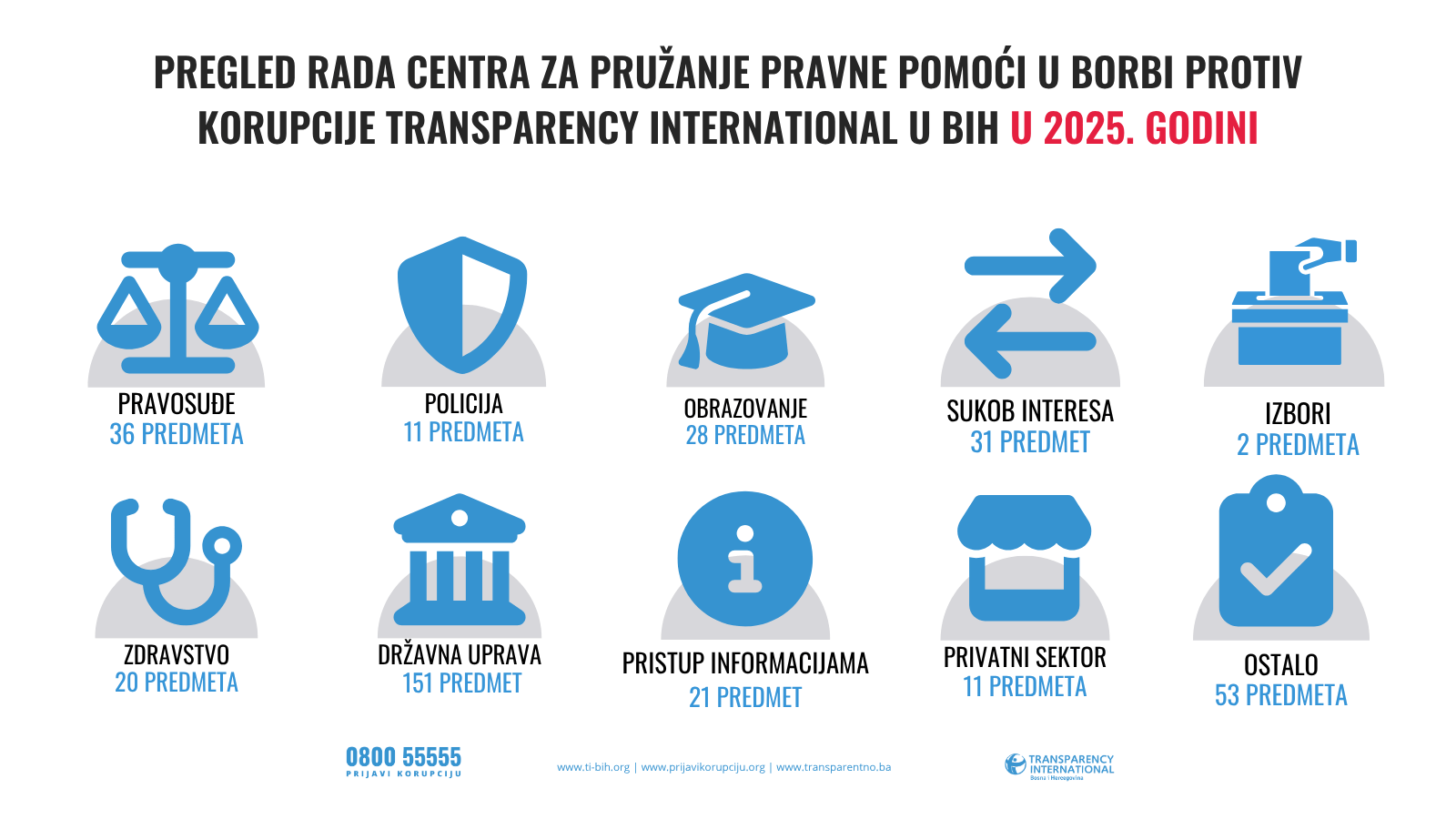
Banja Luka, 7. April 2026 . During 2025, the Advice and Legal Aid Centre of Transparency International in BiH (ALAC) handled 364 new cases, while 1,027 calls from citizens who were witnesses or victims of corruption were received through the toll-free hotline 0800 55555.

As in previous years, the largest number of reports concerned public administration (151 cases), confirming that employment, appointments, and management of public resources remain the highest-risk areas for corruption, according to the ALAC Annual Report for 2025 year.

A significant number of reports were also recorded in the areas of the judiciary (31), education (28), and conflict of interest (31), where a clear increase in the number of cases is evident, confirming that this phenomenon is becoming increasingly widespread and that TI BiH’s warnings about the normalization of conflicts of interest due to the absence of sanctions were justified.

These very trends were confirmed through specific cases, as following ALAC reports, the Central Election Commission of BiH revoked the mandate of the President of the Municipal Assembly of Gacko and an advisor to the then-President of Republika Srpska, Milorad Dodik, for holding incompatible positions. During the past year, a total of 13 cases were referred to the competent institutions for action, and such examples simultaneously indicate growing awareness of the importance of integrity in the public sector, as well as serious shortcomings in the consistent application of the law.

During the year, TI BiH initiated 24 administrative disputes due to denial of access to information, while 24 cases from previous years were resolved in favor of the Centre, indicating systematic violations of this right by institutions.

The fact that the lack of transparency and accountability of institutions is an increasingly serious problem is confirmed by decisions of the highest domestic and international courts. The Court of Bosnia and Herzegovina upheld TI BiH’s lawsuit against the Ministry of Justice of BiH for unlawfully denying access to the Draft Law on the Court of BiH, thereby preventing the public from participating in the adoption process of one of the key judicial regulations.

At the same time, the European Court of Human Rights has taken under consideration cases concerning denial of access to information by the Federal Ministry for Veterans and Disabled Veterans of the Defensive-Liberation War, as well as ALAC’s application on behalf of a citizen who, despite numerous court decisions in his favor, has been unable to establish employment with the Tax Administration of Republika Srpska for several years.

In addition to insufficient openness and lack of accountability, institutions in Bosnia and Herzegovina are under increasing political influence, which is particularly evident in appointment procedures, where processes are often annulled or adapted to political interests. For example, TI BiH filed a criminal complaint against officials at multiple levels of government in the Federation of BiH for unjustified annulment of an already completed procedure for appointing members of the Management Board of the Federal Pension and Disability Insurance Institute, thereby highlighting serious abuses and political influence on institutional operations.

These cases, along with the fact that during 2025 journalists requested and received free legal assistance from the Centre 57 times, while an increasing number of cases in which citizens and media must seek judicial protection due to continuous violations of their rights by institutions, further confirm the scale of the problem.

The complex political structure, frequent blockages in institutional operations, and the absence of key legal solutions, such as the law on conflict of interest in the Federation of BiH and adequate whistleblower protection, not only significantly hinder the fight against corruption but also deny citizens fundamental rights, primarily to legal protection, employment, and access to information of public importance.

Problems such as lack of transparency, unlawful appointments, conflicts of interest, and restrictions on access to information are deeply rooted in institutions at all levels of government. Nevertheless, the work of the Centre for Free Legal Aid to Citizens through initiating administrative disputes, appeals, criminal complaints, and other legal mechanisms before domestic and European courts, as well as decisions in favor of the Centre, demonstrate that persistent and strategic legal action can lead to concrete changes.

Transparency International in BiH will continue to provide free legal assistance to citizens and advocate for the improvement of the legal and institutional framework to ensure greater transparency, accountability, and more effective fight against corruption in Bosnia and Herzegovina.

Press rls_7_4_2026
TI BiH warns: Appointment of investor through amendments to the Southern Interconnection Law sets a dangerous precedent

Banja Luka, 30. March 2026 year – Transparency International in BiH warns that amendments to the Law on the Southern Interconnection of FBiH, which directly define which...

Izvještaji za Mediae

TI BiH warns: Appointment of investor through amendments to the Southern Interconnection Law sets a dangerous precedent

Banja Luka, 30. March 2026 year – Transparency International in BiH warns that amendments to the Law on the Southern Interconnection of FBiH, which directly define which investor will implement the project, represent a dangerous precedent and as such carry the risk of seriously undermining the public interest.

The Draft Law on Amendments to the Law on the Gas Pipeline “Southern Interconnection Bosnia and Herzegovina and the Republic of Croatia“, which the Government of the Federation of BiH adopted on March 25 and submitted for adoption to the Parliament of FBiH under urgent procedure, undermines not only transparency but also eliminates any possibility of competition. The content itself raises numerous questions and indicates multiple risks that may lead to the endangerment of responsible governance and compromising the public interest by favoring particular interests.

Considering the importance of this project for the entire economy and energy independence of BiH, TI BiH emphasizes that no adequate analysis has been provided nor a rational basis for the radical change in approach to the project’s implementation compared to the Law that was adopted only one year earlier.

Specifically, the proposed amendments appoint a private investor as partner and project leader directly in the law itself, which represents a dangerous precedent that raises justified suspicion that this is a so-called tailor-made legal solution, i.e., legal provisions tailored to particular interests.

In addition to opening the risk of regulatory capture, which favors personal, commercial, or political interests of certain actors at the expense of BiH citizens, establishing such a practice in a country with one of the highest levels of corruption in Europe would lead to catastrophic consequences in the implementation of strategically important projects such as the “Southern Interconnection” gas pipeline.

The implications that such a project implementation model carries are something the entire BiH public should be informed about, as well as the professional credentials of the potential investor and the very reasons for changing the model, all of which the proposer has neglected in the proposed amendments to the Law.

Furthermore, the Government of the Federation has not explained the reasons for the urgent procedure, which has prevented broader discussion that should be necessary considering the importance of the project and the possible consequences of its implementation in the proposed manner.

Finally, there are justified concerns regarding the compliance of this Law with existing constitutional and legal solutions, as well as with obligations arising from the harmonization of BiH legislation with EU regulations.

In view of all the above, Transparency International BiH calls on the Parliament and Government of FBiH to organize a public debate on this law so that the public can gain insight into all aspects of these amendments, and that through reasoned discussion all concerns be addressed and contribute to the adoption of an optimal solution for the implementation of such an important project.

Press rls_30_03_2026
Collection of concession fees in BiH is declining. Numerous concessionaires are avoiding payment of already minimal obligations

SARAJEVO, March 19, 2026. – Collection of concession fees in Bosnia and Herzegovina decreased by approximately 17% last year, according to preliminary data from Transparency...

Izvještaji za Mediae

Collection of concession fees in BiH is declining. Numerous concessionaires are avoiding payment of already minimal obligations

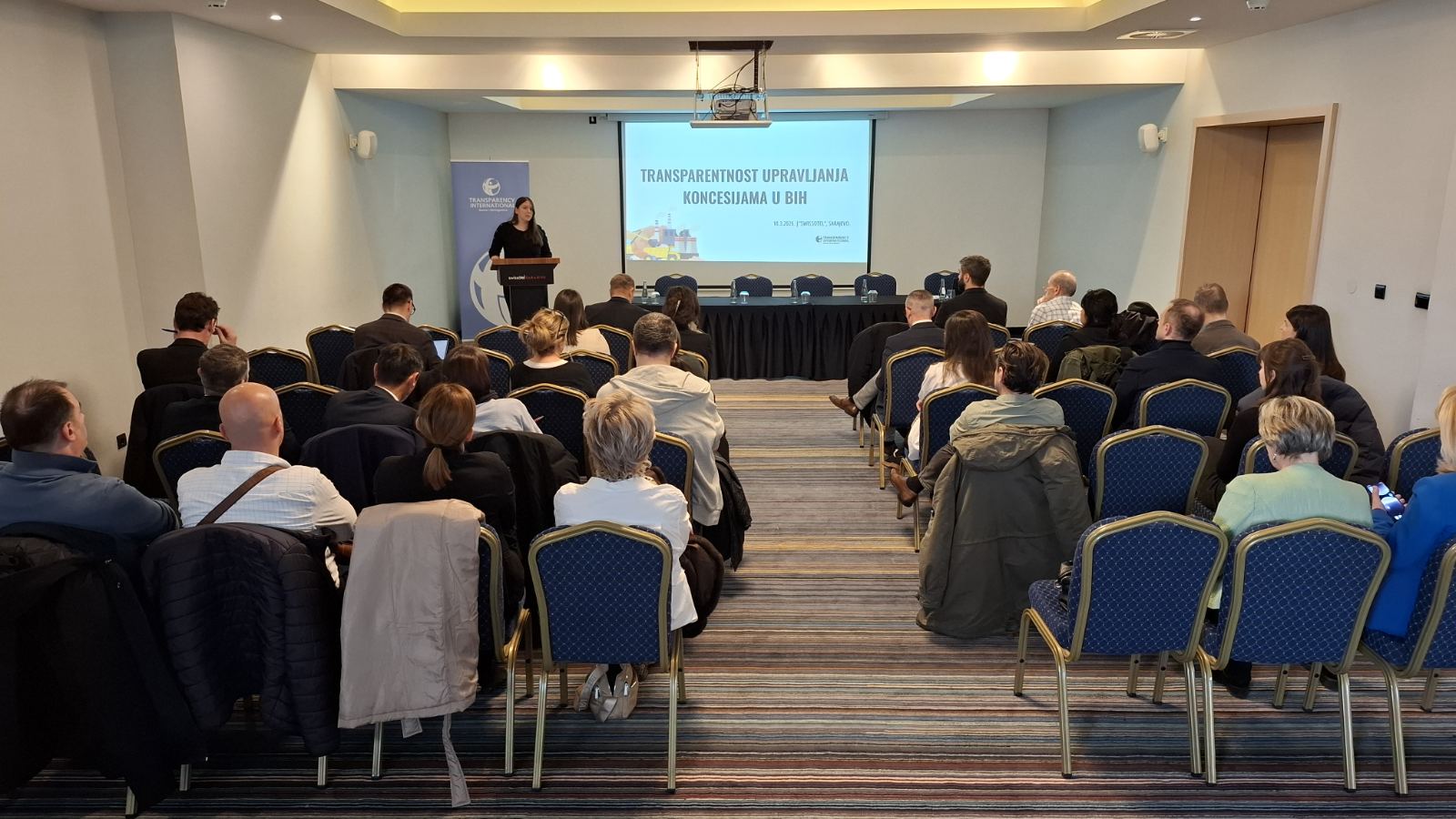
SARAJEVO, March 19, 2026. – Collection of concession fees in Bosnia and Herzegovina decreased by approximately 17% last year, according to preliminary data from Transparency International in BiH presented at a conference dedicated to transparency in concession management. These figures are based on data provided by authorities, but the number is not final as TI BiH continues to pursue disputes with institutions that refuse to disclose information, while numerous concessionaires exploiting significant natural resources avoid paying already low obligations to the state. The share of concession fees in total public budget revenues continues to decline. In the last year, it decreased from 1.2% to 1.02%, which is a direct consequence of poor collection and chronic lack of transparency.

The current debt of concessionaires exceeds nine million convertible marks, but experts warn that this is not the final figure. As many as seven government bodies continue to refuse to provide payment data, while others have provided only partial information, preventing accurate insight into how much money the state is actually losing. Auditors in numerous institutions constantly encounter deficiencies caused by inconsistent laws and the absence of adequate records.

Therefore, TI BiH believes that the lack of transparency in concession award procedures subsequently leads to environmental, economic, and other negative consequences for society as a whole.

This problem is further exacerbated by weak oversight of institutions that should ensure compliance with legal procedures, which enables avoidance of obligations and irregularities in contract implementation. Irresponsibly awarded or inadequately supervised concessions not only endanger the environment but also directly put people’s lives at risk, while undermining citizens’ trust in institutions , stated Ivana Korajlić, Executive Director of Transparency International in BiH.

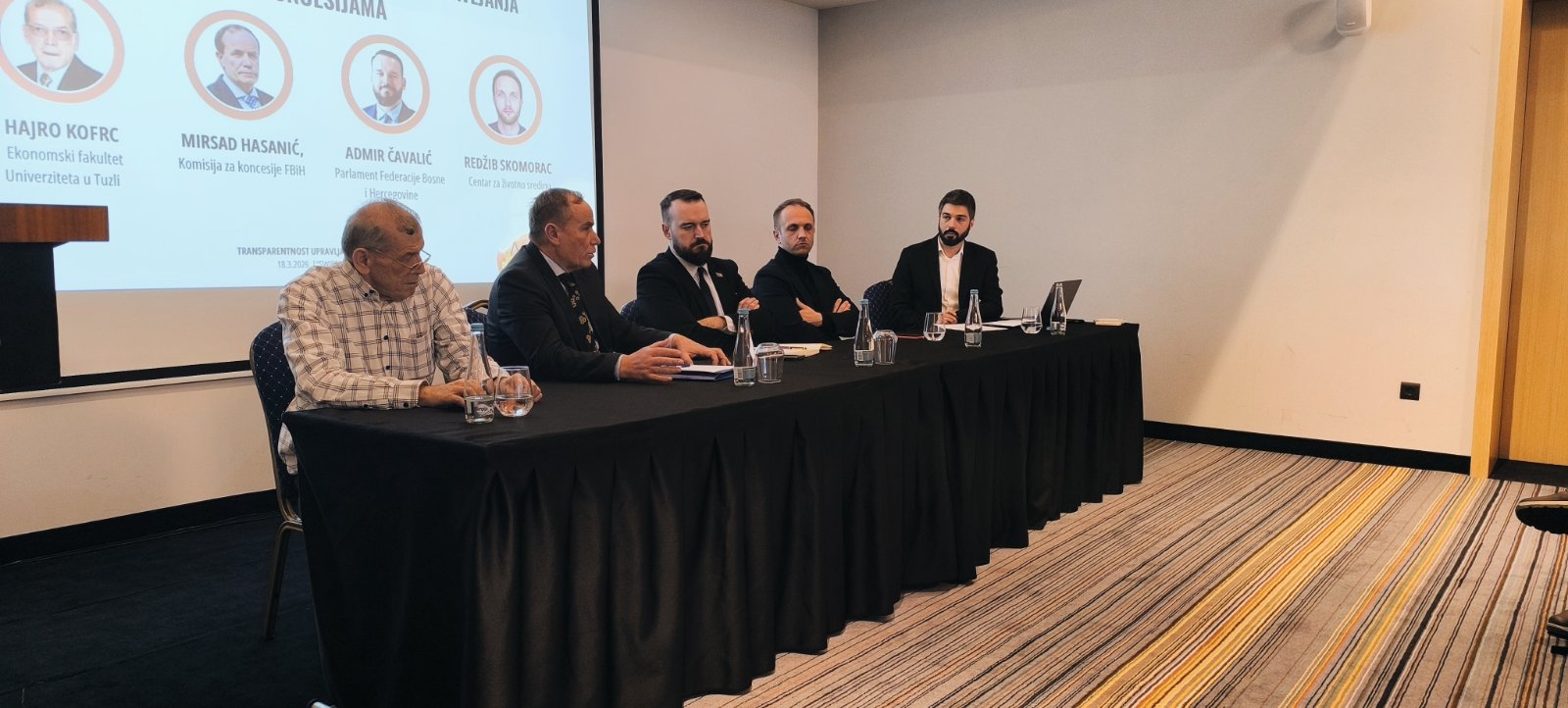
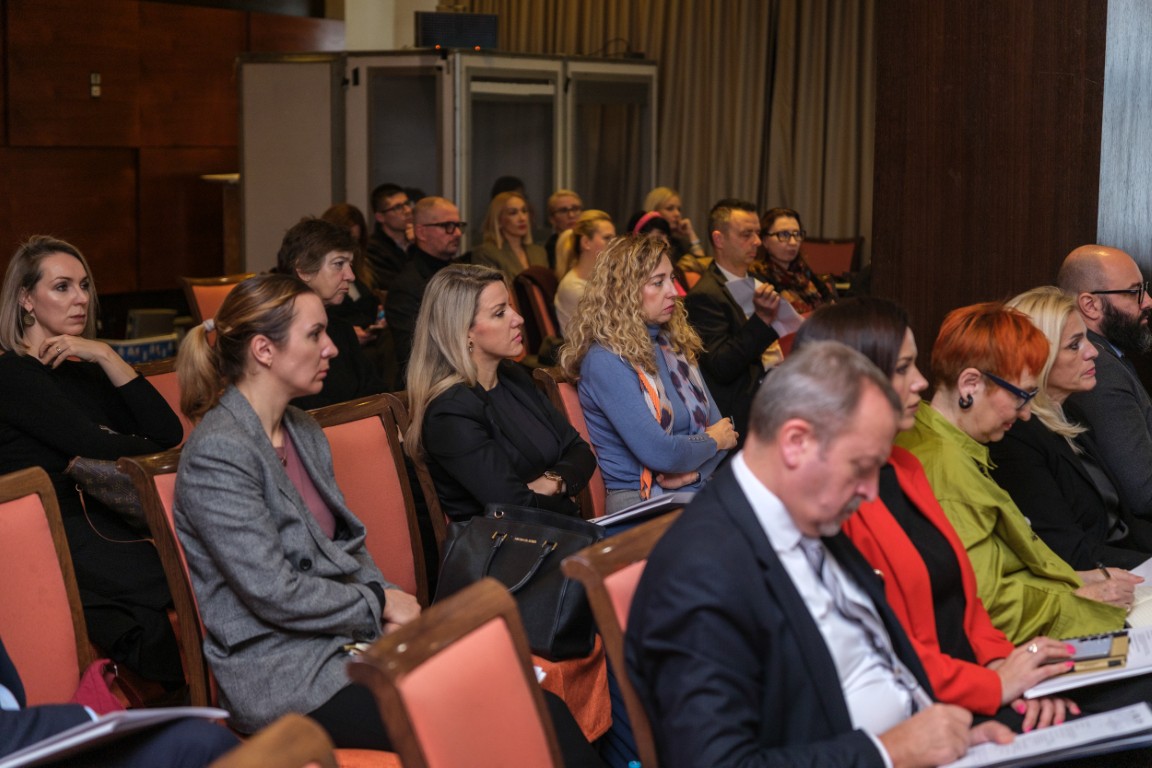
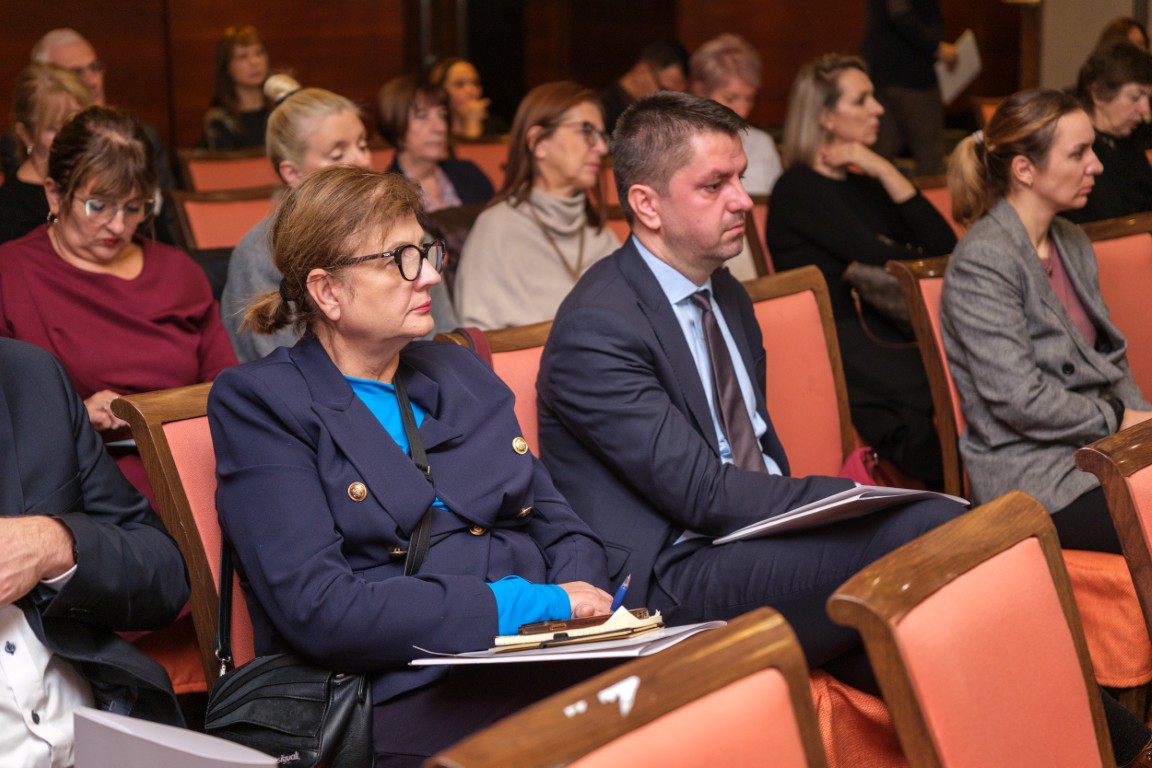
The conference organized by TI BiH in Sarajevo brought together relevant stakeholders from this field who agreed that society benefits little from this manner of concession management.

Member of the FBiH Parliament Admir Čavalić stated that concession fees in Bosnia and Herzegovina are among the lowest in the region and that they should be increased, with the introduction of a variable component that would track market price changes, while collected funds should be distributed more proportionally to local communities that directly experience the consequences of resource exploitation.

Mirsad Hasanić from the FBiH Concessions Commission also pointed to systemic anomalies, noting that unsolicited proposals have become the rule rather than the exception, and that in legal terms, virtually no concession has been awarded through a classic tender process, which places favorites in a privileged position from the start.

An additional problem is the so-called “project fragmentation,” highlighted by Redžib Skomorac from the Center for the Environment. He notes that in the construction of solar power plants, projects are deliberately divided into smaller parts to completely avoid the obligation of concession award. Professor at the Faculty of Economics in Tuzla, Dr. Hajro Kofrc, stated that concessions can be a powerful tool for economic development, but only with strict adherence to rules. The conference also presented recommendations for improving transparency in concession management. Primarily, harmonization of the legislative framework on concessions at all levels in BiH with the Concessions Directive and other significant segments of the EU Acquis, followed by adoption and publication of concession plans, with mandatory prior public consultations from the earliest project phases, and incorporation of all three pillars of the Aarhus Convention into concession laws in BiH—namely the right to access information, the right to public participation in decision-making, and the right to legal protection. There was also a call for the introduction of concession contract registries with detailed data open to the general public, including financial indicators, as only this can enable adequate public oversight of concessionaire operations.

Press_rls19.03.2026
TI BiH Presented 13 Databases That Help Detect Corruption

Sarajevo, 26 February 2025 February 2026. years – Oversight of public spending is crucial for effective anti-corruption efforts, and Transparency International in BiH has...

Izvještaji za Mediae

TI BiH Presented 13 Databases That Help Detect Corruption

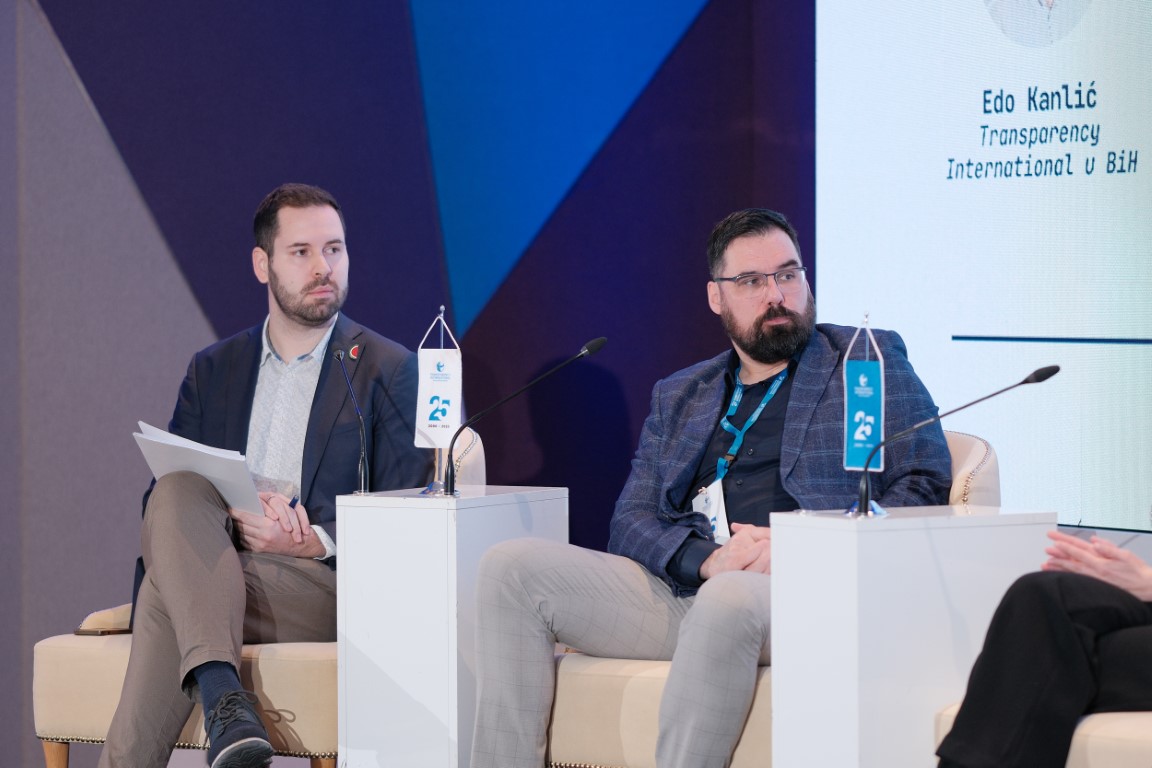
Sarajevo, 26 February 2025 February 2026. years – Oversight of public spending is crucial for effective anti-corruption efforts, and Transparency International in BiH has presented 13 databases that help detect irregularities to all those who wish to monitor and control government operations. On these platforms, media, civil society organizations, activists, and all interested citizens can find out how public money is spent and how much goes to companies connected to elected officials, as nearly 36% of those who declared ownership in private enterprises after general elections have business dealings with the state.

The Register of Public Officials reveals over 300 political leaders who hold multiple positions or head associations funded from the budget, thereby directly violating existing conflict of interest laws. The Concessions Register provides a broader picture of public resource management and politically connected investors, while other databases help uncover their connections with heads of institutions, public enterprises, and establishments.

On dedicated platforms, TI BiH has also published data on the transparency of judicial institutions and their results in fighting corruption in terms of the number of investigations, indictments, and convictions for corruption. How closed the system is and how much institutions obstruct oversight is best illustrated by data from the Judiciary Index, according to which as many as 35% of courts and prosecutor’s offices violated the legal deadline for responding to freedom of information requests, 46% of courts do not publish first-instance verdicts, and 85% of prosecutor’s offices conceal plea agreements.

In addition to hiding its work from citizens, the judiciary’s work is characterized by the fact that half of the prosecutor’s offices in BiH do not conduct investigations into high-level corruption at all, which represents a serious blow to the rule of law and the culture of accountability.

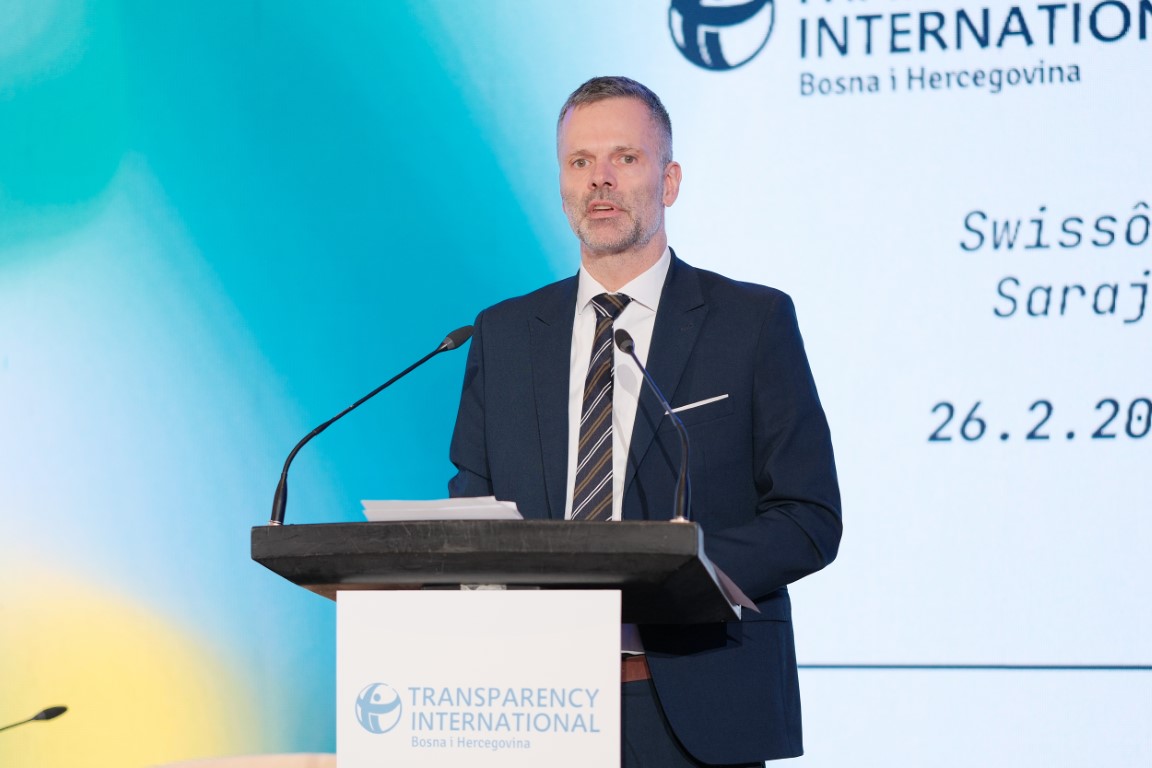
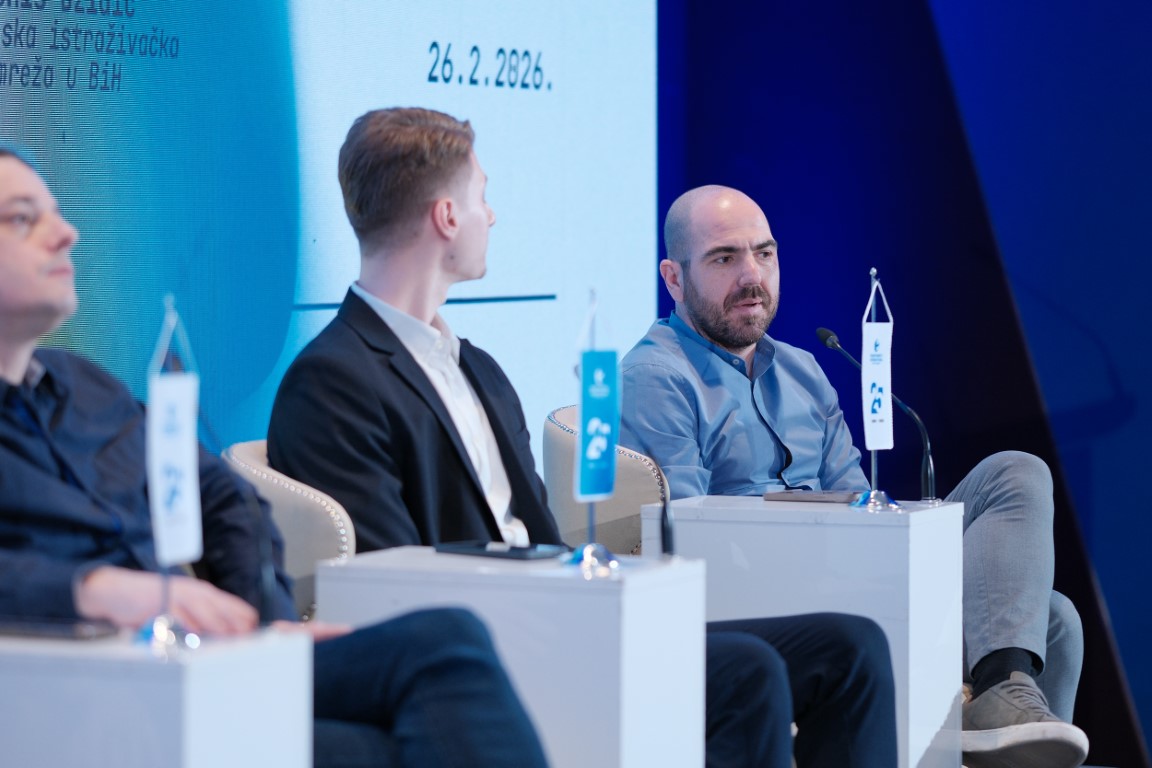
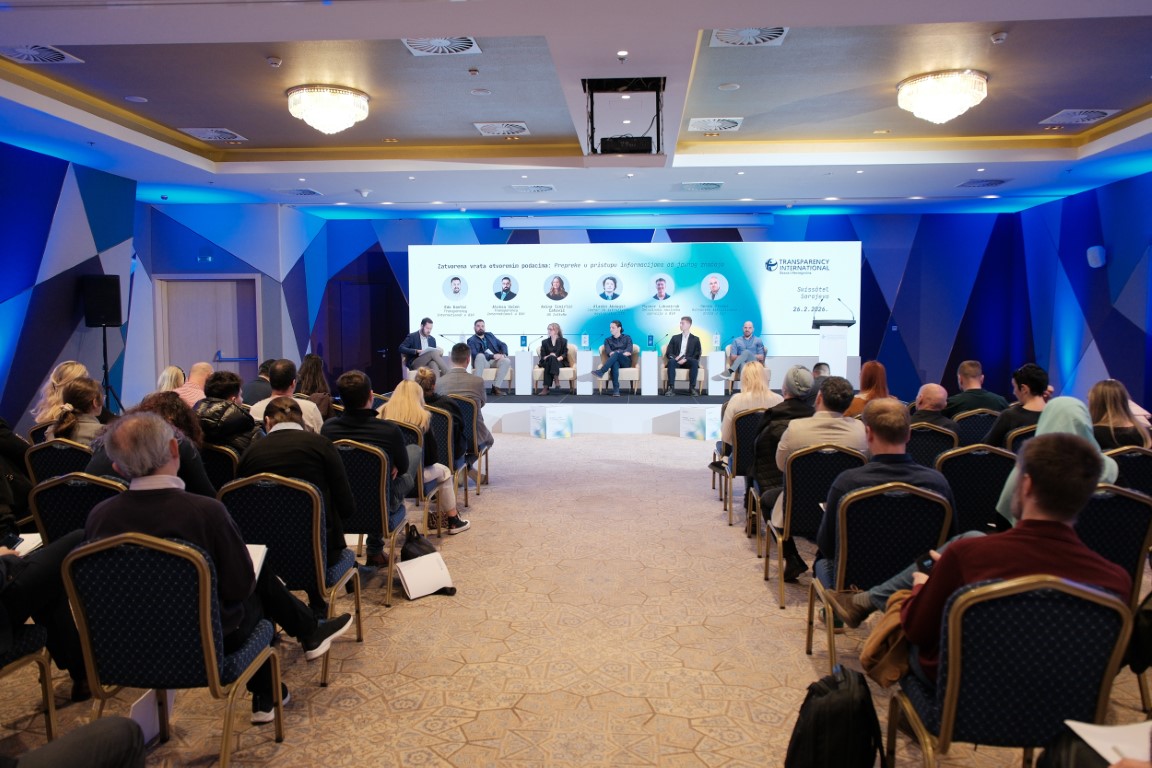
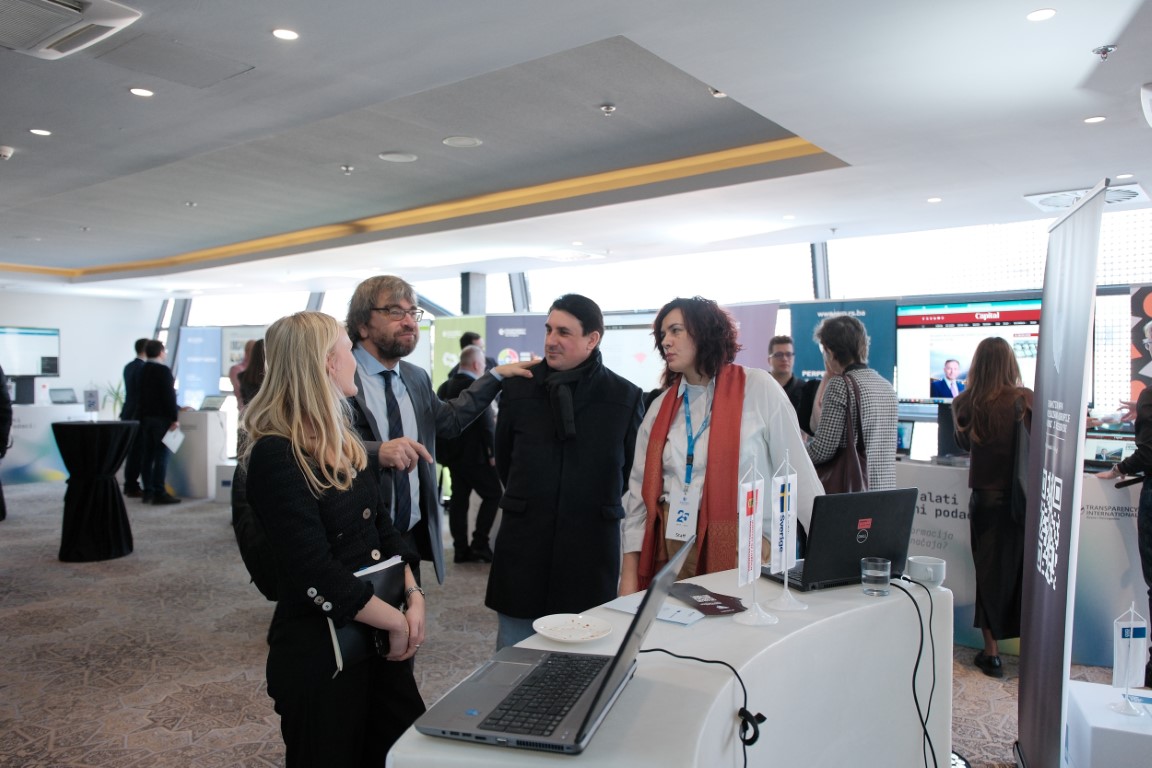
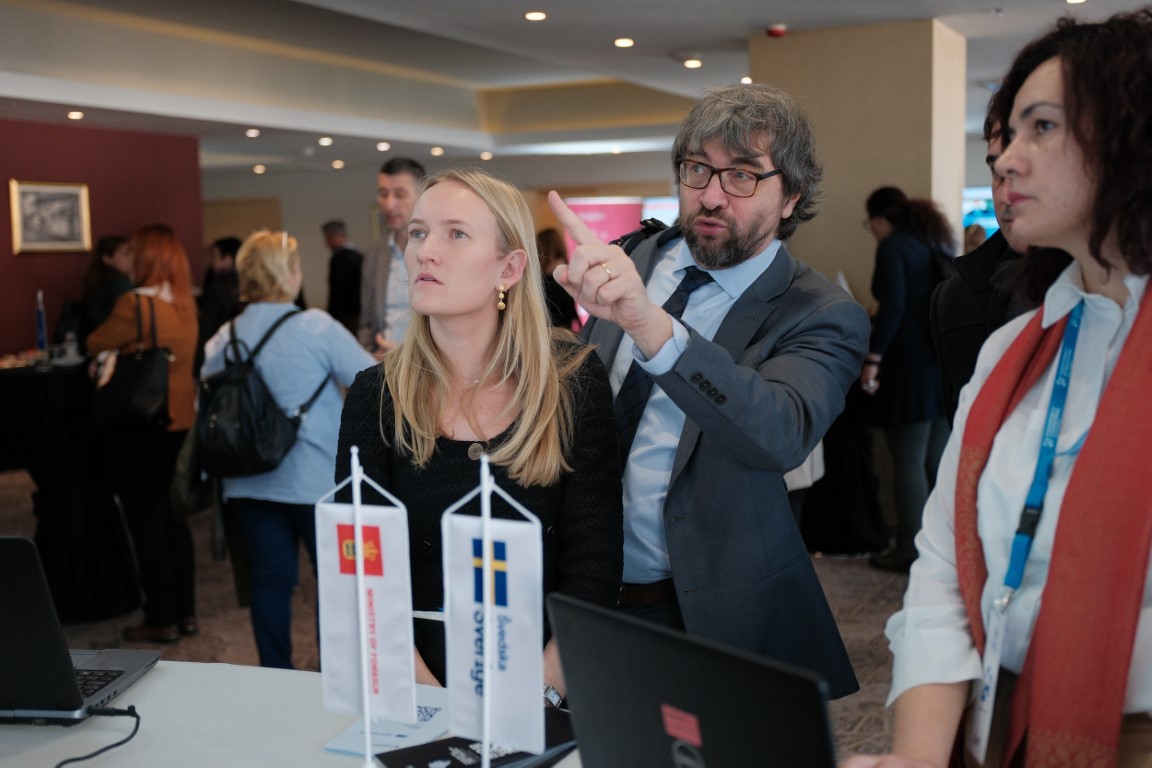
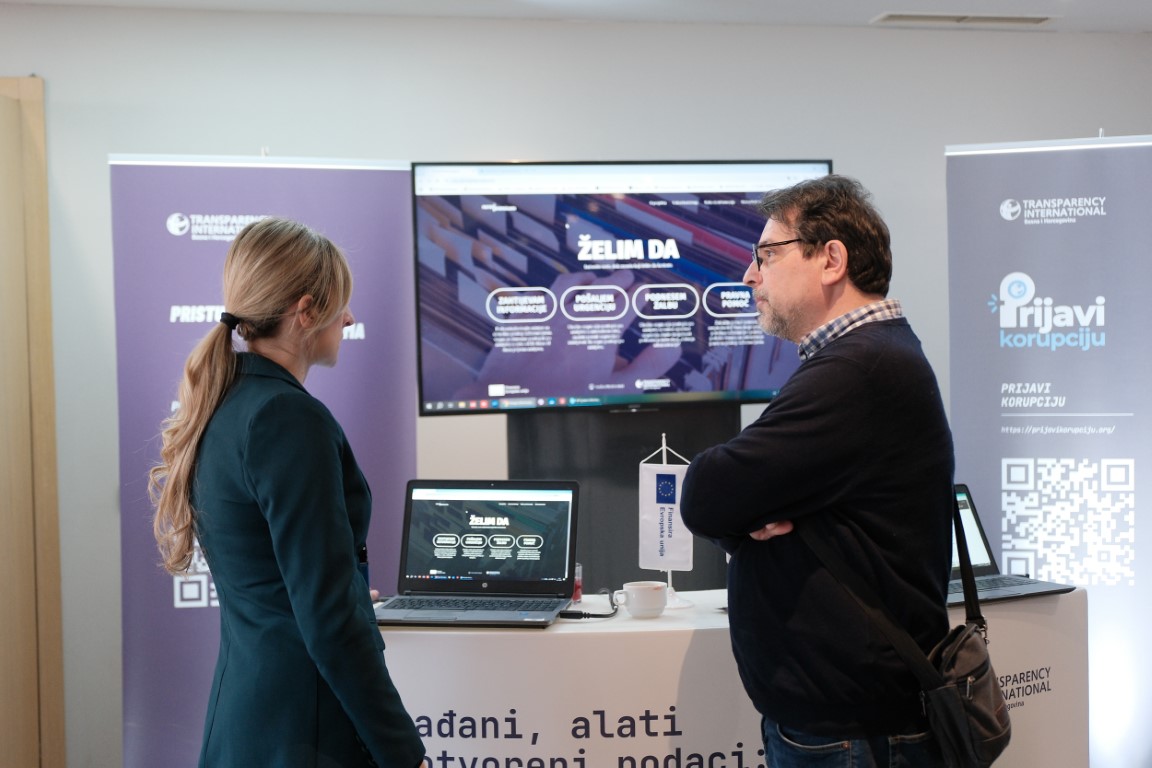
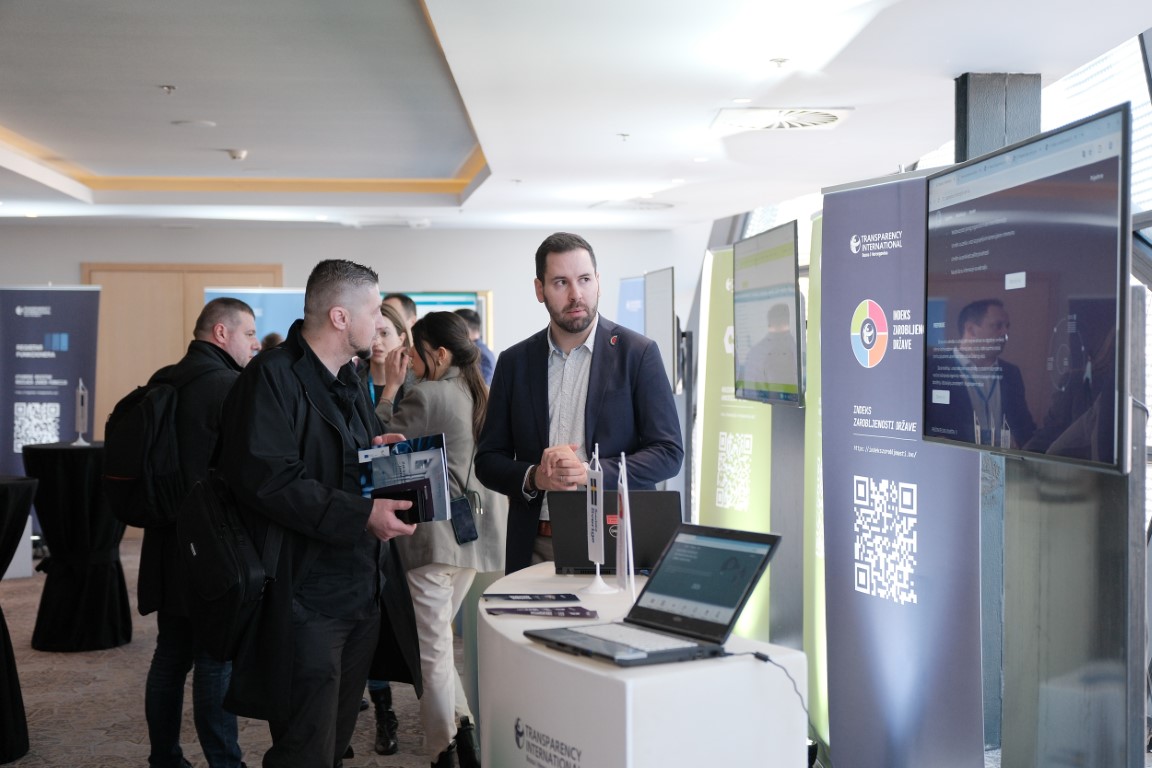
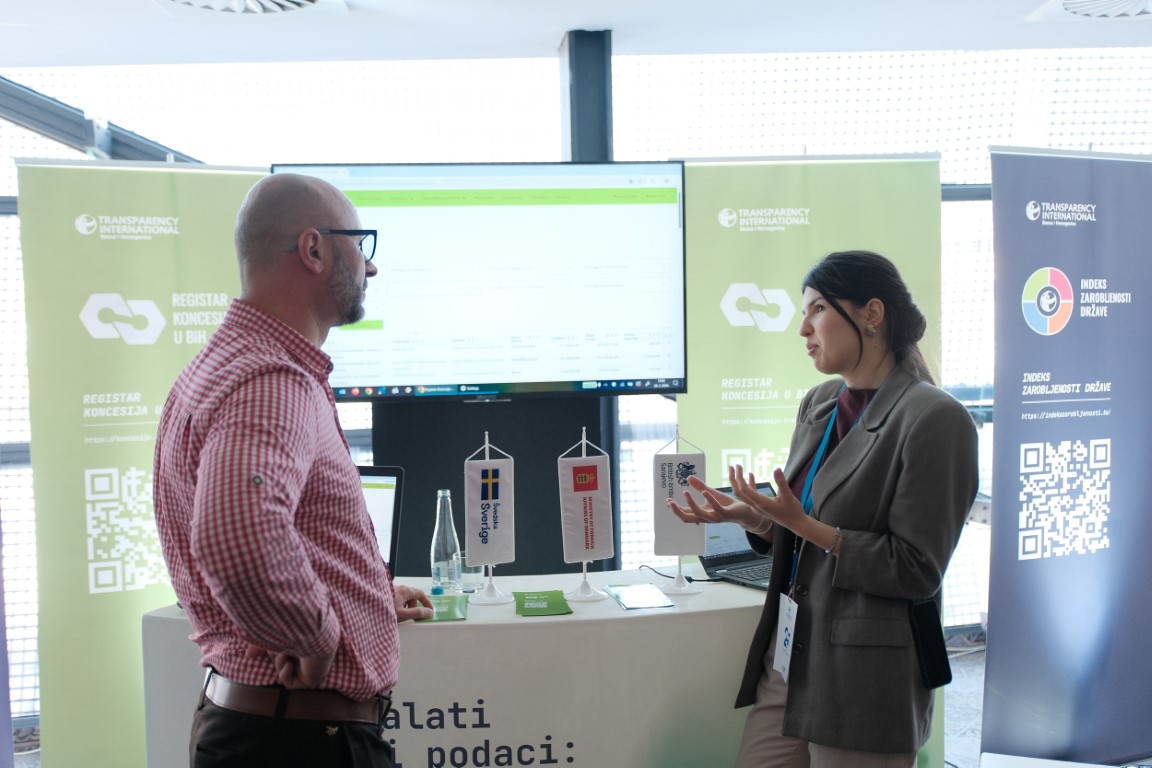
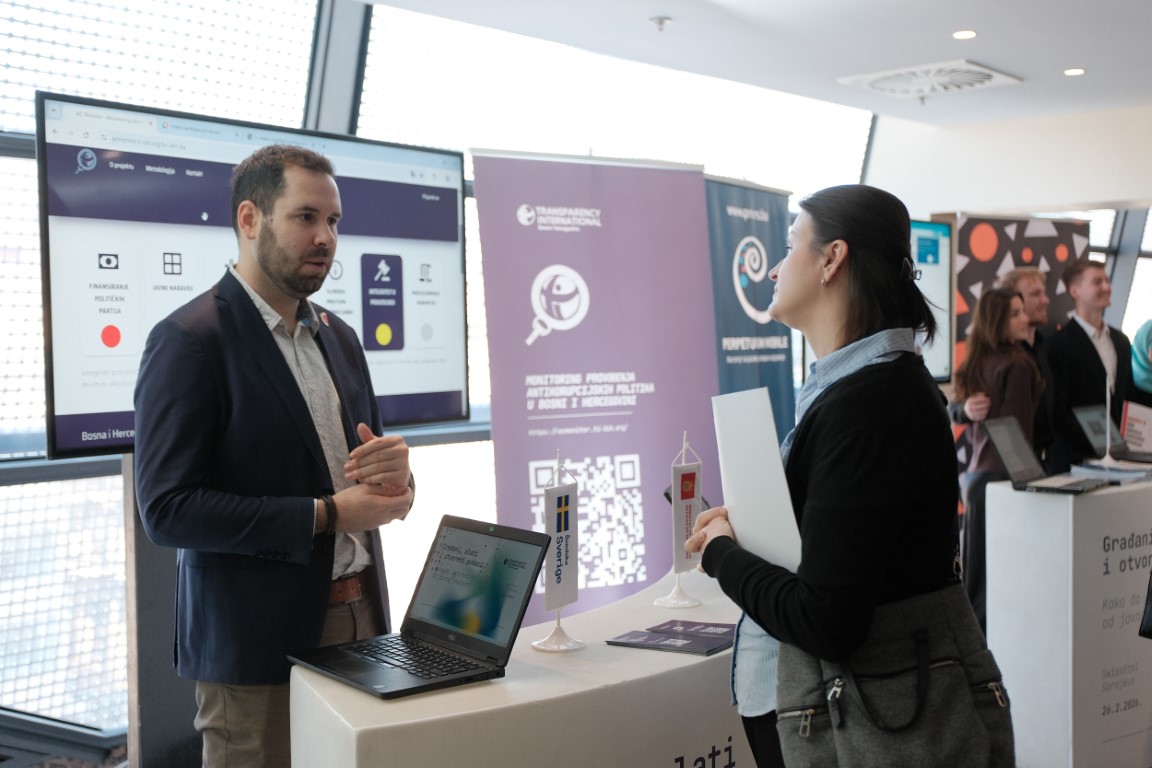
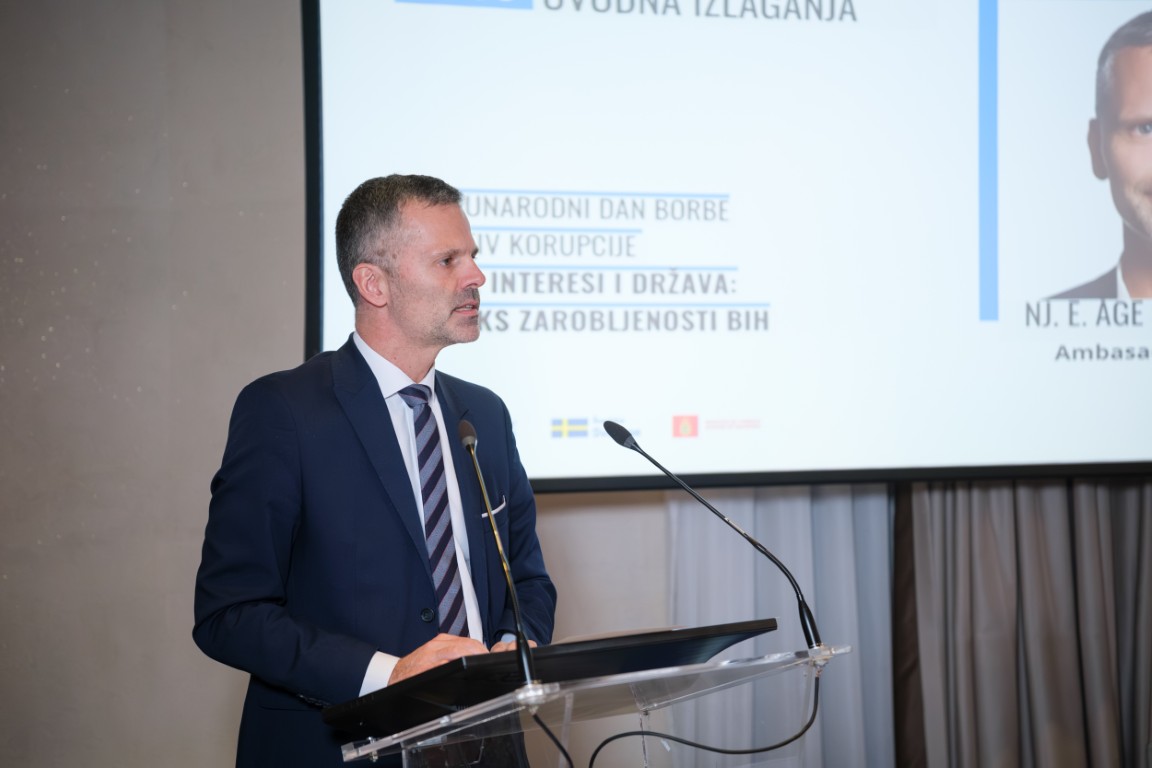
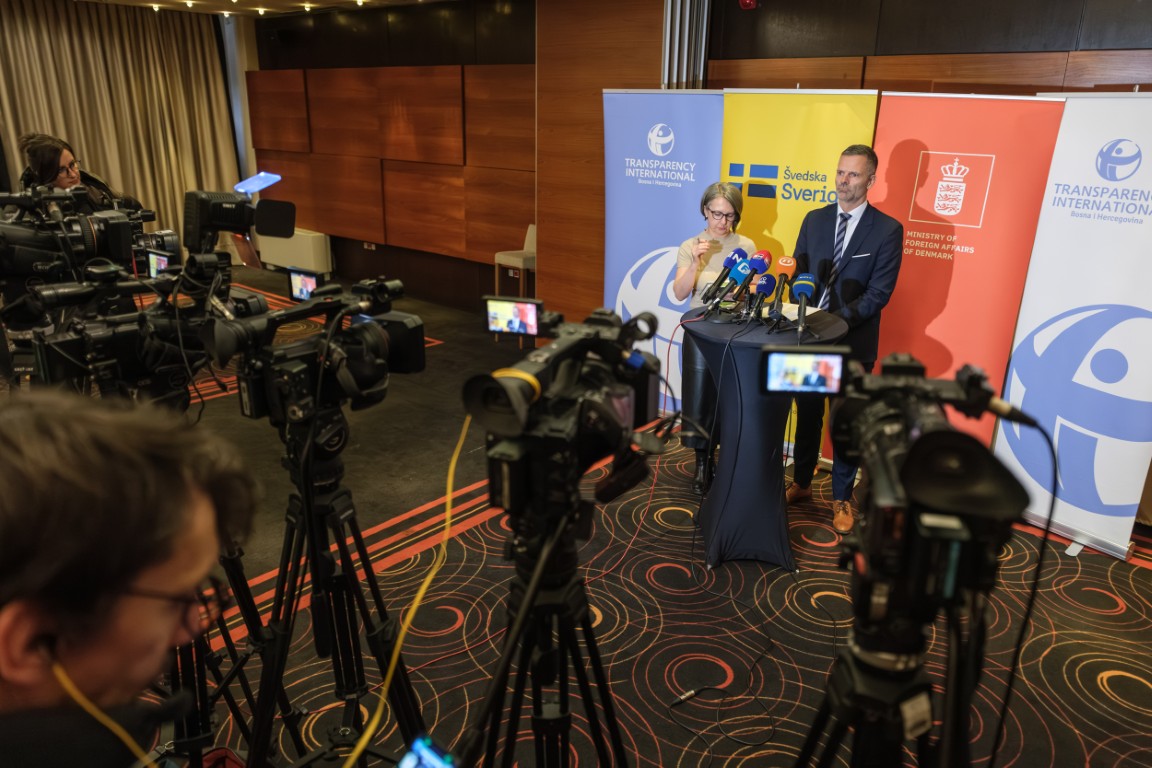
All of this necessitates initiating a broader societal debate on these issues, which was the reason for holding the conference “Citizens, Tools, and Open Data: How to Access Information of Public Interest” organized by Transparency International in Bosnia and Herzegovina (TI BiH) today in Sarajevo. The conference served as an introduction to the TI BiH Expo – an exhibition of databases and tools developed to enable easier access to public information, which is crucial for corruption prevention. That this is a fundamental issue for the European path was also emphasized by H.E. Åge Sandal Møller, Ambassador of Denmark to BiH.

Transparency and access to information for citizens and media are essential prerequisites of every democratic society. Open data not only strengthens trust in institutions but is also a key tool in fighting corruption and a driver of economic growth. Denmark is a country founded on trust in institutions, and the fight against corruption is essential on Bosnia and Herzegovina’s EU path. Our support aims to encourage civil society efforts whose oversight role is absolutely necessary , stated Ambassador Møller.

The Delegation of the European Union to BiH emphasized that the availability of information of public interest is crucial for empowering citizens in a democracy.

Therefore, it is of crucial importance for BiH to establish a fair and effective mechanism for monitoring the implementation of laws that guarantee free access to public information, ensure impartial legal remedies, and impose sanctions. The European Union will continue to advocate for cooperation between public institutions, civil society, and media to achieve this , stated Aurelie Valtat, Head of the European Integration, Political Affairs, Media and Information Section at the EU Delegation to BiH.

To facilitate access to information and break down the “wall of silence,” TI BiH has, in addition to the aforementioned information, opened to the public on various platforms data on the operations and management structures of public institutions and enterprises, the distribution of public funds to non-profit organizations, information on the prosecution of corruption and transparency of judicial operations, monitoring of reforms in the field of anti-corruption, as well as various tools for oversight of public fund distribution, strengthening institutional integrity, and accountability of holders of the highest public offices.

Press rls_26_02_2026
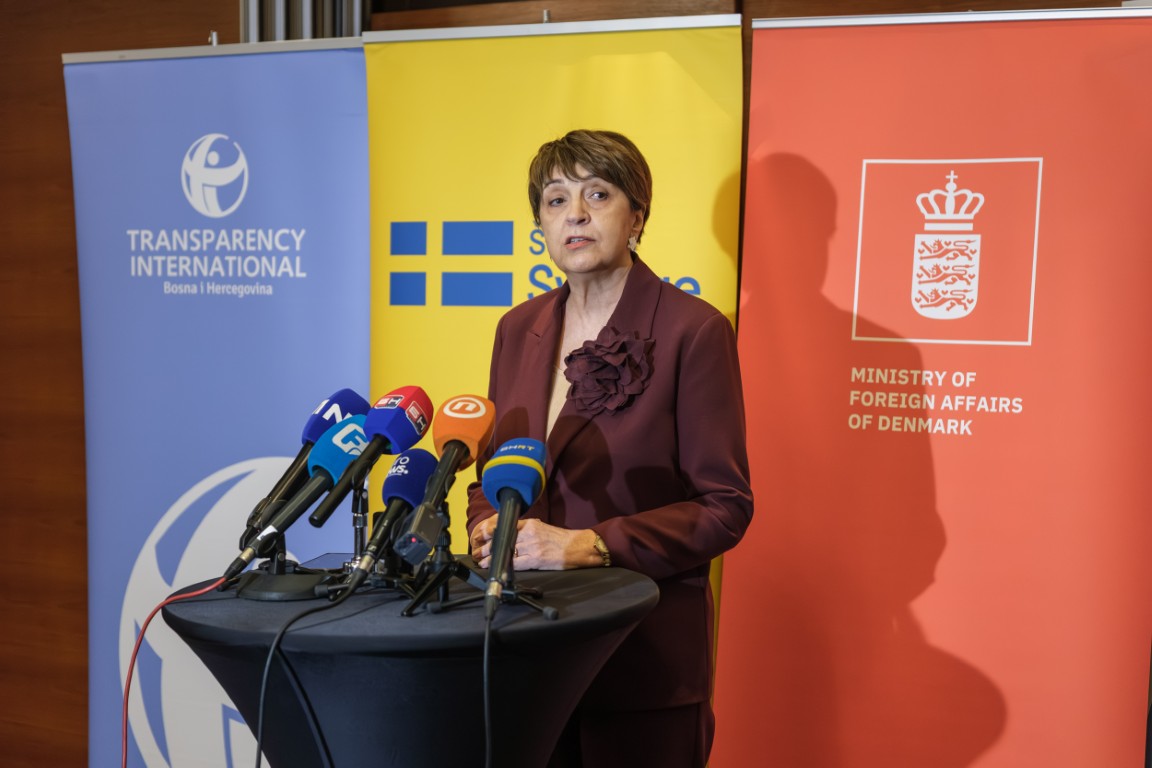
Possible Suspension of Timber Exports to the EU: Forests of Una-Sana Canton Victims of Devastation and Poor Laws

Bihać, 24. February 2026. year – While logging plans in Una-Sana Canton are fulfilled at 98%, forest restoration is realized at only 41%, which in the long term leads to the...

Izvještaji za Mediae

Possible Suspension of Timber Exports to the EU: Forests of Una-Sana Canton Victims of Devastation and Poor Laws

Bihać, 24. February 2026. year – While logging plans in Una-Sana Canton are fulfilled at 98%, forest restoration is realized at only 41%, which in the long term leads to the destruction of this resource, Transparency International in BiH (TI BiH) warned today. At the conference on forest law reform, it was emphasized that public enterprises, of which 88% of directors are politically connected, prioritize short-term exploitation over biological sustainability, while the canton, due to outdated fee calculations, loses millions.

Such practices not only devastate forests but also place Bosnia and Herzegovina in real danger of losing the European Union market. Unless digital traceability systems are urgently established and legislation is harmonized with the new EU Regulation on Deforestation-Free Products (EUDR), domestic timber products will not be able to cross the border—this was the key message from the conference “Cantonal Forest Laws: Between Reform and EUDR Requirements”, organized today in Bihać by TI BiH.

At the conference, which brought together representatives of the Government and Assembly of Una-Sana Canton (USK), the management of Forest Enterprise “Unsko-sanske šume,” and experts, the concerning effects of the new EU regulation coming into force were presented, expected by the end of 2026, which requires that every timber product possess precise geolocation coordinates (WGS84) of the plot from which the wood originates, as well as proof that there has been no forest degradation at that location since 2020. . This requirement cannot be met from a legal, technical, and operational standpoint, which calls into question timber exports from Bosnia and Herzegovina to the EU, thereby jeopardizing the entire forestry sector.

“Domestic exporters face operational risk because, without a unified information system, they cannot provide valid data on origin to their EU partners. If BiH is classified as a ‘high-risk’ country due to corruption and lack of data, our trucks will undergo rigorous inspections, which threatens the closure of jobs in the timber industry,” emphasized Prof. Dr. Dženan Bećirović from the Faculty of Forestry in Sarajevo, who warned that the current fragmentation of the sector, where the Federation of BiH has no forest law and the cantons have inconsistent regulations and disconnected information systems, prevents the fulfillment of these conditions.

Special focus was placed on the situation in Una-Sana Canton, and TI BiH’s analysis showed that public enterprises in this sector often prioritize short-term revenues over long-term sustainability. Data for 2023 show that Forest Enterprise “Unsko-sanske šume” achieved the logging plan at 98%, while the reforestation plan was realized at only 41%.

Additionally, the problematic calculation of forest use fees was highlighted. USK charges a fee of 9% on the base price of timber “on the stump,” while Republika Srpska charges 10% on a higher base (truck road). Due to such differences in calculation and the absence of a federal law, the entire Federation of BiH collects three times less revenue from forest fees compared to RS, although the volume of logging is nearly identical (approximately 15.8 million BAM in the Federation of BiH versus 48.4 million BAM in RS in 2023).

TI BiH reiterated the finding that 88% of directors of forest enterprises in BiH are politically connected, which makes this sector prey to party interests instead of a resource for economic development.

Mustafa Ružnić, Prime Minister of USK, emphasized that the data on political influence in the forestry sector are unambiguous and represent a clear call for serious action: “It is high time we turn to expertise and place forest management in the service of its sustainability rather than exploitation. Therefore, we should view EUDR as an opportunity, not a threat,” he added.

During the panel discussion, it was emphasized that the new Forest Law of USK must also resolve the issue of jurisdiction in the area of forest protection as well as the manner of spending budgetary funds for these purposes, which is currently an open question since the complete transfer of authority to the Cantonal Forestry Administration has not been carried out.

Edvin Alijanović, Minister of the Ministry of Agriculture, Water Management and Forestry of USK, concluded that “our political responsibility is decision-making, but it is equally a professional responsibility to adopt the best solutions that will ensure transparent, accountable, and long-term forest management.”

Recommendations were issued from the conference for the urgent adoption of harmonized regulations, particularly the new Forest Law of USK, which will enable digitalization and timber traceability, depoliticization of management structures in public enterprises, and clear jurisdiction regarding forest protection and control of earmarked spending for forest restoration, in order to prevent further devastation of this resource and ensure the survival of exports.


Press rls_24_02_2026
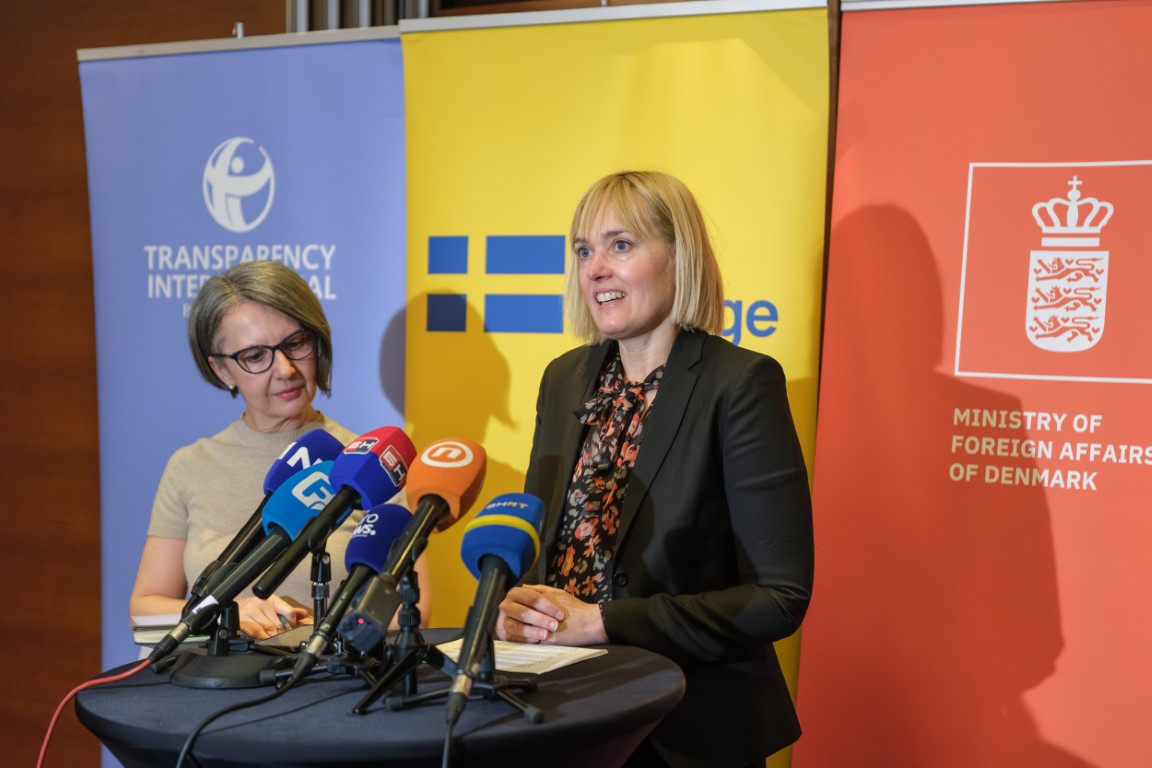
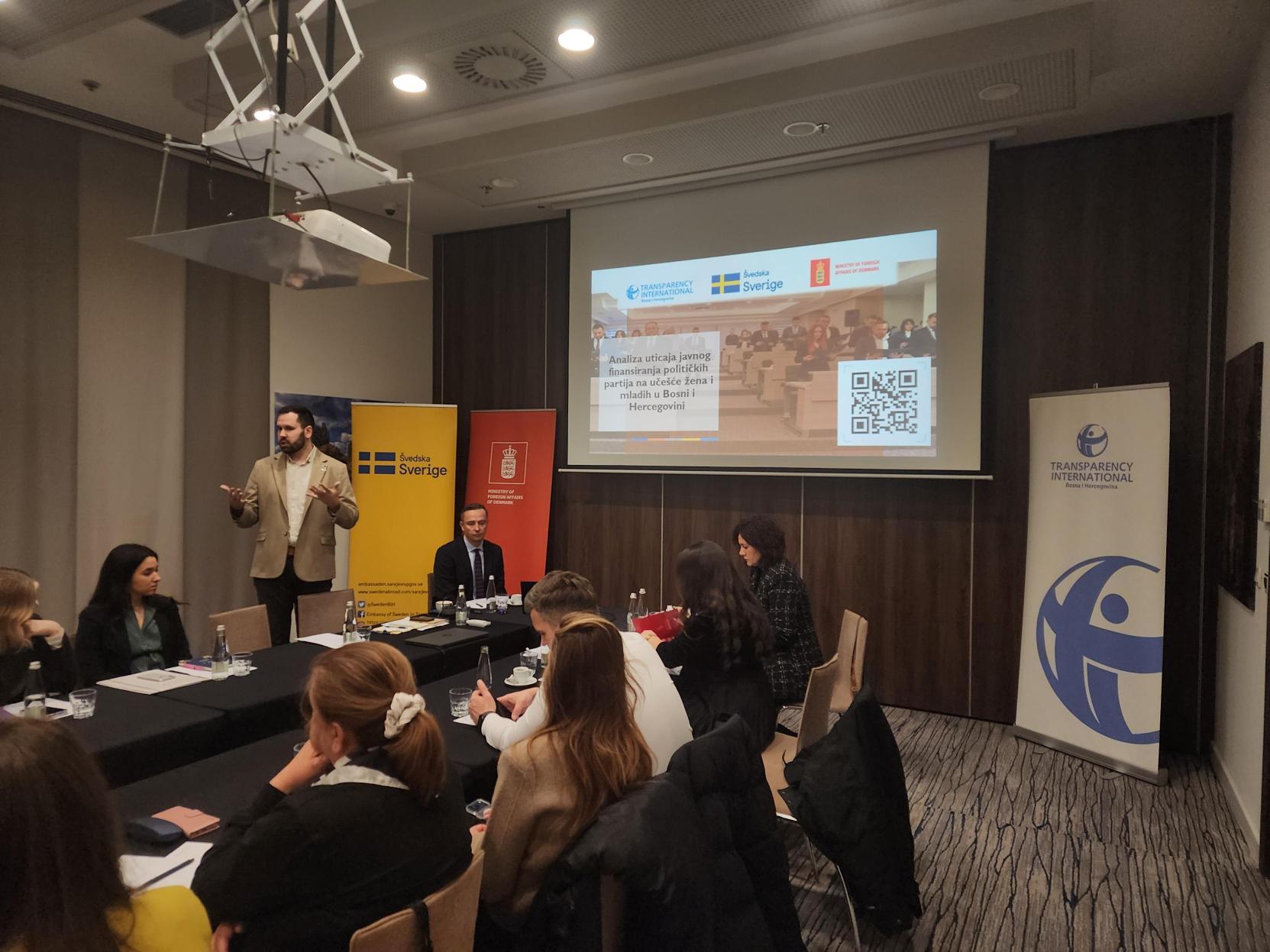
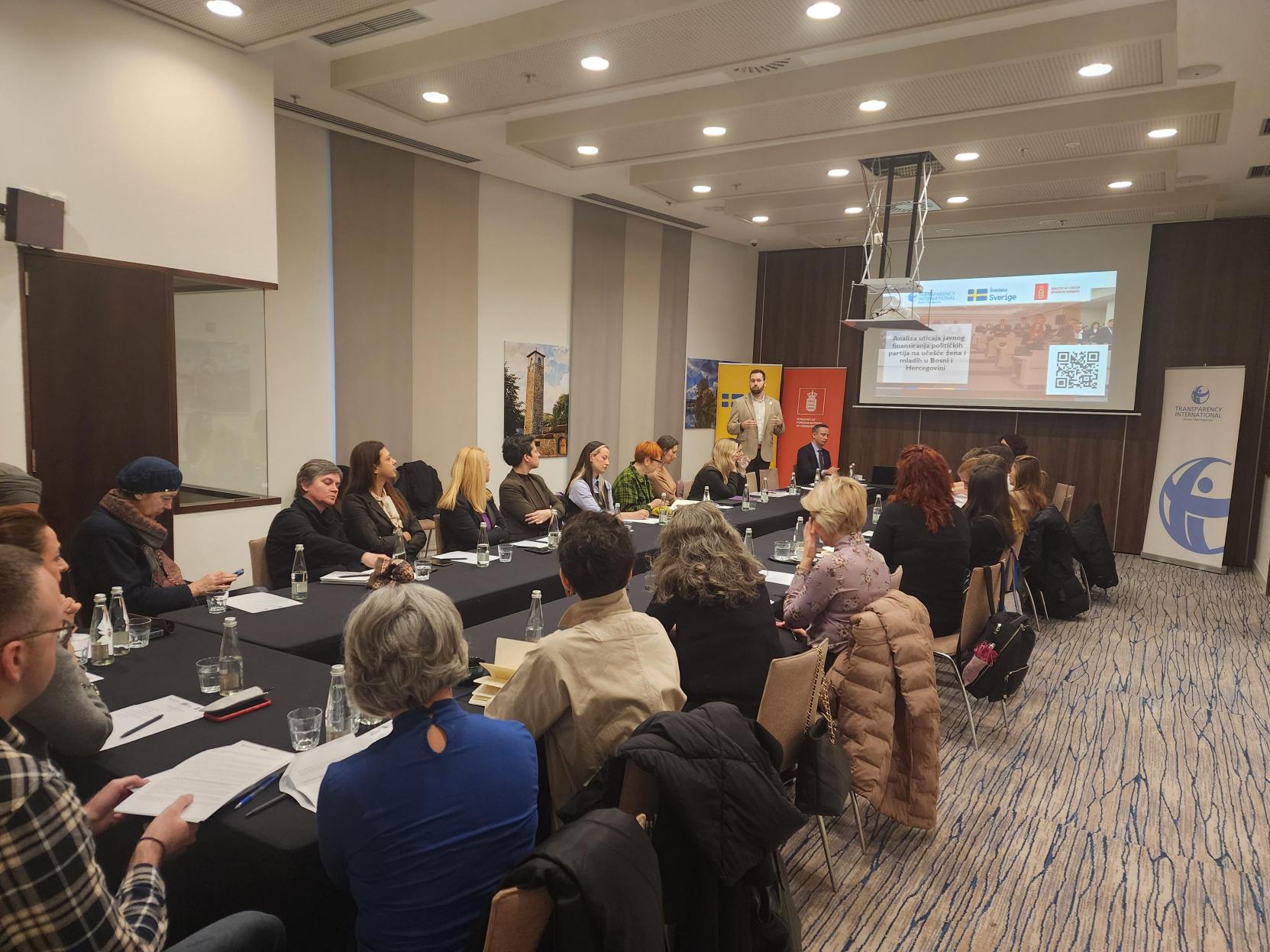
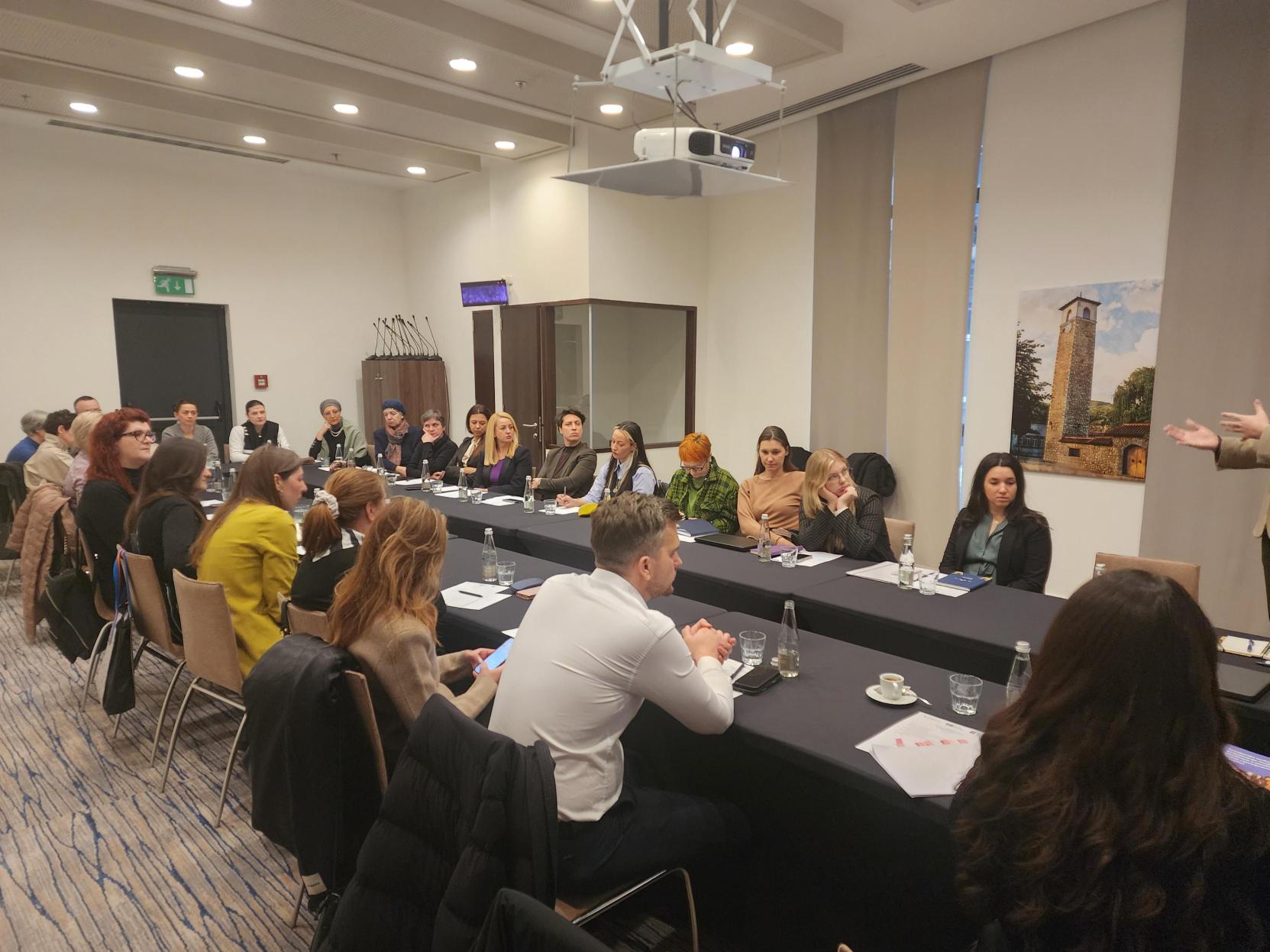
Women’s Representation Below Legal Threshold, Youth Invisible: Public Financing of Political Parties Does Not Deliver Equality

Sarajevo, 17 February 2026. 2025 – Political parties in Bosnia and Herzegovina have had tens of millions of marks in public funds at their disposal for years, yet this money...

Izvještaji za Mediae

Women’s Representation Below Legal Threshold, Youth Invisible: Public Financing of Political Parties Does Not Deliver Equality

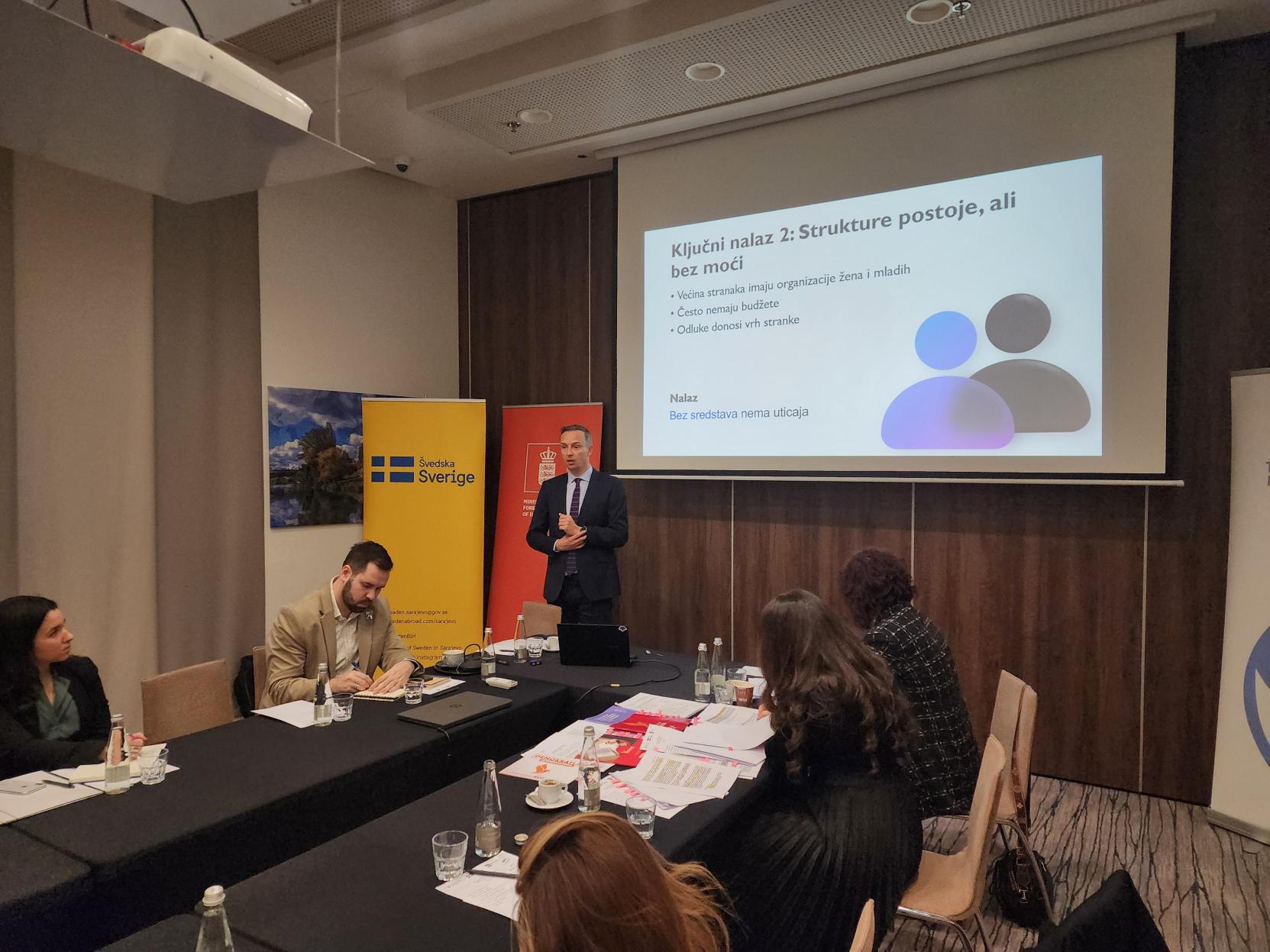
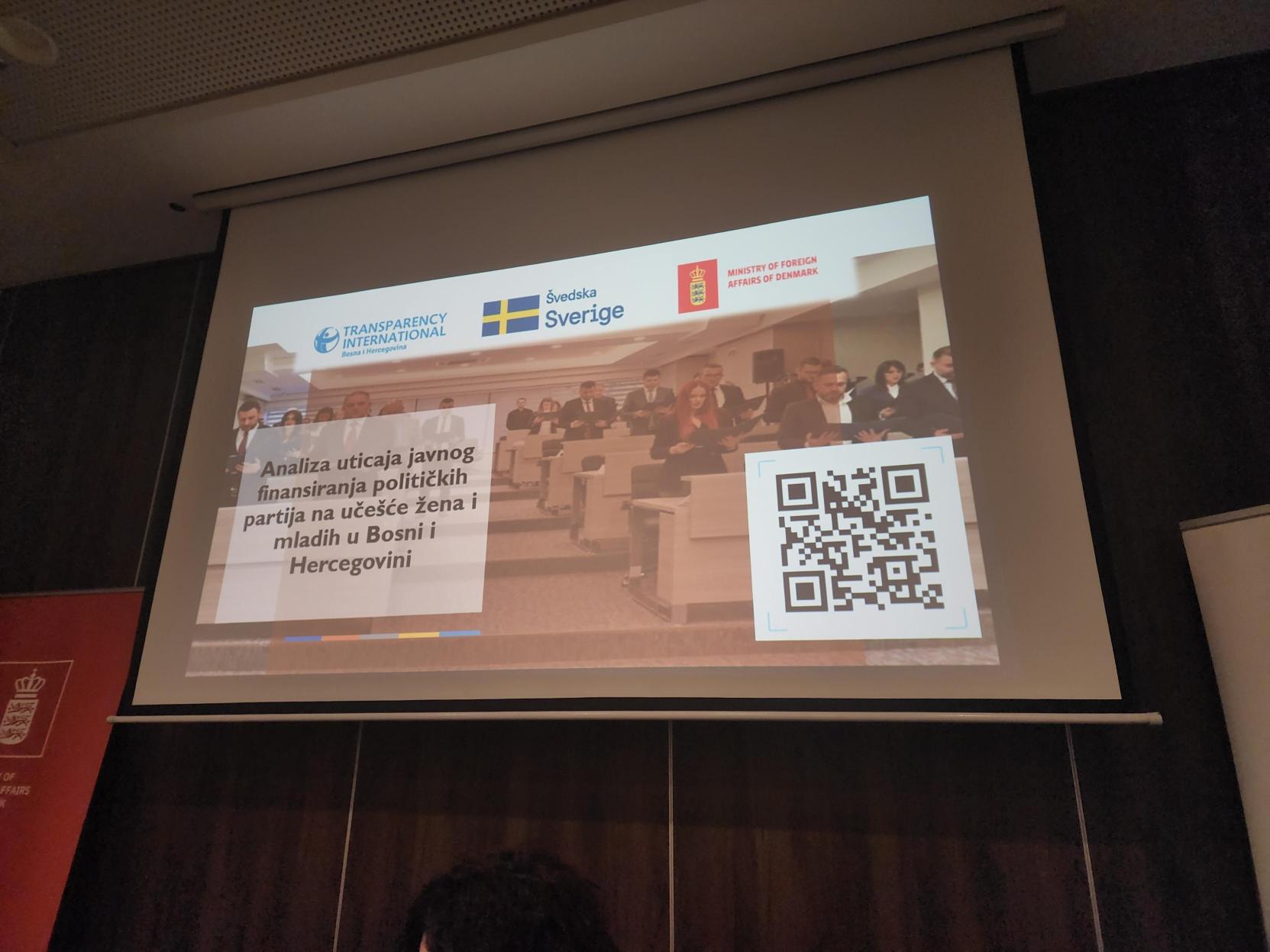
Sarajevo, 17 February 2026. 2025 – Political parties in Bosnia and Herzegovina have had tens of millions of marks in public funds at their disposal for years, yet this money does not contribute to increasing the participation of women and youth in politics, nor is it used transparently and for its intended purpose, according to an analysis by Transparency International in BiH presented today in Sarajevo. Although political parties decide who enters politics and who shapes public policies, the current financing system does not ensure that public funds lead to greater equality, democratization, and inclusion of underrepresented groups.

The study shows that women’s participation in most institutions remains below 30%, even though the law stipulates that their representation must not fall below 40%. Even more concerning is the fact that there are no systematic data on youth participation whatsoever, nor any standards that would guarantee their representation. At the same time, over 70% of political party revenues come from the budget, confirming that public funds represent a key mechanism for the potential transformation of party politics, but this potential has not been utilized.

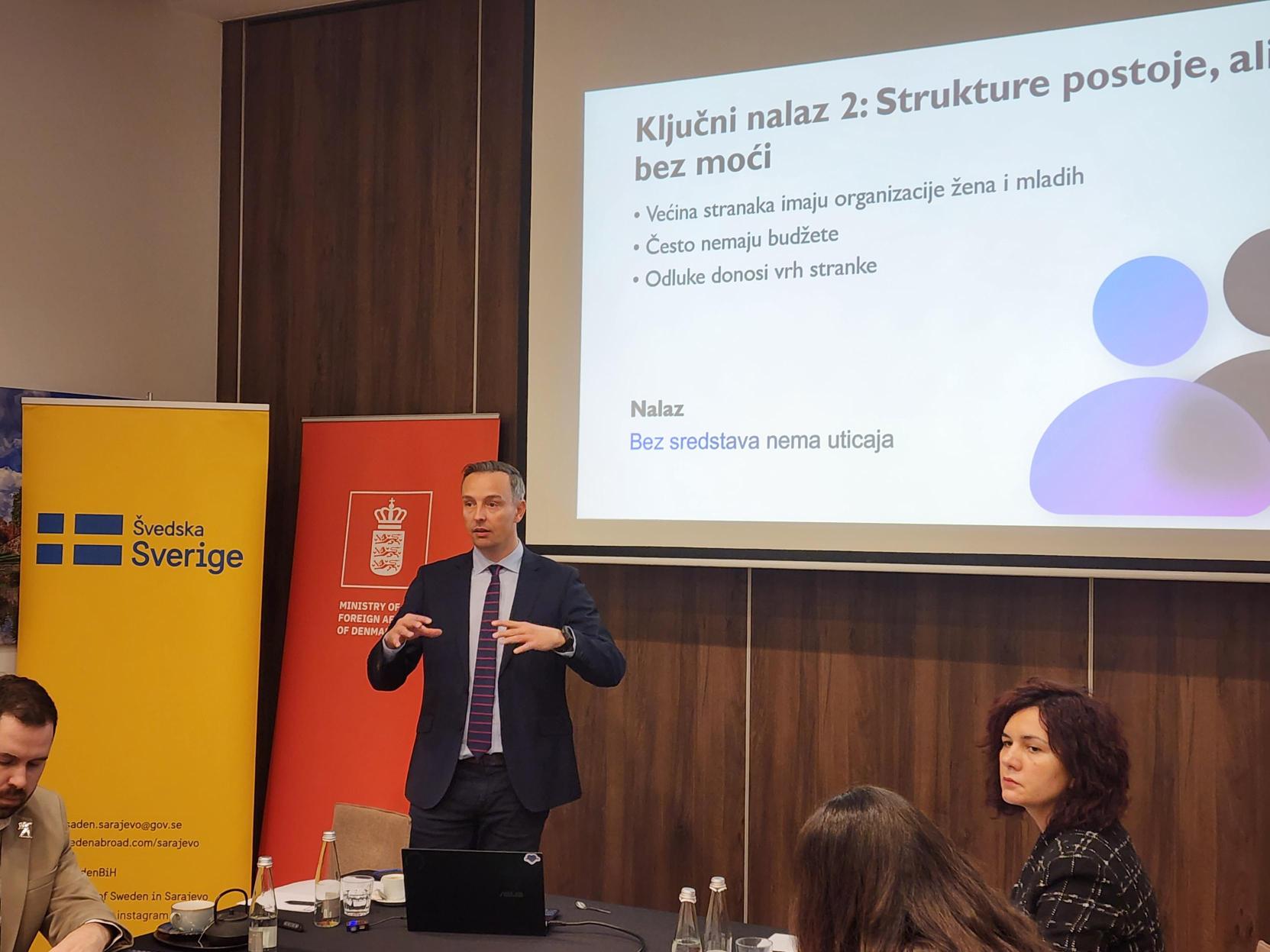
Although public financing exists at all levels of government, there are no clear conditions on how these funds are spent. Additional financing exists for the underrepresented gender, but it has no effect because parties are not required to use these funds for activities that would improve the position of women. Incentive systems do not influence party behavior, and youth are not covered by financial criteria at all. Women’s and youth party organizations exist, but without their own budgets and without real power, while all key decisions remain in the hands of party leadership, leaving other categories without real influence on both the composition of candidate lists and decision-making processes.

An additional problem is the complete lack of transparency—there are no data on how funds are used, no standardized reporting, and oversight mechanisms are extremely weak. Without oversight there is no accountability, which leaves wide room for abuse and prevents the public from knowing whether parties are using funds in accordance with the public interest.

Comparative examples show that other countries use public financing as a tool for change—increasing funds for parties with more women, reducing financing for those that do not respect equality, or introducing mandatory allocation of funds for women and youth. Solutions are therefore known and proven.

Speaking about the study’s findings, the author of the analysis and TI BiH associate Adnan Kadribašić emphasized the significance of the results:

“This study is the first in Bosnia and Herzegovina to clearly show how public money is used in political parties and what this means for gender equality and youth participation. We have shown that more than 70% of financing comes from the budget, but without clear rules and oversight, this money does not lead to greater representation or real change. This is a matter of public interest, because citizens finance political parties. If we are already allocating public funds, we must know what we are getting in return.”

Event participants emphasized that public financing has the potential to be a driver of transformation in political relations, but only if it is linked to results, transparency is introduced, oversight mechanisms are strengthened, and mandatory funds are secured for the work of women’s and youth organizations within parties. Without this, political party financing remains financing of the status quo, not a tool for democratization.

Transparency International in BiH has called on competent institutions to urgently harmonize the legislative framework, introduce clear rules, and establish control mechanisms that will ensure that funds coming from public budgets truly contribute to a more equal and inclusive political system, rather than reproducing existing inequalities.

TI BiH will continue to advocate for reform processes that enable political parties, as key bearers of the democratic order, to become more accountable, transparent, and open to all citizens.

Press rls_17_02_2026
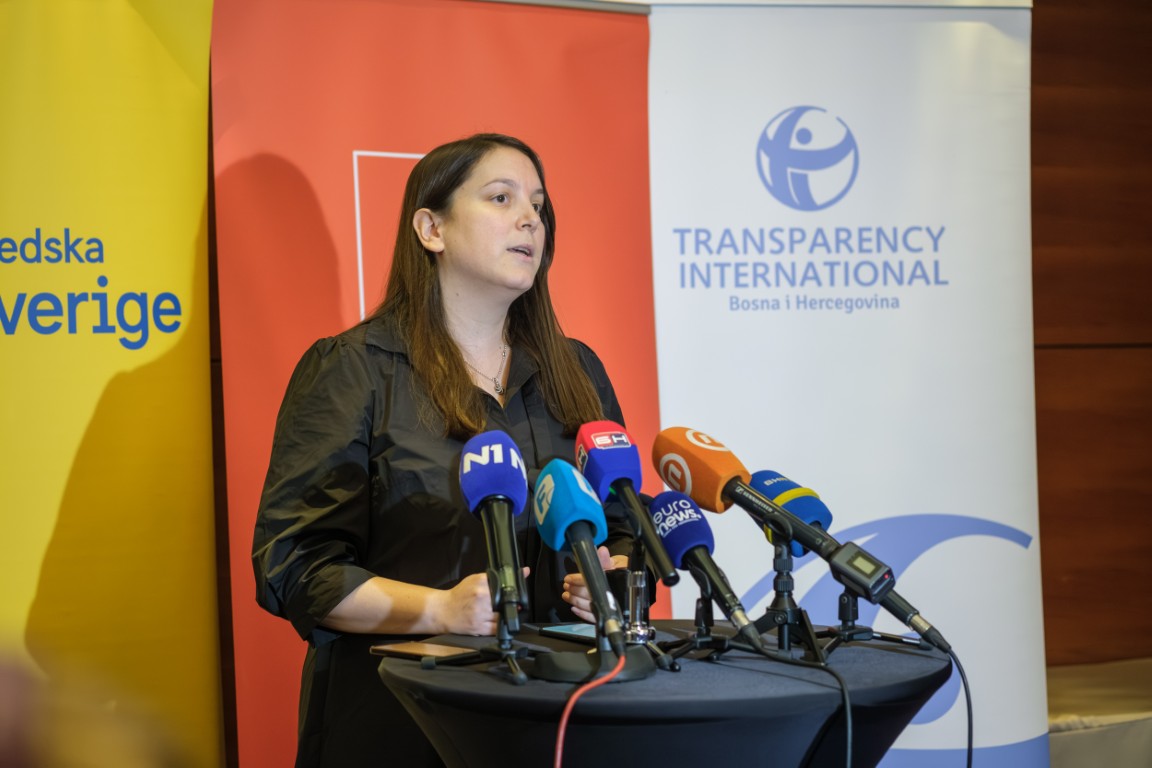
TI-BIH – Analysis of the Impact of Public Financing of Political Parties on the Participation of Women and Youth in Bosnia and Herzegovina


BiH among the four worst-positioned countries in Europe regarding corruption status

Sarajevo, 10. February 2026. year – According to the Corruption Perceptions Index (CPI), Bosnia and Herzegovina is among the four worst-positioned countries in Europe with a...

Izvještaji za Mediae

BiH among the four worst-positioned countries in Europe regarding corruption status

Sarajevo, 10. February 2026. year – According to the Corruption Perceptions Index (CPI), Bosnia and Herzegovina is among the four worst-positioned countries in Europe with a score of 34 out of a possible 100 and ranks 109th globally, sharing this position with Algeria, Nepal, and Indonesia. A minor change of one point higher compared to last year does not alter the picture of multi-year stagnation, as BiH remains at the bottom of Europe where only Russia, Belarus, and Serbia have worse results, with Serbia experiencing a significant decline in recent years due to the consequences of corruption on human lives and the suppression of civil liberties.

The focus of this year’s CPI research was precisely on the consequences that the erosion of democracy has on the state of corruption in a country, as countries with established democratic institutions, free media, and other mechanisms for overseeing government work more effectively combat corruption. In this regard, nothing has changed in BiH compared to previous years, as we are positioned between countries assessed as failed democracies and states bearing the label of dictatorial regimes according to the corruption status measured by CPI. This was particularly influenced by a series of laws in Republika Srpska that during the past year aimed at suppressing freedom of speech and association as well as undermining the legal order.

The global report published alongside the CPI results also focused on transparency in electoral campaign financing, which is of vital importance for protecting the electoral process from corruption. In our context, it is important to note that TI BiH research shows complete darkness prevails in this area, where parties in their latest reports concealed at least 2.6 million KM in campaign costs. In a country where the illusion of democracy prevails, authorities experiencing a legitimacy crisis increasingly seek to control the electoral process, which has been proven through the discovery of massive electoral fraud.

The regional report by Transparency International states that BiH’s progress in combating corruption is hindered by unsuccessful efforts to eliminate political influence on judicial appointments and to effectively regulate the independence and accountability of judges and prosecutors. TI BiH has already pointed to the farce currently accompanying the process of adopting the law on the High Judicial and Prosecutorial Council, where key decision-makers seek to retain mechanisms that enable political control over the judiciary.

Such BiH judiciary in a country at the bottom regarding corruption status continues to have devastating results in prosecuting corruption-related criminal offenses. In such a situation, numerous corruption scandals that marked the past year, such as the Viaduct or Pretis affairs, have not received judicial resolution.

Another critical area that remains problematic is preventing conflicts of interest among public officials, where under the new law at the state level, no sanctions have been imposed, in Republika Srpska conflict of interest has been practically legalized through arbitrary interpretations, and at the FBiH level the law has not been applied for more than 13 years. Therefore, TI BiH recently initiated, with the support of 13 parliamentarians, the adoption of a new conflict of interest law in FBiH, and the parliamentary vote could clearly show which political actors are obstructing key reforms, which is why BiH has been at the bottom of Europe for years.

With this level of corruption, BiH cannot make any steps in European integration, and the government has promised to fulfill most reforms necessary for combating corruption through the reform agenda. However, we continue to see obvious obstructions of reform processes, especially from key actors in power who are experiencing a legitimacy crisis and seek to retain levers of power by resisting democratic processes, through reshaping citizens’ electoral will and placing under political control what remains of independent institutions in this country.

Therefore, TI BiH appeals to all political actors, as well as to the EU and the international community, to provide support for the fight against corruption, as otherwise only further steps toward institutional collapse and suppression of human rights and civil liberties can be expected.

Press rls_10_02_2026

More

TI BiH: Systemic corruption prevents development of renewable energy sector

Sarajevo, February 5, 2026. year – “Systemic corruption and non-transparent occupation of grid capacities by privileged investors have directly pushed numerous citizens...

Izvještaji za Mediae

TI BiH: Systemic corruption prevents development of renewable energy sector

Sarajevo, February 5, 2026. year – “Systemic corruption and non-transparent occupation of grid capacities by privileged investors have directly pushed numerous citizens out of the energy transition and prevented investments in electricity production from renewable energy sources” is the key message from the conference dedicated to corruption prevention in this field, organized today in Sarajevo by Transparency International in BiH.

The analysis presented by TI BiH showed that in recent years, numerous privileged investors have occupied available dynamic quotas, negotiated high purchase prices, and received incentives from funds collected from citizens through electricity bills. The extent to which the struggle for quotas has paid off is demonstrated by the fact that privileged investors who entered the system earlier receive almost six times higher incentives for the same amount of electricity produced than other producers. In the Federation of BiH, only one producer receives about 20% of the total incentives paid annually, and large investors in this field have largely reserved capacities and pushed out small producers.

Corruption risks in this field have now shifted to the grid connection process, where non-transparent capacity reservation for fictitious projects and lack of state planning create new “bottlenecks” that block fair competition and market access. The problem of fictitious projects that “reserve” grid capacities for years by those with privileged information is particularly emphasized, which directly blocks serious investments and threatens the stability of the entire system.

Furthermore, the new entity laws regulating electricity production from renewable sources have not fully resolved the problem of artificial project fragmentation, where large solar parks are divided on paper into numerous small power plants to avoid concluding concession agreements and entering a more favorable incentive system.

To stop this degradation of the sector, conference participants emphasized that the solution lies in urgently introducing aggregation rules into entity laws on renewable energy sources, whereby all connected projects would be treated as one unified facility. This would force investors to assume concession obligations and pay a realistic price for resource use.

Finally, complete digitalization of the process and publication of transparent waiting lists and grid capacities are possible ways to prevent corruption in this field that can protect public interest, bring direct benefits to a greater number of citizens, and enable BiH to achieve strategic goals of increasing electricity production from renewable energy sources.


Press rls_5_02_2026

At the initiative of TI BiH, a new Law on Conflict of Interest of FBiH has been submitted to the procedure

Sarajevo, 28 January 2026. years – For almost 13 years, there has been no body in the Federation of BiH that determines conflicts of interest, and numerous officials who...

Izvještaji za Mediae

At the initiative of TI BiH, a new Law on Conflict of Interest of FBiH has been submitted to the procedure

Sarajevo, 28 January 2026. years – For almost 13 years, there has been no body in the Federation of BiH that determines conflicts of interest, and numerous officials who perform multiple functions while their private companies freely obtain state contracts exploit this legal chaos. As the resolution of this issue has been obstructed for years, Transparency International in BiH (TI BiH), with the support of 13 representatives, launched an initiative and submitted to the procedure a proposal for a new Law on Prevention of Conflict of Interest in Government Bodies in FBiH. The TI BiH initiative was supported by representatives from Our Party, SDA, NIP, DF, SBiH, HRS, and one independent representative. The goal of the proposal submitted to the House of Representatives of the FBiH Parliament is to establish an independent body that will determine and sanction conflicts of interest, verify asset declarations, and define clear rules regarding incompatible functions and restrictions relating to the private interests of officials.

Data from the Public Functions Registry established by TI BiH shows that 265 officials in FBiH currently hold additional functions in public institutions and enterprises. A large number of them thereby violate the still valid federal law, but there is no one to determine the conflict of interest because with the adoption of the new Law at the BiH level in 2013, this jurisdiction was taken away from the CEC. Since the new law in FBiH was never adopted, this opened enormous space for making decisions in private or party interests, including favoritism in employment, budget allocation, and public procurement. It is interesting to mention that data from TI BiH’s Integrity Watch platform shows that 20% of elected public office holders reported ownership in companies that received tenders in 2024.

TI BiH notes that the proposal submitted to the procedure is not a new text but a solution that has been prepared for many years and represents an important mechanism in the fight against corruption as well as part of reforms on the European path. The previous FBiH Government adopted the draft law in 2022, after years of preparation and consultations with relevant institutions, civil society, and international partners. The draft was then submitted to parliamentary procedure, but after the formation of the new FBiH Government in 2023, it was withdrawn “for revision.” Almost three years later, the FBiH Ministry of Justice continues to obstruct the adoption of the new Law, which it has never returned to procedure, nor are there clear indications that this will happen by the end of this mandate.

After multiple urgencies that TI BiH sent to the FBiH Government and Parliament, and general responses from institutions without clear deadlines for when the draft would be returned to procedure, TI BiH organized consultations with representatives and proposed that they use their procedural right and become proposers of the identical text that was previously withdrawn. TI BiH called on all representatives of the House of Representatives to join the initiative, with the goal that the law be the result of cross-party support. After collecting signatures, the draft law was submitted to the FBiH Parliament protocol on January 20. TI BiH calls on representatives to support and adopt this law as a clear message to citizens that public interest is above the interests of individuals and political parties. It is particularly important that the law be adopted in this mandate, considering that 2026 is an election year and that space for reform steps is rapidly narrowing.

PressRls 28.01.2026.

Politics and Private Business: Nearly 20% of Companies Owned by Elected Officials Do Business with the State

Banja Luka, 30. December 2025. year – Institutions at all levels of government in Bosnia and Herzegovina have awarded over 27,000 public procurement contracts to companies that...

Izvještaji za Mediae

Politics and Private Business: Nearly 20% of Companies Owned by Elected Officials Do Business with the State

Banja Luka, 30. December 2025. year – Institutions at all levels of government in Bosnia and Herzegovina have awarded over 27,000 public procurement contracts to companies that supported political parties with donations in some election cycles from 2018 to the present. The total value of these tenders exceeds one billion convertible marks, most commonly awarded in areas such as alarm system monitoring services, security services, restaurant and catering services, and the organization of educational seminars.

Cross-referencing the asset declarations of politicians submitted to the Central Election Commission and public procurement data shows that 19.8% of elected officials, who declare ownership of private companies in their asset declarations, have conducted business with the state through awarded tenders. This percentage is 36.4% for officials elected in 2022, indicating a systemic conflict of interest problem that deepens during their term. The data available on the “Integrity Watch BiH” platform illustrate the high degree of connection between political parties, their donors, and the institutions managing the distribution of public funds.

One example of a contract that clearly illustrates this practice is the case of the Minister for Human Rights and Refugees of BiH, Sevlid Hurtić, against whom Transparency International in BiH (TIBiH) filed a complaint for conflict of interest because his private company received multimillion-dollar contracts from budget-funded institutions. The Commission for Deciding on Conflicts of Interest determined only two years after the complaint that Minister Hurtić was in a conflict of interest and imposed a sanction, although in the meantime, his company continued to indirectly participate in public procurements through other legal entities.

An analysis of over 930,000 public procurement procedures in recent years conducted by TI BiH shows that companies owned by some elected officials in BiH received 2,450 contracts, while more than two-thirds or 76.9% of all tenders were awarded through direct agreements with suppliers, without the possibility of competition and participation from competitors.

Political parties record the most donations precisely in election years, while companies that received tenders account for about 10% of total donations to parties. This is only a small portion of the funds that parties report, given that previous research by TI BiH has shown that parties largely do not report donations.

What is particularly important to emphasize is that the data on ownership of business entities by politicians are limited to elected officials who submitted asset data to the Central Election Commission and do not include appointed individuals and all companies over which politicians have beneficial ownership, transferring ownership to third parties.

These phenomena are monitored by the “Integrity Watch BiH” platform, which provides a visual and analytical overview of public procurement procedures, searches for donations to political parties, and insight into the asset declarations of elected officials, all of which provide an overview of the mechanisms through which public resources are put at the service of private and party interests.

These findings are just another of many pieces of evidence that in BiH, as an example of a state whose institutions are captured, business success depends solely on connections with political parties and their leaders, who enable their donors – clients – unrestricted access to contracts through the public procurement system.

TI BiH calls on the media, researchers, and citizens to use Integrity Watch BiH as a tool that, by connecting three different data sources: reports from the Public Procurement Agency of BiH, financial reports of political parties, and asset declarations of elected officials, enables the detection of corrupt patterns and connections that have been capturing institutions and undermining the budget of BiH for decades.

Panel Discussion: 30 Years After Dayton – How to Build a Society Without Captured Institutions

Banja Luka, December 10, 2025 – On the occasion of marking 30 years since the signing of the Dayton Peace Agreement and 25 years of Transparency International in BiH (TI BiH), a...

Izvještaji za Mediae

Panel Discussion: 30 Years After Dayton – How to Build a Society Without Captured Institutions

Banja Luka, December 10, 2025 – On the occasion of marking 30 years since the signing of the Dayton Peace Agreement and 25 years of Transparency International in BiH (TI BiH), a panel discussion titled “30 Years After Dayton – How to Build a Society Without Captured Institutions” will be held on December 11, 2025, in Sarajevo at the Art Gallery of Bosnia and Herzegovina (Zelenih beretki no. 8), starting at 2:00 PM.

At the event, TI BiH’s analysis “BiH 30 Years After Dayton – Building a Captured State” will be presented, providing an overview of key political, institutional, and anti-corruption trends in post-Dayton BiH, reflecting on TI BiH’s activities during this period and possible scenarios for the coming decades.

The panel discussion will bring together prominent political, academic, and social figures who will speak from various perspectives on how to overcome systemic obstacles of state capture and create conditions for a genuine fight against corruption.

Media statements are scheduled for 1:45 PM.

Media Announcement_10_12_2025


Agenda Below


Panel Discussion:

“30 Years After Dayton – How to Build a Society Without Captured Institutions”

Art Gallery of Bosnia and Herzegovina

Zelenih beretki no. 8

December 11, 2025 years

Agenda:

1:30 PM – 2:00 PM – Participant Registration

1:45 PM – 2:00 PM – Media Statements

2:00 PM – 2:15 PMOpening Remarks

  • Brigitta Jansson, Head of Cooperation (SIDA), Embassy of Sweden in BiH
  • Boris Divjak, Chairman of the Board, TI BiH

2:15 PM – 2:45 PM – Presentation of the Analysis: “BiH 30 Years After Dayton – Building a Captured State”

Srđan Blagovčanin, Transparency International in BiH

2:45 PM – 4:00 PMPanel Discussion: 30 Years After Dayton – How to Build a Society Without Captured Institutions

  • Mladen Ivanić, Former Member of the Presidency of BiH
  • Vildana Selimbegović, Editor-in-Chief of Oslobođenje
  • Dragan Markovina, Historian and Publicist
  • Nerzuk Ćurak, Professor, Faculty of Political Sciences Sarajevo
  • Boris Divjak, Chairman of the Board, TI BiH

Moderator: Ivana Korajlić, Executive Director, TI BiH

4:00 PM – Reception


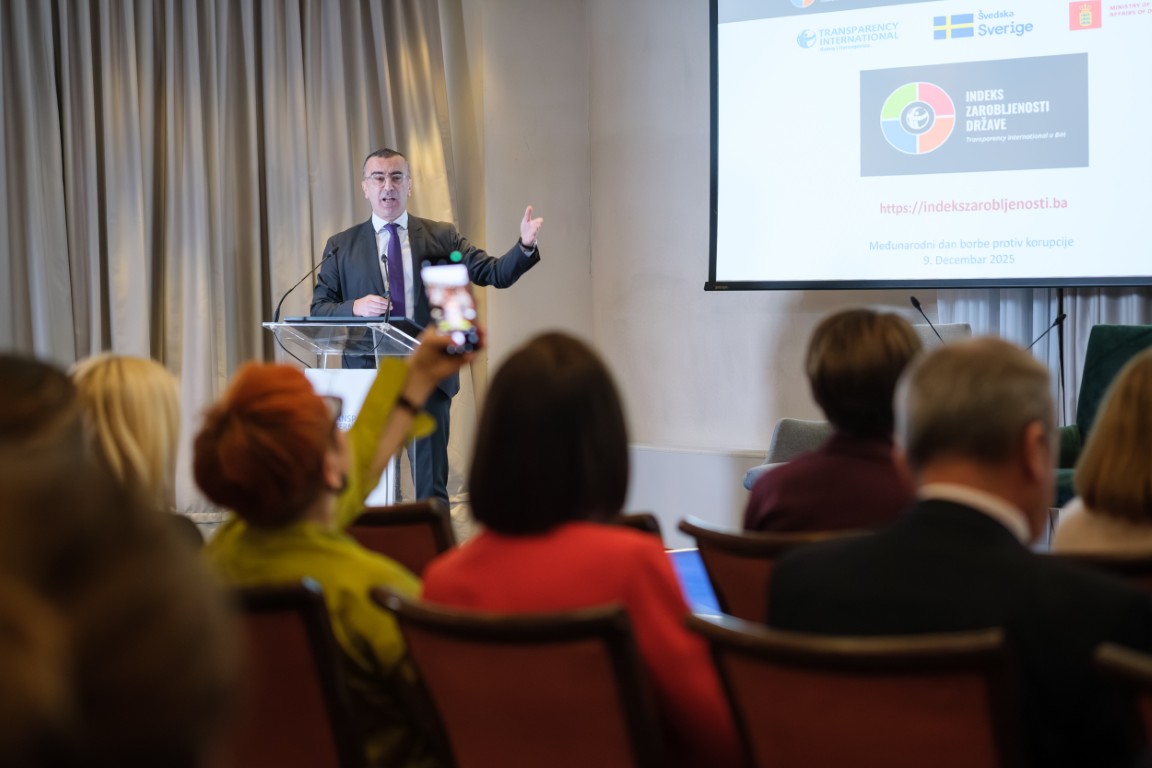
Level Of State Capture Of BiH: TI BiH Presents The “State Capture Index”, Parties Have Created A Parallel Universe

Sarajevo, December 9th 2025 – Bosnia and Herzegovina can be rated 2 out of a possible 5 on the State Capture Index – meaning that the power of political parties over...

Izvještaji za Mediae

Level Of State Capture Of BiH: TI BiH Presents The “State Capture Index”, Parties Have Created A Parallel Universe

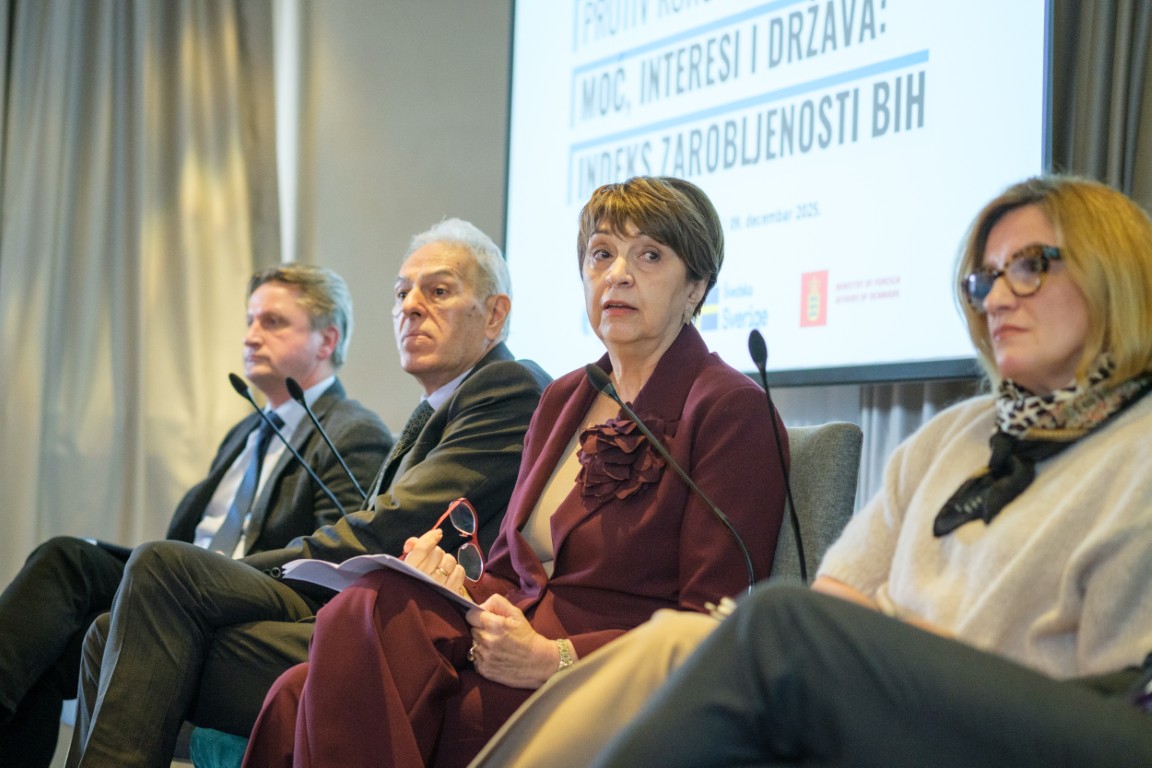
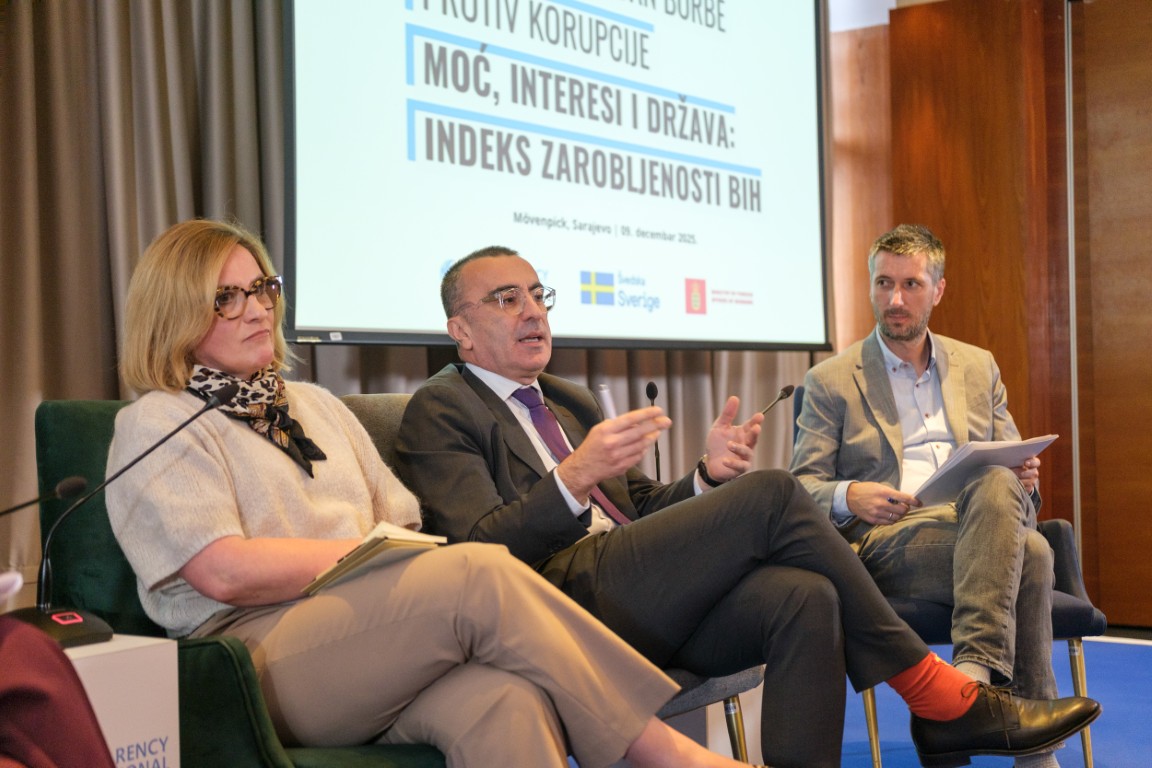
Sarajevo, December 9th 2025 – Bosnia and Herzegovina can be rated 2 out of a possible 5 on the State Capture Index – meaning that the power of political parties over institutions and public resources suppresses citizens’ interests and hinders the proper functioning of the state.

The State Capture Index, presented by Transparency International in BiH (TIBiH) on the occasion of International Anti-Corruption Day, measures key areas such as democratic processes (score 2), decision-making (2.5), accountability (2.5) and the distribution of resources (1.5 – the worst score). It points to serious systemic weaknesses, particularly the dominance of the executive over the legislative branch, which is supposed to oversee the work of the government. This conclusion is also found in the European Commission’s report on BiH, noting that “political authorities have failed to address widespread corruption and have actively hindered progress, leading to prolonged stagnation and increasingly evident signs of state capture.”

The analysis that underpins the Index shows that parties maintain their power by controlling resources and access to employment, keeping institutions under their influence, resulting in the absence of accountability and a weakening democracy. This is further reinforced by the lack of electoral integrity, leaving citizens unsure whether their vote truly counts and reflects their will, while efforts to establish any form of accountability system are systematically undermined. Such a situation allows political parties, through public procurement, concessions and employment in the public sector, to use public resources for the benefit of party networks rather than citizens. In addition, influence over accountability mechanisms—particularly oversight institutions, law-enforcement bodies and the judiciary—leads to selective enforcement of the law, while impunity remains widespread in BiH.

Moreover, the research finds that the media and civil society, although formally recognised as oversight actors in a democratic society, operate in a restricted environment, without real possibilities to fulfil their role in protecting the public interest and creating pressure for more accountable governance.

“We can describe the phenomenon of state capture as a parallel universe that is informal and operates alongside the official, institutional one. In that universe, parties dictate employment, manage state-owned companies and decide on tenders and concessions — in short, they divide resources. In this way, loyalty is rewarded and the system of state capture is maintained,” said Srđan Blagovčanin, lead author of the research and a member of TI BiH.

Blagovčanin stressed that the way out of this situation must follow two key directions: “We need to limit the power of political parties through their democratization, but also reduce the ‘spoils’ they control — by rationalizing the public sector, which is the source of their power,” he added, emphasising that political leaders cannot be expected to give up control over public resources voluntarily, which is why change must come from outside their control — from citizens, the private sector and civil society.

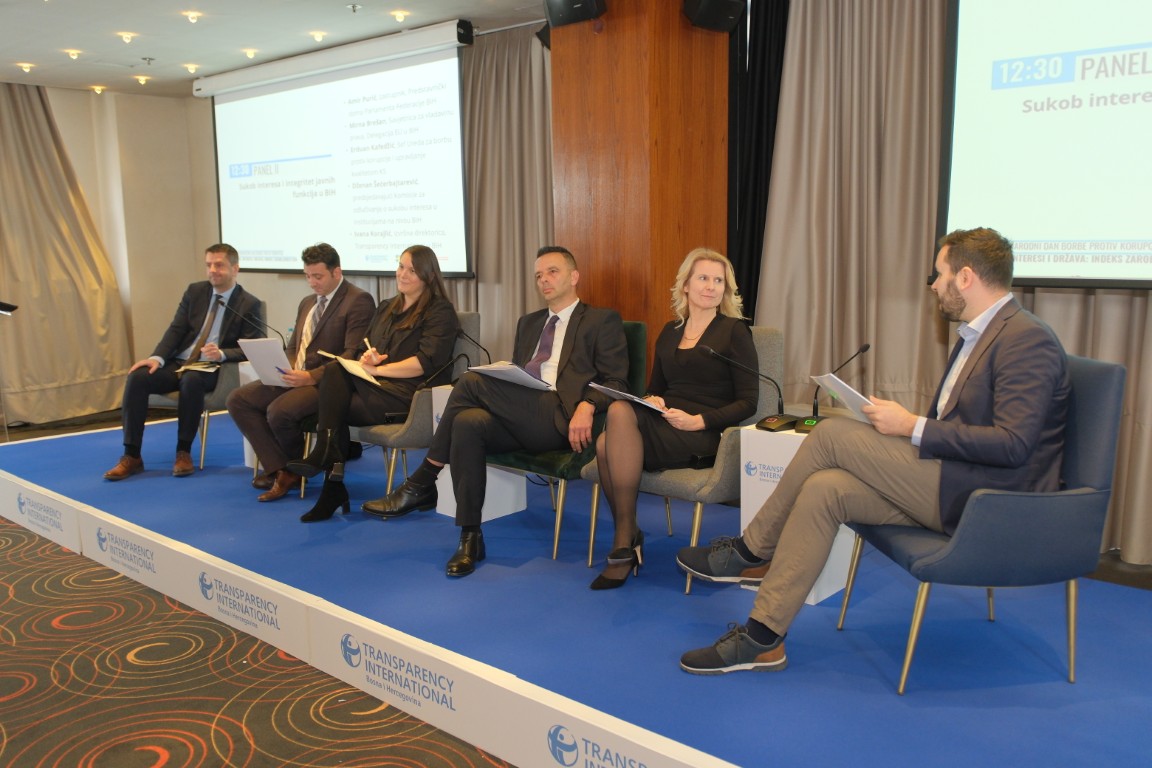
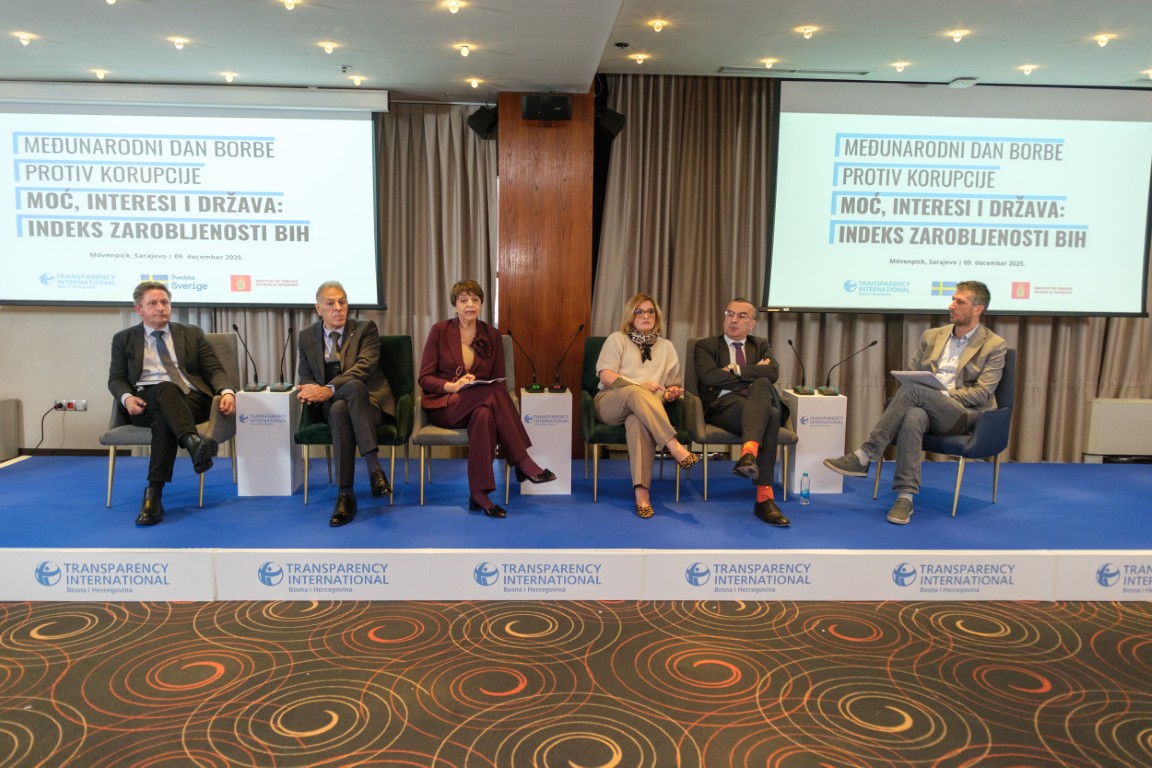
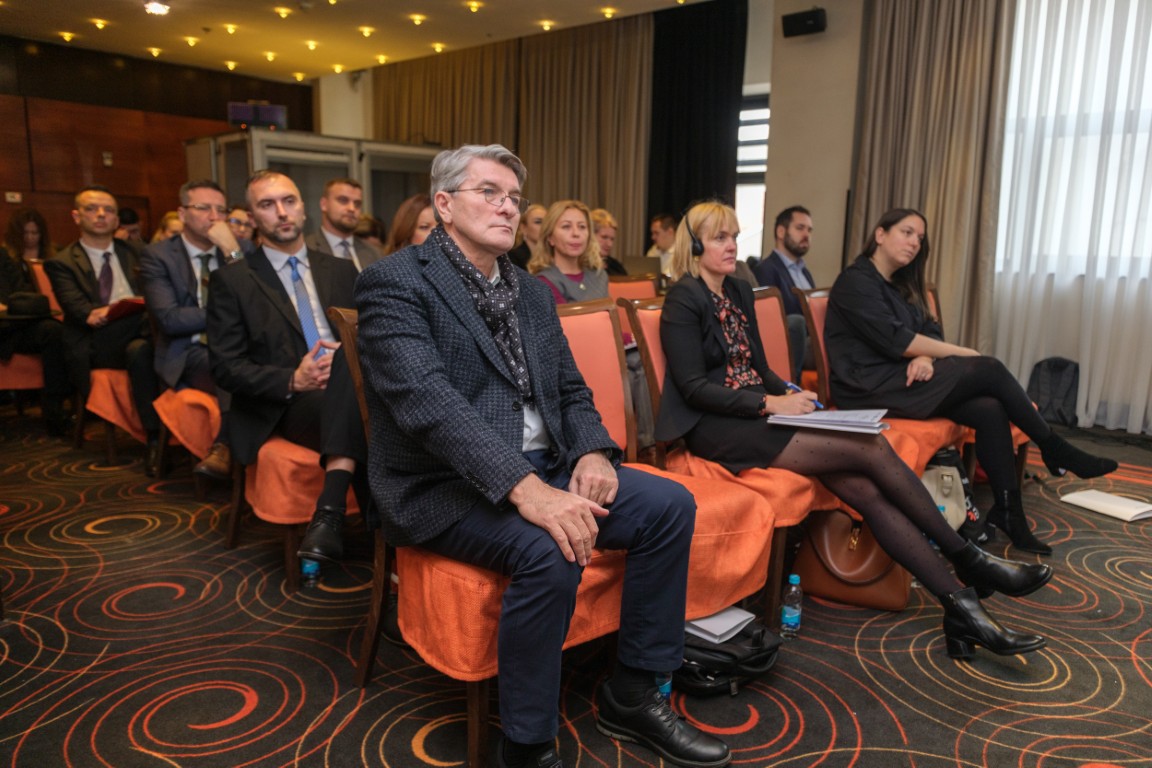
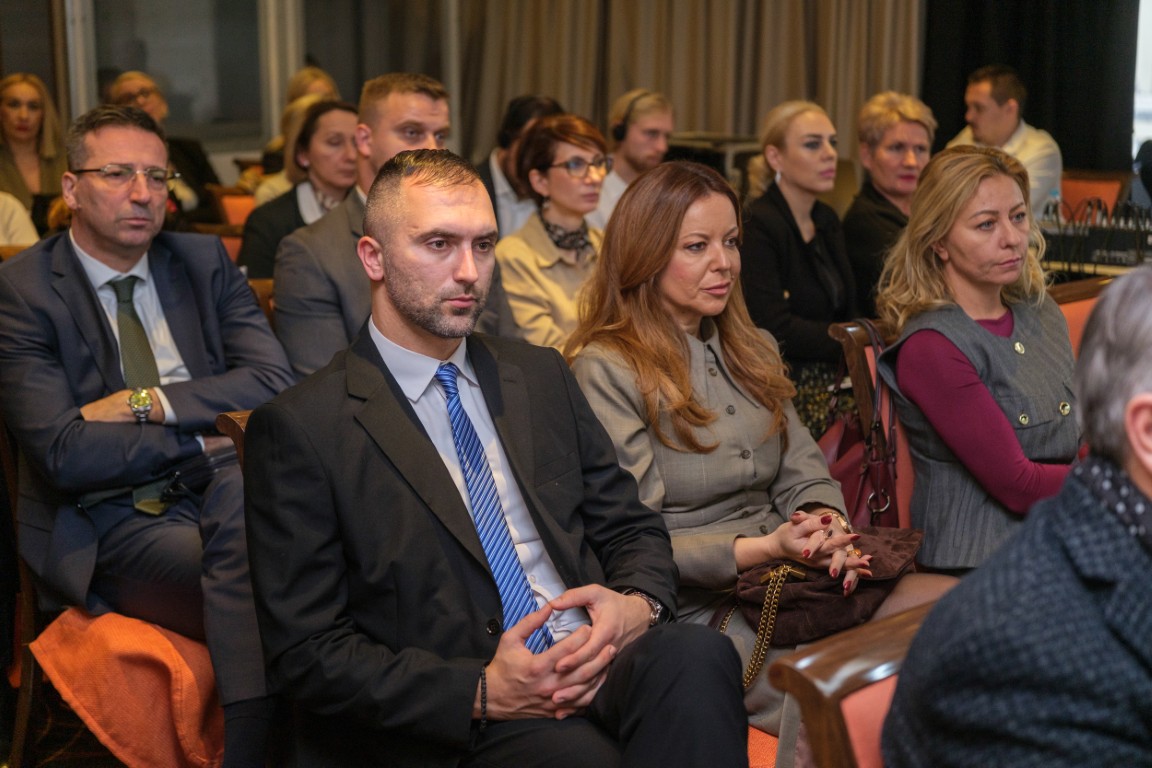
Because of these findings, part of the discussion at the conference “Power, Interests and the State: BiH State Capture Index”, organised with the support of Sweden and Denmark to mark 9 December, International Anti-Corruption Day, focused on establishing an effective system for preventing conflict of interest. On this occasion, an initiative and proposals were presented for a new Conflict of Interest Law at the Federation of BiH level, which has not been applied since 2013 and has been pending adoption for years. The proposals focus on establishing an independent body to enforce the law, creating a unified system for verifying asset declarations, and preventing private interests from influencing decision-making by public officials.

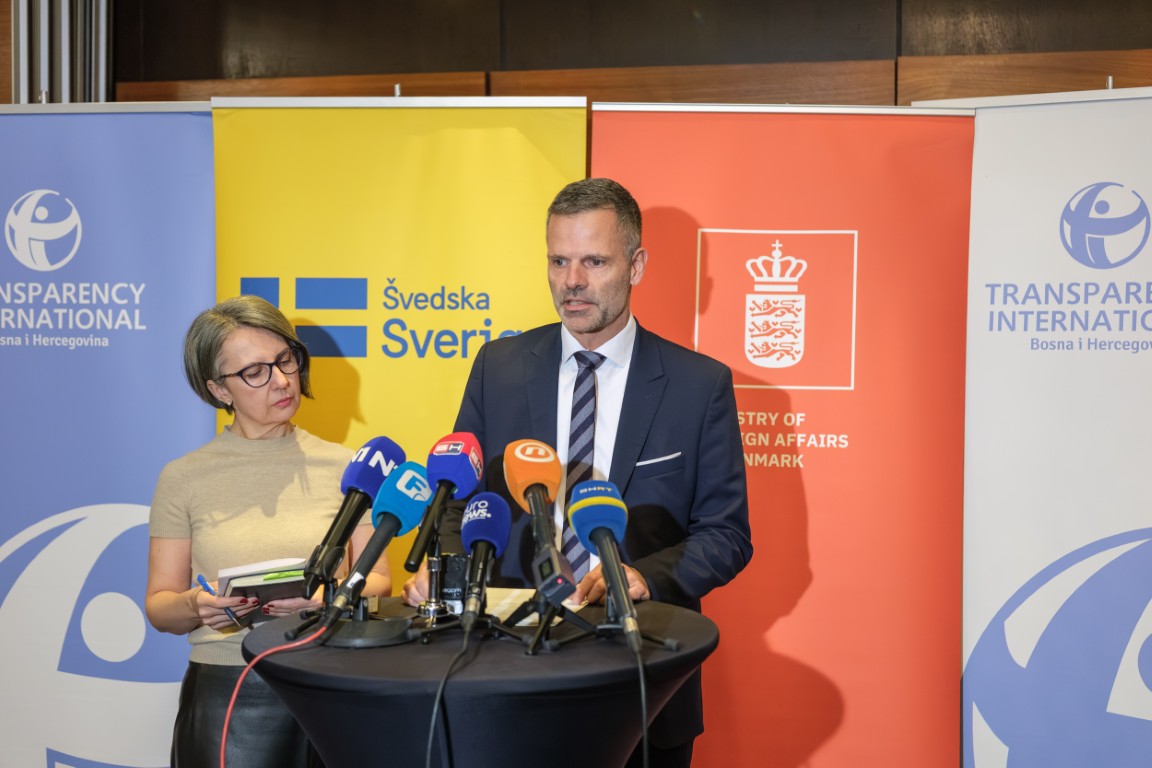
“The lack of transparency that lies at the heart of this problem threatens to undermine our efforts altogether, with dire consequences for citizens. Strengthening transparency, and rooting out corruption, is essential to realise Bosnia and Herzegovina’s progress towards EU integration.” said H.E. Åge Sandal Møller, Ambassador of Denmark to Bosnia and Herzegovina, which together with Sweden supported the conference and the research itself.

Sara Lindegren, Deputy Ambassador of Sweden to Bosnia and Herzegovina, noted in her address that “Corruption remains one of the greatest threats to the progress of Bosnia and Herzegovina. The recent European Commission country report sends a serious warning: corruption is growing, and institutions are increasingly exposed to political influence,” adding that signs of state capture and a lack of progress in key areas, from the judiciary to public administration and electoral integrity, demand urgent action.

Press rls_9_12_2025

Despite the court ruling, the Ministry of Justice of BiH continues to refuse to deliver the draft Law on the Court of BiH.

Sarajevo, 1. December 2025. years – The Ministry of Justice of Bosnia and Herzegovina refused to publish the Draft Law on the Court of BiH even after a court ruling in favor of...

Izvještaji za Mediae

Despite the court ruling, the Ministry of Justice of BiH continues to refuse to deliver the draft Law on the Court of BiH.

Sarajevo, 1. December 2025. years – The Ministry of Justice of Bosnia and Herzegovina refused to publish the Draft Law on the Court of BiH even after a court ruling in favor of Transparency International in BiH (TI BiH). The draft of this law, which has been in the making for several years, was requested as early as March last year, after transitioning from the version of the Law on Courts of BiH to the Law on the Court of BiH, which has repeatedly been on the agenda of the Council of Ministers without informing the public about its content. Although the ruling of the Court of BiH indicates that one of the most important laws to be adopted in the process of European integration should have been published, the Ministry of Justice decided to ignore the ruling, explaining that the draft law is an “internal text.” Furthermore, at tomorrow’s session of the Council of Ministers, this law will be reconsidered, but now the amendments to the Law on the Court of BiH are in question, not the draft of a new law, and the public is once again deprived of information about the content of the proposed amendments.

At the end of October, the Court of BiH issued a ruling on the lawsuit by TI BiH, which clearly states that there is undoubtedly public interest in this case and that “in democratic societies, the procedures for adopting general legal acts are generally public so that the public, through its criticisms, can influence the drafting of future laws, which the legislator or proposer may or may not accept.”

Given that this law is being adopted in the process of European integration and represents one of the conditions that BiH must fulfill to hold the first intergovernmental conference, it should be emphasized that the Court of BiH’s ruling clearly highlights the need to protect the European Convention on Human Rights. The Court believes that the Ministry did not conduct a public interest test to justify the non-disclosure of the requested information. Nevertheless, despite the clear instructions from the court, the Ministry of Justice of BiH again refused access to the draft law, arguing that providing the draft would seriously undermine the completion of its harmonization and prevent the quality and coordinated preparation of the draft.

“In this way, incorrect interpretations of the draft’s content could be triggered, as well as unfounded public debates on solutions that are not final, creating pressure on the institutions involved in the harmonization process… Furthermore, providing the draft law at this stage could negatively impact the freedom of expression and exchange of opinions among the entities involved in its creation, as their proposals could be exposed to external pressure and interpretations,” states the Ministry’s decision.

TI BiH reminds that in this case, the draft law was not published on the eConsultations portal, the regulation could not be commented on, and there were only speculations regarding its content, which is why the Ministry was requested to provide the draft that was, at that time and in the subsequent period, several times placed and then removed from the agenda of the Council of Ministers.

We also note that the public in BiH has long witnessed non-transparent processes in the adoption of the most important laws on the European path. The latest example is the adoption of the Draft Law on the HJPC, which was on the agenda of the Council of Ministers’ session tomorrow before the consultations were completed. This example, as well as the mere concealment of the Draft Law on the Court of BiH, is a clear indicator that the public is systematically excluded in the adoption of the most important laws. TI BiH has previously proposed and initiated initiatives to introduce the obligation to publish materials for the sessions of the Council of Ministers, especially when it comes to laws directly related to the process of European integration, where transparency of all decision-making stages should exist—from working groups for law preparation, public consultations, reports on the content of public consultations, to the publication of the drafts themselves before their adoption.

Press-rls_01.12.2025.

Farce and Procedural Manipulation: Draft Law on HJPC Sent to Council of Ministers Despite Ongoing Consultations

Sarajevo, 28 November 2025 – The Draft Law on the High Judicial and Prosecutorial Council (HJPC), which has been sent for public consultation, does not represent a step forward...

Izvještaji za Mediae

Farce and Procedural Manipulation: Draft Law on HJPC Sent to Council of Ministers Despite Ongoing Consultations

Sarajevo, 28 November 2025 – The Draft Law on the High Judicial and Prosecutorial Council (HJPC), which has been sent for public consultation, does not represent a step forward but rather a risk of further undermining the independence of the judiciary. Moreover, the Draft Law was placed on the agenda of the Council of Ministers even before the consultations were concluded, indicating procedural manipulation and that public consultations are merely a farce.

Regarding the content of the Draft, or the version currently under public consultation, instead of addressing previously identified issues, the draft further entrenches them by, among other things, solidifying ethnic quotas in the Council’s membership, which become a permanent rule. Additionally, it retains the principle of pre-determined distribution of positions based on ethnic affiliation and the institution from which candidates for judicial functions are nominated, which has already led to manipulations in practice to rig positions.

Instead of ethnic quotas being a temporary corrective mechanism, as recommended by the Venice Commission, the draft permanently embeds them into the law, making them a permanent rule for selecting HJPC members. Transitional provisions even allow for the quotas to remain in effect until potential EU membership, and even beyond, thereby long-term entrenching the practice of selecting members of the most important judicial body based on ethnicity rather than expertise, experience, and professional integrity. Besides establishing national affiliation as a permanent instrument of control over the Council’s work, this form of political influence can have serious consequences for its independence and functionality in the years to come.

An additional problem is the fact that the Rulebook on the Lottery Procedure under this draft is adopted by the HJPC and the Ministries of Justice at the state, entity level, and Brčko District level, giving the executive branch direct influence over a key part of the process of appointing Council members, and the composition of the Council further determines the application of all other provisions of the law.

On the other hand, key procedures are left to by-laws, and political influence on the selection of Council members remains possible through non-transparent procedures for selecting members who are chosen outside the judicial community, by the Council of Ministers, the Parliamentary Assembly, and the Bar Associations of FBiH and RS.

In addition, the HJPC would further regulate a series of essential provisions concerning conflicts of interest, the selection of electoral commissions, appointment and promotion procedures, and rules for deviating from ranking lists through its rulebooks. Such a wide scope for arbitrary decision-making by HJPC members regarding their own obligations, oversight, and procedures, as well as the discretion thus created in terms of appointments, will not contribute to strengthening accountability and oversight. This weakens the already shaken public trust in the integrity of the judiciary and the accountability of judicial office holders, given the previous practice in which the HJPC changed the meaning of legal norms through secondary regulations.

The integrity and accountability of Council members can be seriously undermined by allowing members to assume office before asset and interest checks are completed, calling into question the legality of decisions in which they participated if negative findings are subsequently obtained. Additionally, the draft does not introduce a mandatory “cooling-off period” after the expiration of the mandate, i.e., a ban on candidacy for certain positions, meaning that Council members can immediately apply for judicial functions they previously decided on, effectively influencing their own appointment.

Furthermore, the solution that previous mandates of Council members, as well as leaders in courts and prosecutor’s offices, would not count towards the new mandate limit, practically allows the same individuals to remain in positions longer than is allowed for other judicial office holders, thereby weakening controls and mechanisms for limiting the concentration of power in the judiciary.

Transparency International in BiH (TI BiH) has pointed out these and other shortcomings of the draft through improvement proposals submitted to the Ministry of Justice of BiH. Nevertheless, the Draft Law on the HJPC has meanwhile been placed on the agenda of the Council of Ministers meeting scheduled for December 2, even though consultations are still ongoing. This clearly shows that the proposer does not intend to consider the views of the expert public, and it raises the question of which version will be presented to the Council of Ministers.

Adopting the most important judicial law in an atmosphere of pressure to quickly meet the conditions for starting negotiations with the EU and without real space and political will for quality public debate carries a serious risk of permanently undermining the rule of law in BiH. Instead of real reforms, an illusion of swift action is created, while serious shortcomings are presented as something that will supposedly be corrected through negotiations with the EU. Past experiences of adopting reform laws on the EU path show that poor norms are rarely corrected, while adopting inadequate solutions subsequently creates problems in their implementation and causes long-term damage.

Besides the fact that public consultations were evidently conducted only as a display of inclusivity, without real intent to consider proposals, this means that there is no time for adopting proposals gathered through public consultations, and the draft text is being changed while public consultations are still ongoing. Information on what exactly was presented to the Council of Ministers and what is ultimately adopted will not be known until it is already adopted and too late for any interventions and public participation.

TI BiH calls on the proposer to address the clearly identified shortcomings, as the law in its proposed form is not aligned with international recommendations and can create long-term negative consequences for the functioning of the judiciary. Considering that this is one of the key reforms in the process of accession to the European Union, we also call on EU institutions to publicly communicate expectations regarding the quality of provisions, the level of alignment, and “red lines” concerning this law, to prevent political manipulations and abuses of the European path at the expense of judicial independence.

Press rls_28_11_2025

Get involved

Don't miss it

If you want to receive our announcements immediately after the publication, leave your e-mail address in the field below.