
Collection of concession fees in BiH is declining. Numerous concessionaires are avoiding payment of already minimal obligations
19 March 2026
SARAJEVO, March 19, 2026. – Collection of concession fees in Bosnia and Herzegovina decreased by approximately 17% last year, according to preliminary data from Transparency International in BiH presented at a conference dedicated to transparency in concession management. These figures are based on data provided by authorities, but the number is not final as TI BiH continues to pursue disputes with institutions that refuse to disclose information, while numerous concessionaires exploiting significant natural resources avoid paying already low obligations to the state. The share of concession fees in total public budget revenues continues to decline. In the last year, it decreased from 1.2% to 1.02%, which is a direct consequence of poor collection and chronic lack of transparency.
The current debt of concessionaires exceeds nine million convertible marks, but experts warn that this is not the final figure. As many as seven government bodies continue to refuse to provide payment data, while others have provided only partial information, preventing accurate insight into how much money the state is actually losing. Auditors in numerous institutions constantly encounter deficiencies caused by inconsistent laws and the absence of adequate records.
Therefore, TI BiH believes that the lack of transparency in concession award procedures subsequently leads to environmental, economic, and other negative consequences for society as a whole.
– This problem is further exacerbated by weak oversight of institutions that should ensure compliance with legal procedures, which enables avoidance of obligations and irregularities in contract implementation. Irresponsibly awarded or inadequately supervised concessions not only endanger the environment but also directly put people’s lives at risk, while undermining citizens’ trust in institutions , stated Ivana Korajlić, Executive Director of Transparency International in BiH.
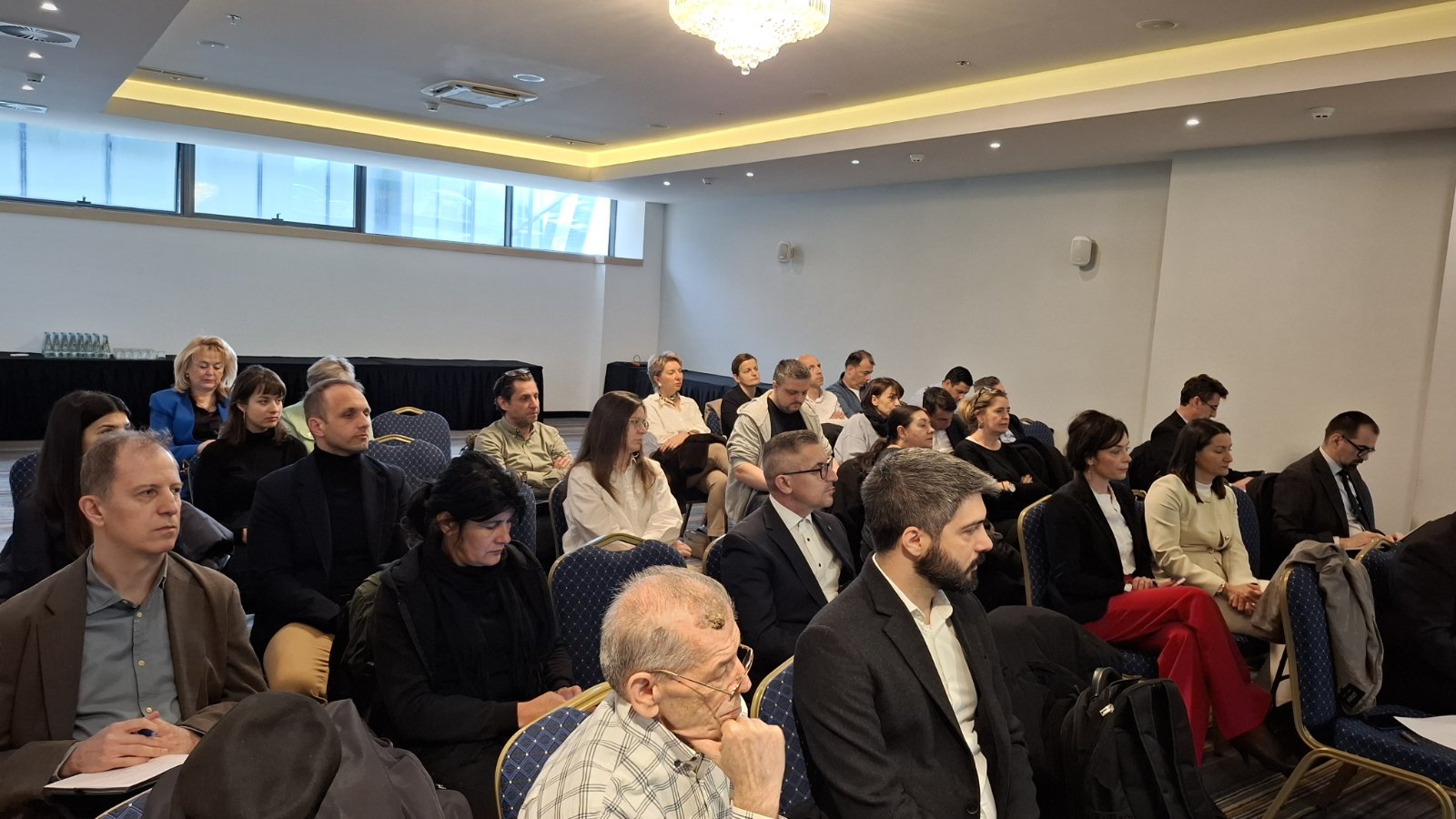
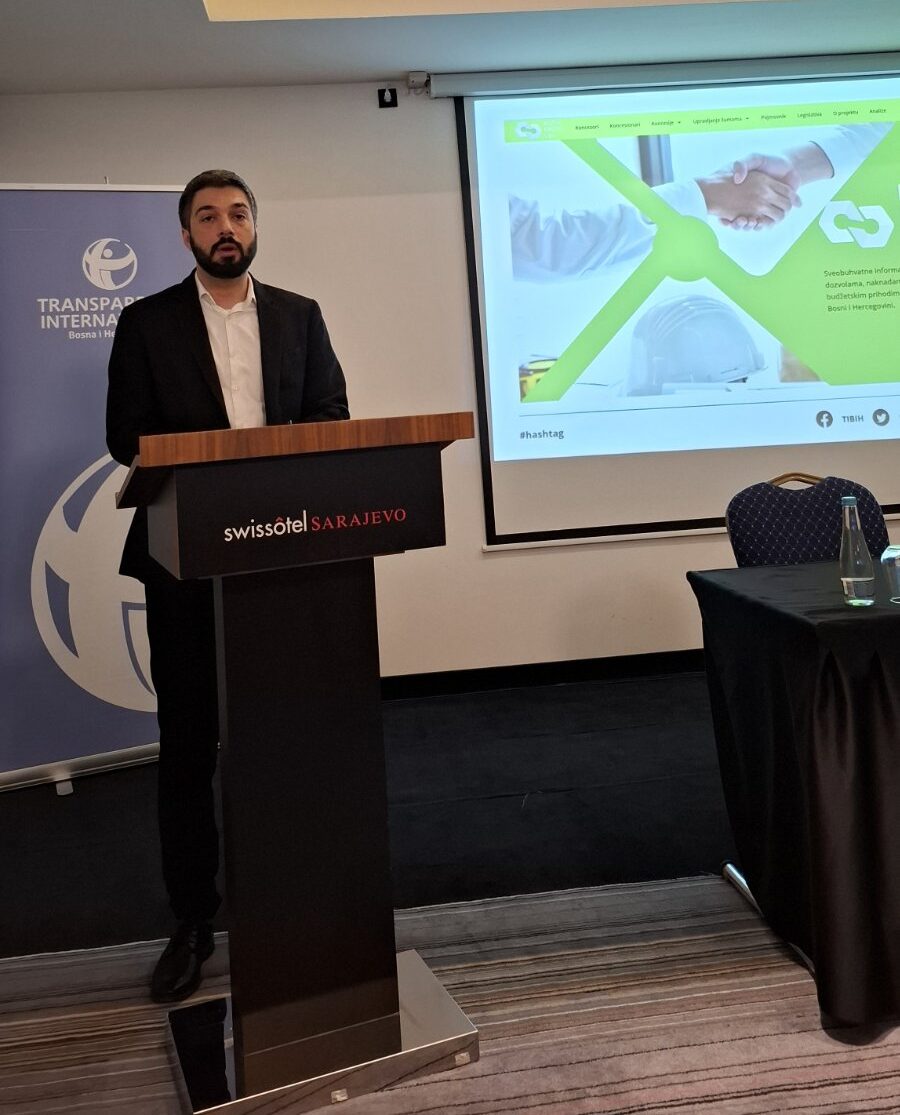
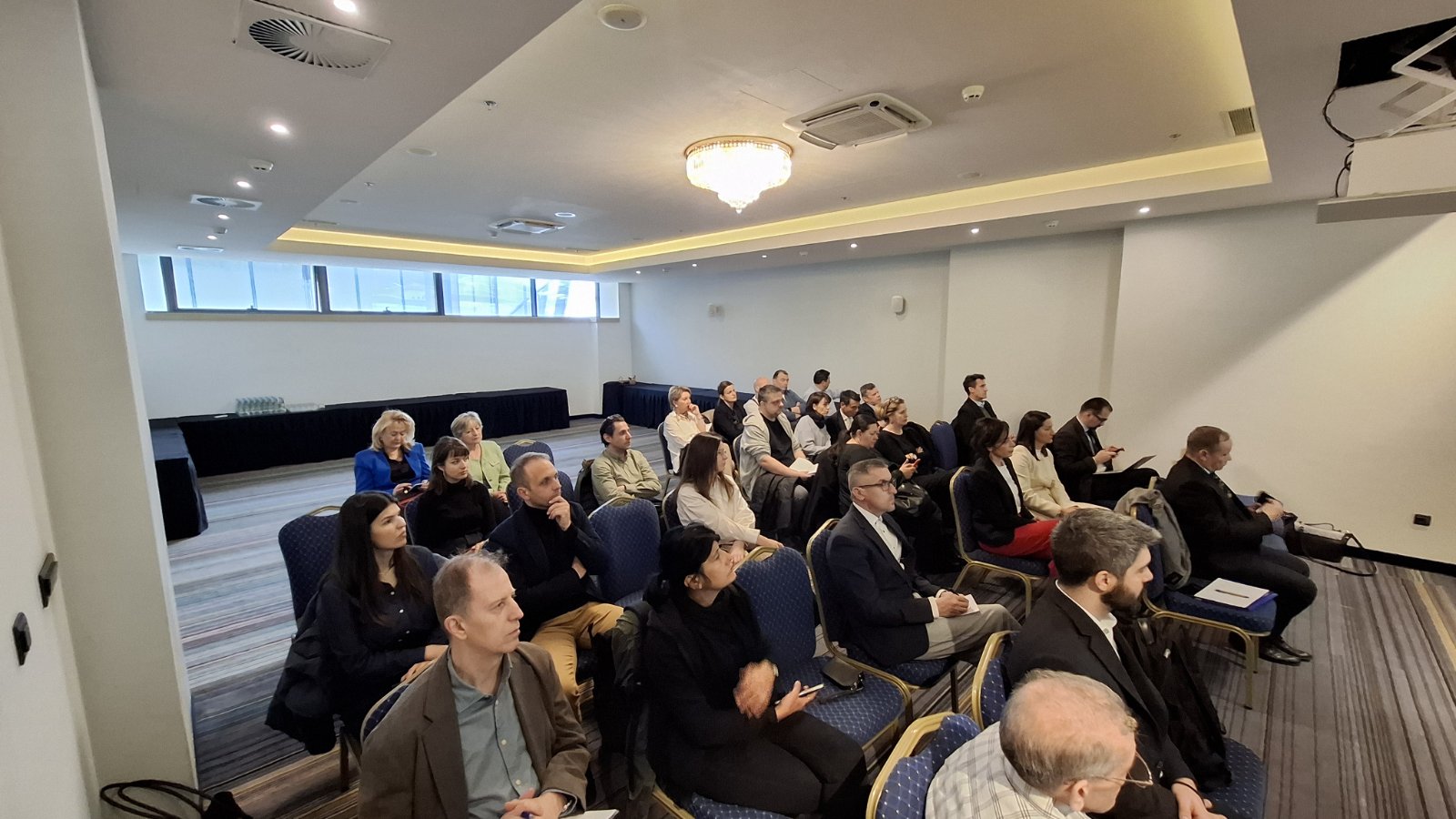
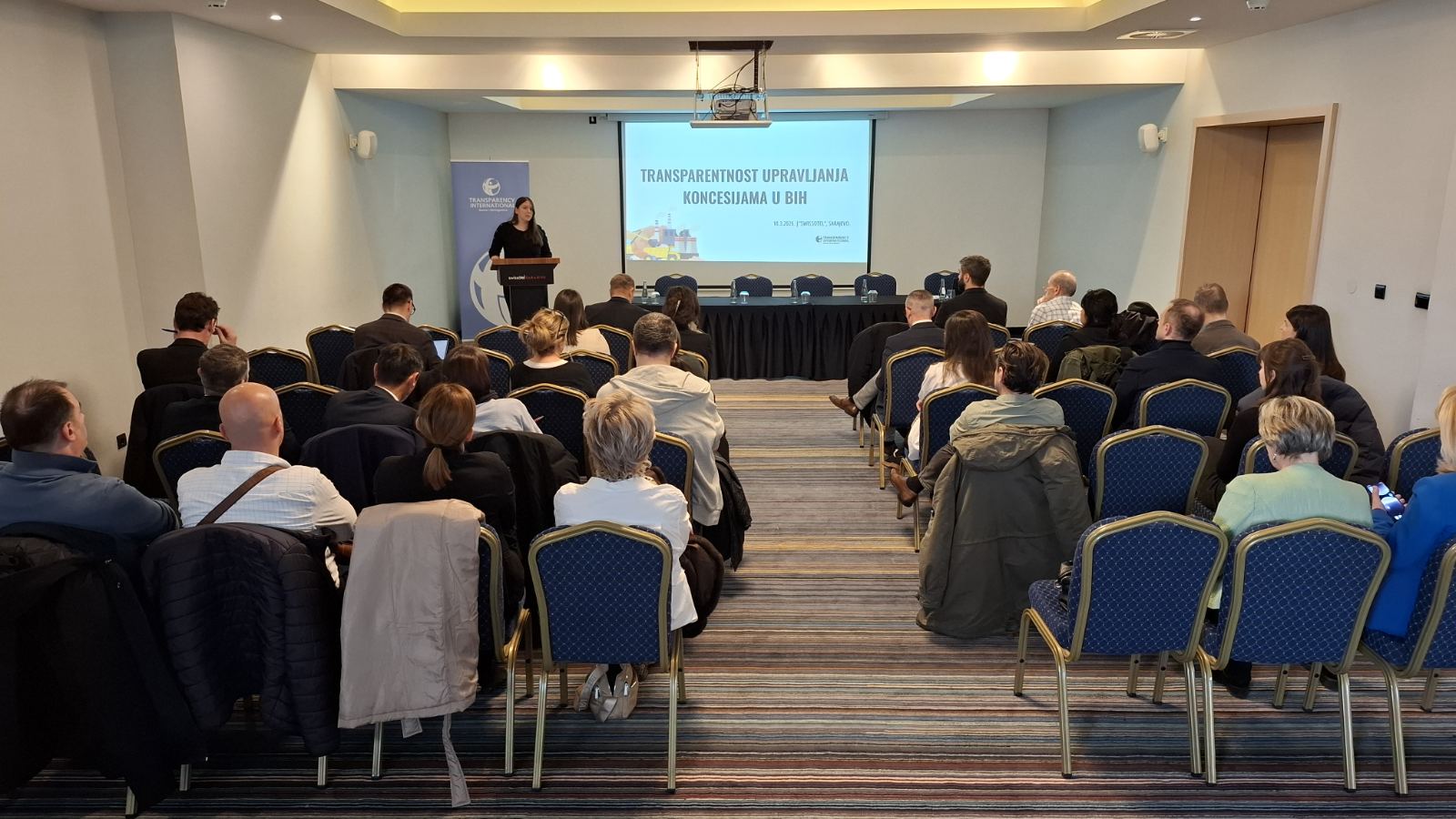
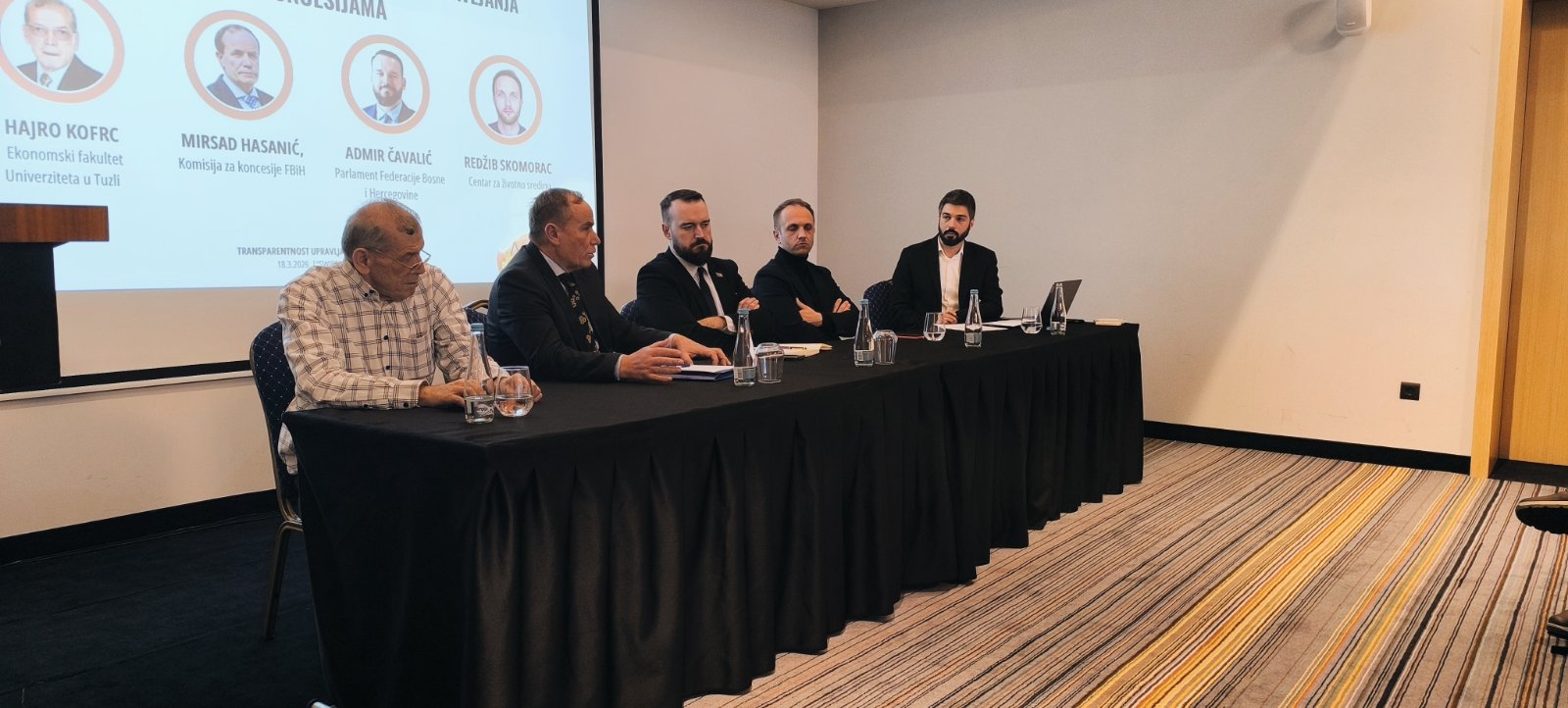
The conference organized by TI BiH in Sarajevo brought together relevant stakeholders from this field who agreed that society benefits little from this manner of concession management.
Member of the FBiH Parliament Admir Čavalić stated that concession fees in Bosnia and Herzegovina are among the lowest in the region and that they should be increased, with the introduction of a variable component that would track market price changes, while collected funds should be distributed more proportionally to local communities that directly experience the consequences of resource exploitation.
Mirsad Hasanić from the FBiH Concessions Commission also pointed to systemic anomalies, noting that unsolicited proposals have become the rule rather than the exception, and that in legal terms, virtually no concession has been awarded through a classic tender process, which places favorites in a privileged position from the start.
An additional problem is the so-called “project fragmentation,” highlighted by Redžib Skomorac from the Center for the Environment. He notes that in the construction of solar power plants, projects are deliberately divided into smaller parts to completely avoid the obligation of concession award. Professor at the Faculty of Economics in Tuzla, Dr. Hajro Kofrc, stated that concessions can be a powerful tool for economic development, but only with strict adherence to rules. The conference also presented recommendations for improving transparency in concession management. Primarily, harmonization of the legislative framework on concessions at all levels in BiH with the Concessions Directive and other significant segments of the EU Acquis, followed by adoption and publication of concession plans, with mandatory prior public consultations from the earliest project phases, and incorporation of all three pillars of the Aarhus Convention into concession laws in BiH—namely the right to access information, the right to public participation in decision-making, and the right to legal protection. There was also a call for the introduction of concession contract registries with detailed data open to the general public, including financial indicators, as only this can enable adequate public oversight of concessionaire operations.
Get involved
Stay tuned
Subscribe to our newsletter and receive periodic notifications about our, announcements, calls and activities via email.
Don't miss it
If you want to receive our announcements immediately after the publication, leave your e-mail address in the field below.