
TI BiH and Vaša prava BiH Present Research Findings: The Public Still Faces Difficulties in Accessing Full Information on Public Spending
Sarajevo, 28 September 2026 – Almost one in three requests for access to information submitted to public institutions in Bosnia and Herzegovina are still not processed...
Sarajevo, 28 September 2026 – Almost one in three requests for access to information submitted to public institutions in Bosnia and Herzegovina are still not processed within the legally prescribed deadline, while approximately one-third of requests do not result in the disclosure of all requested information. Particularly poor practices were recorded among ministries in Republika Srpska, where only 10% of decisions were issued in the legally prescribed form, representing the lowest level of formal compliance among the categories of institutions covered by the research.
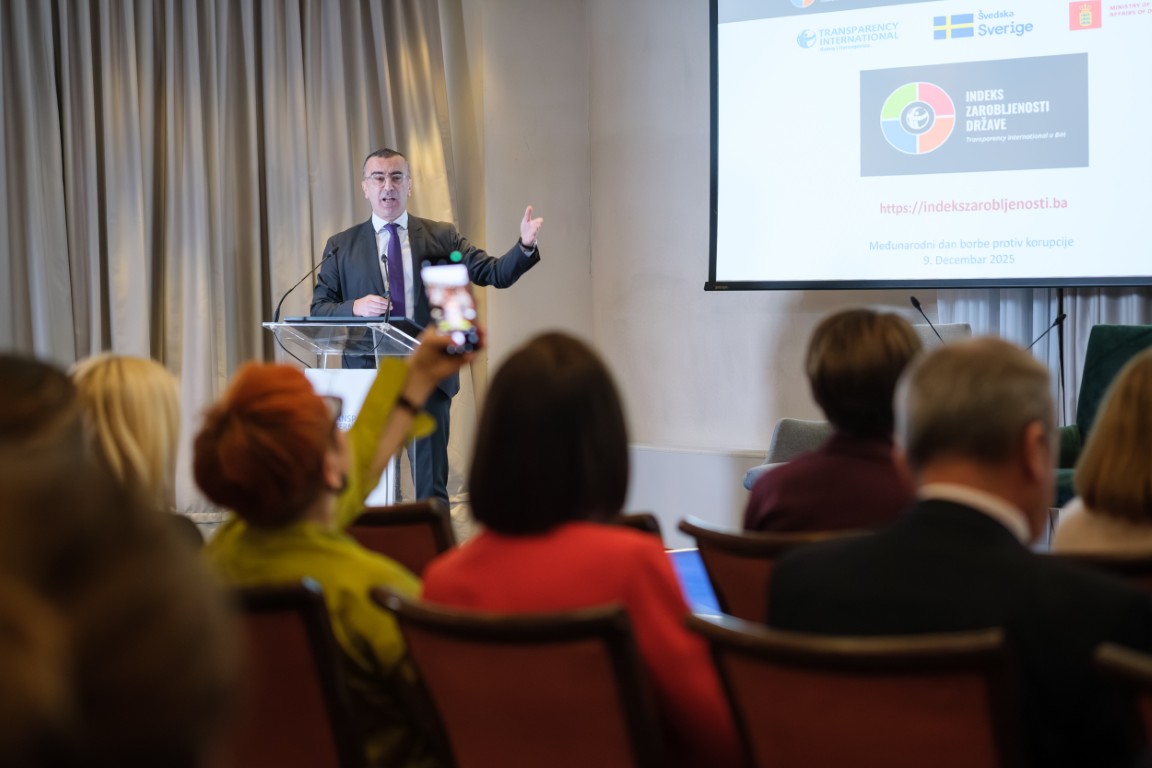
These are the findings of research conducted by Transparency International in Bosnia and Herzegovina (TI BiH) and Vaša prava BiH (VP BiH), as part of the EU funded project „Access4All“ supporting access to information in Bosnia and Herzegovina. It was presented at a conference marking the International Day for Universal Access to Information. The research covered 278 requests submitted to public authorities across Bosnia and Herzegovina and showed that, despite some progress compared to 2024, the implementation of access to information legislation remains inconsistent.
Compared to 2024, the percentage of requests processed within the statutory deadline increased from 56.5% to 67.6%, while the share of requests for which all requested information was provided increased from 35.5% to 66.2%. Nevertheless, formal compliance with legal requirements remains a serious problem, as only 27.3% of decisions in the overall sample were issued in the form prescribed by law.
Despite positive developments in the percentage of information disclosed, the research highlighted a particularly low level of formal compliance of decisions with legal requirements, significantly limiting applicants’ access to legal remedies. While ministries at the state level and in the Federation of Bosnia and Herzegovina recorded formal compliance rates of 77.8% and 75%, respectively, the corresponding rate for ministries in Republika Srpska was 10%, indicating scope for improvement in the form of responses and the provision of information requested by applicants. in a form that complied with the law and provided applicants with the information they had requested. The situation was particularly problematic among healthcare institutions, which issued only 25.3% of decisions in the prescribed form, while social welfare centres did so in only 16.8% of cases.
Due to respond to requests, TI BiH, as part of the research initiated in 2024, filed 18 administrative lawsuits against public authorities. Thirteen of these cases have been concluded, and in all of them the courts upheld TI BiH’s claims, while five proceedings remain ongoing. In the cases analysed, courts identified unlawful practices in the denial of access to information, particularly where institutions invoked privacy protection without adequately considering the public interest in information concerning employment, salaries and service contracts.
However, in some cases, the problem persists even after a court judgment has been issued. The analysis shows that, following the annulment of their decisions, some public authorities again refused to disclose information, delayed the adoption of new decisions, or failed to act in accordance with the court’s legal reasoning. As a result, TI BiH had to initiate new administrative proceedings in two cases.
The conference also presented further steps under the initiative to amend access to information legislation launched by TI BiH in April this year together with 27 other civil society organisations. The initiative proposes amendments to legislation at all levels of government aimed at strengthening oversight and accountability mechanisms, improving legal protection, and introducing clearer obligations for the proactive publication of information. More than five months after the proposed amendments were submitted, the relevant entity-level ministries have provided neither a response nor feedback, while the state-level authorities have provided a formal response but no concrete steps towards improving the legislative framework.
The conference also presented results from the use of the “Pristup informacijama” (Access to Information) platform, developed within the same EU-funded project, which enables citizens, journalists, activists and civil society organisations to exercise their right of access to information more easily. To date, the platform has been used to create a total of 967 requests for access to information, follow-up requests and appeals, demonstrating the concrete need for tools that facilitate citizens’ use of legal mechanisms for accessing information.
Read more
Get involved
Stay tuned
Subscribe to our newsletter and receive periodic notifications about our, announcements, calls and activities via email.
Don't miss it
If you want to receive our announcements immediately after the publication, leave your e-mail address in the field below.