
The Judiciary Retreats Before Corruption: More Than Half of Corruption Reports Without Investigation
19 May 2026
Banja Luka, 19. May 2026 years More than half of corruption reports end with an order not to conduct an investigation, while almost 30% of investigations are suspended after initiation, which best illustrates the unwillingness of the BiH judiciary to fight corruption, and directly affects the drastic decline in citizens’ trust in judicial institutions.
In 2025, there was a decrease in the share of corruption-related criminal reports from 5.2 to 5.05% of the total number of reports, while the total number of criminal reports is increasing. At the same time, the number of high-level corruption reports during the previous year is 30% lower compared to 2023 and 2024, shows the latest analysis of corruption prosecution before courts and prosecutor’s offices in Bosnia and Herzegovina in 2025 which Transparency International in BiH (TI BiH) conducted based on official data from the High Judicial and Prosecutorial Council (HJPC BiH).
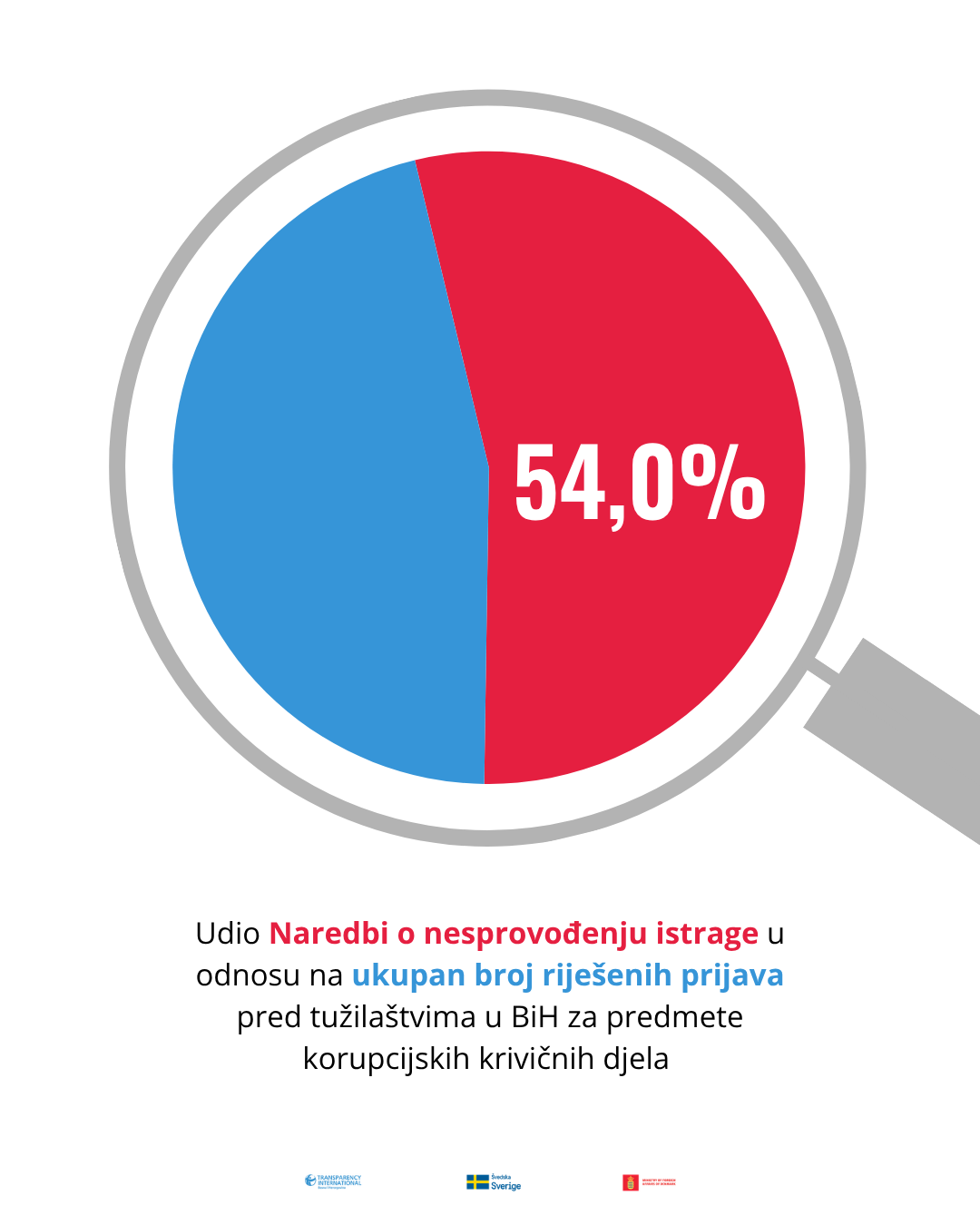
These disastrous data on inefficiency in combating corruption are a direct consequence of the failure to adopt key reform laws that are necessary for the integrity of the judiciary, as well as the obvious obstruction of reform processes, thanks to which BiH has been ranked among the four most corrupt countries in Europe. Years of stagnation in reforms, state capture, lack of transparency as well as the refusal to prosecute some of the largest corruption scandals involving even the highest holders of judicial functions, diminishes the already poor trust of citizens in the judiciary’s willingness to confront corruption.
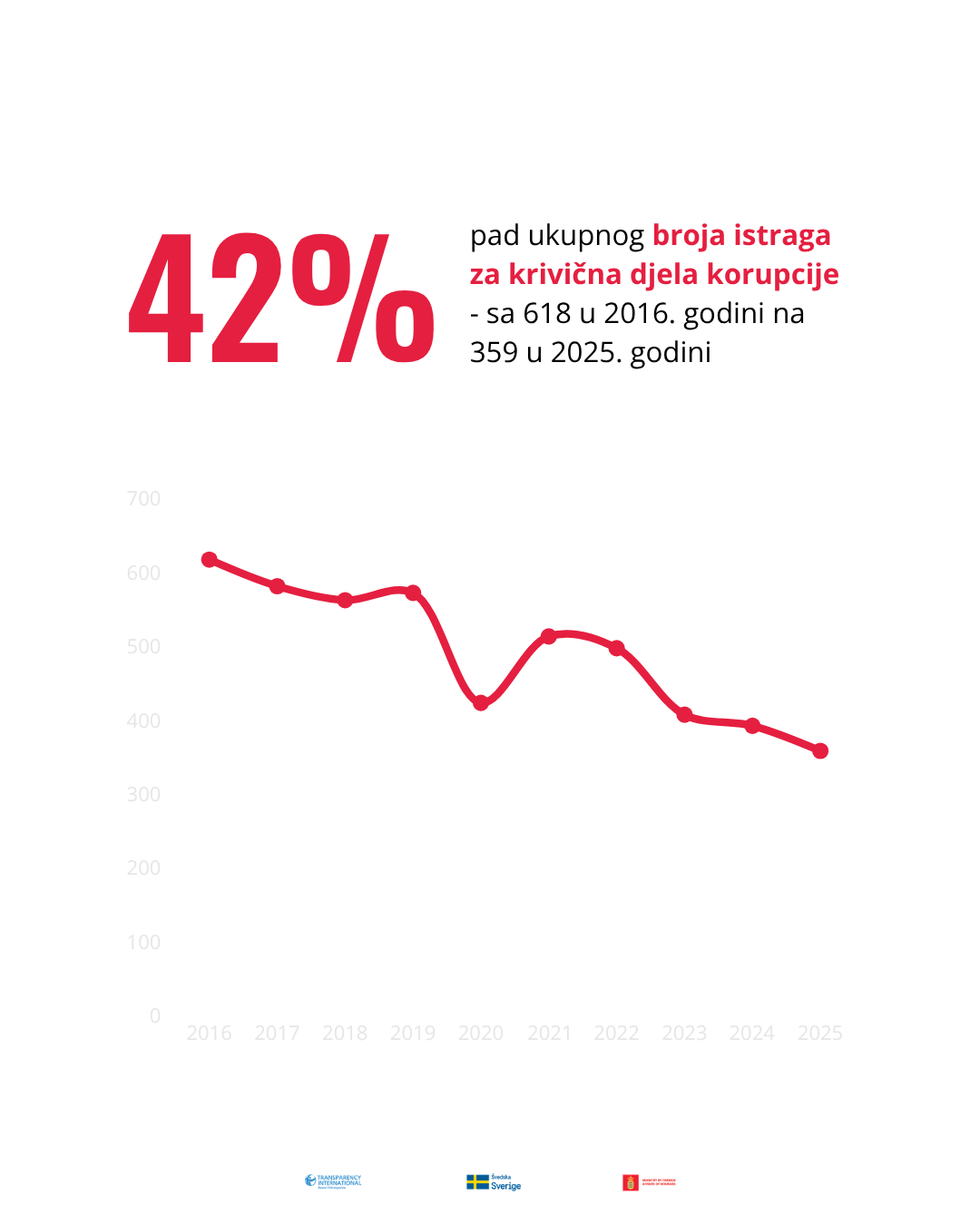
The validity of these assessments, as well as an indicator of the increasingly poor state of the judiciary, is best illustrated by the constant decrease in the number of investigations for corruption-related criminal offenses, from 618 in 2016 to 359 in 2025, which is a decline of as much as 43% in the last decade.
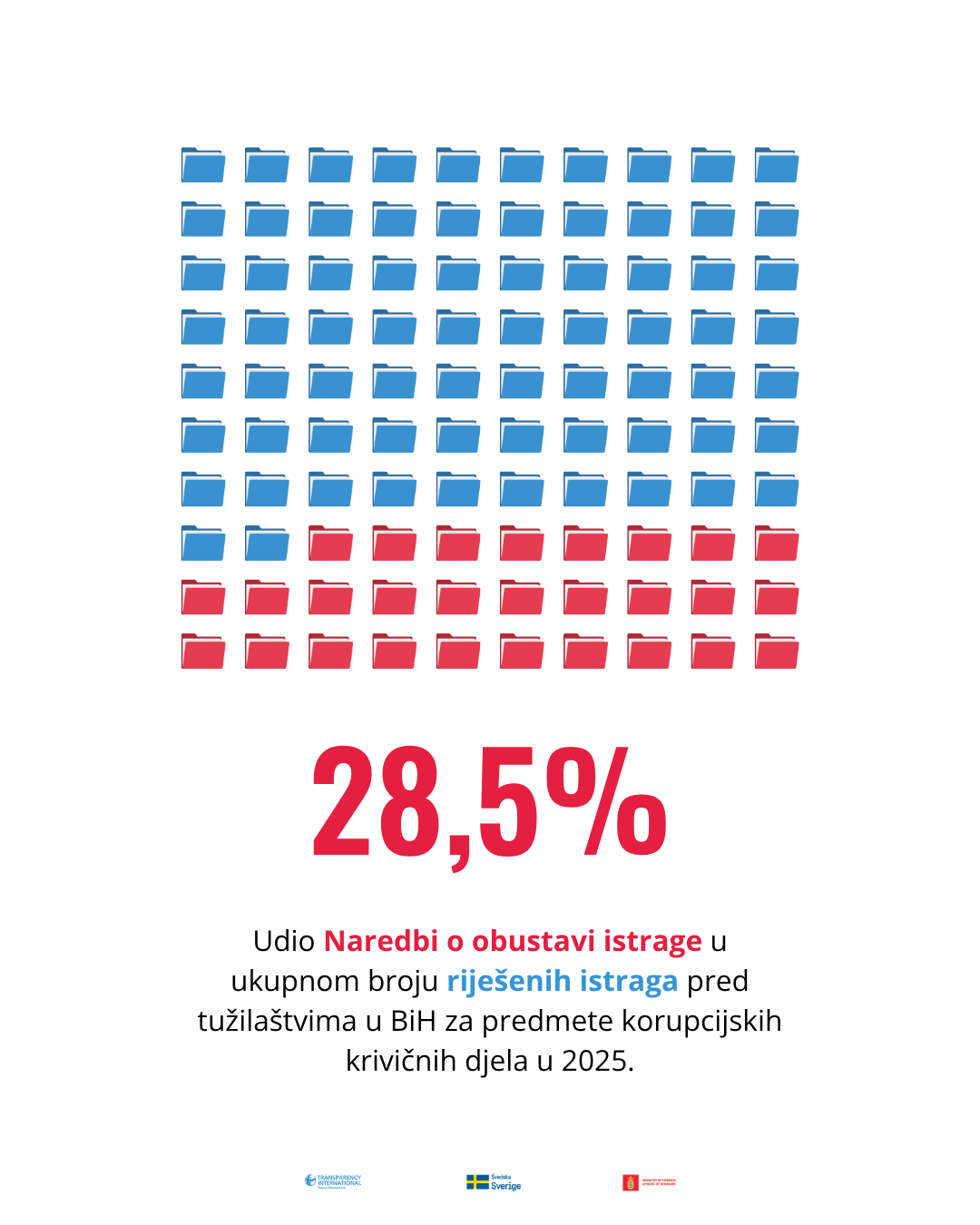
The decline in the number of opened investigations for these offenses is particularly noticeable in the prosecutor’s offices of the Federation of BiH and Brčko District, and the high share of suspended investigations in all prosecutor’s offices (28.5%) indicates not only serious problems in the evidence-gathering phase but also completes the picture of a judiciary that is retreating and is unable to adequately confront corruption in the country.
When it comes to indictments, only 1.4% of all indictments filed in 2025 relate to corruption while of the total of 144 indictments filed for corruption-related criminal offenses, only 5 (or 3.4%) relate to high-level corruption offenses, i.e., abuse of position by the highest government officials through which multi-million benefits are obtained at the expense of the state.
Even in the rare cases that reach court, an increasing number of defendants are acquitted, which is particularly evident in high-level corruption cases, where out of 28 court decisions rendered, 17 were convictions, while almost 40% consist of acquittals or dismissals. In trials for other corruption-related criminal offenses that do not relate to high-level corruption, the average of acquittals and dismissals is significantly lower and amounts to approximately 28%.
An additional blow to the rule of law is represented by extremely lenient sentencing policy as 43% of those convicted of corruption receive suspended sentences, while imprisonment is imposed in less than half of cases. In addition to creating no preventive effect, with this practice the judiciary sends a clear message that corruption is profitable and will go unpunished.
This disastrous state of corruption prosecution is also contributed to by unsuccessful efforts to eliminate political influence through key reform laws, which was particularly evident through the extremely inefficient and non-transparent process of adopting the new Law on the HJPC. If the proposed solution is adopted, it will still not meet the key recommendations of the Venice Commission, as it still contains mechanisms through which the executive branch seeks to retain political control over the judicial system.
It is particularly important to note that insufficiently precise provisions on preventing conflicts of interest, as well as the inefficiency of mechanisms for reporting and verifying the assets of judges and prosecutors, whose implementation is directly obstructed, have opened space for blocking the process of depoliticizing the judiciary.
TI BiH warns that it is urgently necessary to improve the work of prosecutor’s offices and courts, enhance the quality of investigations and indictments, and introduce stricter sentencing policy. Without these changes and without increasing the transparency of institutional operations, it is impossible to expect citizens to regain trust in justice, and Bosnia and Herzegovina will continue to remain at the very bottom in combating corruption and strengthening the rule of law.
Get involved
Stay tuned
Subscribe to our newsletter and receive periodic notifications about our, announcements, calls and activities via email.
Don't miss it
If you want to receive our announcements immediately after the publication, leave your e-mail address in the field below.