PRESS RELEASES AND ANNOUNCEMENTS

Key dates

Without reforms, BiH loses one billion marks from the Growth Plan by the end of the year. Marta Kos: There will be no extension of this deadline

Sarajevo, 29. April 2026 . Bosnia and Herzegovina faces the risk of permanently losing 373.9 of the total 976.6 million euros available to it through the Growth Plan for the...

TI BiH
Izvještaji za Mediae

Without reforms, BiH loses one billion marks from the Growth Plan by the end of the year. Marta Kos: There will be no extension of this deadline

Sarajevo, 29. April 2026 . Bosnia and Herzegovina faces the risk of permanently losing 373.9 of the total 976.6 million euros available to it through the Growth Plan for the Western Balkans if it does not implement reforms in the areas of strengthening the rule of law, judicial integrity, preventing conflicts of interest, and protecting whistleblowers by the end of the year, as it committed to under the Reform Agenda.

While warnings from the EU indicate that deadlines will no longer be extended, BiH has already been sanctioned with a 10% reduction in available funds due to delays, meaning that 108 million euros will be invested elsewhere instead of in development and infrastructure projects in BiH, and further procrastination means not only the loss of nearly one billion marks, but also further erosion of credibility on the European path.

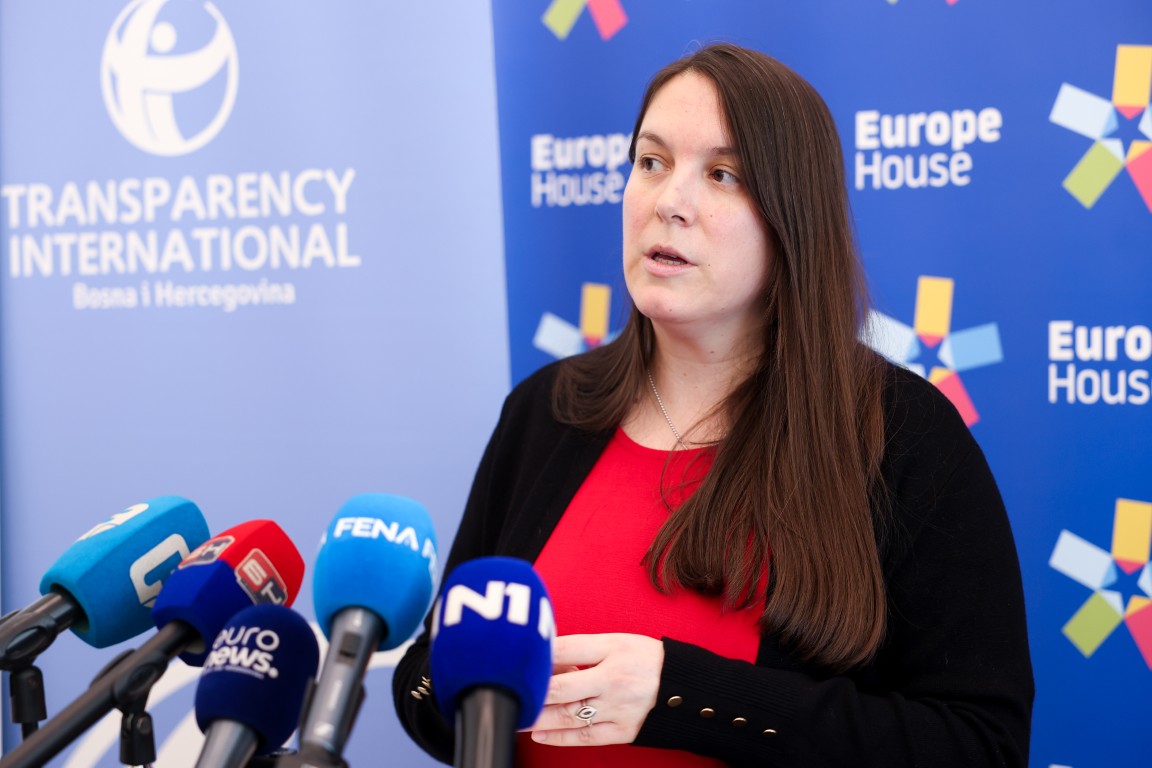
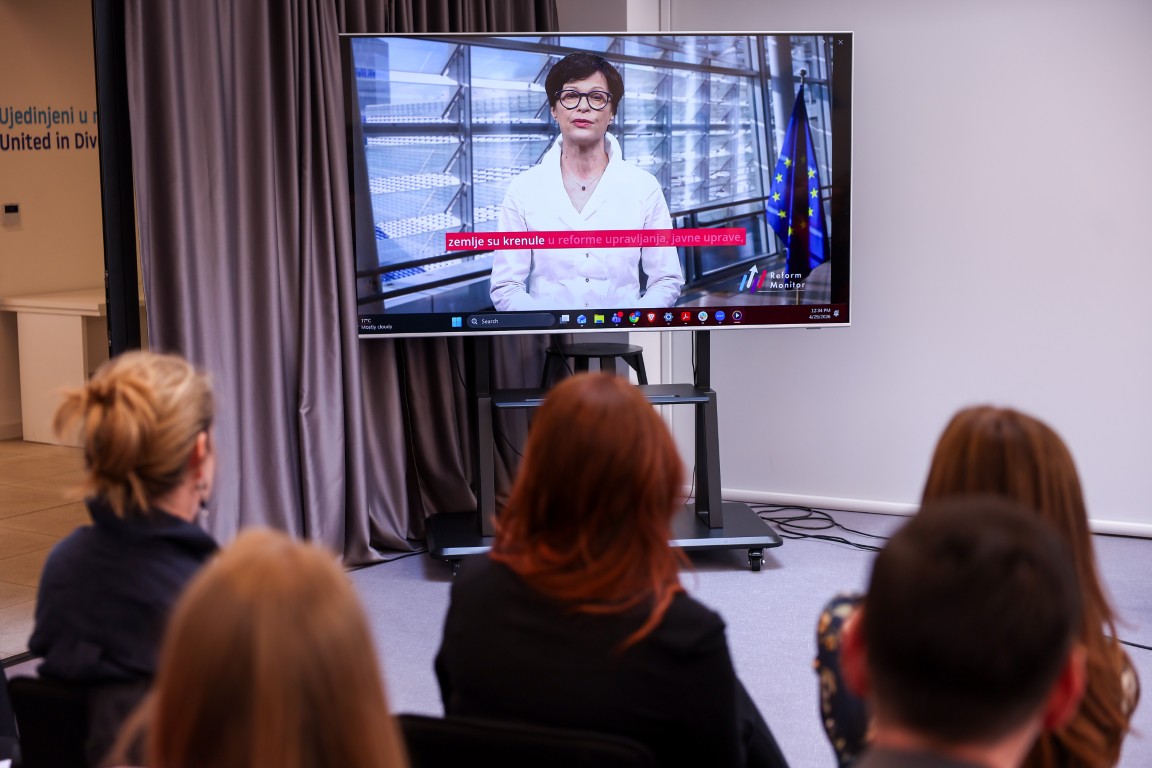
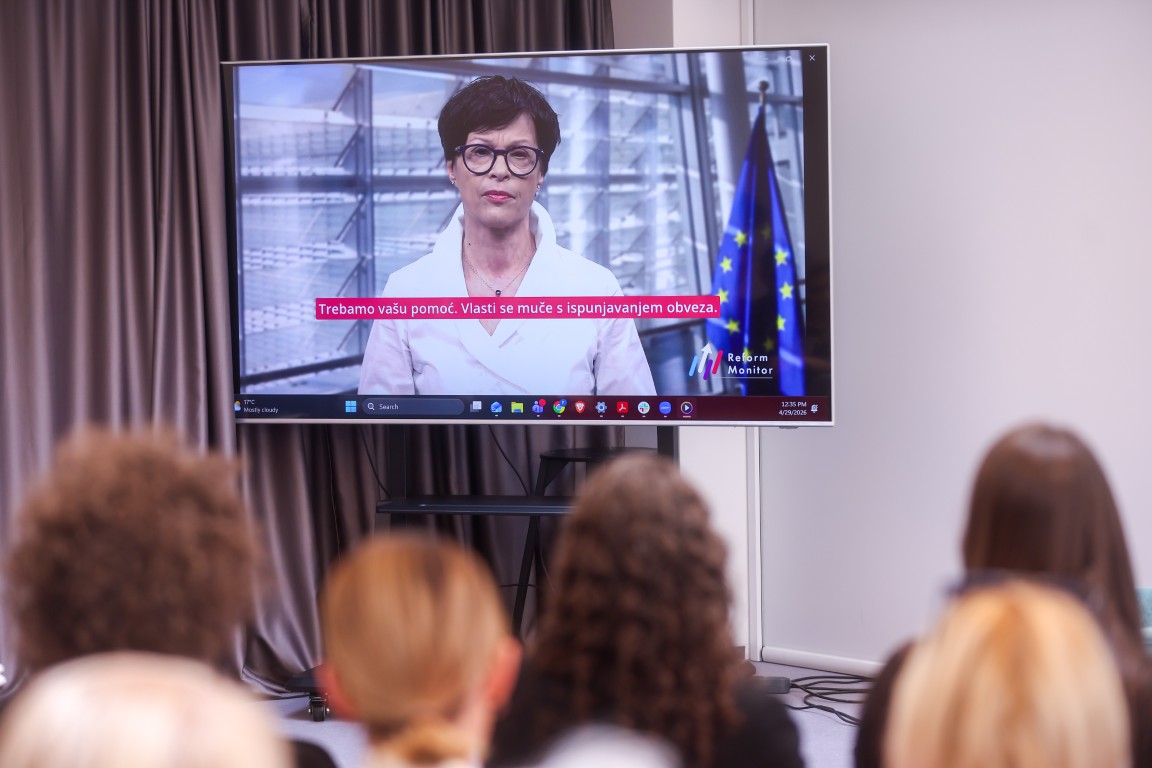
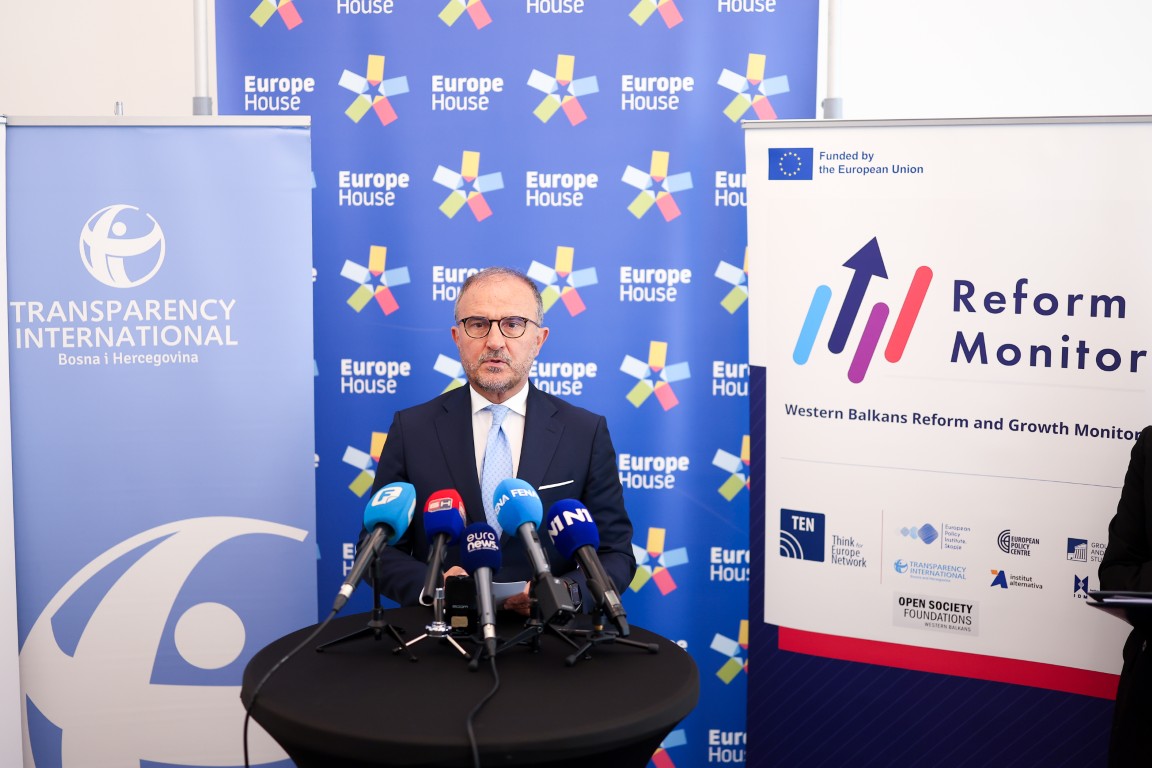
“Just last week, I sent a letter to the authorities, warning that Bosnia and Herzegovina risks losing hundreds of millions of euros if the necessary reforms are not implemented by December 2026. years” emphasized Marta Kos, European Commissioner for Enlargement, in a video message at the opening of the First Consultative Forum on the Implementation of the Reform Agenda in BiH (CONFRA BiH), organized today in Sarajevo by Transparency International in Bosnia and Herzegovina (TI BiH).

She added that there will be no extension of this deadline, warning that “almost 50 percent of the funds (977 million convertible marks) could be lost” and reminded that countries in the region have launched necessary reforms in governance, public administration, the private sector, energy, human capital, and the rule of law, after which the promised funds followed.

Unlike them, Bosnia and Herzegovina, where public focus has been too long on the amount of available funds rather than on the obligations that must be fulfilled, has still not signed and ratified the agreement on accession to the Reform and Growth Instrument and the loan agreement, which are prerequisites for using the 976.6 million euros.

However, inaction also carries its own cost. Namely, in the absence of reforms, Bosnia and Herzegovina risks losing 373 million euros from the funds allocated under the Growth Plan, in addition to the 108 million euros it lost last year.

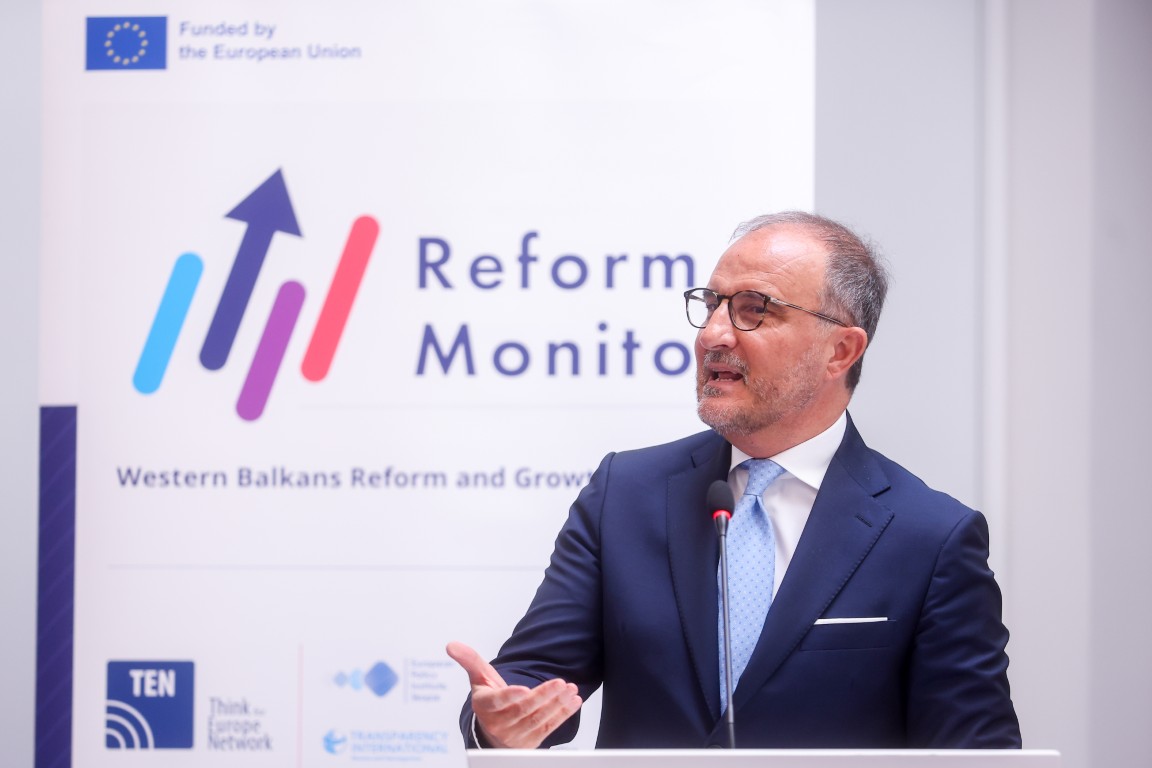
“The reforms in the Reform Agenda are the blueprint for an economic transformation in this country – one that will help it to use its considerable economic potential. This country has an educated population, a proud industrial tradition and is geographically located in the heart of Europe close to the European Single Market.” stated Luigi Soreca, Head of the EU Delegation to Bosnia and Herzegovina, adding that these advantages are not being utilized sufficiently.

“The education system needs urgent reform. Much of BiH’s industry relies on ageing technology, and needs to be modernised, including to take advantage of the clean energy revolution. BiH may be geographically close to the European Single Market, but barriers still exist to accessing it. The reforms in the Reform Agenda help bring these barriers down and move this country closer to receiving the benefits of EU membership. There is however also a cost to inaction – in the absence of reforms, regrettably, Bosnia and Herzegovina is at risk of losing EUR 373 million from its allocation under the Growth Plan, in addition to the EUR 108 million it lost last year” Soreca added.

Forum participants emphasized that the aforementioned funds from the Growth Plan are not a reward for declarative commitment to the European path, but support for countries that demonstrate political will, capacity, and responsibility to implement reforms. Therefore, BiH must appoint a national coordinator, establish a secretariat, a monitoring committee, and contact points for each reform step, so that it is clear who is responsible for implementation, monitoring, and reporting.

In addition, it was emphasized, the implementation process must be more open to the public, which means that the authorities must publish the Reform Agenda in the official languages of BiH together with a list of infrastructure projects to be financed from the Growth Plan, so that citizens know what the state has promised and where it plans to direct the available funds.

“The Growth Plan is a test of institutional responsibility, not just a financial opportunity. If the authorities in BiH are not prepared to implement the reforms they themselves undertook, then the problem is not only in the lost funds, but in the message that political representatives are sending to the EU and citizens. The attitude toward the Growth Plan today shows the real attitude toward BiH’s European path “, stated Ivana Korajlić, Executive Director of TI BiH.

TI BiH warns that when establishing the institutional framework, lessons learned from a decade of a dysfunctional coordination mechanism must be utilized. Through the new system, it is necessary to define clear responsibilities, deadlines, and mechanisms for overcoming blockages, so that the implementation of the Reform Agenda does not turn into another captured process.

Civil society and other relevant actors need to be included in the work of the monitoring committee through a transparent process and clear criteria, based on expertise, experience, and proven results. Only in this way can the monitoring and reporting process be of higher quality, more open, and focused on real results.

Continued delays and political blockages do not only mean the loss of available funds. They directly harm BiH’s credibility before the European Union and member states, and reduce the chances that the country will make a serious step forward toward opening negotiations in the near future. Therefore, TI BiH calls on the authorities to open the implementation process of the Reform Agenda to civil society and to use CONFRA BiH as a space for regular dialogue, monitoring progress, and addressing obstacles in fulfilling undertaken obligations.

Press rls_29_04_2026

Video message, Marta Kos, European Commissioner for Enlargement

Photo gallery
See also:

TI BiH Wrote to the House of Peoples of the PA BiH: The Proposed Candidate for APIK Director Does Not Meet the Requirements for This Position

SARAJEVO, April 17 April 2026 – Transparency International in Bosnia and Herzegovina (TI BiH) sent a letter to the delegates of the House of Peoples of the Parliamentary...

TI BiH
Izvještaji za Mediae

TI BiH Wrote to the House of Peoples of the PA BiH: The Proposed Candidate for APIK Director Does Not Meet the Requirements for This Position

SARAJEVO, April 17 April 2026 – Transparency International in Bosnia and Herzegovina (TI BiH) sent a letter to the delegates of the House of Peoples of the Parliamentary Assembly of BiH warning that the legality and integrity of the upcoming appointment of the director of the Agency for Prevention of Corruption and Coordination of the Fight Against Corruption (APIK), which will be considered at the session on Monday, is questionable. The letter draws attention to the fact that the top-ranked candidate Alen Halep has not proven that he meets the requirements prescribed by the competition, as he submitted as proof of work experience in managerial positions in the relevant field, experience managing his own company engaged in electricity production.

This concerns the company “Vrbas-energija” LLC Donji Vakuf, which owns a small hydroelectric power plant Torlakovac and according to financial reports has always had only one employee. Since the requirement for the position of APIK director is at least five years of work experience in managerial positions in the relevant field, TI BiH believes that managing such a company has no connection with the prevention and fight against corruption, and on the other hand, managing a company with only one employee cannot be considered relevant experience for managing one of the most important institutions for corruption prevention.

The private company owned by Alen Halep took over permits for electricity production at SHP “Torlakovac” in 2015 and received state incentives for electricity production until 2020. It has the status of a qualified producer selling energy to Elektroprivreda BiH until 2041. .

Additional concern is raised by the fact that Halep has been employed in the Agency itself as a civil servant since 2015, while simultaneously being the owner and director of a private company, although the Law on Civil Service in BiH Institutions clearly stipulates that a civil servant cannot perform additional activities without permission.

The report on determining the ranking list of candidates for the appointment of APIK director will be considered at the session of the House of Peoples on April 20. April. TI BiH appeals to the delegates to ensure the legality of the appointment, and that all necessary verifications of the relevance of the experience of the candidate proposed for director be carried out before the decision, bearing in mind that this was omitted in the previous procedure. TI BiH emphasizes that it is necessary to ensure that a person who first and foremost meets all legal requirements, and then possesses full professional integrity, is appointed to head one of the key institutions responsible for the fight against corruption and the protection of whistleblowers.

Press rls_17.04.26

Ensuring Real Access to Information: Necessary Amendments to Laws at All Levels

The implementation of existing laws shows that institutions continue to deny information of public interest, especially that related to the spending of public funds, which is why TI BiH, together with 27 civil society organizations, has submitted initiatives for amendments to freedom of access to information laws at all levels of government in BiH.

Banja Luka, 14. April 2026 year – Almost half of the institutions in BiH do not respond to requests for access to information within the legal deadline, while only 140 out of...

TI BiH
Izvještaji za Mediae

Ensuring Real Access to Information: Necessary Amendments to Laws at All Levels

Banja Luka, 14. April 2026 year – Almost half of the institutions in BiH do not respond to requests for access to information within the legal deadline, while only 140 out of 394 institutions provided data on time. At the same time, existing entity laws do not oblige institutions to publish key information themselves, nor do they provide effective oversight and legal protection for citizens, which are significant shortcomings and why Transparency International in BiH, together with 27 civil society organizations, has submitted initiatives for amendments to freedom of access to information laws at all levels of government in BiH.

The implementation of existing laws shows that institutions continue to deny information of public interest, especially that related to the spending of public funds. Almost half of the authorities do not respond within the legal deadline, while only one-third provided the requested data on time, and in practice legal loopholes are often abused to avoid transparency.

In addition to ignoring deadlines, institutions in Bosnia and Herzegovina also ignore court rulings ordering them to provide information requested by citizens and civil society organizations. Thus, the BiH Court has concluded only three out of eight administrative disputes initiated by TI BiH against public bodies that refuse to provide requested information, while the low level of efficiency of the judiciary in providing legal protection in this area is illustrated by the fact that TI BiH waited more than a year for rulings, despite the 60-day deadline for issuing court decisions prescribed by law.

The inefficiency of courts, absence of penalties, and inability to impose sanctions have enabled institutions to avoid implementing freedom of access to information laws, while citizens have been denied adequate legal protection. This is best illustrated by the case of the dispute against the Ministry of Transport and Communications of RS, which persistently ignores multiple court rulings and refuses without sanctions to publish the concession contract for the Banja Luka–Prijedor highway, protecting the commercial interests of the Chinese investor instead of the interests of citizens who remain denied the financial aspects of this important infrastructure project.

Apart from implementation problems, entity laws lack the obligation of so-called proactive transparency, so institutions are not required to publish meeting materials, budgets, draft laws, and other documents from their areas of work, leaving the public denied information about decision-making processes as well as the ways in which public money is spent.

This is the main reason why civil society organizations propose introducing the obligation of proactive publication of draft laws, decisions, and other materials containing data on the spending of public funds in machine-readable format (Word and text PDF), so that they are accessible to persons with disabilities who use screen readers, which is also an international obligation undertaken by BiH in accordance with the UN Convention.

The initiatives also call for introducing the obligation to issue formal decisions in response to requests for freedom of access to information, as well as inspection oversight of law implementation and the possibility of imposing penalties in cases of unlawful denial of information. This is particularly important in Republika Srpska, where the practice of institutions is to respond to requests with ordinary “letters,” often without signature and stamp, thereby directly denying citizens the right to appeal and similar legal protection mechanisms.

In the Federation of BiH, harmonization with administrative procedure laws is proposed, clarification of legal remedies, and establishment of effective oversight of law implementation, along with the requirement that information be provided in machine-readable and accessible format.

On the other hand, the new Law on Freedom of Access to Information at the level of BiH institutions, adopted as one of the reform laws on the European path, has not accelerated the publication of data of public interest, and in some areas has brought negative effects. The existing second-instance mechanism for protection of rights is not sufficiently functional and independent, which is why TI BiH proposes shortening the deadlines for the Appeals Board to act from 60 to 45 days in cases of conducting the public interest test.

All initiatives have a common goal, which is the transition from formal to real access to information, through clear obligations of institutions, effective oversight, and availability of data in practice. Without these amendments, the right to access information remains limited, and the space for abuse of public resources significantly increased, while strengthening the transparency and accountability of institutions, which is also one of the basic requirements in the process of European integration of Bosnia and Herzegovina, remains only an empty phrase of political leaders.


Initiative for Amendments to FOIA BiH | Initiative for Amendments to FOIA RS | Initiative for Amendments to FOIA FBiH

Signatories of the initiatives:

Transparency International in BiH, Your Rights BiH, Balkan Investigative Reporting Network – BIRN BiH, Center for Investigative Reporting – CIN, Sarajevo Open Centre – SOC, CA “Why Not,” Helsinki Citizens’ Parliament Banja Luka, ProPeace in BiH, CA Tolerance Against Differences – ToPeer, Doboj, Centers for Civic Initiatives – CCI BiH, Infohouse Foundation, Peacebuilding Network Association, BH Journalists Association, Women’s Association “Make a Difference,” My Right – Empowers people with disabilities, CURE Foundation, “Aarhus Resource Centre in BiH” Association, Association for Democratic Initiatives – ADI Sarajevo, Roma Information Center “Kali Sara,” Youth Center “Kvart” Prijedor, Atelier for Social Change Foundation, Citizens’ Association “Oštra nula,” United Women Banja Luka Foundation, Perpetuum mobile – Institute for Youth and Community Development Banja Luka, Association of Independent Creators and Activists Unsa Geto, Banja Luka Centre for Human Rights, Citizens’ Association “Zdravo da ste,” Genesis Project Association


Press rls_14_04_2026

Corruption and lack of transparency continue to dominate institutional operations

Banja Luka, 7. April 2026 . During 2025, the Advice and Legal Aid Centre of Transparency International in BiH (ALAC) handled 364 new cases, while 1,027 calls from citizens who...

TI BiH
Izvještaji za Mediae

Corruption and lack of transparency continue to dominate institutional operations

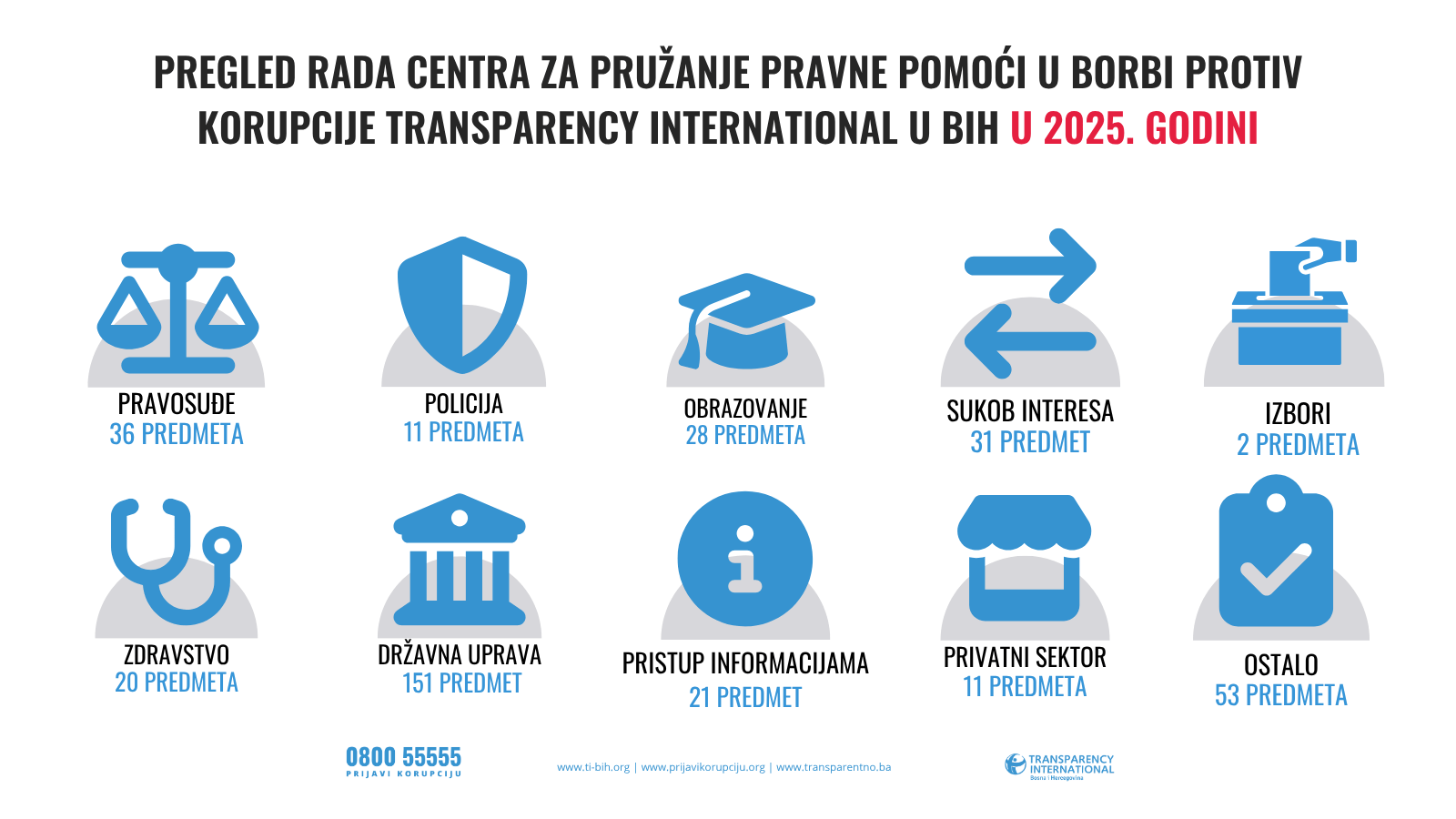
Banja Luka, 7. April 2026 . During 2025, the Advice and Legal Aid Centre of Transparency International in BiH (ALAC) handled 364 new cases, while 1,027 calls from citizens who were witnesses or victims of corruption were received through the toll-free hotline 0800 55555.

As in previous years, the largest number of reports concerned public administration (151 cases), confirming that employment, appointments, and management of public resources remain the highest-risk areas for corruption, according to the ALAC Annual Report for 2025 year.

A significant number of reports were also recorded in the areas of the judiciary (31), education (28), and conflict of interest (31), where a clear increase in the number of cases is evident, confirming that this phenomenon is becoming increasingly widespread and that TI BiH’s warnings about the normalization of conflicts of interest due to the absence of sanctions were justified.

These very trends were confirmed through specific cases, as following ALAC reports, the Central Election Commission of BiH revoked the mandate of the President of the Municipal Assembly of Gacko and an advisor to the then-President of Republika Srpska, Milorad Dodik, for holding incompatible positions. During the past year, a total of 13 cases were referred to the competent institutions for action, and such examples simultaneously indicate growing awareness of the importance of integrity in the public sector, as well as serious shortcomings in the consistent application of the law.

During the year, TI BiH initiated 24 administrative disputes due to denial of access to information, while 24 cases from previous years were resolved in favor of the Centre, indicating systematic violations of this right by institutions.

The fact that the lack of transparency and accountability of institutions is an increasingly serious problem is confirmed by decisions of the highest domestic and international courts. The Court of Bosnia and Herzegovina upheld TI BiH’s lawsuit against the Ministry of Justice of BiH for unlawfully denying access to the Draft Law on the Court of BiH, thereby preventing the public from participating in the adoption process of one of the key judicial regulations.

At the same time, the European Court of Human Rights has taken under consideration cases concerning denial of access to information by the Federal Ministry for Veterans and Disabled Veterans of the Defensive-Liberation War, as well as ALAC’s application on behalf of a citizen who, despite numerous court decisions in his favor, has been unable to establish employment with the Tax Administration of Republika Srpska for several years.

In addition to insufficient openness and lack of accountability, institutions in Bosnia and Herzegovina are under increasing political influence, which is particularly evident in appointment procedures, where processes are often annulled or adapted to political interests. For example, TI BiH filed a criminal complaint against officials at multiple levels of government in the Federation of BiH for unjustified annulment of an already completed procedure for appointing members of the Management Board of the Federal Pension and Disability Insurance Institute, thereby highlighting serious abuses and political influence on institutional operations.

These cases, along with the fact that during 2025 journalists requested and received free legal assistance from the Centre 57 times, while an increasing number of cases in which citizens and media must seek judicial protection due to continuous violations of their rights by institutions, further confirm the scale of the problem.

The complex political structure, frequent blockages in institutional operations, and the absence of key legal solutions, such as the law on conflict of interest in the Federation of BiH and adequate whistleblower protection, not only significantly hinder the fight against corruption but also deny citizens fundamental rights, primarily to legal protection, employment, and access to information of public importance.

Problems such as lack of transparency, unlawful appointments, conflicts of interest, and restrictions on access to information are deeply rooted in institutions at all levels of government. Nevertheless, the work of the Centre for Free Legal Aid to Citizens through initiating administrative disputes, appeals, criminal complaints, and other legal mechanisms before domestic and European courts, as well as decisions in favor of the Centre, demonstrate that persistent and strategic legal action can lead to concrete changes.

Transparency International in BiH will continue to provide free legal assistance to citizens and advocate for the improvement of the legal and institutional framework to ensure greater transparency, accountability, and more effective fight against corruption in Bosnia and Herzegovina.

Press rls_7_4_2026

Get involved

Don't miss it

If you want to receive our announcements immediately after the publication, leave your e-mail address in the field below.