PRESS RELEASES AND ANNOUNCEMENTS

Key dates

Without reforms, BiH loses one billion marks from the Growth Plan by the end of the year. Marta Kos: There will be no extension of this deadline

Sarajevo, 29. April 2026 . Bosnia and Herzegovina faces the risk of permanently losing 373.9 of the total 976.6 million euros available to it through the Growth Plan for the...

TI BiH
Izvještaji za Mediae

Without reforms, BiH loses one billion marks from the Growth Plan by the end of the year. Marta Kos: There will be no extension of this deadline

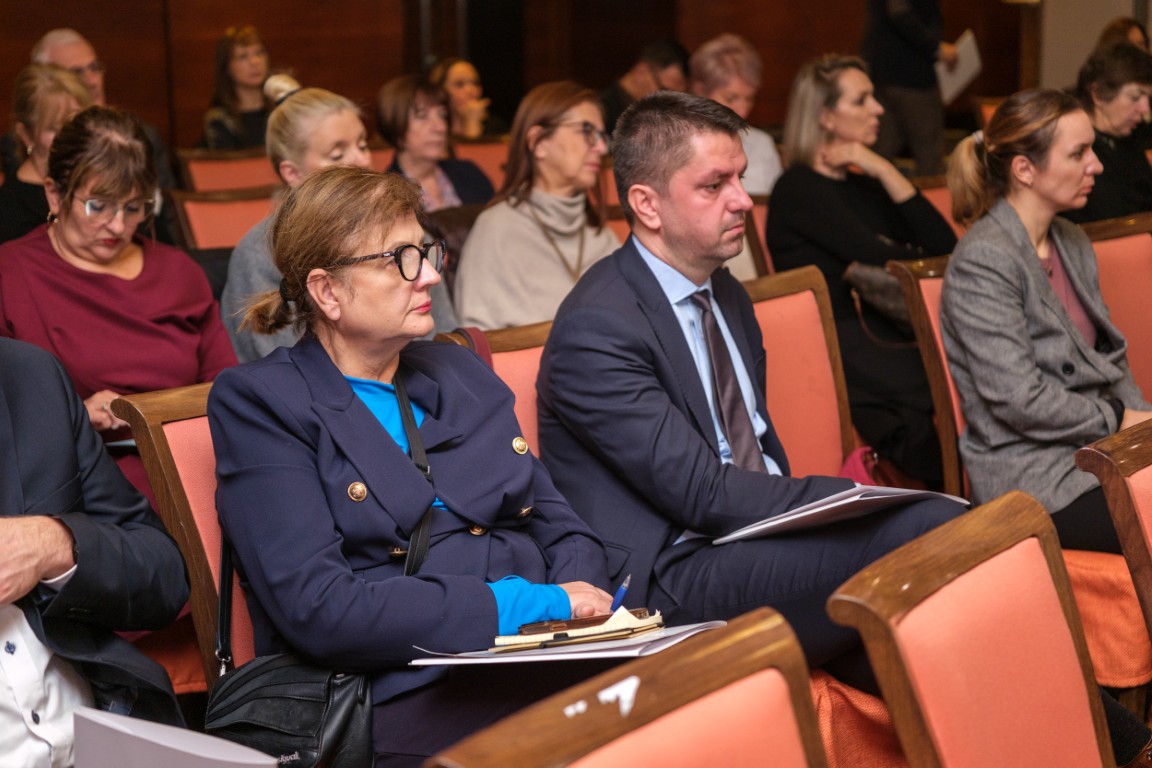
Sarajevo, 29. April 2026 . Bosnia and Herzegovina faces the risk of permanently losing 373.9 of the total 976.6 million euros available to it through the Growth Plan for the Western Balkans if it does not implement reforms in the areas of strengthening the rule of law, judicial integrity, preventing conflicts of interest, and protecting whistleblowers by the end of the year, as it committed to under the Reform Agenda.

While warnings from the EU indicate that deadlines will no longer be extended, BiH has already been sanctioned with a 10% reduction in available funds due to delays, meaning that 108 million euros will be invested elsewhere instead of in development and infrastructure projects in BiH, and further procrastination means not only the loss of nearly one billion marks, but also further erosion of credibility on the European path.

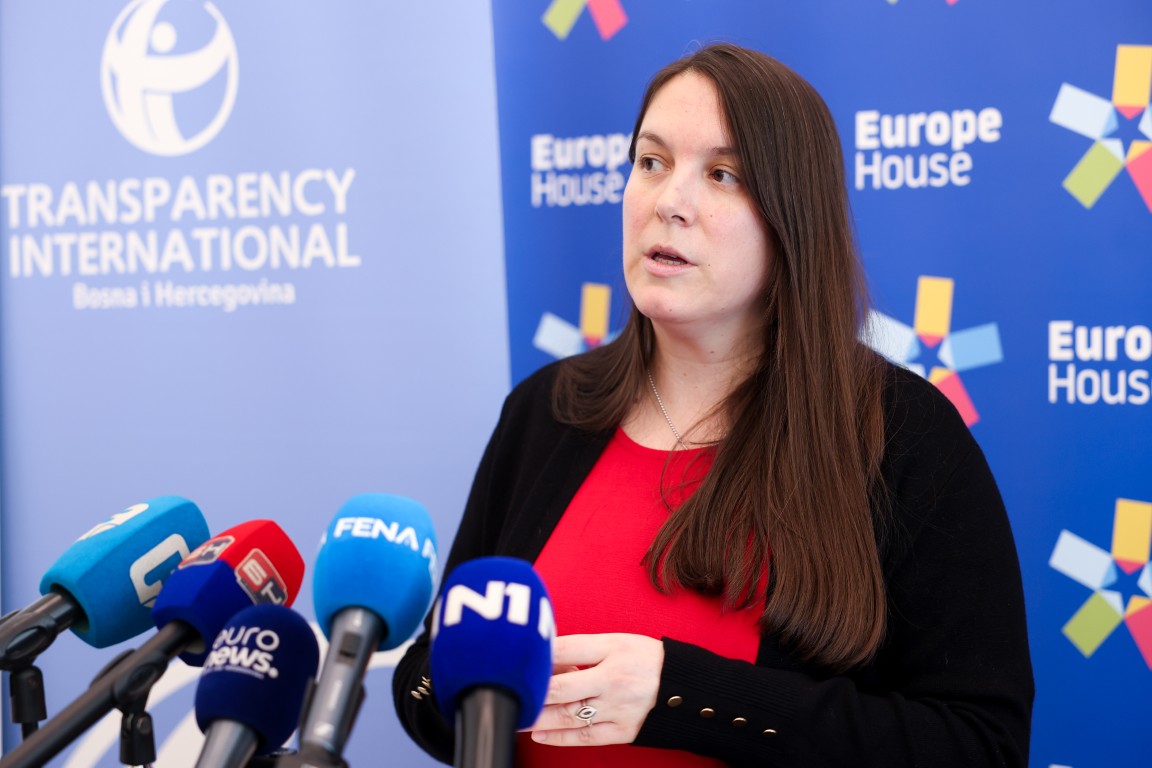
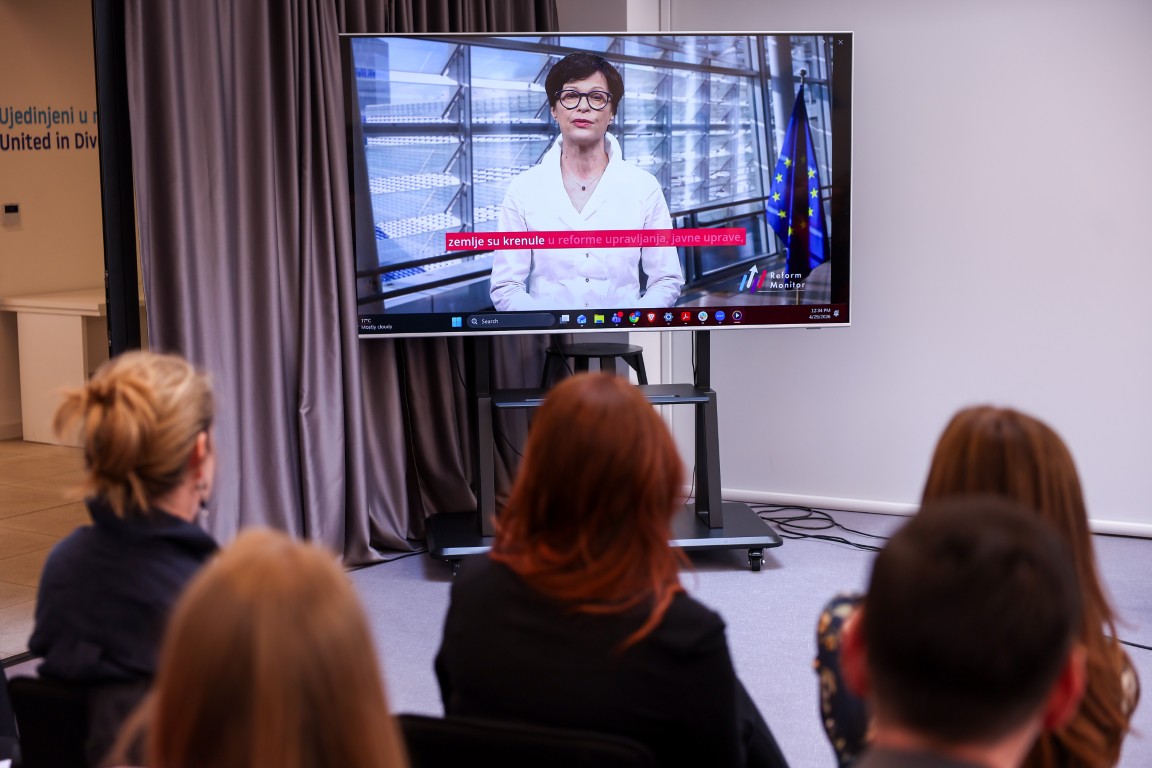
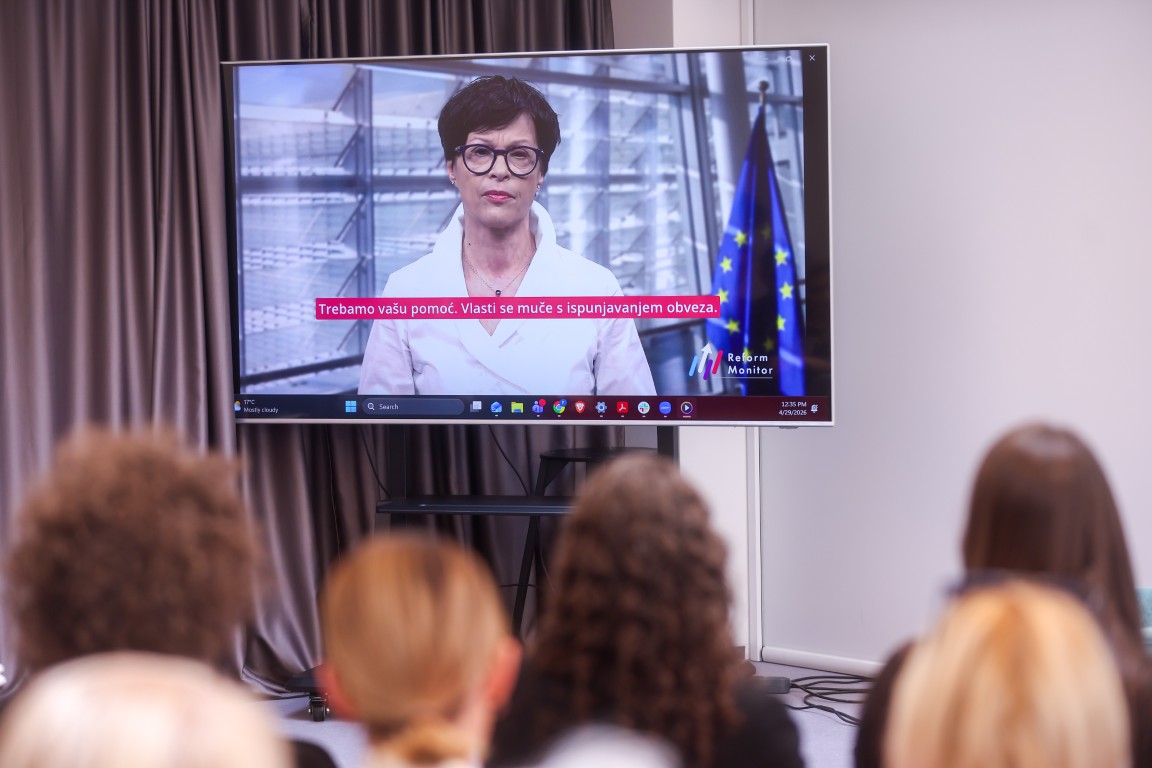
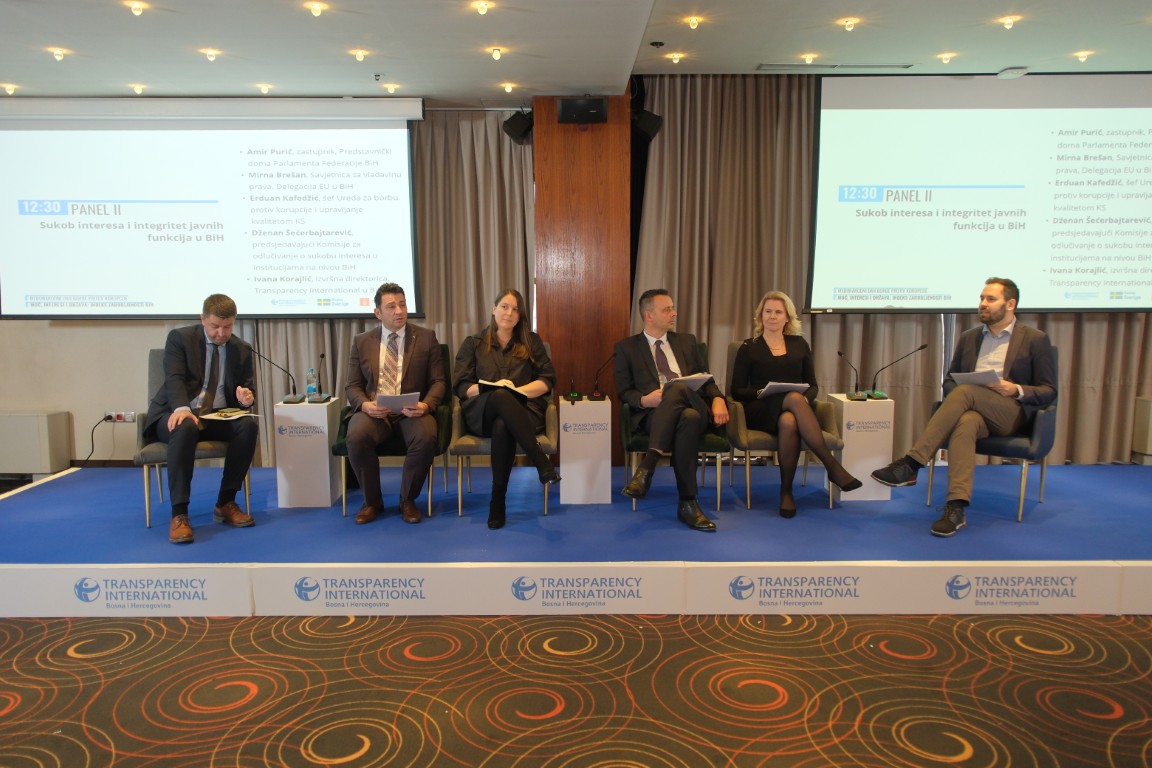
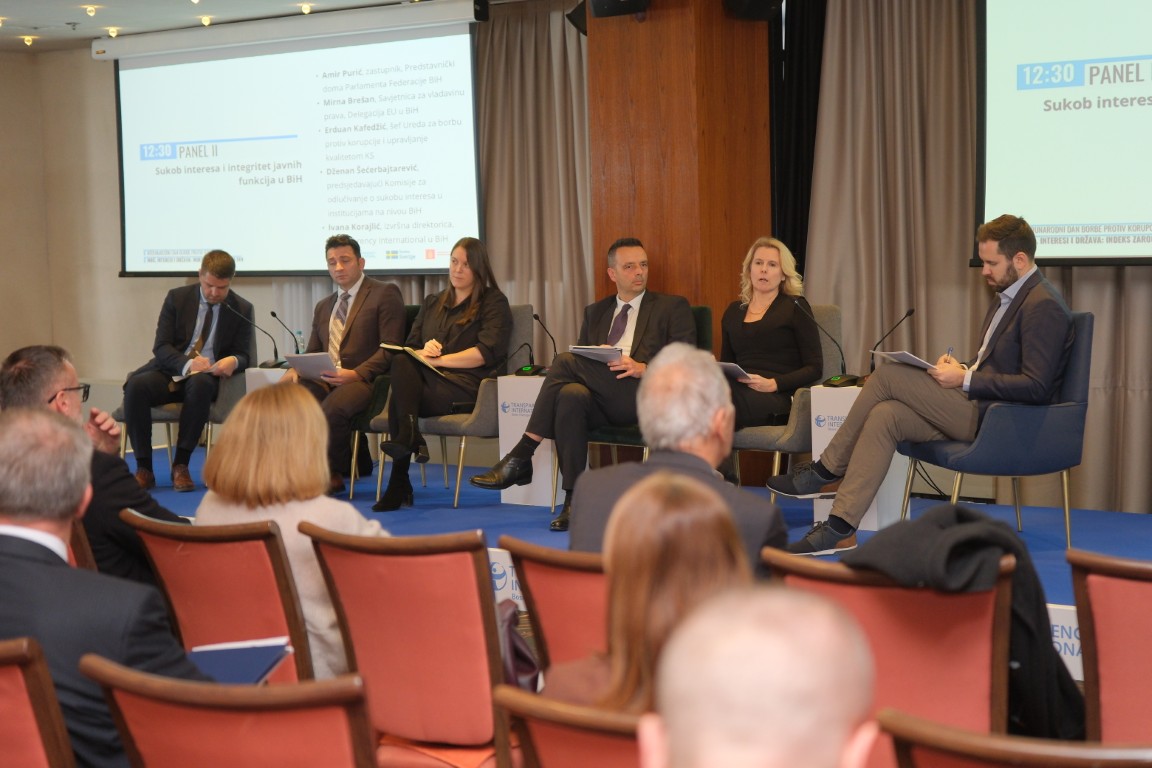
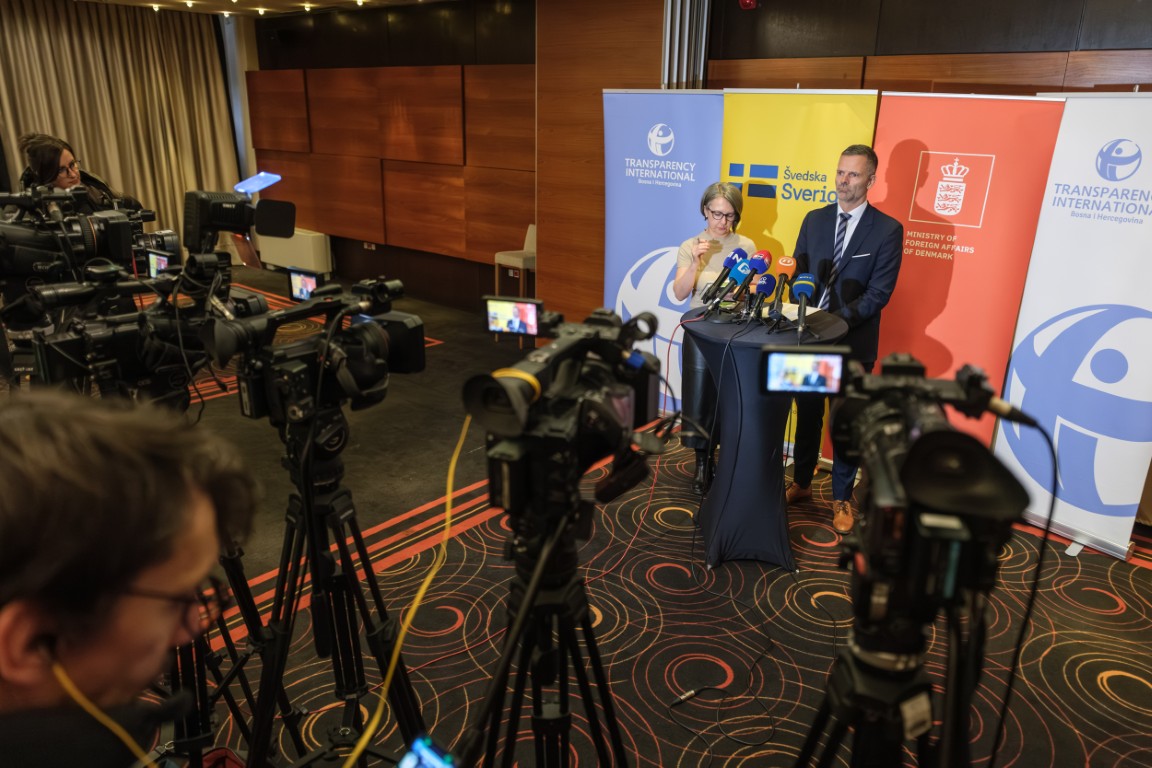
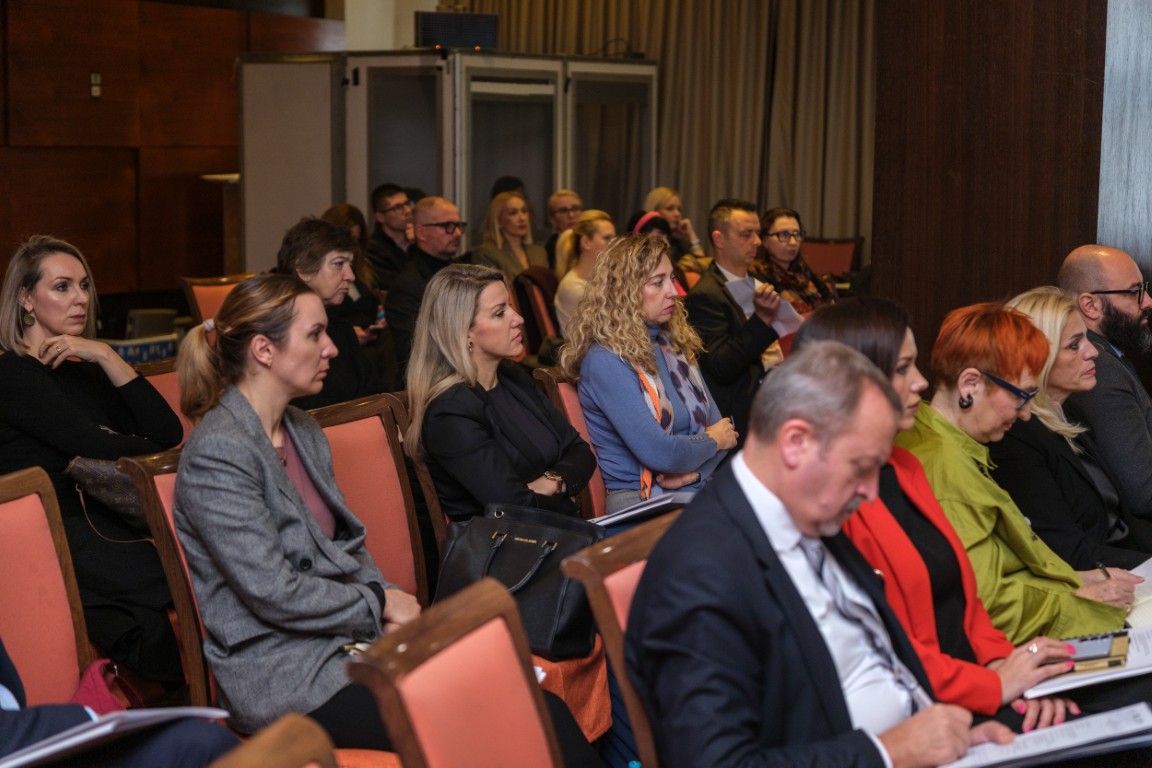
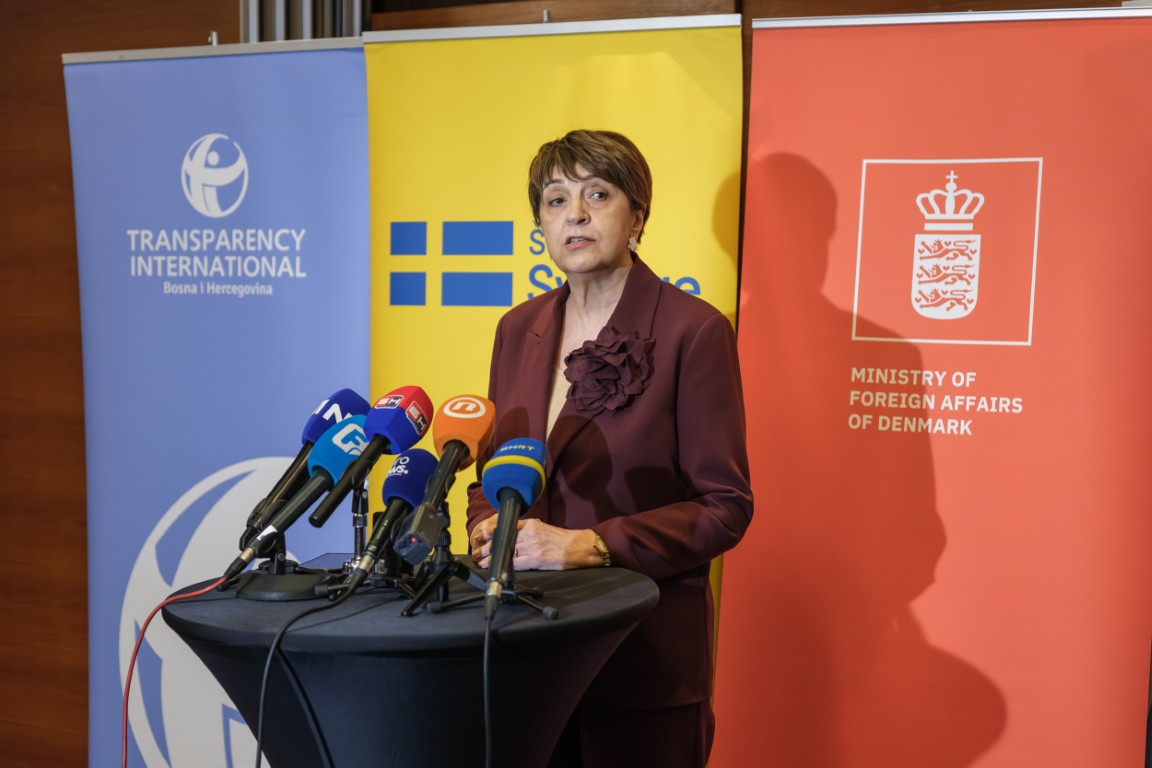
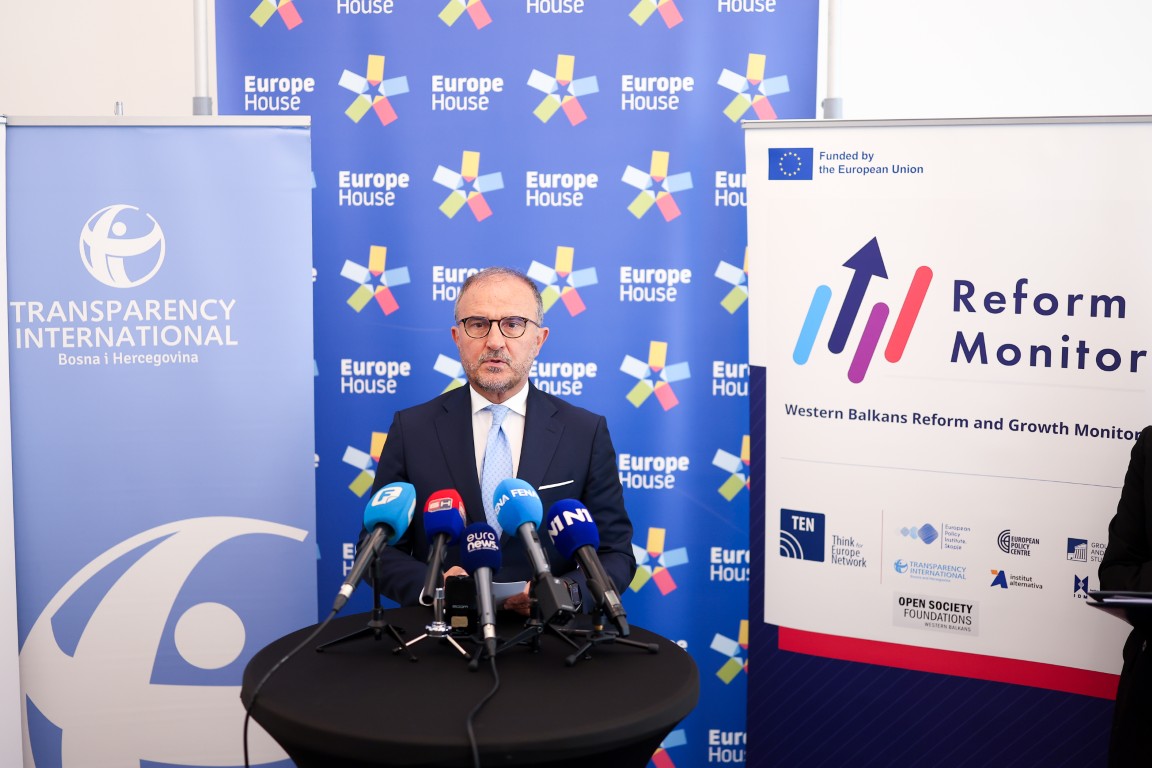
“Just last week, I sent a letter to the authorities, warning that Bosnia and Herzegovina risks losing hundreds of millions of euros if the necessary reforms are not implemented by December 2026. years” emphasized Marta Kos, European Commissioner for Enlargement, in a video message at the opening of the First Consultative Forum on the Implementation of the Reform Agenda in BiH (CONFRA BiH), organized today in Sarajevo by Transparency International in Bosnia and Herzegovina (TI BiH).

She added that there will be no extension of this deadline, warning that “almost 50 percent of the funds (977 million convertible marks) could be lost” and reminded that countries in the region have launched necessary reforms in governance, public administration, the private sector, energy, human capital, and the rule of law, after which the promised funds followed.

Unlike them, Bosnia and Herzegovina, where public focus has been too long on the amount of available funds rather than on the obligations that must be fulfilled, has still not signed and ratified the agreement on accession to the Reform and Growth Instrument and the loan agreement, which are prerequisites for using the 976.6 million euros.

However, inaction also carries its own cost. Namely, in the absence of reforms, Bosnia and Herzegovina risks losing 373 million euros from the funds allocated under the Growth Plan, in addition to the 108 million euros it lost last year.

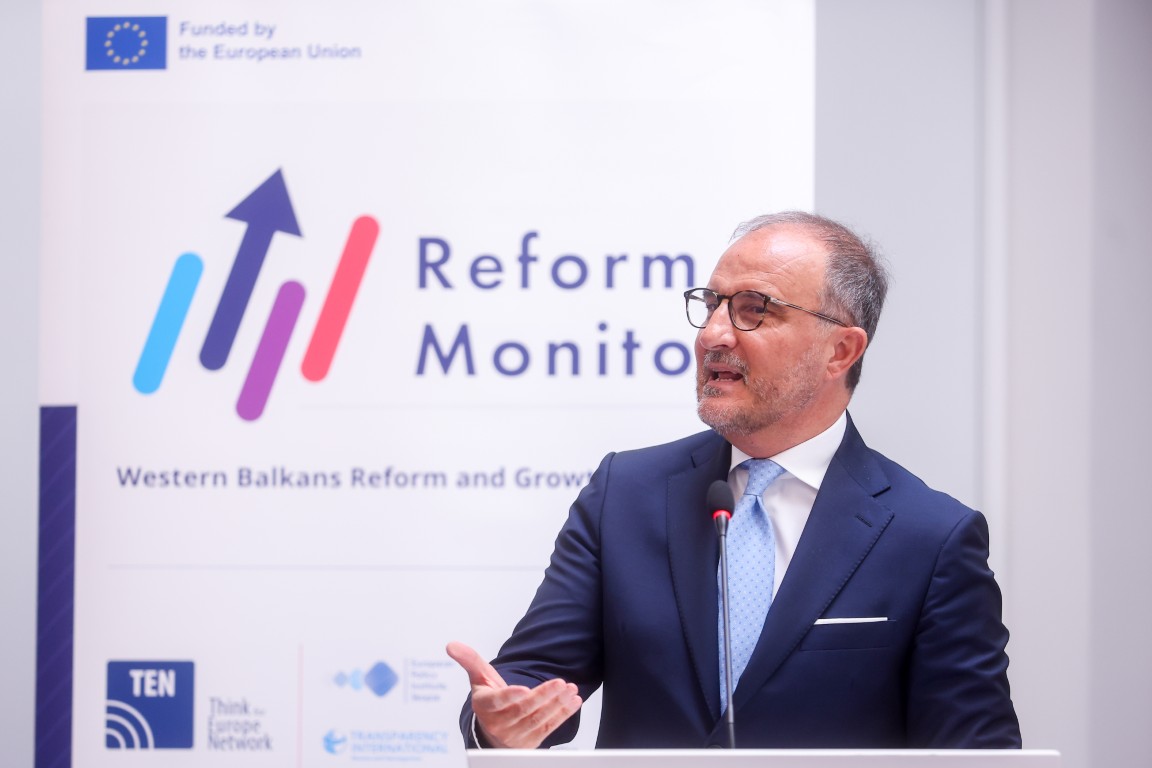
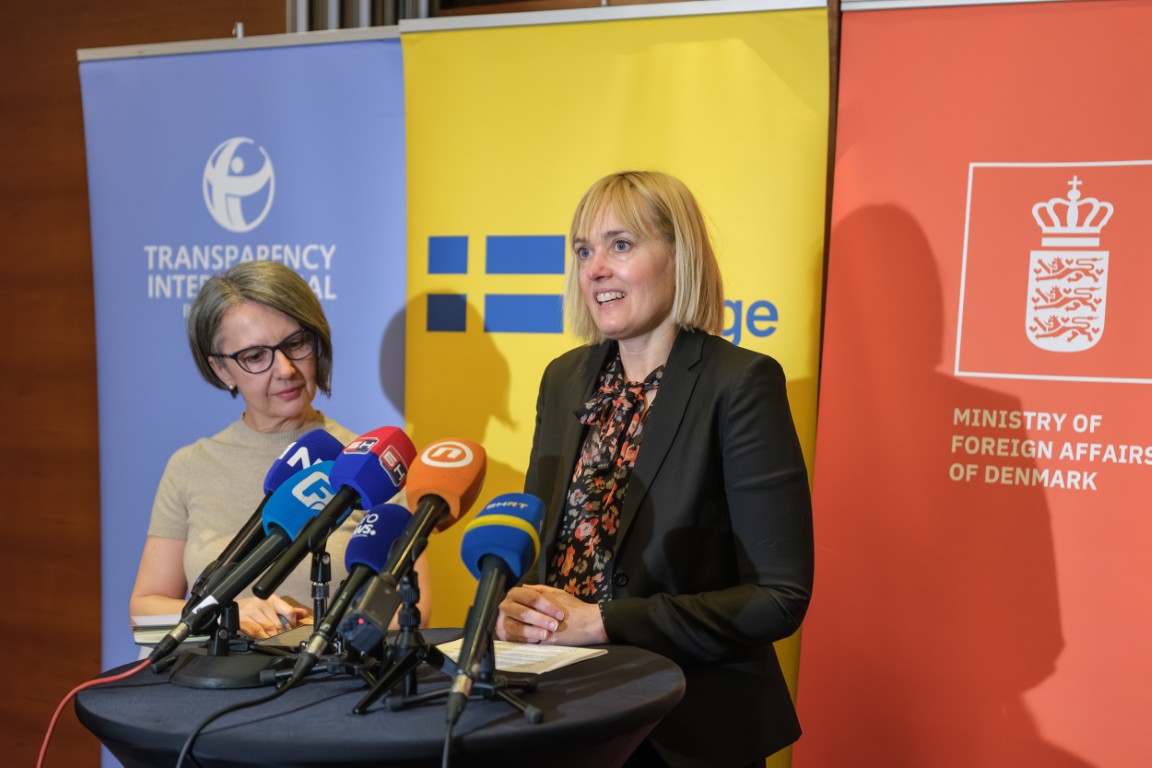
“The reforms in the Reform Agenda are the blueprint for an economic transformation in this country – one that will help it to use its considerable economic potential. This country has an educated population, a proud industrial tradition and is geographically located in the heart of Europe close to the European Single Market.” stated Luigi Soreca, Head of the EU Delegation to Bosnia and Herzegovina, adding that these advantages are not being utilized sufficiently.

“The education system needs urgent reform. Much of BiH’s industry relies on ageing technology, and needs to be modernised, including to take advantage of the clean energy revolution. BiH may be geographically close to the European Single Market, but barriers still exist to accessing it. The reforms in the Reform Agenda help bring these barriers down and move this country closer to receiving the benefits of EU membership. There is however also a cost to inaction – in the absence of reforms, regrettably, Bosnia and Herzegovina is at risk of losing EUR 373 million from its allocation under the Growth Plan, in addition to the EUR 108 million it lost last year” Soreca added.

Forum participants emphasized that the aforementioned funds from the Growth Plan are not a reward for declarative commitment to the European path, but support for countries that demonstrate political will, capacity, and responsibility to implement reforms. Therefore, BiH must appoint a national coordinator, establish a secretariat, a monitoring committee, and contact points for each reform step, so that it is clear who is responsible for implementation, monitoring, and reporting.

In addition, it was emphasized, the implementation process must be more open to the public, which means that the authorities must publish the Reform Agenda in the official languages of BiH together with a list of infrastructure projects to be financed from the Growth Plan, so that citizens know what the state has promised and where it plans to direct the available funds.

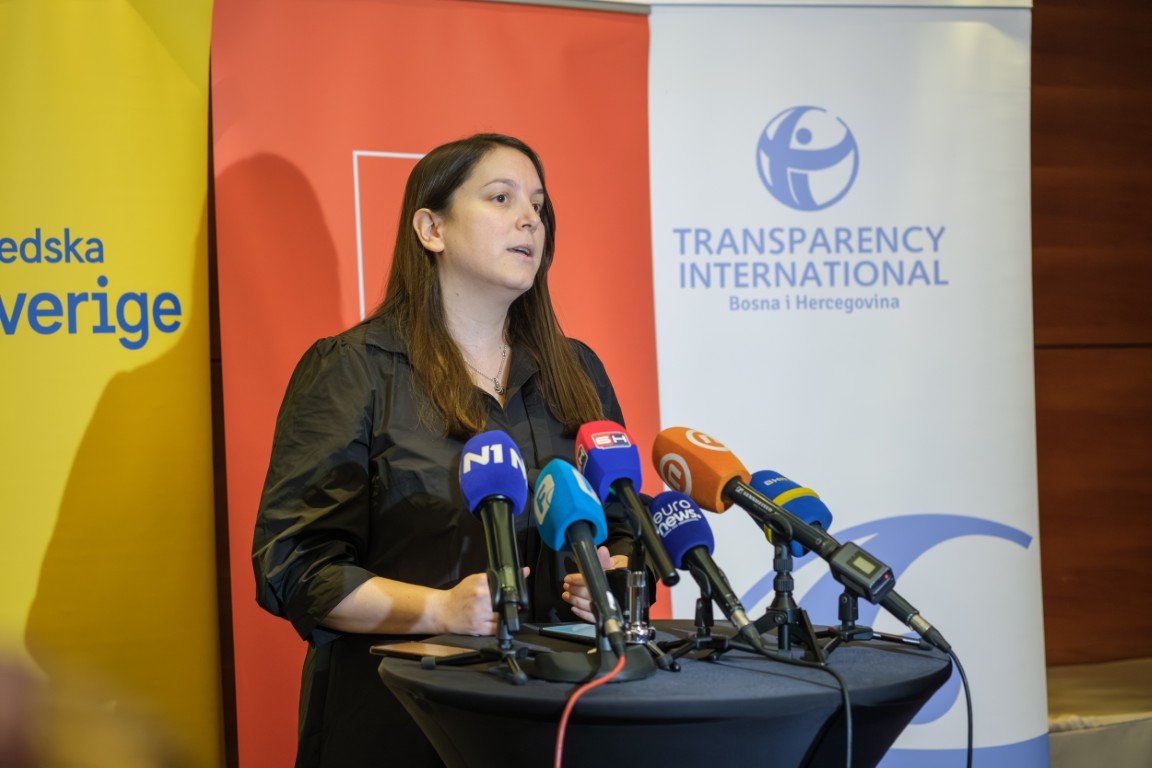
“The Growth Plan is a test of institutional responsibility, not just a financial opportunity. If the authorities in BiH are not prepared to implement the reforms they themselves undertook, then the problem is not only in the lost funds, but in the message that political representatives are sending to the EU and citizens. The attitude toward the Growth Plan today shows the real attitude toward BiH’s European path “, stated Ivana Korajlić, Executive Director of TI BiH.

TI BiH warns that when establishing the institutional framework, lessons learned from a decade of a dysfunctional coordination mechanism must be utilized. Through the new system, it is necessary to define clear responsibilities, deadlines, and mechanisms for overcoming blockages, so that the implementation of the Reform Agenda does not turn into another captured process.

Civil society and other relevant actors need to be included in the work of the monitoring committee through a transparent process and clear criteria, based on expertise, experience, and proven results. Only in this way can the monitoring and reporting process be of higher quality, more open, and focused on real results.

Continued delays and political blockages do not only mean the loss of available funds. They directly harm BiH’s credibility before the European Union and member states, and reduce the chances that the country will make a serious step forward toward opening negotiations in the near future. Therefore, TI BiH calls on the authorities to open the implementation process of the Reform Agenda to civil society and to use CONFRA BiH as a space for regular dialogue, monitoring progress, and addressing obstacles in fulfilling undertaken obligations.

Press rls_29_04_2026

Video message, Marta Kos, European Commissioner for Enlargement

Photo gallery
See also:

Level Of State Capture Of BiH: TI BiH Presents The “State Capture Index”, Parties Have Created A Parallel Universe

Sarajevo, December 9th 2025 – Bosnia and Herzegovina can be rated 2 out of a possible 5 on the State Capture Index – meaning that the power of political parties over...

TI BiH
Izvještaji za Mediae

Level Of State Capture Of BiH: TI BiH Presents The “State Capture Index”, Parties Have Created A Parallel Universe

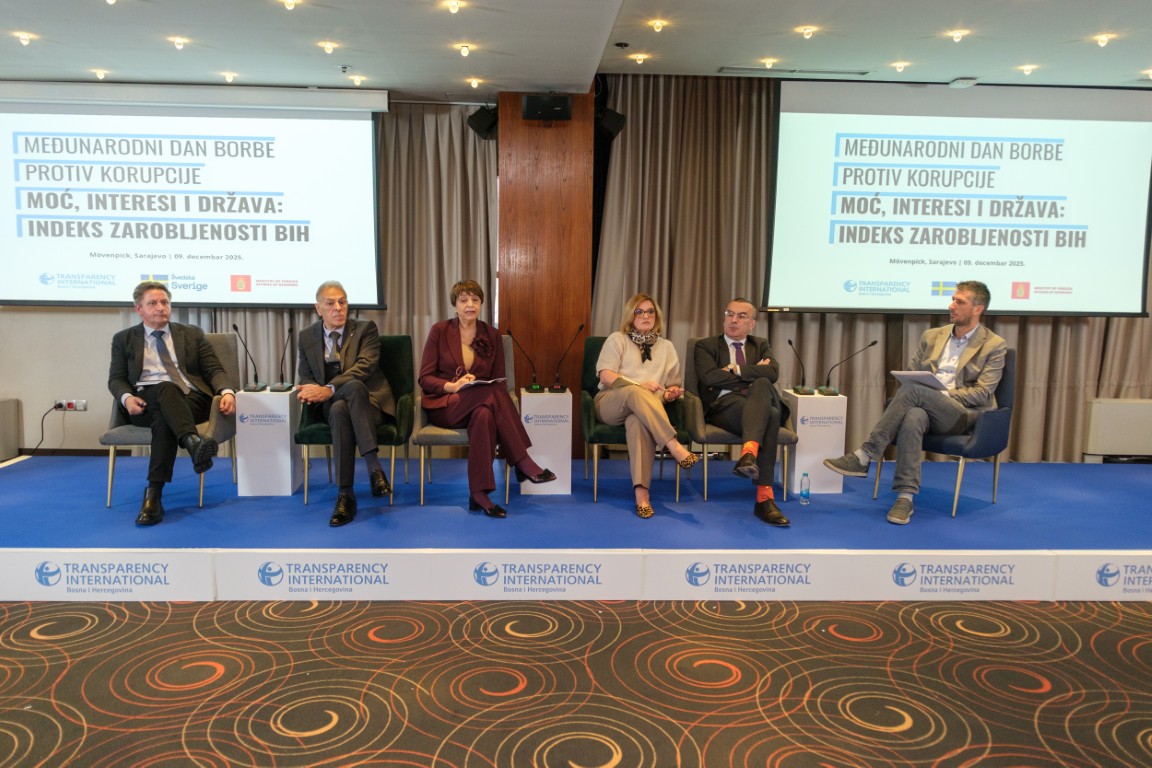
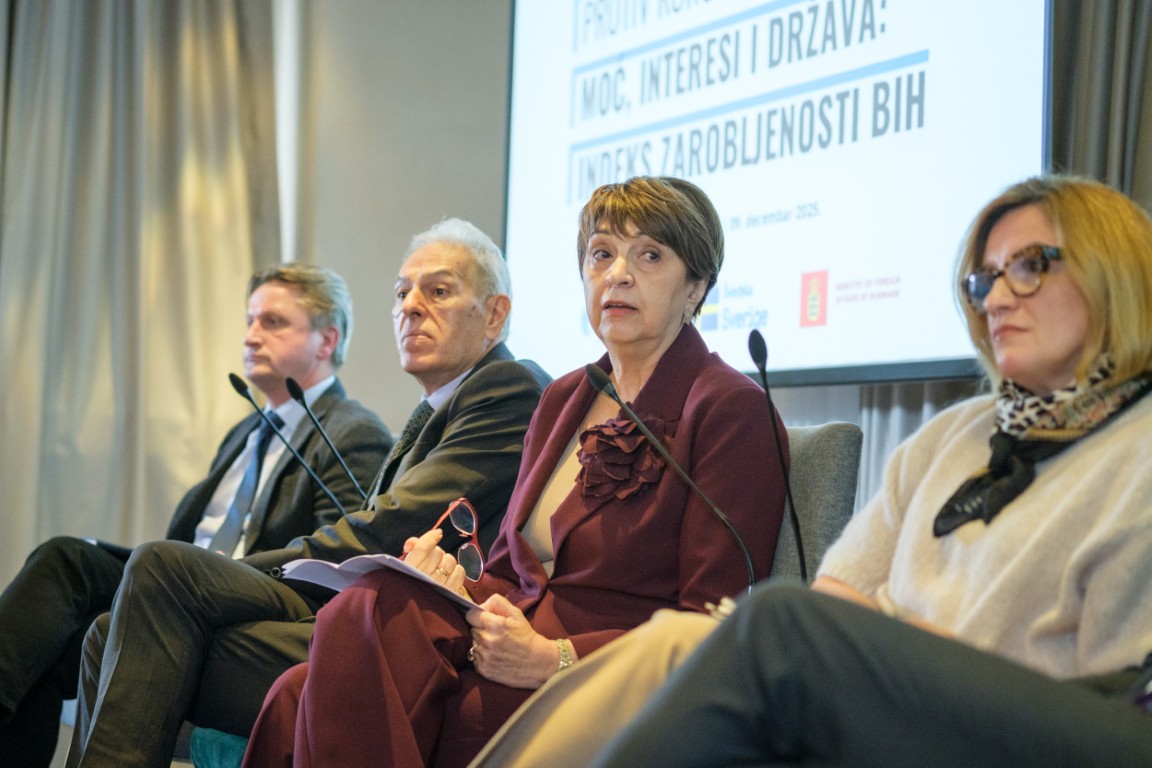
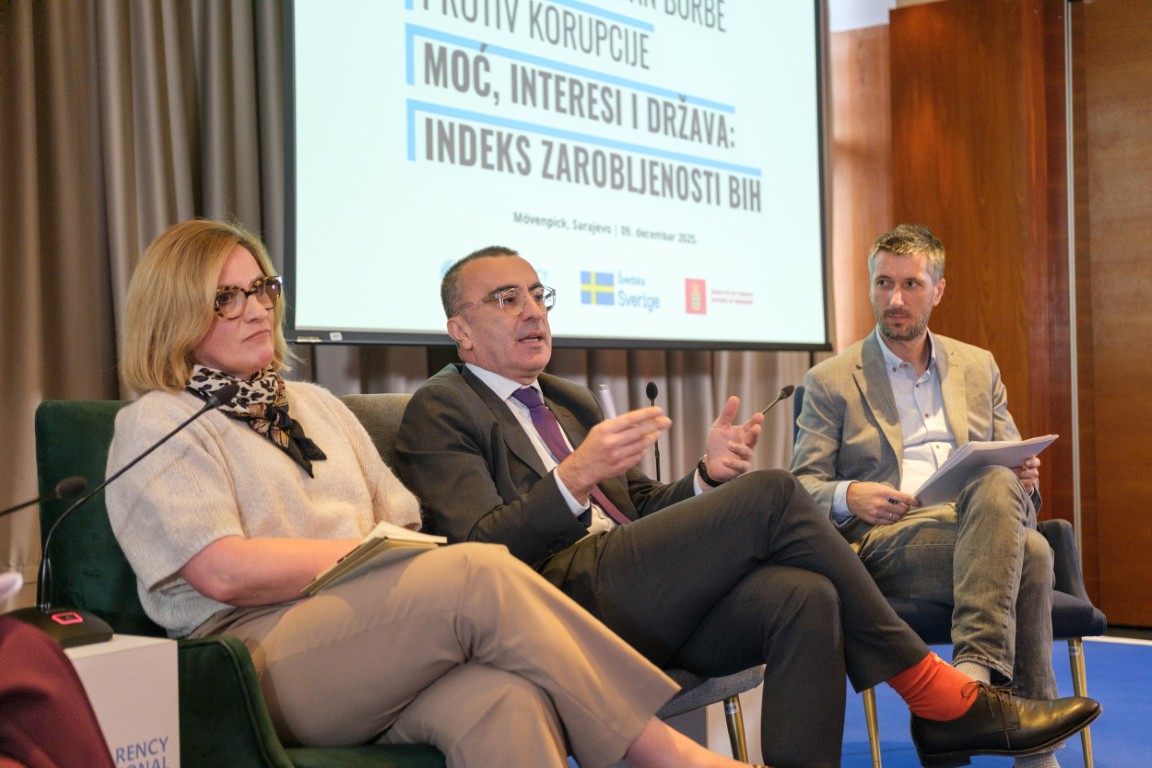
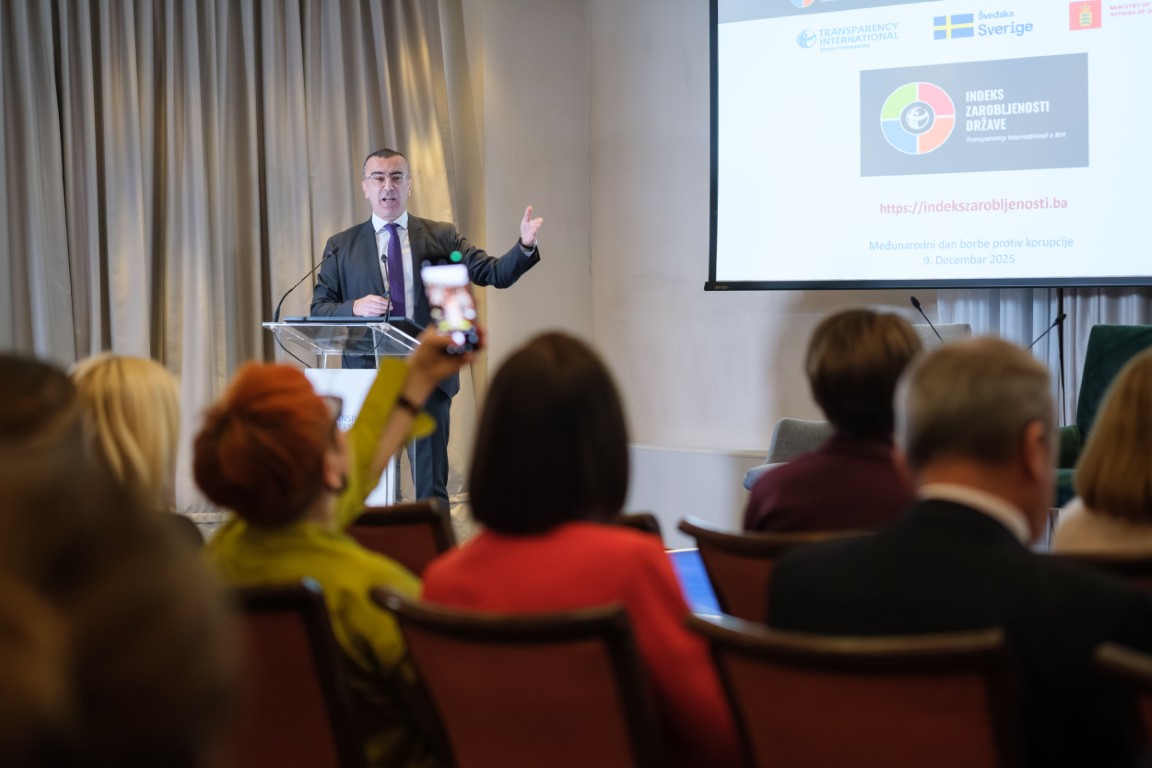
Sarajevo, December 9th 2025 – Bosnia and Herzegovina can be rated 2 out of a possible 5 on the State Capture Index – meaning that the power of political parties over institutions and public resources suppresses citizens’ interests and hinders the proper functioning of the state.

The State Capture Index, presented by Transparency International in BiH (TIBiH) on the occasion of International Anti-Corruption Day, measures key areas such as democratic processes (score 2), decision-making (2.5), accountability (2.5) and the distribution of resources (1.5 – the worst score). It points to serious systemic weaknesses, particularly the dominance of the executive over the legislative branch, which is supposed to oversee the work of the government. This conclusion is also found in the European Commission’s report on BiH, noting that “political authorities have failed to address widespread corruption and have actively hindered progress, leading to prolonged stagnation and increasingly evident signs of state capture.”

The analysis that underpins the Index shows that parties maintain their power by controlling resources and access to employment, keeping institutions under their influence, resulting in the absence of accountability and a weakening democracy. This is further reinforced by the lack of electoral integrity, leaving citizens unsure whether their vote truly counts and reflects their will, while efforts to establish any form of accountability system are systematically undermined. Such a situation allows political parties, through public procurement, concessions and employment in the public sector, to use public resources for the benefit of party networks rather than citizens. In addition, influence over accountability mechanisms—particularly oversight institutions, law-enforcement bodies and the judiciary—leads to selective enforcement of the law, while impunity remains widespread in BiH.

Moreover, the research finds that the media and civil society, although formally recognised as oversight actors in a democratic society, operate in a restricted environment, without real possibilities to fulfil their role in protecting the public interest and creating pressure for more accountable governance.

“We can describe the phenomenon of state capture as a parallel universe that is informal and operates alongside the official, institutional one. In that universe, parties dictate employment, manage state-owned companies and decide on tenders and concessions — in short, they divide resources. In this way, loyalty is rewarded and the system of state capture is maintained,” said Srđan Blagovčanin, lead author of the research and a member of TI BiH.

Blagovčanin stressed that the way out of this situation must follow two key directions: “We need to limit the power of political parties through their democratization, but also reduce the ‘spoils’ they control — by rationalizing the public sector, which is the source of their power,” he added, emphasising that political leaders cannot be expected to give up control over public resources voluntarily, which is why change must come from outside their control — from citizens, the private sector and civil society.

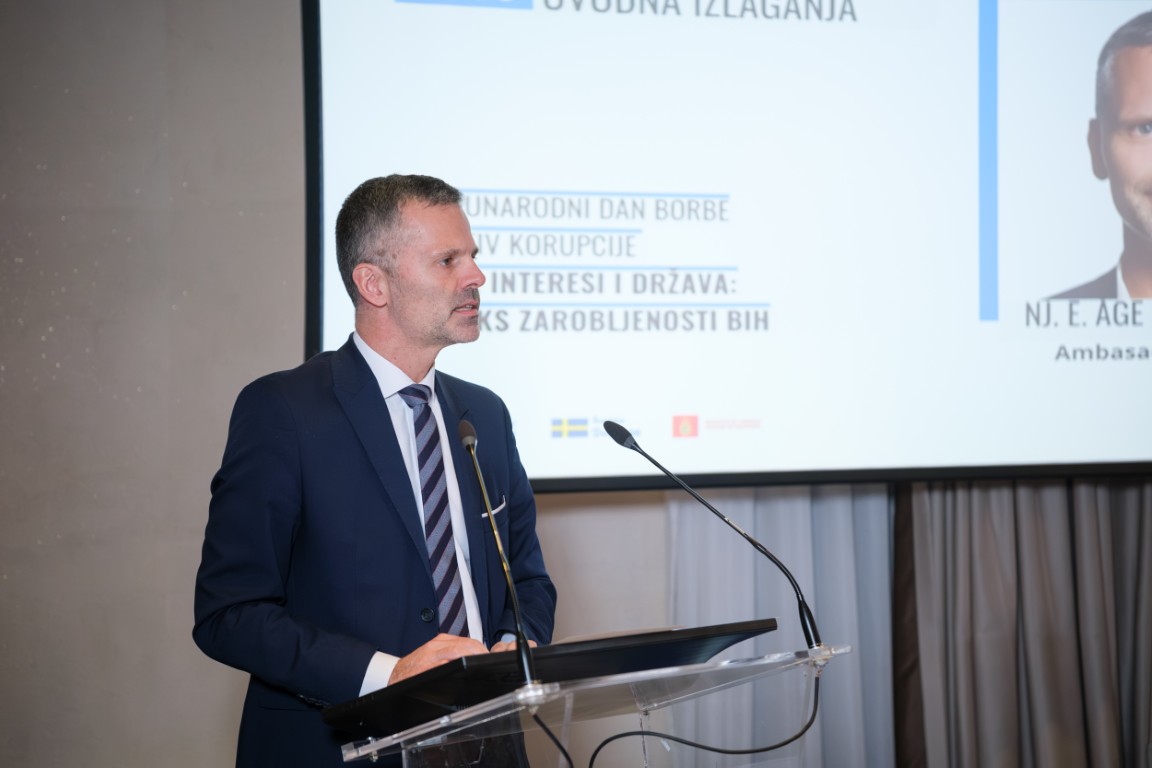
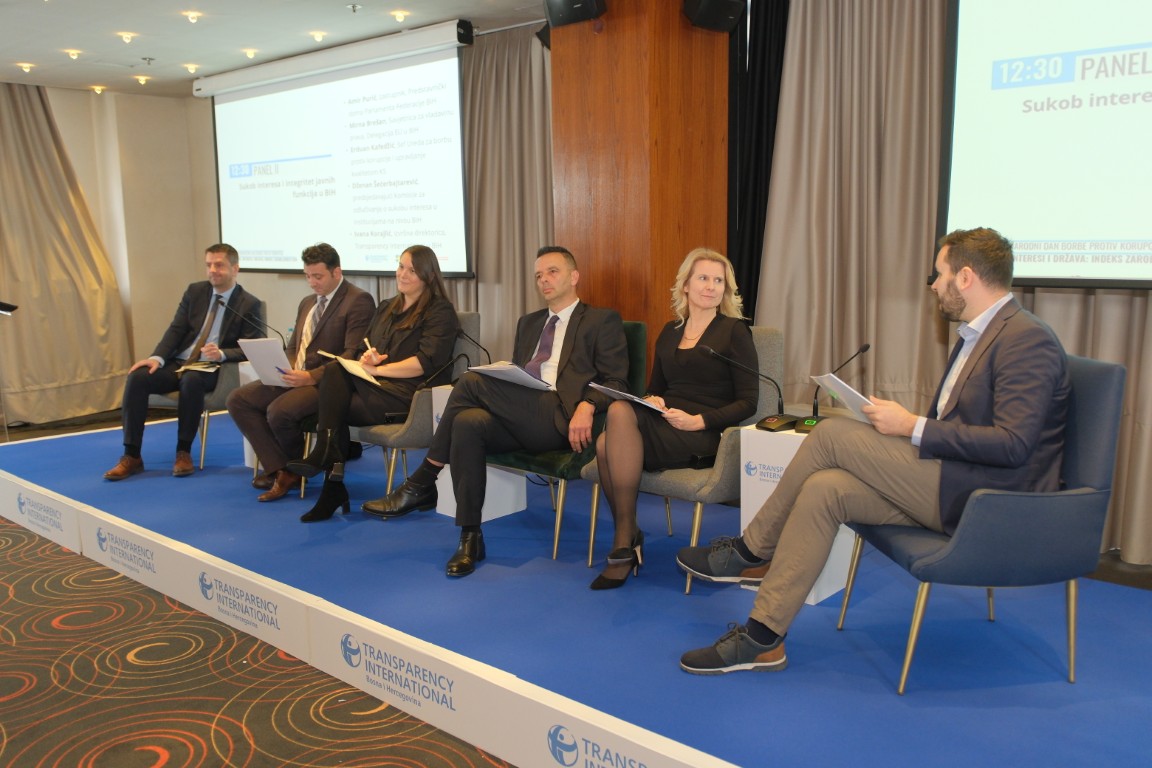
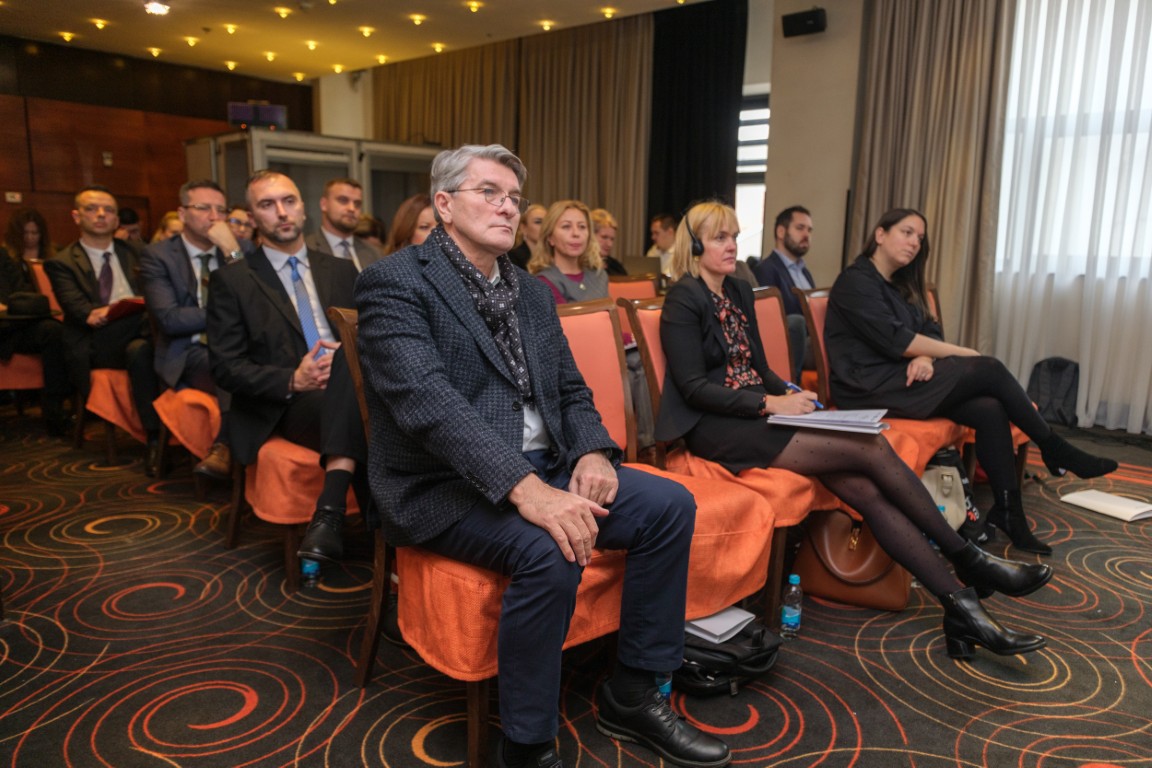
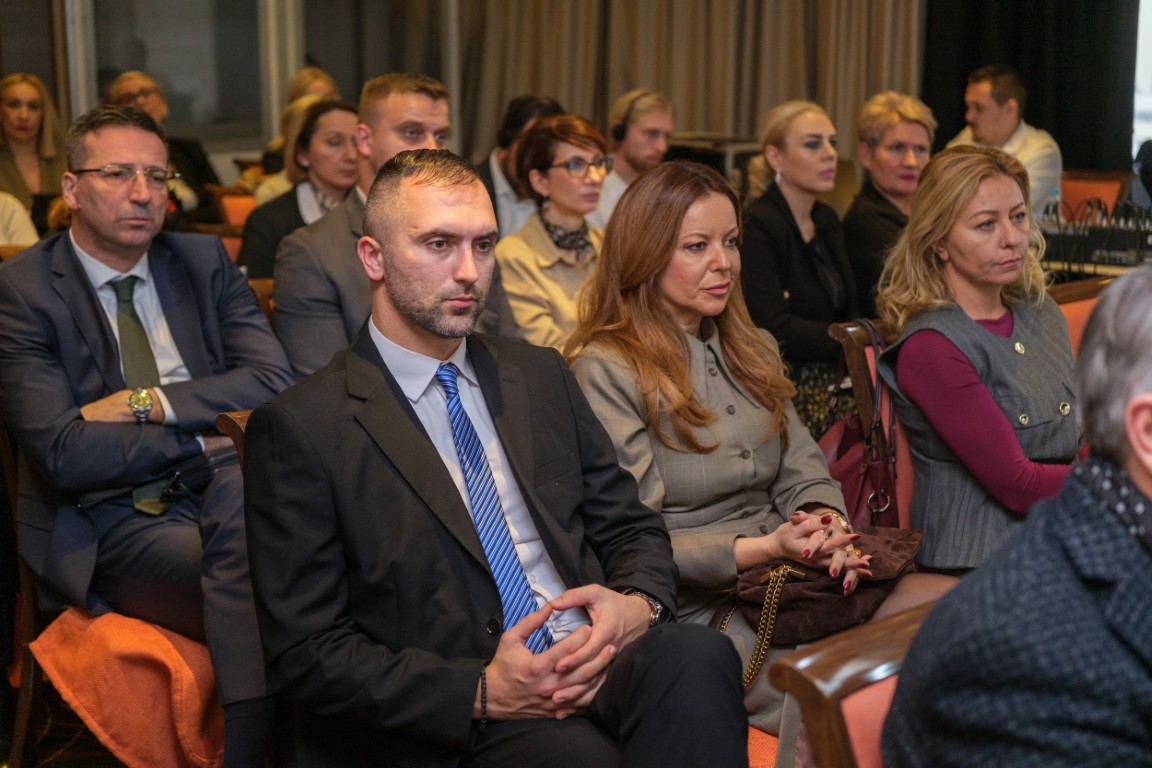
Because of these findings, part of the discussion at the conference “Power, Interests and the State: BiH State Capture Index”, organised with the support of Sweden and Denmark to mark 9 December, International Anti-Corruption Day, focused on establishing an effective system for preventing conflict of interest. On this occasion, an initiative and proposals were presented for a new Conflict of Interest Law at the Federation of BiH level, which has not been applied since 2013 and has been pending adoption for years. The proposals focus on establishing an independent body to enforce the law, creating a unified system for verifying asset declarations, and preventing private interests from influencing decision-making by public officials.

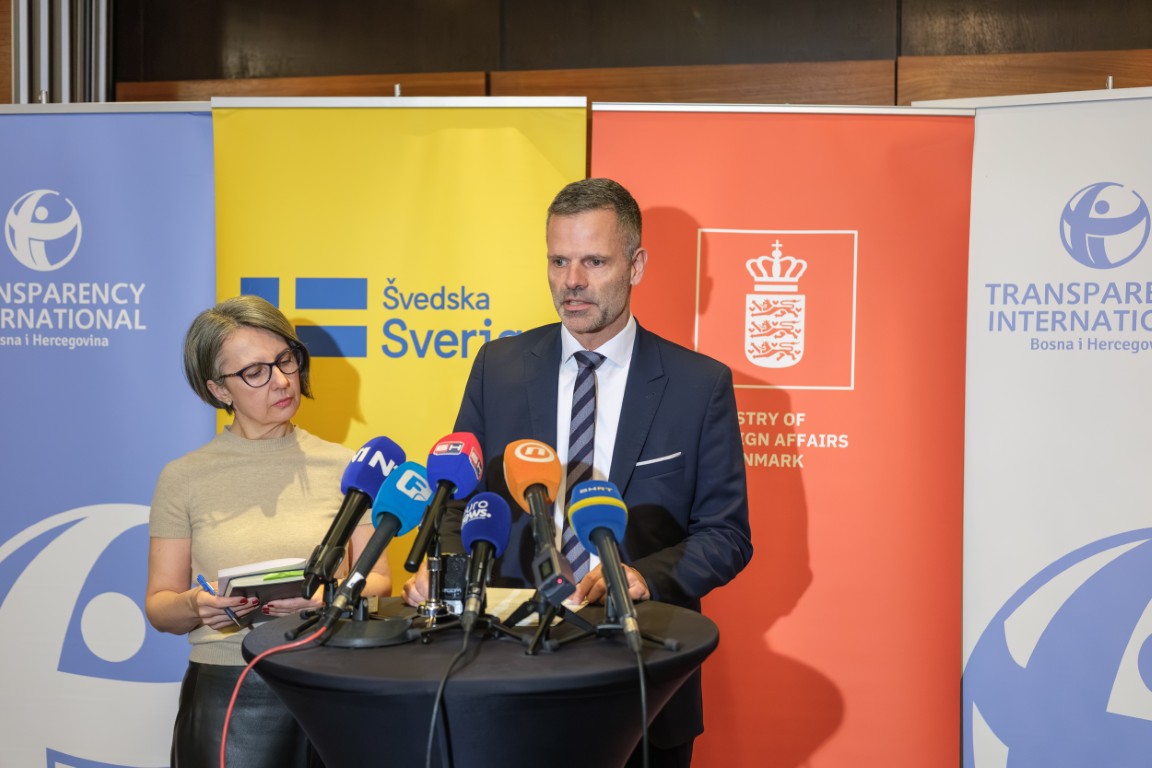
“The lack of transparency that lies at the heart of this problem threatens to undermine our efforts altogether, with dire consequences for citizens. Strengthening transparency, and rooting out corruption, is essential to realise Bosnia and Herzegovina’s progress towards EU integration.” said H.E. Åge Sandal Møller, Ambassador of Denmark to Bosnia and Herzegovina, which together with Sweden supported the conference and the research itself.

Sara Lindegren, Deputy Ambassador of Sweden to Bosnia and Herzegovina, noted in her address that “Corruption remains one of the greatest threats to the progress of Bosnia and Herzegovina. The recent European Commission country report sends a serious warning: corruption is growing, and institutions are increasingly exposed to political influence,” adding that signs of state capture and a lack of progress in key areas, from the judiciary to public administration and electoral integrity, demand urgent action.

Press rls_9_12_2025

Worst Result Yet: BiH Among the Three Lowest-Ranked Countries in Europe in Terms of Corruption

Sarajevo, 11 February 2025 Bosnia and Herzegovina has suffered a significant decline in this year’s Corruption Perceptions Index (CPI), recording its worst score to date with 33...

TI BiH
Izvještaji za Mediae

Worst Result Yet: BiH Among the Three Lowest-Ranked Countries in Europe in Terms of Corruption

Sarajevo, 11 February 2025 Bosnia and Herzegovina has suffered a significant decline in this year’s Corruption Perceptions Index (CPI), recording its worst score to date with 33 points, placing it alongside Belarus as the second worst-ranked country in Europe. This represents a drop of two points compared to last year and a decline of nine points since 2012, when BiH was among the better-ranked countries in the region. Today, it sits at the bottom of the Western Balkans, which on average shows slight progress.

The latest drop was heavily influenced by the collapse of integrity in the electoral process, as serious allegations of electoral fraud have plagued several election cycles. BiH now ranks alongside authoritarian regimes where governments have never changed through elections. Amendments to the electoral law imposed by the High Representative failed to address the issue, as the Central Election Commission effectively nullified most of the provisions meant to prevent abuse of public resources and manipulation of polling boards.

In a country with a façade of democracy, a government facing a legitimacy crisis is intensifying pressure on critics. This has been most visible in Republika Srpska through a series of attacks on civil society and the adoption of repressive laws aimed at silencing independent media and disabling associations not controlled by the government. This year’s TI report emphasizes that strong democratic institutions are key to effective anti-corruption efforts. Fully democratic states average a CPI of 73, flawed democracies 47, while non-democratic regimes average 33 – the exact score BiH received this year.

The focus of this year’s global CPI research is the impact of corruption on the environment. It shows how powerful individuals profiting from environmental destruction use their wealth and influence to buy government support and suppress dissent. This is highly relevant to BiH, where, following the tragedy in Jablanica and numerous ecological issues (such as Bistrica, Lopare, Ozren, Vareš, Livno, and the Gudron pit in Modriča), it has become clear that profits for a few matter more to authorities than the lives, safety, and health of local populations. TI BiH’s data on concessions show that the state earns modest revenues from significant natural resources, while individuals benefit due to weak laws and non-transparent governance, avoiding obligations and acquiring public assets at the expense of the public interest.

The dire state of the judiciary remains BiH’s weakest link. TI’s regional report notes that upcoming judicial reforms still contain many shortcomings. These reforms fail to improve the appointment process or ensure effective asset checks for judges and prosecutors. Last year’s amendments to the HJPC Law, intended to address these issues, have yet to be implemented. The captured judiciary continues to show poor results in prosecuting high-level corruption. Despite some convictions of senior officials in the Federation last year, the most serious corruption scandals remain unresolved.

Given all this, institutions must undertake urgent reforms. In its comprehensive National Integrity Study, Transparency International outlined anti-corruption steps across key sectors. These include regulating conflict of interest, systemic whistleblower protection, stronger oversight of the executive, electoral reform, and strengthening the independence of the judiciary and other law enforcement agencies – all of which align with BiH’s path toward EU integration.

Press rls_11.2.25

Additional content


Initiative for monitoring EU integration: It is time for a fundamental step forward in reforms on the way to BiH’s membership in the EU

Initiatives for monitoring European integration: "We welcome the decision to open accession negotiations between BiH and the EU - it is time for a fundamental step forward in fulfilling reforms on BiH's path towards EU membership"

The initiative for monitoring EU integration, as the only coalition of non-governmental organizations that monitors the process of negotiations and accession to the EU, welcomes...

TI BiH
Izvještaji za Mediae

Initiative for monitoring EU integration: It is time for a fundamental step forward in reforms on the way to BiH’s membership in the EU

The initiative for monitoring EU integration, as the only coalition of non-governmental organizations that monitors the process of negotiations and accession to the EU, welcomes the decision to open negotiations between Bosnia and Herzegovina and the European Union. After the formal opening of negotiations, it is time for BiH institutions to return to serious work on fulfilling the necessary conditions referred to by the European Council. This is only the first step in the long process of approaching EU standards, and it is necessary to engage all the available capacities this country has. In order for Bosnia and Herzegovina to make real progress in this sense, it is necessary to implement all the foreseen steps and approach the participatory process of integration into the EU community.

The annual reports of this Initiative, as well as several domestic and international analyses, showed that the BiH authorities did not systematically approach the fulfillment of the conditions, and that some of the reform laws represented only “cosmetic changes”, and were most often adopted in urgent procedures – without the opportunity for serious involvement of civil society and professional public. The country continues to face the following challenges:

  1. Lack of progress in the implementation of reforms: despite the decision to open negotiations, we are still, as a society, faced with minimal progress in the implementation of key reforms required for membership. Bosnia and Herzegovina still has to adopt a series of reforms, including the Law on Courts, creating conditions for the functioning of the coordination mechanism, and preparing and adopting a program for the application of the EU acquis;
  2. Strong international pressure and geopolitical circumstances as a basis for bringing the country closer to full integration with the EU: the members of the Initiative require the decision-makers to communicate more clearly about the significance of the geopolitical circumstances that arose after Russia’s invasion of Ukraine in 2022 and the impact of these changes on European soil on the opening of negotiations with BiH. Also, the influence of international mediators, as well as the presence of the European Union in Bosnia and Herzegovina, played a primary role in the adoption of part of the reforms and the decision to open negotiations;
  3. The process of adopting laws and making decisions, which were key to the opening of negotiations, were characterized by a lack of transparency through the implementation of urgent procedures for adopting laws without adequate consultations with the civil sector and the public: we expect that the processes will be more transparent and that through the process of European integration citizens’ trust in the institutions of our country will be restored.

Taking into account the aforementioned challenges, the decision to open negotiations represents an opportunity to return the process of adoption of reforms to the institutions, while giving a more significant role to experts and civil society, with the aim of ensuring the best benefits for the citizens of BiH.

The European integration monitoring initiative calls on decision-makers to take responsibility for the implementation of reforms and ensure the inclusion of civil society and citizens in decision-making processes. Also, the members of the Initiative remind the decision-makers that only after the adoption and implementation of the reforms will follow the screening process (analysis of compliance of the legislation of the candidate country with European regulations), which will give Bosnia and Herzegovina a clear picture of Bosnia and Herzegovina’s perspective and the country’s approach to the European Union.

The initiative for monitoring European integration will continue to monitor the next steps and will insist on the quality of legal solutions that will create a democratic and functional system.

Bosnia and Herzegovina should take advantage of new EU enlargement signals for key reforms towards democratization and the fight against corruption

Sarajevo, October 31, 2023 – Renewed EU interest in the enlargement process for the countries of the Western Balkans should serve as a motivation for accelerating essential...

TI BiH
Izvještaji za Mediae

Bosnia and Herzegovina should take advantage of new EU enlargement signals for key reforms towards democratization and the fight against corruption

Sarajevo, October 31, 2023 – Renewed EU interest in the enlargement process for the countries of the Western Balkans should serve as a motivation for accelerating essential reforms, primarily in the field of democratization and strengthening the rule of law, it was said at the “EU Integration Forum” conference, organized today by Transparency International in Bosnia and Herzegovina in Sarajevo.

Instead of the previous declarative decisions for integration, the leaders of the countries of the region should initiate a whole series of brave but necessary steps in order to achieve stronger legal, political, economic and developmental integration, it was said at the conference.

“It is time for expansion, but it is up to Bosnia and Herzegovina to take the necessary steps and initiate reforms towards further integration with the European Union,” said Adebayo Babajide, Deputy Head of the Delegation of the European Union to Bosnia and Herzegovina at the opening of the conference.

During the panel discussions, the participants noted that BiH is experiencing constant deterioration in numerous areas such as the rule of law and corruption, which has become almost unpunishable due to the captivity of the judiciary and other institutions. At the same time, authoritarian trends are increasingly present in the country through laws that violate basic human rights and freedoms, which is most visible in Republic of Srpska, where defamation has been returned to the criminal code with announcements of even more rigorous laws that will suppress the work of the media, non-governmental organizations and individuals who are not under the control of the authorities.

All this indicates that BiH is in a state of institutional captivity and at the limit of basic functionality, which is why the ability to respond to the challenges of the negotiation process with the EU is called into question.

“The existing dysfunctional management structure in BiH will hardly be able to respond to the challenges of the negotiation process,” said Srđan Blagovčanin at the opening of the conference, adding that BiH has not yet adopted an integration program, which shows that the existing coordination mechanism is completely dysfunctional.

The conference also dealt with the issue of challenges facing the EU itself, which is going through the longest period since not a single new member was accepted and which, the participants agreed, is ripe for reforms in terms of the internal functioning, in order to create a sufficiently attractive space for political and economic integration of neighboring countries, such as the countries of the Western Balkans.

The conference, which was organized by Transparency International in BiH with the support of the Kingdom of Sweden, was attended by Adebayo Babajide, Deputy Head of the Delegation of the European Union in Bosnia and Herzegovina, Birgitta Jansson, representative of the Swedish Embassy in BiH, Srđan Blagovčanin, Chairman of the Board of Directors of TI BiH and regional experts from area of the rule of law, EU integration, representatives of domestic institutions and international organizations, civil society organizations, the academic community and the media.


BOSNIA AND HERZEGOVINA WORST IN THE REGION ACCORDING TO THE CORRUPTION PERCEPTION INDEX: BIH COMPLETELY DEVASTED BY CORRUPTION – THE SITUATION IS GETTING WORSE

While numerous countries in the region are moving forward, Bosnia and Herzegovina has fallen by as many as 8 index points since 2012 and, along with Turkey, in this year's TI global report, it was singled out as an example of the biggest decline compared to 2012 in the region of Eastern Europe and Central Asia.

Sarajevo, January 31, 2023 – Bosnia and Herzegovina once again fell behind in this year’s survey of the Corruption Perception Index (CPI) published by Transparency...

TI BiH
Izvještaji za Mediae

BOSNIA AND HERZEGOVINA WORST IN THE REGION ACCORDING TO THE CORRUPTION PERCEPTION INDEX: BIH COMPLETELY DEVASTED BY CORRUPTION – THE SITUATION IS GETTING WORSE

Sarajevo, January 31, 2023 – Bosnia and Herzegovina once again fell behind in this year’s survey of the Corruption Perception Index (CPI) published by Transparency International (TI) and ranks by far the lowest in the region and third worst in Europe when it comes to the state of corruption in the country. Only Russia and Ukraine achieved a result worse than Bosnia and Herzegovina, which, with a score of 34 on a scale of 0 to 100, is among the countries where the state of corruption is worsening the most. While numerous countries in the region are moving forward, Bosnia and Herzegovina has fallen as many as 8 index points since 2012 and, along with Turkey, in this year’s TI global report, was singled out as an example of the biggest decline compared to 2012 in the region of Eastern Europe and Central Asia.

BiH records the worst trend of all surrounding countries, which is best illustrated by the example of Kosovo, which from 2012 to 2022 progressed from a score of 34 to 41 index points, while in the same ten years BiH fell from 45 to 34 points. In the key findings for the region of Eastern Europe and Central Asia, it is stated that the countries of the Western Balkans cannot suppress organized crime due to the deterioration of the rule of law and a captive judiciary.

It was especially emphasized that Bosnia and Herzegovina is at a historic low, and that ethnic divisions are hindering democratic institutions needed to fight corruption, which was especially evident in the Prosecutor’s Office of Bosnia and Herzegovina, for which it is stated that there are serious doubts about its ability to prosecute corruption, and that the appointment of the new chief prosecutor of BiH took place in a very flawed procedure in which three of the four original candidates either gave up or were eliminated. Numerous corruption scandals, resignations and the very method of selecting the chief prosecutor have seriously called into question the integrity of the Prosecutor’s Office, it was stated in the regional announcement.

Due to this situation, a number of important cases of organized crime and corruption, including those involving high officials, have not been processed in the judiciary for years. Just one of the latest examples is the trial for those responsible for the crime in Bobar Bank worth over 100 million BAM, which after a long judicial farce ended with the acquittal of one of the first defendants in this case, and numerous other corruption cases had a similar epilogue.

It should also be noted that the General Election in 2022 was accompanied by a series of scandals involving theft of votes, election committees trafficking and abuse of public resources. This problem was not solved by the imposition of amendments to the Electoral Law by the High Representative, whose actions only further deepened the political crisis and did not solve the problem of complete blockade of the government, which continues to act primarily as an instrument of political parties to strengthen their own control over all processes in the state.

Evaluating the findings of the Index, the Chairman of the Management Board of TI BiH, Srđan Blagovčanin pointed out:

“Not only there is no strategy, policy or activity of state institutions to prevent corruption, but state institutions, completely captured by political control, focus their activities almost entirely on causing corruption. Unfortunately, corruption has become the primary reason for the existence of institutions. A special danger for the state is the complete symbiosis of organized crime and state institutions, which will lead to further destabilization of the country and the collapse of security.”

Srđan Blagovčanin, Chairman of the Management Board of TI BiH


This year’s TI report emphasizes that corruption has led to serious consequences for global peace because it causes decline of democracy and strengthening of authoritarian leaders, while peace and stability become endangered in countries with a lower index. These tendencies have been present in BiH for years, and as stated in the TI report, “an additional reason for concern is the leader of the Republic of Srpska and his recent mention of the Criminal Defamation Law which could be used to silence independent critics.”.

In the past year, Bosnia and Herzegovina received candidate status for membership in the European Union, but this took place without the implementation of essential reforms from 14 priorities, so the poor result of the CPI in Bosnia and Herzegovina was expected primarily due to the absence of key reforms such as amendments to the Election Law and the Law on Political Parties Financing, the Law on Conflict of Interest, the Law on Protection of Whistleblowers on Corruption, the law on the High Judicial and Prosecutorial Council, and attempts to adopt laws that are worse than the existing ones under the guise of reforms are particularly worrying.

Urgent action to prevent further deterioration of the country is imposed as a priority, without which it is impossible to expect the initiation of important reform processes.

TI BIH, in cooperation with international and domestic experts, drafted a proposal for the Good Governance Agenda 2025, thus offering an innovative approach to governance challenges in the country, caused by dominant capture of the state by ethno-national elites. The Agenda presents a set of anti-corruption measures beyond the typical and conventional, which could potentially free these efforts from obstruction by political elites.

Some of the measures refer to: implementation of systemic functional audits of the public sector in order to optimize it, centralization of public procurement, integrity improvement of the electoral process and political parties.

Press rls_31.1.23_

Presentation of CPI 2022 findings

More on the Results of the CPI Corruption Perceptions Index Survey for 2022


TI BiH welcomes the recommendation for conditional candidate status, but warns that the situation in BiH has deteriorated dramatically

TI BiH calls on the EU to intensify the support, as well as the pressure on the BiH authorities, with a special focus on rule of law and democratization, since granting the candidate status in itself will not bring much significance for a country that is in a deep institutional and political crisis,

Banja Luka, October 13th, 2022 – Transparency International in BiH (TI BIH) welcomes the decision of the European Commission to recommend the conditional granting of...

TI BiH
Izvještaji za Mediae

TI BiH welcomes the recommendation for conditional candidate status, but warns that the situation in BiH has deteriorated dramatically

Banja Luka, October 13th, 2022 – Transparency International in BiH (TI BIH) welcomes the decision of the European Commission to recommend the conditional granting of candidate status, which is positive news for Bosnia and Herzegovina in the context of new geopolitical relations, but warns that the state of corruption and the rule of law in the country has dramatically deteriorated since the publication of 14 priorities. 

Since the publication of the Opinion of the European Commission on BiH application for EU membership, BiH has fully fulfilled only one of the 14 priorities, while in the area of the rule of law and the fight against corruption, to which most of the priorities refer, the situation has dramatically worsened. According to research by Transparency International, BiH is globally ranked among the countries with the most serious decline in the fight against corruption, and is among the three worst countries in Europe according to the Corruption Perception Index. 

A key part of the priority regarding strengthening the integrity of judiciary not only was not implemented, but the situation in that segment has further deteriorated. An illustrative example of this is the process of appointing the Chief Prosecutor of BiH, which was carried out in a way that causes serious doubts about the integrity of the process itself, which makes it compromised and not credible basis for the appointment of the top person of the Prosecutor’s Office of BiH. Even the EU report that was published yesterday states that “political leaders and judicial institutions have failed to tackle widespread corruption and have actively blocked progress, leading to long-term stagnation and increasing signs of political state capture“. 

It is further stated that the overall results in preventing and suppressing corruption (including high-level corruption) remained insignificant, due to operational inefficiency and political interference in the judiciary. 

In the period since the publication of the Opinion of the European Commission, the government at the state level was almost completely blocked, while in the Federation of BiH it was not even constituted since the General Elections in 2018. The arbitrary actions of High Representative, which are in contrast to fundamental democratic standards and human rights and according to which changes to the Election Law and the FBiH Constitution during the election process were imposed, further distanced BiH from fulfilling the conditions for EU membership and contributed to a deep institutional and political crisis in the country. 

The elections that were held in Bosnia and Herzegovina on October 2 were neither fair nor honest, they were marked by brutal misuse of public resources, threats, manipulations and violations of the integrity of the electoral process. 

TI BiH calls on the EU to intensify the support, as well as the pressure on the BiH authorities, with a special focus on rule of law and democratization, since granting the candidate status in itself will not bring much significance for a country that is in a deep institutional and political crisis, apart from BiH formally becoming “captured state candidate for membership” instead of a “captured state potential candidate for membership “. 

Press rls_13.10.22_en

BiH is among the three worst countries in Europe according to the Corruption Perceptions Index for 2021.

Sarajevo, January 25, 2022 – According to this year’s Corruption Perception Index (CPI), Bosnia and Herzegovina took the third worst place in Europe with a score of...

TI BiH
Izvještaji za Mediae

BiH is among the three worst countries in Europe according to the Corruption Perceptions Index for 2021.

Sarajevo, January 25, 2022 – According to this year’s Corruption Perception Index (CPI), Bosnia and Herzegovina took the third worst place in Europe with a score of 35, on a scale from 0 to 100, which positions it at 110. place of 180 countries, and only Ukraine and Russia have a worse result. The assessment is the same as last year and is the worst in the last decade, because BiH, unlike neighboring countries, has not made any progress in the fight against corruption, primarily due to political obstruction of key reforms. (more…)

BiH is among the countries where the state of corruption is deteriorating the most, life-threatening citizens

Corruption Perception Index for 2020 ranks BiH at 111. place of 180 countries, with a score of 35 (scale 0 -100), which is the worst score since 2012. BiH is again ranked among...

TI BiH
Izvještaji za Mediae

BiH is among the countries where the state of corruption is deteriorating the most, life-threatening citizens

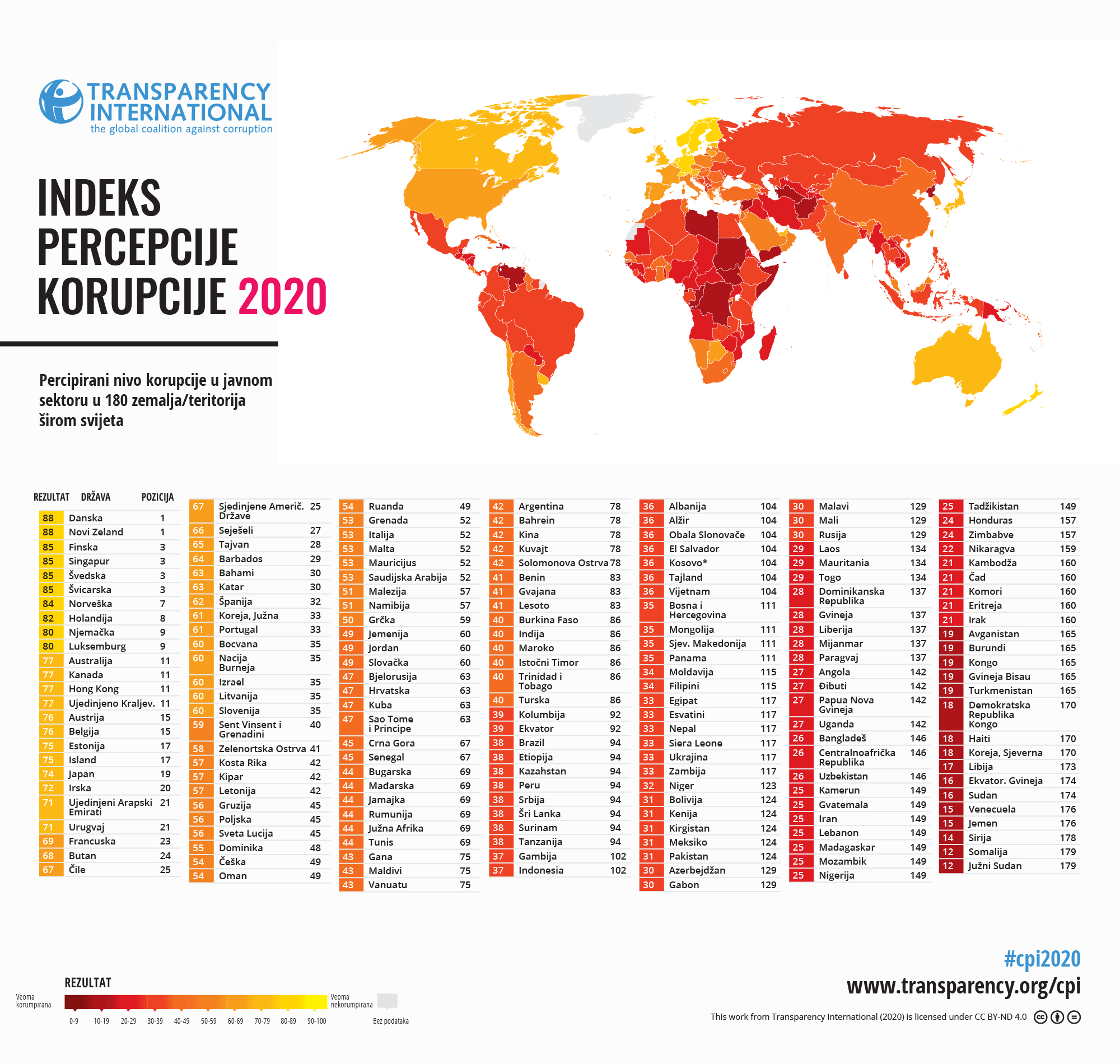
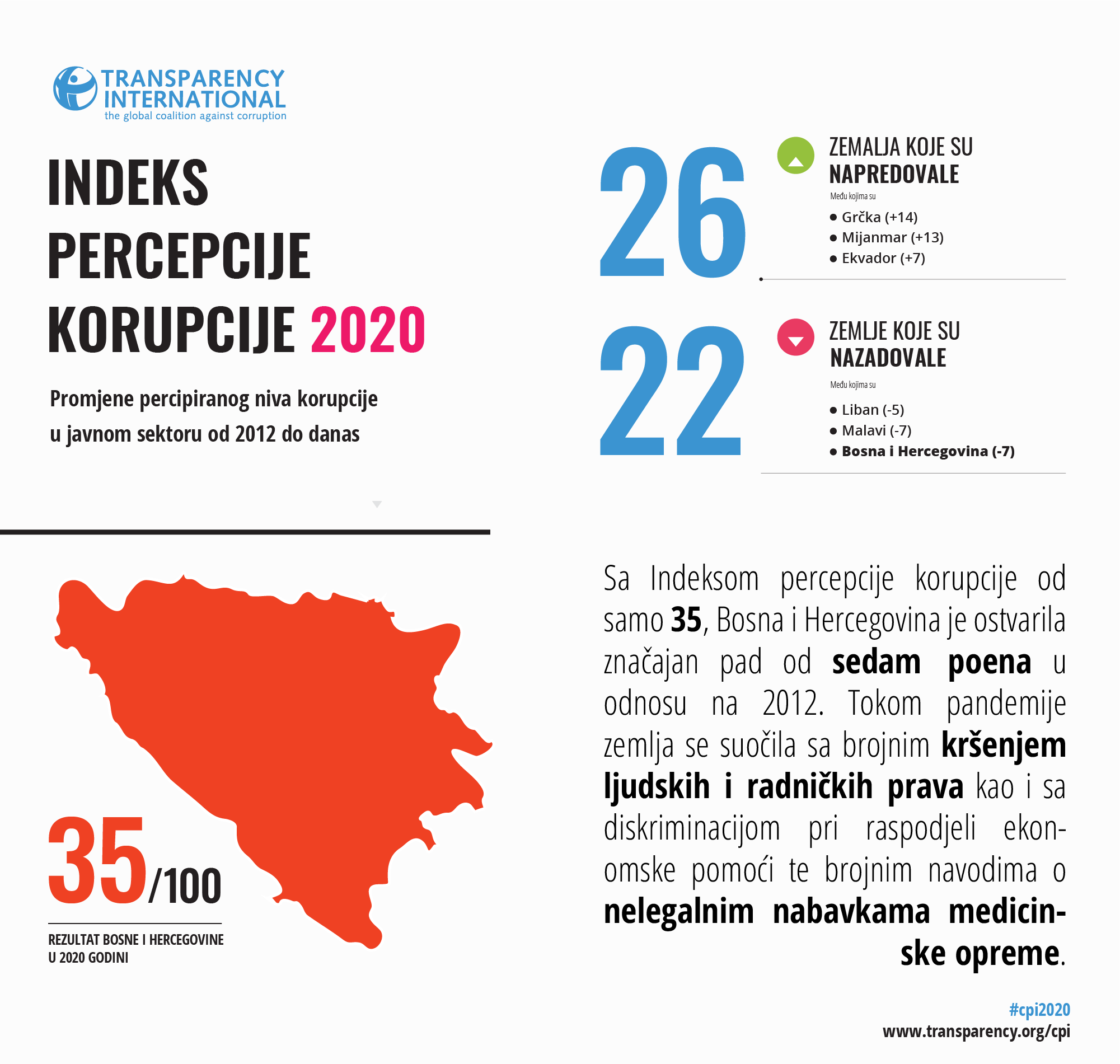
Corruption Perception Index for 2020 ranks BiH at 111. place of 180 countries, with a score of 35 (scale 0 -100), which is the worst score since 2012. BiH is again ranked among the countries lagging behind the most in the fight against corruption.

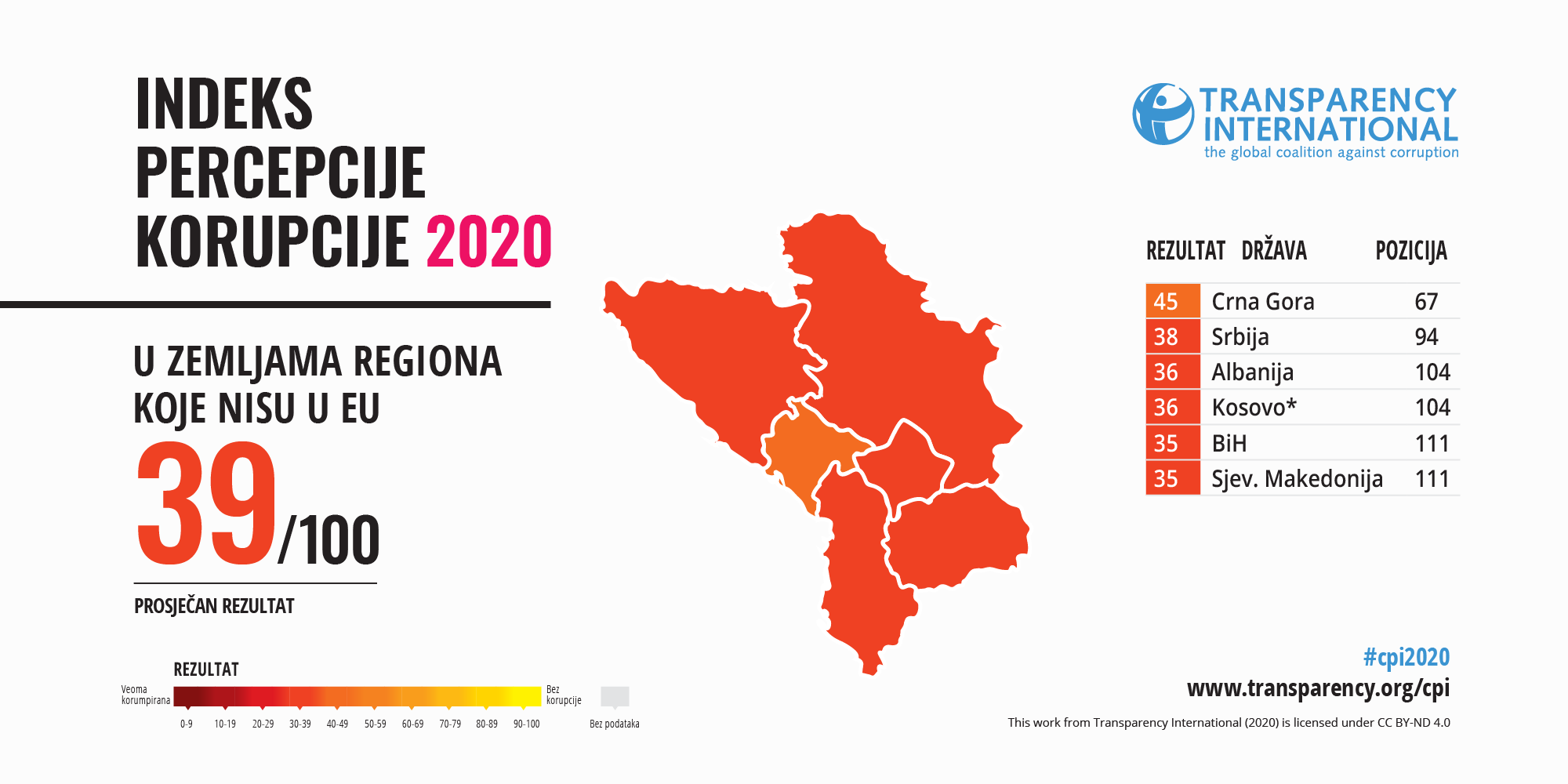
Sarajevo, January 28, 2021 – Transparency International’s Corruption Perception Index (CPI) for 2020 ranks Bosnia and Herzegovina (BiH) among the countries in the world where the state of corruption is deteriorating the most. Noting the decline of BiH by 11 places, the BiH index ranks at 111. place of 180 countries, with a score of 35 (scale 0 -100), which is also the worst score since 2012, when BiH was ranked 72nd. place with a grade of 42.

BiH is worst positioned in the Western Balkans region and shares a place with Northern Macedonia. Slovenia has the best position in the region with a score of 60, followed by Croatia 47, Montenegro 45, Serbia 38 and Kosovo 36. The best-positioned countries globally on the Corruption Perceptions Index are proverbially Denmark, New Zealand, Finland and other Western countries with a high degree of democracy. Countries affected by war, lawlessness and dictatorship are holding the ground, and this year they are Syria, Somalia and South Sudan.

Contextualizing the findings of the index, the pandemic of the COVID 19 virus undoubtedly marked the past year, but also completely exposed the darkest face of corruption, the price of which citizens unfortunately pay with their own lives. Institutions paralyzed by corruption have given priority to the unscrupulous looting of public funds, to the detriment of ensuring adequate health care. The entire period of the pandemic was marked by non-transparent and unresolved procurement of medical equipment.

These, as well as numerous other cases of corruption in which the criminal trail leads to the very top of the government, and which shook the BH public, have not received an epilogue to date, which further undermined the already almost non-existent credibility of the judiciary and public trust. Instead of an uncompromising contribution to solving the problem of corruption, the judiciary has become only the burning and biggest problem of BH society. Politically instrumental, without elementary independence and responsibility, it requires urgent and in-depth reform based on conducting detailed checks of all judicial office holders (vetting) as a first step in the fight against corruption.

BiH does not have an adequate policy or strategy for the fight against corruption, and the legal framework has been waiting for a complete and comprehensive reconstruction for years, which is unequivocally emphasized by the European Commission among the 14 priorities for obtaining candidate status. The absence of progress and direct blockade of the improvement of the legal framework for the prevention of conflicts of interest, financing of political parties, protection of whistleblowers, public procurement only confirms the complete captivity of the state and the institutional framework. The extent of the state’s captivity raises the question of the legitimacy of the BiH authorities, which is further derogated from by systemic fraud and the lack of integrity of the electoral process. During the last election campaign alone, TI BiH documented over 2,500 examples of overt misuse of public resources in the campaign.

Of particular concern is the situation in the Federation of BiH, which did not even establish a government two and a half years ago, the Constitutional Court is also incomplete, there is no legal framework for whistleblower protection, and the Law on Conflict of Interest implemented, which makes the whole situation in this entity anarchic.

“The country has been going in the wrong direction for a long time, but the COVID 19 pandemic and the economic crisis resulting from the pandemic, combined with growing corruption, could create a highly flammable mixture that could put BiH at high risk of paralysis.” , stressed Srdjan Blagovcanin, Chairman of the Board of TI BiH, at the presentation of the Index.

“In such a context, the systematic violation of human rights, the existential uncertainty of citizens, as well as the very threat to life due to the inadequate response of the authorities to the protection of public health can lead to escalating anger among citizens.”

Political parties are undoubtedly the key protagonists of capturing the state, under the leadership of undisputed leaders in whose hands real power is concentrated, they have completely controlled the public sector, subordinating it to their own needs to the detriment of the public interest.

The direct consequence of deep-rooted corruption, ie the intention to prevent disclosure of corruption and accountability at all costs, is frequent human rights violations, as pointed out by international actors, especially in the context of restrictions on freedom of assembly in Republika Srpska. European Commission. The erosion of democratic standards, the stifling of freedom of speech, the creation of an atmosphere of intolerance for voices of criticism is a long-standing trend in BiH.

Press rls_28_1_2021 – BiH among the countries where the state of corruption is deteriorating the most, life-threatening citizens

CPI 2020 Presentation

Corruption Perception Index: BiH is still in danger

According to Transparency International Corruption Perception Index, BiH takes 83rd position, out of 176 countries, with a score of 39 on a scale of 0 to 100. The results show...

TI BiH
Izvještaji za Mediae

Corruption Perception Index: BiH is still in danger

According to Transparency International Corruption Perception Index, BiH takes 83rd position, out of 176 countries, with a score of 39 on a scale of 0 to 100. The results show that there has been no progress in the recent years. (more…)

Corruption Perceptions Index: BiH is constantly deteriorating

Based on the Transparency International Corruption Perception Index BiH takes 76th place, out of 168 countries, with a score of 38 on the scale from 0 to 100, and it has...

TI BiH
Izvještaji za Mediae

Corruption Perceptions Index: BiH is constantly deteriorating

Based on the Transparency International Corruption Perception Index BiH takes 76th place, out of 168 countries, with a score of 38 on the scale from 0 to 100, and it has deteriorated compared to last year, when its score was 39, and it keeps falling on the scale, starting with 2012 when its score was 42.
(more…)

BiH has fallen behind the Corruption Perceptions Index

Sarajevo, 3. December 2014 — Transparency International presented the Corruption Perceptions Index (CPI) for 2014. year, which ranks the countries of the world according to...

TI BiH
Izvještaji za Mediae

BiH has fallen behind the Corruption Perceptions Index

Sarajevo, 3. December 2014 — Transparency International presented the Corruption Perceptions Index (CPI) for 2014. year, which ranks the countries of the world according to the perceived level of corruption, and this year, on a list of 175 countries, Bosnia and Herzegovina is at 80. place. This is a setback compared to 2013, when BiH was at 72. place. CPI, based on relevant international sources, assigns ratings on a scale from 0 to 100, where 0 represents the highest level of perceived corruption, while 100 represents the lowest level of corruption, so this year BiH found itself in this position based on 39, which is also lower than in the previous year, but also in 2012, when it was 42. BiH 80. the place shares with El Salvador, Mongolia, Morocco and Benin. When it comes to the region, ie the countries of the former Yugoslavia, Slovenia is still in the best position (39th place, with a score of 58), followed by Croatia at 61st. place, with a score of 48, and Macedonia (64th place, with a score of 45), Montenegro (76th place, and a score of 42) and Serbia (78th place with a score of 41). Only Kosovo is behind BiH, at 110. place, with a score of 33. The Corruption Perceptions Index and BiH’s unenviable position on this scale reflect a complete lack of results in the fight against corruption in the previous period, caused not only by the lack of interest of government institutions in anti-corruption reforms, but also by hampering the work of law enforcement institutions. actors of the biggest corruption scandals. Reports from the European Union and relevant international institutions also indicate that not only is there no progress in this area, but BiH is moving in the opposite direction, towards the complete collapse of institutions and their privatization by political elites. Bearing in mind that BiH has been at the bottom of the region for years according to the Corruption Perceptions Index, but also when it comes to reforms in the process of joining the European Union, a complete turnaround is needed in tackling corruption in BiH – through legislative reform, strengthening laws and judiciary, and most importantly, the removal of pressure and control over institutions, in order for BiH to make a significant shift in the CPI scale.

Press rls – 3 12 2014 CPI

B&H Continues to Stagnate in the Fight against Corruption

Banja Luka, 3rd December 2013 – Transparency International (TI) has published the Corruption Perception Index (CPI) for 2012, according to which B&H is placed on 72nd...

TI BiH
Izvještaji za Mediae

B&H Continues to Stagnate in the Fight against Corruption

Banja Luka, 3rd December 2013 – Transparency International (TI) has published the Corruption Perception Index (CPI) for 2012, according to which B&H is placed on 72nd place on a list of 176 countries, and with a score of 42 (on scale from 0 to 100). B&H shares this place with Sao Tome and Principe, Brazil, Serbia and South Africa.

This result is still below the average of 50, and B&H is found among the countries with dangerous levels of corruption that impacts all segments of the life of its citizens. CPI continues to show that B&H has made no breakthrough in the fight against corruption.

In comparison with countries in the region, B&H is on the scale below Slovenia at 44nd place, Croatia at 58th place, Montenegro and Macedonia that share 67th place with a score of 44, shares its position with Serbia, while only Kosovo is under B&H at 111th place.

As in earlier years, the CPI shows again that B&H stagnates in the fight against corruption, and that there are no serious efforts by authorities that could affect the CPI. This is proven by the collapse of anti- corruption laws, lack of final convictions for offenses of corruption and lack of implementation of strategic documents for the fight against corruption.

Although the CPI and all other relevant research for years indicate a decline or stagnation of B&H, responsible institutions and governments in B&H have even ignored the warnings of the EU that the fight against corruption would be a key factor in B&H’s accession to European Union, due to which, even 20 years lather B&H is just beginning to establish a system of responsibility towards its citizens.

For years BiH has been the only country in the region without progress in the fight against corruption

Sarajevo, December 01, 2011. – Transparency International launched the Corruption Perception Index (CPI) 2011 according to which Bosnia and Herzegovina has not achieved...

TI BiH
Izvještaji za Mediae

For years BiH has been the only country in the region without progress in the fight against corruption

Sarajevo, December 01, 2011. – Transparency International launched the Corruption Perception Index (CPI) 2011 according to which Bosnia and Herzegovina has not achieved significant progress in fighting corruption, which shows the fact that BiH is ranked between 91st to 94th position in an index that covers 182 countries based on the perceived level of public sector corruption. BiH’s score in Transparency International’s Corruption Perception Index is only 3.2, ranging from 10 – no corruption to 1 – absolute corruption), the same as in 2010. Regarding the previous year, BiH has not made a move towards fighting against corruption, and when compared to the period between 2007 and 2011 it has not achieved significant progress

BiH is ranked lower than all of the former Yugoslavian republics, from which Slovenia with 35th place emerges in the highest position. Croatia is ranked 66th on the scale, Macedonia 69th, Serbia 86th, while UNMIK Kosovo is ranked in the112th place below the BiH rate.

The position of Bi in relation to these countries was no different in previous years, considering the fact that all countries in the region had approximate CPI scale scores five years ago. CPI shows that BiH still lags behind others in the region, needless to say of how much the situation in BiH has deteriorated in relation to developed European countries

In the view of deterioration of BiH, regarding other countries in the region, it has been shown in the Progress Reports of the European Commission, in which the Commission recommends granting EU candidate status to Serbia and the opening of accession negotiations between EU and Montenegro is adopted while Croatia will become a European Union member next year. BiH has received a negative assessment, particularly  referring to efficiency in the fight against corruption.

Therefore, institutions in BiH have to take such findings as a call to awakening and urgent action in order for BiH to keep pace with countries in the region and hope for some progress in implementing multiple reforms, and also to take a step forward for the European Union. Otherwise, BiH will lose the last chance to accede to the region and corruption may lead to the completely collapse of stability and endanger the future of the country.

Please find enclosed:

Get involved

Don't miss it

If you want to receive our announcements immediately after the publication, leave your e-mail address in the field below.