PRESS RELEASES AND ANNOUNCEMENTS

Key dates

TI BiH and Vaša prava BiH Present Research Findings: The Public Still Faces Difficulties in Accessing Full Information on Public Spending

Sarajevo, 28 September 2026 – Almost one in three requests for access to information submitted to public institutions in Bosnia and Herzegovina are still not processed within...

TI BiH
Izvještaji za Mediae

TI BiH and Vaša prava BiH Present Research Findings: The Public Still Faces Difficulties in Accessing Full Information on Public Spending

Sarajevo, 28 September 2026 – Almost one in three requests for access to information submitted to public institutions in Bosnia and Herzegovina are still not processed within the legally prescribed deadline, while approximately one-third of requests do not result in the disclosure of all requested information. Particularly poor practices were recorded among ministries in Republika Srpska, where only 10% of decisions were issued in the legally prescribed form, representing the lowest level of formal compliance among the categories of institutions covered by the research.

These are the findings of research conducted by Transparency International in Bosnia and Herzegovina (TI BiH) and Vaša prava BiH (VP BiH), as part of the EU funded project „Access4All“ supporting access to information in Bosnia and Herzegovina. It was presented at a conference marking the International Day for Universal Access to Information. The research covered 278 requests submitted to public authorities across Bosnia and Herzegovina and showed that, despite some progress compared to 2024, the implementation of access to information legislation remains inconsistent.

Compared to 2024, the percentage of requests processed within the statutory deadline increased from 56.5% to 67.6%, while the share of requests for which all requested information was provided increased from 35.5% to 66.2%. Nevertheless, formal compliance with legal requirements remains a serious problem, as only 27.3% of decisions in the overall sample were issued in the form prescribed by law.

Despite positive developments in the percentage of information disclosed, the research highlighted a particularly low level of formal compliance of decisions with legal requirements, significantly limiting applicants’ access to legal remedies. While ministries at the state level and in the Federation of Bosnia and Herzegovina recorded formal compliance rates of 77.8% and 75%, respectively, the corresponding rate for ministries in Republika Srpska was 10%, indicating scope for improvement in the form of responses and the provision of information requested by applicants. in a form that complied with the law and provided applicants with the information they had requested. The situation was particularly problematic among healthcare institutions, which issued only 25.3% of decisions in the prescribed form, while social welfare centres did so in only 16.8% of cases.

Due to respond to requests, TI BiH, as part of the research initiated in 2024, filed 18 administrative lawsuits against public authorities. Thirteen of these cases have been concluded, and in all of them the courts upheld TI BiH’s claims, while five proceedings remain ongoing. In the cases analysed, courts identified unlawful practices in the denial of access to information, particularly where institutions invoked privacy protection without adequately considering the public interest in information concerning employment, salaries and service contracts.

However, in some cases, the problem persists even after a court judgment has been issued. The analysis shows that, following the annulment of their decisions, some public authorities again refused to disclose information, delayed the adoption of new decisions, or failed to act in accordance with the court’s legal reasoning. As a result, TI BiH had to initiate new administrative proceedings in two cases.

The conference also presented further steps under the initiative to amend access to information legislation launched by TI BiH in April this year together with 27 other civil society organisations. The initiative proposes amendments to legislation at all levels of government aimed at strengthening oversight and accountability mechanisms, improving legal protection, and introducing clearer obligations for the proactive publication of information. More than five months after the proposed amendments were submitted, the relevant entity-level ministries have provided neither a response nor feedback, while the state-level authorities have provided a formal response but no concrete steps towards improving the legislative framework.

The conference also presented results from the use of the “Pristup informacijama” (Access to Information) platform, developed within the same EU-funded project, which enables citizens, journalists, activists and civil society organisations to exercise their right of access to information more easily. To date, the platform has been used to create a total of 967 requests for access to information, follow-up requests and appeals, demonstrating the concrete need for tools that facilitate citizens’ use of legal mechanisms for accessing information.
Press rls_26_09_2026

Conversion decisions covered nearly 29 km² of forests; the public often does not know why or in whose favor

Sarajevo, 23 September 2026 – In Bosnia and Herzegovina (BiH), during the period from 2014 to 2024, a total of 2,863.46 hectares of forests and forest land—equivalent to 29...

TI BiH
Izvještaji za Mediae

Conversion decisions covered nearly 29 km² of forests; the public often does not know why or in whose favor

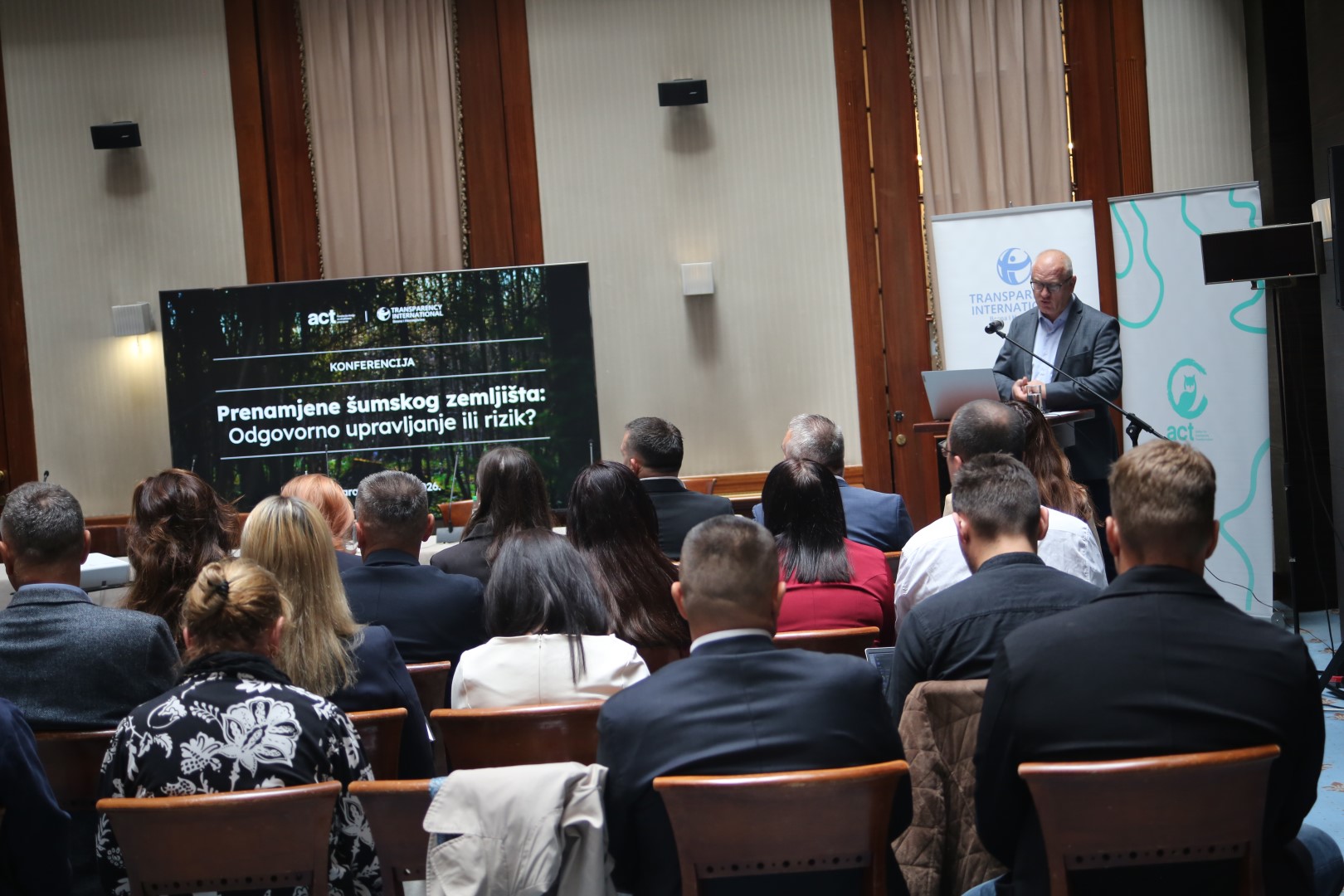
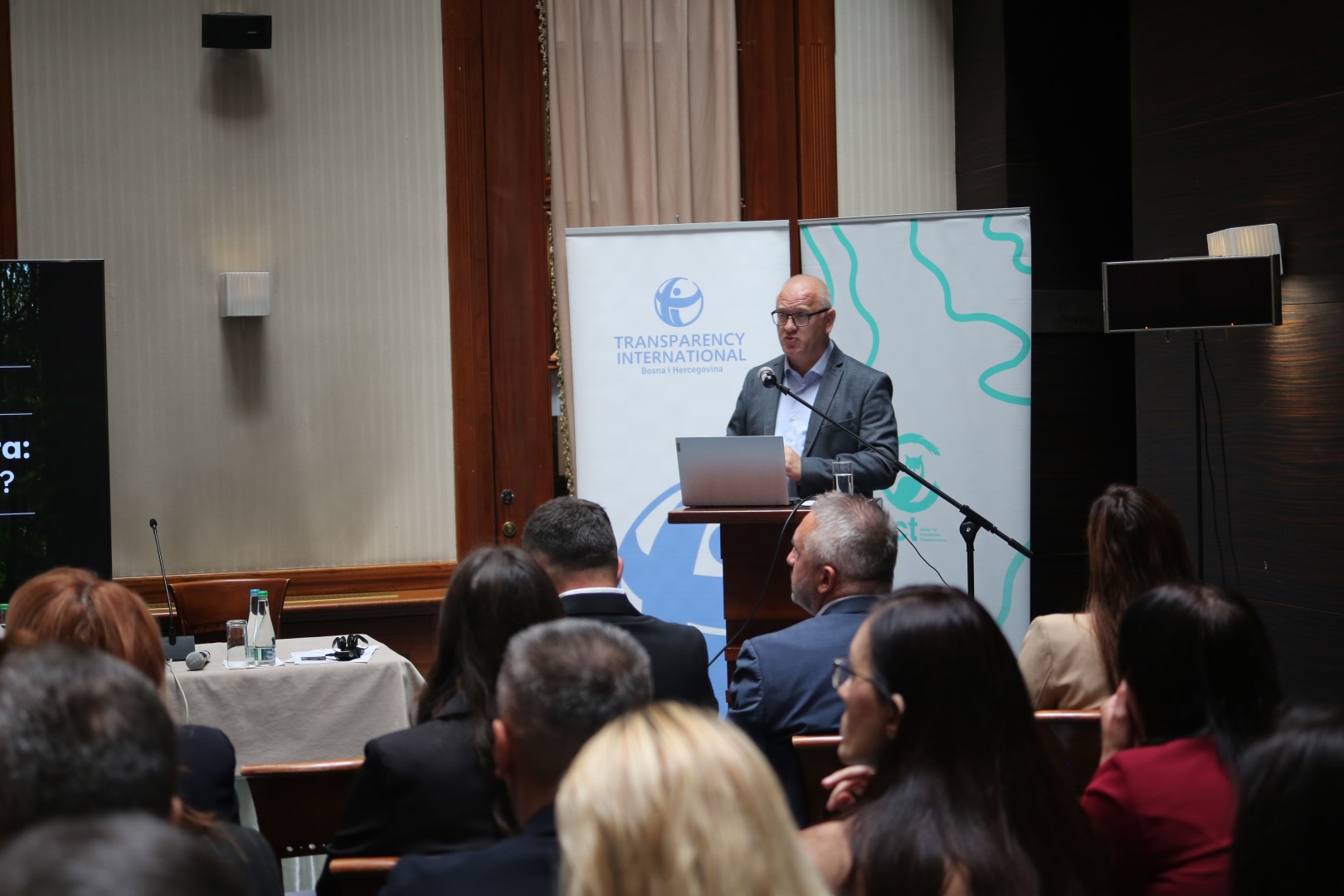
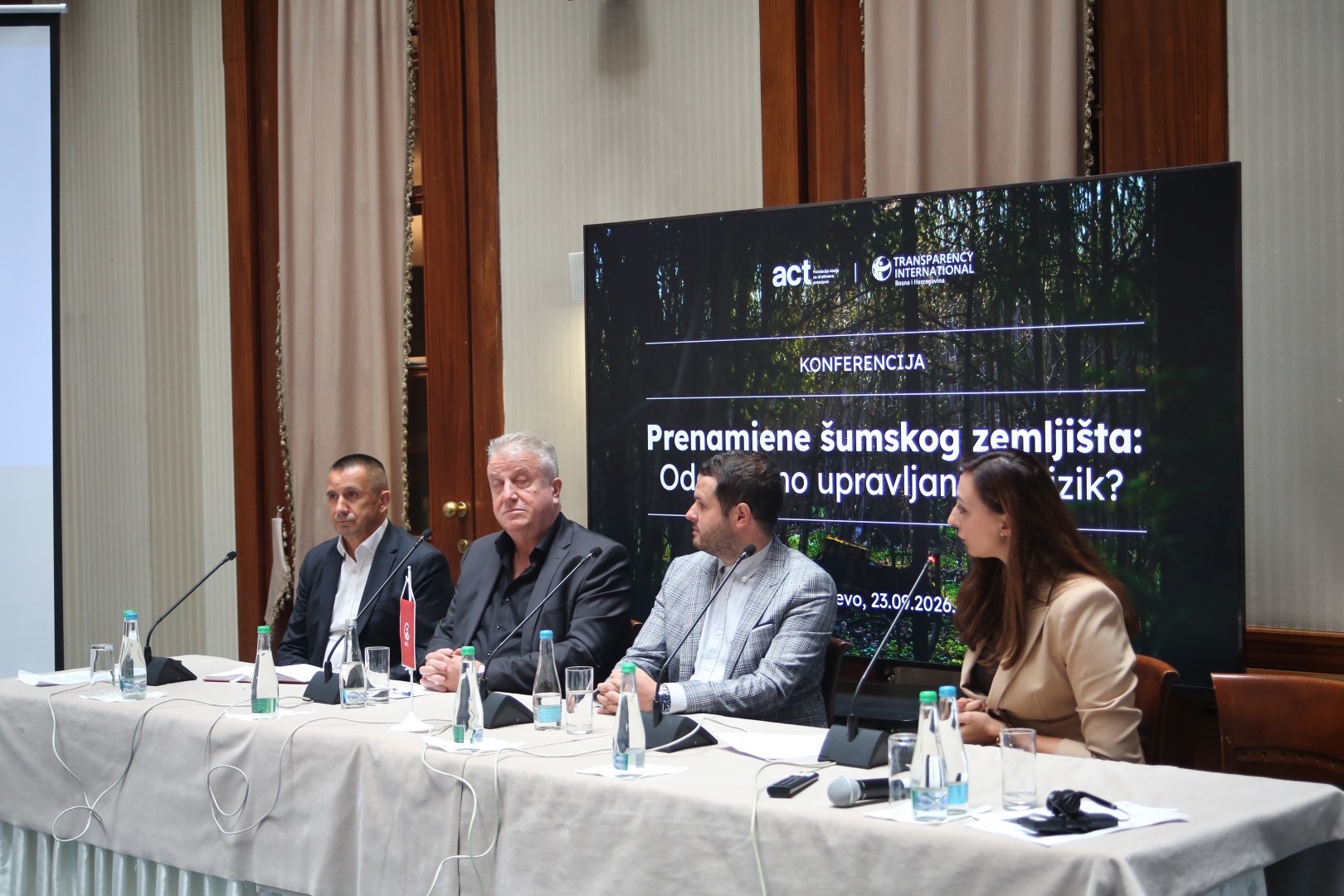
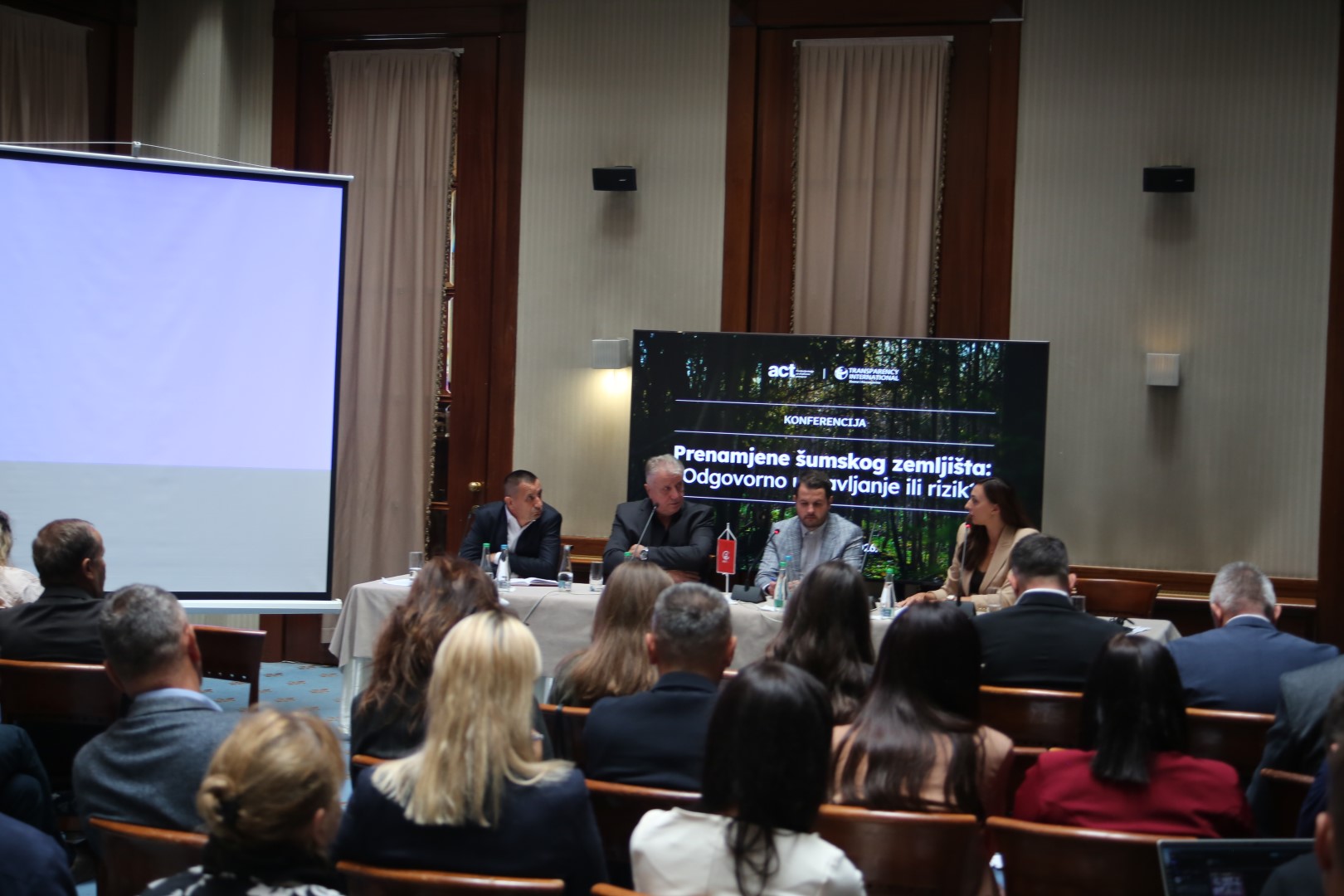
Sarajevo, 23 September 2026 – In Bosnia and Herzegovina (BiH), during the period from 2014 to 2024, a total of 2,863.46 hectares of forests and forest land—equivalent to 29 square kilometers—were covered by 1,398 recorded conversion permits. Of this, 18.6 km2 pertains to Republika Srpska, where 977 permits were recorded, and 10 km2 to the Federation of BiH, where 421 permits were recorded, according to research by the Foundation Atelier for Social Change – ACT and Transparency International in Bosnia and Herzegovina (TI BiH).

More than half of the recorded area—approximately 1,645 hectares or 57 percent—was converted for the realization of concession agreements, and the research shows that the public often lacks access to decisions, expert documentation, and justifications from which it could be determined why the conversion was approved, who benefits from it, and what obligations the investor assumes.

In Republika Srpska, 1,072 hectares of forest were cut down for concession purposes, while in the Federation of BiH that area is half as large, approximately 573 hectares over ten years. An interesting finding is that the area covered by decisions in FBiH grew from 87.19 ha in 2017 to 163.1 ha in 2018, which is nearly a doubling, for which two wind farms in Canton 10 are primarily responsible. These are the “Široka Draga” facilities on the territories of the municipalities of Livno, Tomislavgrad, and Posušje, and “Slovinj” near Glamoč, for the construction of which 70% of the total forest territory ceded for the realization of concession agreements in BiH in 2018 was converted.

The data also show pronounced territorial concentration: around 85 percent of the recorded area converted in the Federation of BiH is located in three cantons—namely, Zenica-Doboj Canton (ZDK), Herzegovina-Neretva Canton (HNK), and West Herzegovina Canton (HŽ).

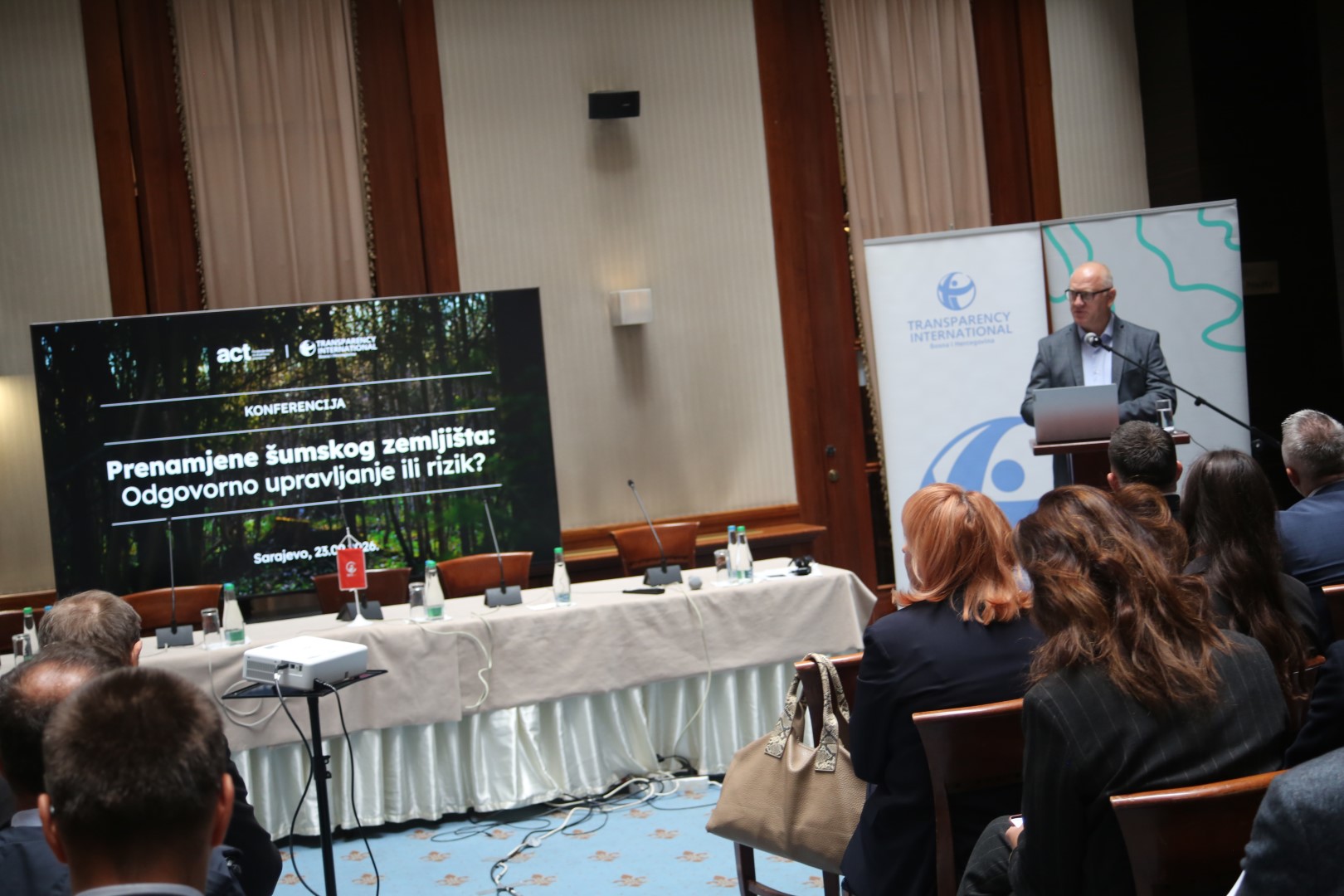
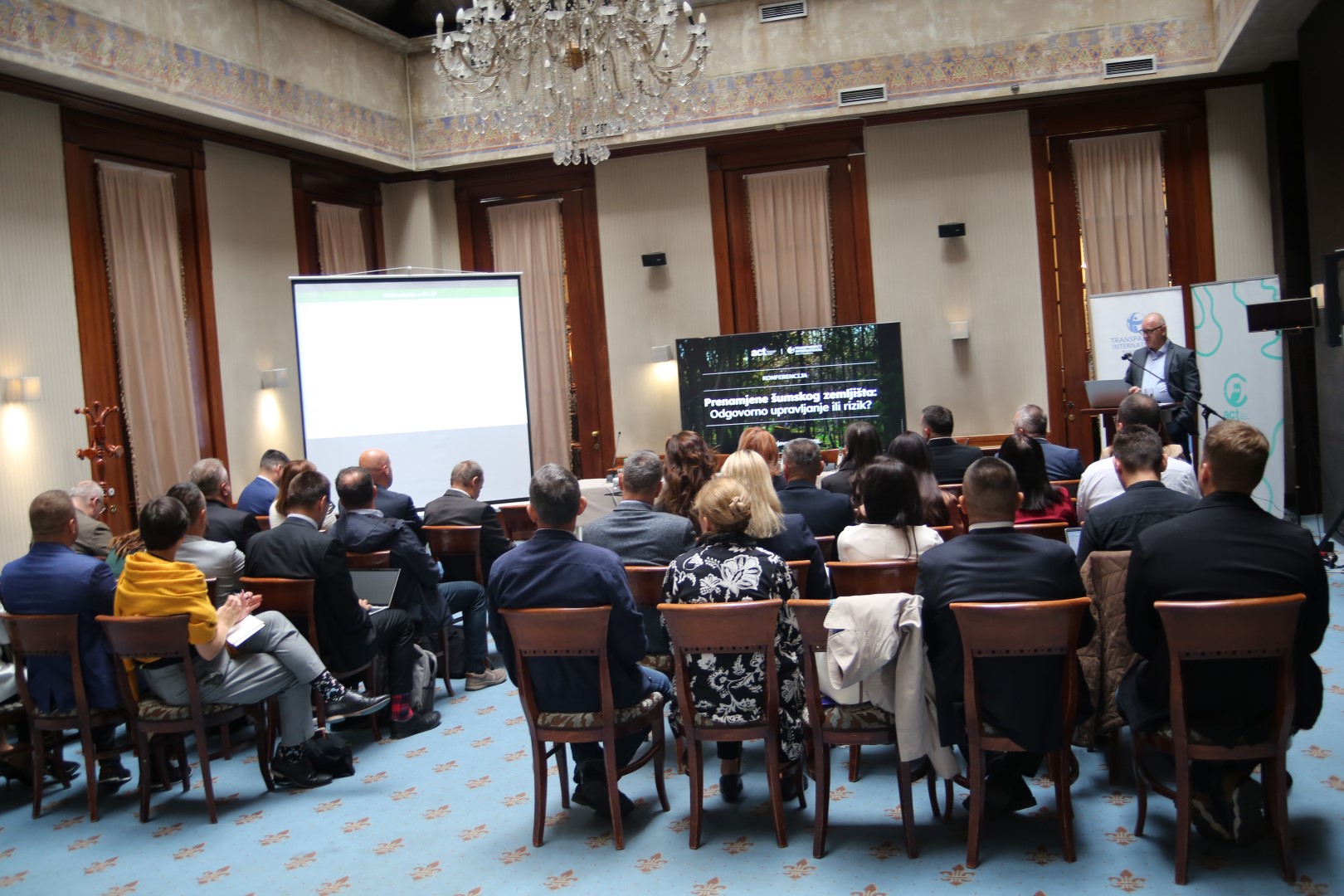
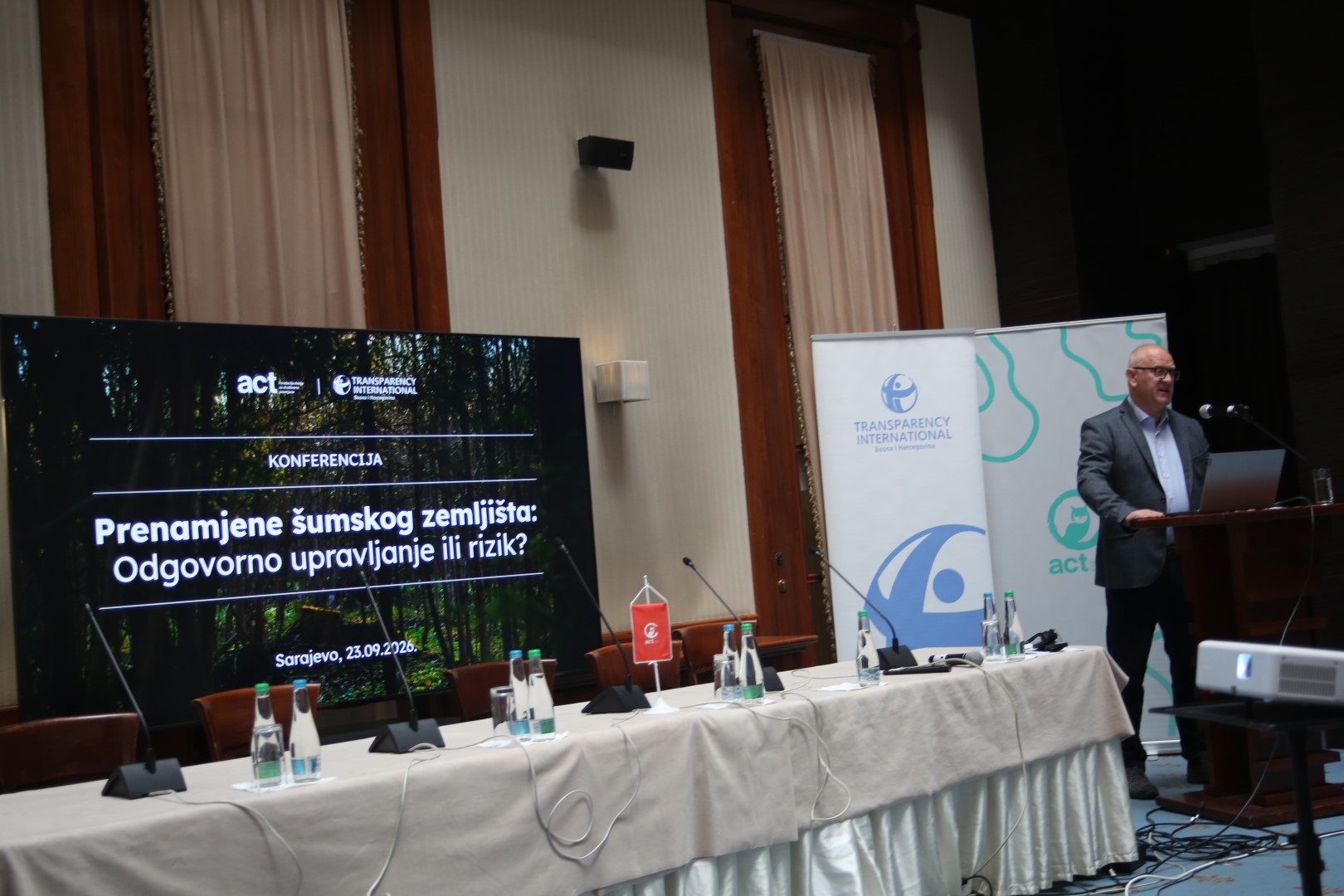
The research, which was presented at the conference “Conversion of Forest Land: Responsible Management or Risk?” in Sarajevo, in addition to areas, also states that conversion procedures are regulated by different regulations and practices, while citizens and local communities are not enabled to familiarize themselves with the future intervention and its consequences before a decision is made and to submit objections to the planned projects.

Bosnia and Herzegovina is a complex state in which we have 3.3 million hectares under forests and forest land, yet we do not have a state-level forestry law that would, in accordance with the principles of forestry science and practice, establish at least basic and common principles for forest management and administration. Instead, we have two parts: one in which a forestry law exists and which is fully centralized, and another in which there is no law and which is decentralized in the sense of forestry legislation existing at the cantonal level , stated Mersudin Avdibegović, who presented the Analysis of Forestry Legislation, adding that, although the data on conversion do not show that BiH stands out from the average of countries in the region or beyond, public participation in these processes is not at a level that satisfies legitimate interest, which is further aggravated by the absence of a methodology for calculating the value of forests, forest land, and all ecosystem functions.

The problem is particularly pronounced in the case of concessions realized on territory covered by forest, given that this area in BiH is regulated by 14 different laws and where earlier research has shown that institutions do not maintain complete and up-to-date registers nor publish sufficient data on contracts, fees, arrears, and the fulfillment of concessionaires’ obligations. When a concession project also requires the conversion of forest land, the public’s ability to gain insight into the economic benefit of the project and its ecological and social consequences is significantly diminished, while transparency is virtually nonexistent.

The need for clearer rules is also highlighted by the case of land conversion connected to the “Rupice” mine in Vareš, a project that has attracted significant public attention and concern due to its impact on the environment and water sources as well as human health. The Constitutional Court of BiH determined in 2024 that the decision of the Government of FBiH on the temporary use of forest land for the realization of the concession agreement is not in accordance with the Constitution of BiH because the Government was not competent to dispose of state property.

That decision, however, did not resolve the broader problem of informing the public in individual forest conversion procedures and their inclusion in the process itself.

In order to make part of the information available, TI BiH has developed a Concessions Register, which, in addition to data on concessions, also displays collected data on acts approving the conversion of forest land, the areas affected, and the scope of conversion by entity and year, enabling genuine public oversight and the beginning of strengthened transparency in this area.

ACT and TI BiH call on the competent institutions to publish all conversion decisions, data on the area, ownership, and future purpose of the land, justification of the public interest, the amounts of fees, and the obligations of investors. Citizens and local communities must be enabled to participate before a decision is made, and regulations should establish clear criteria for conversion and effective oversight of the fulfillment of obligations.

In addition, it is urgently necessary to adopt forestry laws in the Federation of BiH and in the Herzegovina-Neretva Canton, so that the area of forest management in this BiH entity and canton is brought under legal frameworks and harmonized with the rest of BiH.

press-release-23-09-2026


TI BiH Warns of Mass Pre-Election Cash Distribution and Indirect Vote Buying

Sarajevo, September 3, 2026 – Transparency International in BiH warns that one month before the General Elections in Bosnia and Herzegovina, there is a concerning trend of...

TI BiH
Izvještaji za Mediae

TI BiH Warns of Mass Pre-Election Cash Distribution and Indirect Vote Buying

Sarajevo, September 3, 2026 – Transparency International in BiH warns that one month before the General Elections in Bosnia and Herzegovina, there is a concerning trend of increasing cases of indirect vote buying through legally prohibited one-time cash payments to various categories of the population. TI BiH data shows that approximately 68 million KM has been distributed since the elections were called, with the largest portion (31 million) allocated by the RS Government for one-time assistance to pensioners before the elections in amounts of 80 and 120 KM.

After the CEC refused to sanction RS Prime Minister Sava Minić in this case, explaining that the decision was made by the RS Government as a collective decision-making body, a new distribution of 16 million KM to students and pupils in amounts of 100 and 150 KM followed. This measure was announced at an SNSD press conference, even though it involves taxpayer money being distributed before elections, was not planned in the budget, and was not paid out in previous years. The Election Law prohibits indirect vote buying with public funds, which includes providing one-time assistance to citizens, except for assistance planned within regular budget subsidies.

However, due to the lack of sanctions, this trend continues—pensioners in Tuzla Canton and Brčko District will also receive one-time assistance before the elections, while the mayor of Zenica awarded one-time assistance to heating plant workers, and there are numerous other examples that TI BiH has published on the pre-election public spending counter.

TI BiH has so far documented over 2,200 potential misuses of public resources, of which approximately 63 percent relate to the intensification of public works during the pre-election period, most often used for political promotion. Throughout BiH, 370 infrastructure projects have been opened with a value of approximately 156 million KM, while the value of projects initiated during this period is 510 million. Although at the very beginning individual cases went unsanctioned, as TI BiH warned, in several recent decisions the CEC has begun sanctioning examples where infrastructure projects are promoted on the social media of political parties.

Thus, a sanction was issued against the director of Banja Mlječanica and NPS president Darko Banjac, who attributed credit to his party for the construction of a local water supply system. Since campaigning is prohibited by law at the opening events of these infrastructure projects, TI BiH conducted field monitoring and has so far attended 49 such public events. Candidates in the elections were present at 75%, while political messages were recorded at 41% of events, for which the CEC issued sanctions based on evidence collected by TI BiH. In the CEC’s most recent decisions, Zenica mayor Fuad Kasumović and his party were each fined 4,000 KM for campaigning at the opening of a new family medicine clinic, while SNSD was fined 12,000 due to Milorad Dodik’s political speech at the opening of a local road in Srpac. A fine was also issued to Vlado Đajić and his party for campaigning at a series of public events called “Krajina Evening,” which have traditionally served as cover for holding his pre-election rallies during a period when this is not permitted.

In a similar case, PSS was fined for political promotion at a pensioners’ gathering, but in an almost identical case the CEC previously refused to fine SNSD because the political messages of this party’s leaders were deemed jokes and observations. PSS was also fined for misuse of public resources, namely involving Banja Luka city civil servants in campaigning during working hours.

So far, over 90 cases of premature campaigning have been documented, most often on social media, and most concerning is that mass billboard campaigns promoting candidates without party symbols go unsanctioned. There have also been 16 cases of paid advertising by institutions promoting election candidates, with the most radical example being the RS President’s campaign called “Srpska Loves You,” where a large portion of billboard advertising space was purchased and the current government is credited for existing budget allocations and acquired rights of various population categories.

There have also been 84 documented cases of one-time non-cash distributions to various categories of the population, most often through free medical examinations and other benefits, which are usually accompanied by some form of political promotion. The CEC fined DNS 3,000 KM for distributing free makeup vouchers. There have also been 44 cases of increased pre-election hiring, for which there is unfortunately no legal restriction in BiH.

TI BiH particularly warns of a systematic campaign of spreading false information about the electoral process, where despite monetary sanctions, political leaders continue to misinform voters about the introduction of new electoral technologies.

In the last two months, TI BiH has forwarded 55 complaints to the CEC, and so far over 102,000 KM in sanctions have been issued to political entities and officials based on TI BiH complaints. Most relate to premature campaigning and partially to resource misuse, and as the elections approach, it is noticeable that the CEC is tightening sanctions. However, most concerning is the lack of sanctions for the most radical examples of public resource misuse and indirect vote buying, which is why fair electoral conditions for all participants still cannot be discussed.

TI BiH continues to monitor misuse of public resources and other forms of Election Law violations, aided by citizen reports received through the Reflektor application, which is designed for simple and anonymous reporting of electoral irregularities.

Press rls_06_08_2026

Presentation Second MONITORING OF PRE-ELECTION ACTIVITIES ELECTIONS 2026 (Presentation (43))

Public Spending and Public Works Counter

Get involved

Don't miss it

If you want to receive our announcements immediately after the publication, leave your e-mail address in the field below.