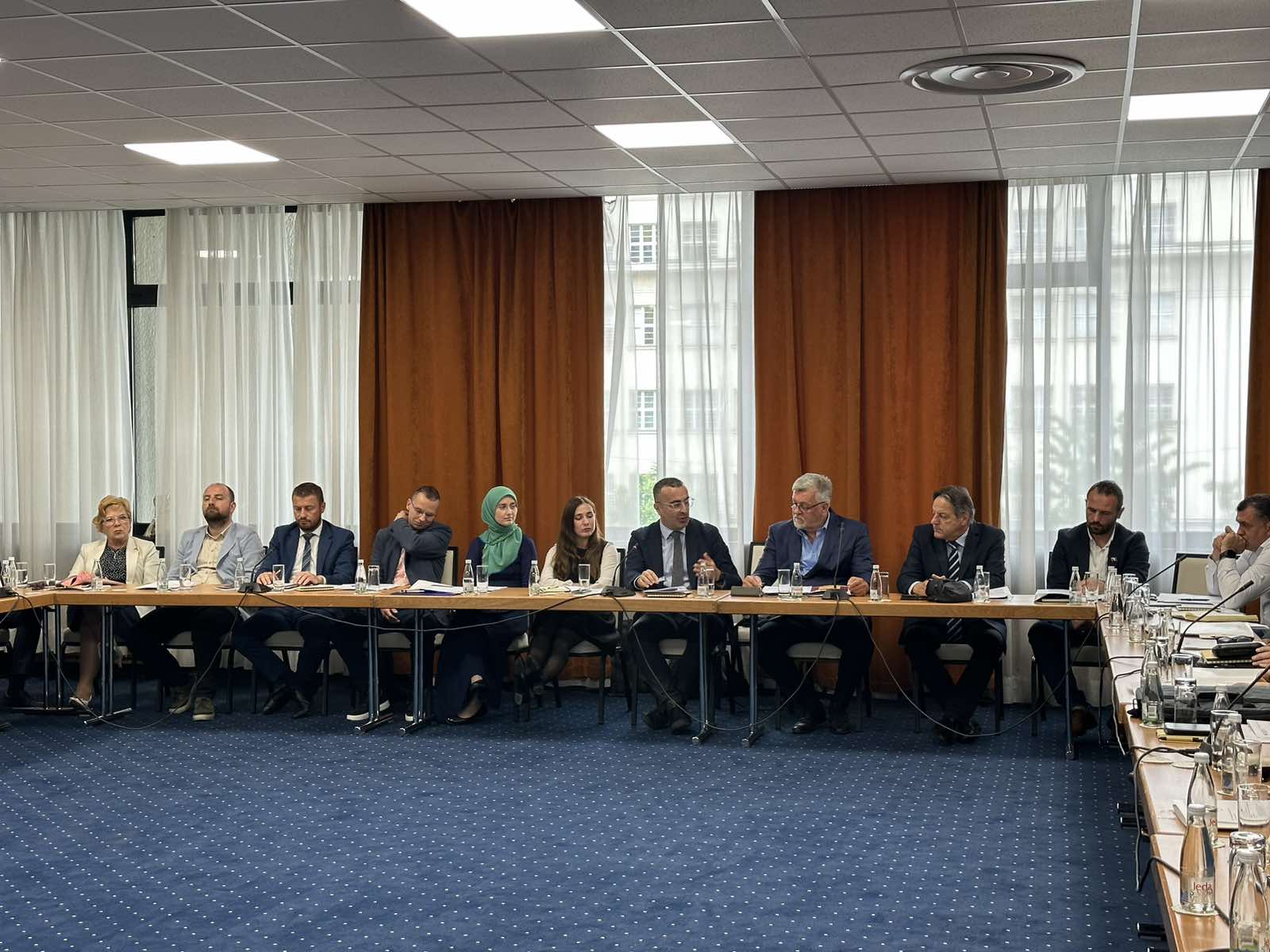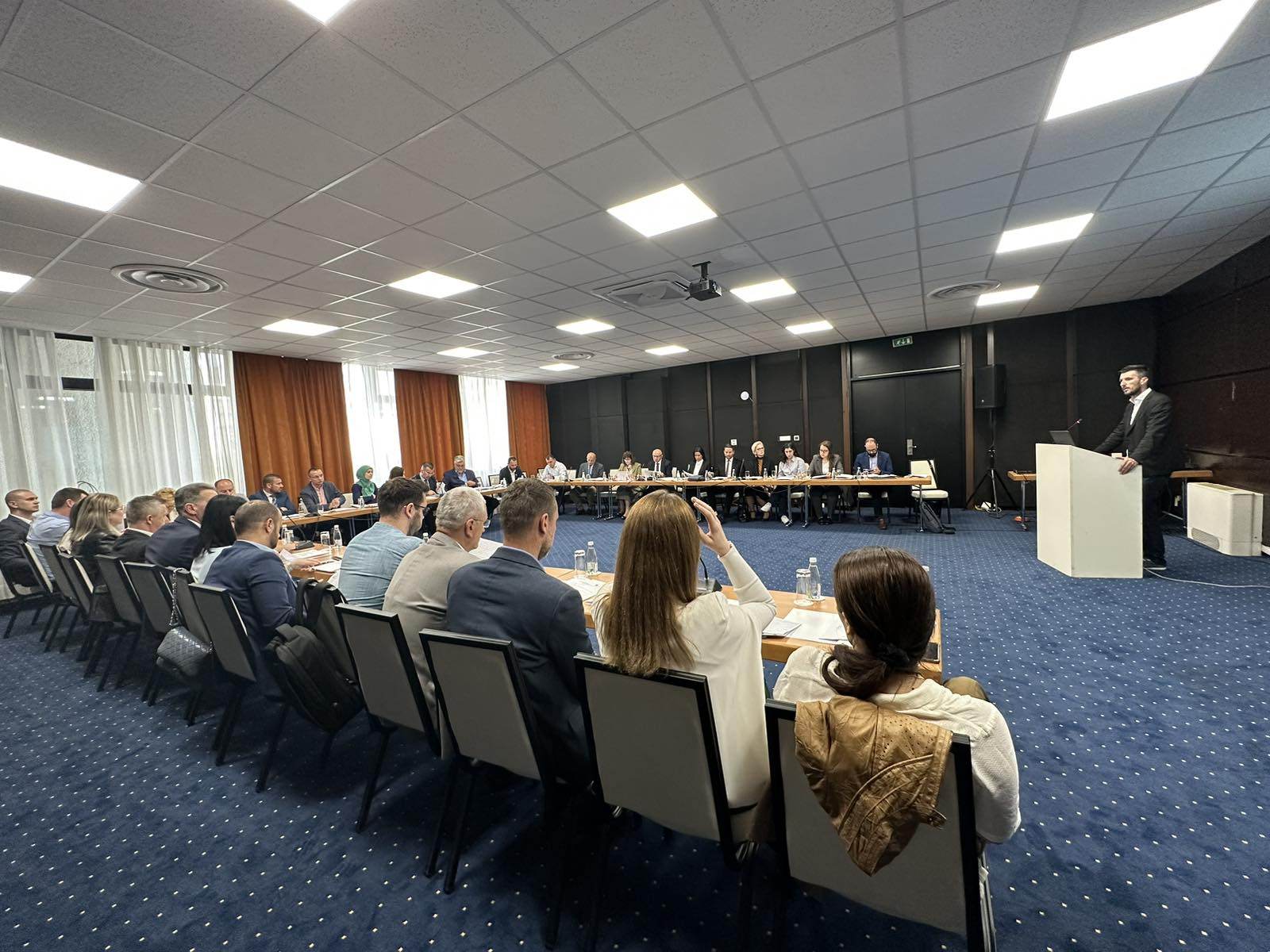
Press releases

Key dates

CEC BiH hides data from election technologies: TI BiH and the Koalicija Pod lupom demand disclosure of information that could help uncover possible election manipulations

Sarajevo, November 14, 2026 – The Central Election Commission (CEC) rejected requests from the Koalicija Pod lupom and Transparency International in BiH to provide information...

Izvještaji za Mediae

CEC BiH hides data from election technologies: TI BiH and the Koalicija Pod lupom demand disclosure of information that could help uncover possible election manipulations

Sarajevo, November 14, 2026 – The Central Election Commission (CEC) rejected requests from the Koalicija Pod lupom and Transparency International in BiH to provide information recorded on voter identification devices and scanners that could help uncover possible election manipulations. The requested data included voter turnout figures by polling station, as well as the number of people who could not be identified via fingerprint. Also requested was a list of polling stations where any of the technologies could not be used, as well as those where discrepancies were observed between electronic and manual vote counts.

The CEC refused to provide this information, the election results were confirmed, and at the session where the request for access to information was decided, it was stated that the requested data could be misinterpreted.

“These are individual data points which, if taken out of context, can be interpreted in various ways and could create a completely false impression among the public,” said CEC member Suad Arnautović, adding that the data would not be provided before the Parliamentary Assembly of BiH had discussed the matter in full.

TI BiH and the Koalicija Pod lupom consider this to be unlawful conduct, which is why legal proceedings will be initiated, as this concerns the protection of the integrity of the electoral process. It should be noted that the new election technologies were introduced precisely because, in the previous period, independent election observation, numerous court proceedings, and graphological analyses had proven widespread manipulation of voters’ ballots. The irregularities established included voting on behalf of other persons (most often deceased individuals or those who did not turn out to vote), double voting, abuse of assisted voting, violations of ballot secrecy, and election theft – adding votes to blank ballots, adding preferential votes, and/or deliberately invalidating valid ballots.

The electronic voter identification and authentication system was meant to prevent identity abuse, while the scanners were meant to prevent manipulation of ballots and vote counting. The non-use or incorrect application of either of these technologies could have enabled new manipulations, and suspicion that such manipulations occurred is raised not only by media reports but also by certain official data.

For example, officially published voter turnout data show an unnatural increase in turnout between 5 p.m. and 7 p.m. in numerous local communities. Data from the Koalicija Pod lupom, based on a representative sample of polling stations, show that in only 55.8% of the observed polling stations did the number of ballots for the BiH Presidency level match the number of voters identified via the identification devices. Discrepancies greater than +/-3 votes were recorded at 6.5% of the observed polling stations.

In addition, TI BiH’s analysis identified more than 500 polling stations where indicators were observed that, according to international practice and electoral analytics, point to the existence of potential election irregularities. These are polling stations that reported turnout higher than 80% (almost double the average), a share of invalid ballots higher than 15%, or a concentration of votes for a single candidate higher than 80%.

Additionally, the process of introducing the new election technologies was highly non-transparent. To this day, it remains unclear how the process of determining the election results unfolded, which results were publicly published, whether they were changed relative to the preliminary results, and why there is no comparison of the official turnout from the new election technologies with the number of ballots, nor a comparison of the electronic results with the manual vote-counting results. It is also unclear which turnout figure was displayed on the results website – the one from the identification devices or the number of ballots processed by the scanners.

Since the election results have been confirmed and the elections were not annulled at any polling station, we believe that all obstacles to the publication of all information regarding the functioning and use of the new election technologies, turnout at individual polling stations, and voting samples and methods have been removed – that is, all information that the CEC undoubtedly possesses and that could help in the analysis of the electoral process itself.

TI BiH and the Koalicija Pod lupom urge the CEC to immediately provide all the requested data, as refusal to disclose all information on the electoral process in its possession may further raise suspicion and trigger speculation about new potential irregularities.

Press release 11/14/2026

Ensuring Real Access to Information: Necessary Amendments to Laws at All Levels

The implementation of existing laws shows that institutions continue to deny information of public interest, especially that related to the spending of public funds, which is why TI BiH, together with 27 civil society organizations, has submitted initiatives for amendments to freedom of access to information laws at all levels of government in BiH.

Banja Luka, 14. April 2026 year – Almost half of the institutions in BiH do not respond to requests for access to information within the legal deadline, while only 140 out of...

Izvještaji za Mediae

Ensuring Real Access to Information: Necessary Amendments to Laws at All Levels

Banja Luka, 14. April 2026 year – Almost half of the institutions in BiH do not respond to requests for access to information within the legal deadline, while only 140 out of 394 institutions provided data on time. At the same time, existing entity laws do not oblige institutions to publish key information themselves, nor do they provide effective oversight and legal protection for citizens, which are significant shortcomings and why Transparency International in BiH, together with 27 civil society organizations, has submitted initiatives for amendments to freedom of access to information laws at all levels of government in BiH.

The implementation of existing laws shows that institutions continue to deny information of public interest, especially that related to the spending of public funds. Almost half of the authorities do not respond within the legal deadline, while only one-third provided the requested data on time, and in practice legal loopholes are often abused to avoid transparency.

In addition to ignoring deadlines, institutions in Bosnia and Herzegovina also ignore court rulings ordering them to provide information requested by citizens and civil society organizations. Thus, the BiH Court has concluded only three out of eight administrative disputes initiated by TI BiH against public bodies that refuse to provide requested information, while the low level of efficiency of the judiciary in providing legal protection in this area is illustrated by the fact that TI BiH waited more than a year for rulings, despite the 60-day deadline for issuing court decisions prescribed by law.

The inefficiency of courts, absence of penalties, and inability to impose sanctions have enabled institutions to avoid implementing freedom of access to information laws, while citizens have been denied adequate legal protection. This is best illustrated by the case of the dispute against the Ministry of Transport and Communications of RS, which persistently ignores multiple court rulings and refuses without sanctions to publish the concession contract for the Banja Luka–Prijedor highway, protecting the commercial interests of the Chinese investor instead of the interests of citizens who remain denied the financial aspects of this important infrastructure project.

Apart from implementation problems, entity laws lack the obligation of so-called proactive transparency, so institutions are not required to publish meeting materials, budgets, draft laws, and other documents from their areas of work, leaving the public denied information about decision-making processes as well as the ways in which public money is spent.

This is the main reason why civil society organizations propose introducing the obligation of proactive publication of draft laws, decisions, and other materials containing data on the spending of public funds in machine-readable format (Word and text PDF), so that they are accessible to persons with disabilities who use screen readers, which is also an international obligation undertaken by BiH in accordance with the UN Convention.

The initiatives also call for introducing the obligation to issue formal decisions in response to requests for freedom of access to information, as well as inspection oversight of law implementation and the possibility of imposing penalties in cases of unlawful denial of information. This is particularly important in Republika Srpska, where the practice of institutions is to respond to requests with ordinary “letters,” often without signature and stamp, thereby directly denying citizens the right to appeal and similar legal protection mechanisms.

In the Federation of BiH, harmonization with administrative procedure laws is proposed, clarification of legal remedies, and establishment of effective oversight of law implementation, along with the requirement that information be provided in machine-readable and accessible format.

On the other hand, the new Law on Freedom of Access to Information at the level of BiH institutions, adopted as one of the reform laws on the European path, has not accelerated the publication of data of public interest, and in some areas has brought negative effects. The existing second-instance mechanism for protection of rights is not sufficiently functional and independent, which is why TI BiH proposes shortening the deadlines for the Appeals Board to act from 60 to 45 days in cases of conducting the public interest test.

All initiatives have a common goal, which is the transition from formal to real access to information, through clear obligations of institutions, effective oversight, and availability of data in practice. Without these amendments, the right to access information remains limited, and the space for abuse of public resources significantly increased, while strengthening the transparency and accountability of institutions, which is also one of the basic requirements in the process of European integration of Bosnia and Herzegovina, remains only an empty phrase of political leaders.


Initiative for Amendments to FOIA BiH | Initiative for Amendments to FOIA RS | Initiative for Amendments to FOIA FBiH

Signatories of the initiatives:

Transparency International in BiH, Your Rights BiH, Balkan Investigative Reporting Network – BIRN BiH, Center for Investigative Reporting – CIN, Sarajevo Open Centre – SOC, CA “Why Not,” Helsinki Citizens’ Parliament Banja Luka, ProPeace in BiH, CA Tolerance Against Differences – ToPeer, Doboj, Centers for Civic Initiatives – CCI BiH, Infohouse Foundation, Peacebuilding Network Association, BH Journalists Association, Women’s Association “Make a Difference,” My Right – Empowers people with disabilities, CURE Foundation, “Aarhus Resource Centre in BiH” Association, Association for Democratic Initiatives – ADI Sarajevo, Roma Information Center “Kali Sara,” Youth Center “Kvart” Prijedor, Atelier for Social Change Foundation, Citizens’ Association “Oštra nula,” United Women Banja Luka Foundation, Perpetuum mobile – Institute for Youth and Community Development Banja Luka, Association of Independent Creators and Activists Unsa Geto, Banja Luka Centre for Human Rights, Citizens’ Association “Zdravo da ste,” Genesis Project Association


Press rls_14_04_2026

TI BiH Presented 13 Databases That Help Detect Corruption

Sarajevo, 26 February 2025 February 2026. years – Oversight of public spending is crucial for effective anti-corruption efforts, and Transparency International in BiH has...

Izvještaji za Mediae

TI BiH Presented 13 Databases That Help Detect Corruption

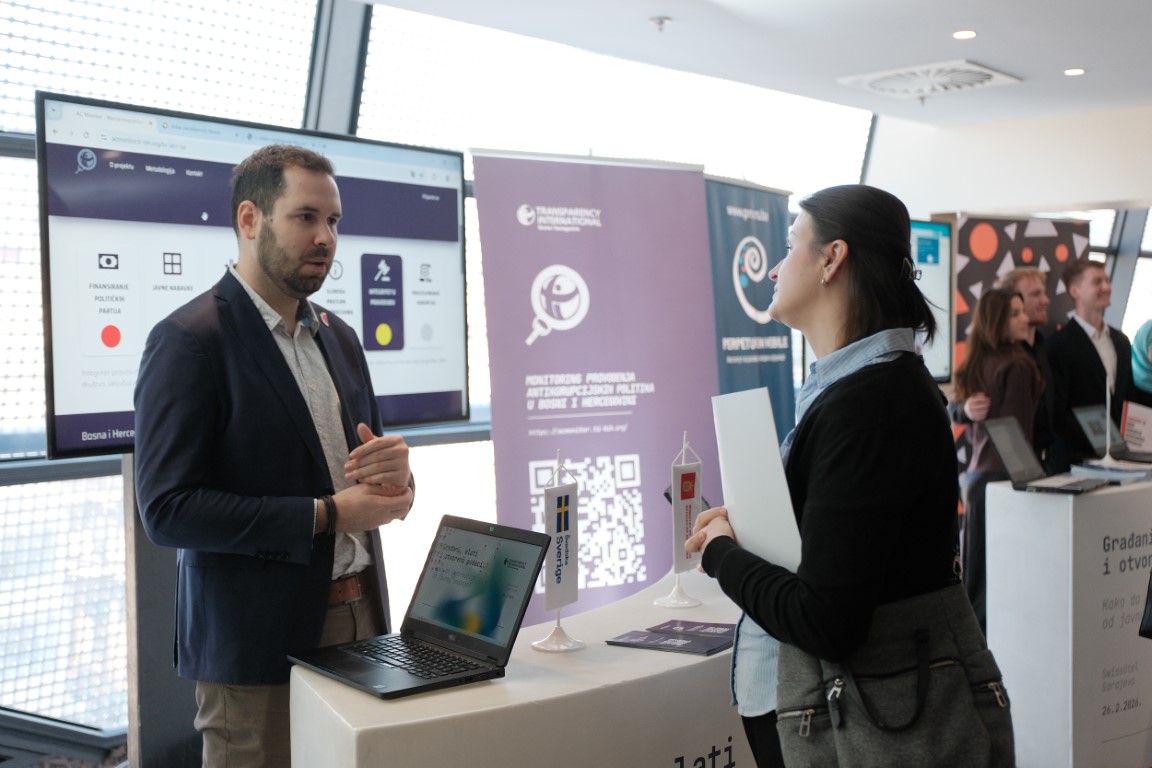
Sarajevo, 26 February 2025 February 2026. years – Oversight of public spending is crucial for effective anti-corruption efforts, and Transparency International in BiH has presented 13 databases that help detect irregularities to all those who wish to monitor and control government operations. On these platforms, media, civil society organizations, activists, and all interested citizens can find out how public money is spent and how much goes to companies connected to elected officials, as nearly 36% of those who declared ownership in private enterprises after general elections have business dealings with the state.

The Register of Public Officials reveals over 300 political leaders who hold multiple positions or head associations funded from the budget, thereby directly violating existing conflict of interest laws. The Concessions Register provides a broader picture of public resource management and politically connected investors, while other databases help uncover their connections with heads of institutions, public enterprises, and establishments.

On dedicated platforms, TI BiH has also published data on the transparency of judicial institutions and their results in fighting corruption in terms of the number of investigations, indictments, and convictions for corruption. How closed the system is and how much institutions obstruct oversight is best illustrated by data from the Judiciary Index, according to which as many as 35% of courts and prosecutor’s offices violated the legal deadline for responding to freedom of information requests, 46% of courts do not publish first-instance verdicts, and 85% of prosecutor’s offices conceal plea agreements.

In addition to hiding its work from citizens, the judiciary’s work is characterized by the fact that half of the prosecutor’s offices in BiH do not conduct investigations into high-level corruption at all, which represents a serious blow to the rule of law and the culture of accountability.

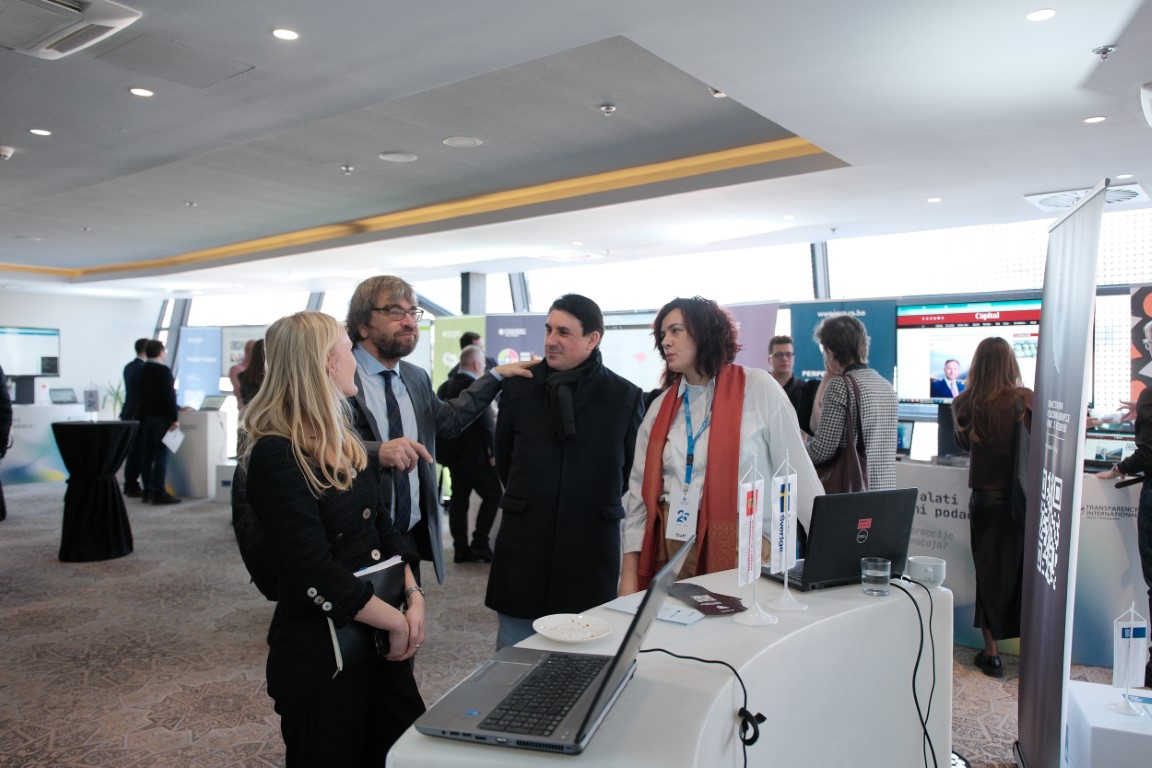
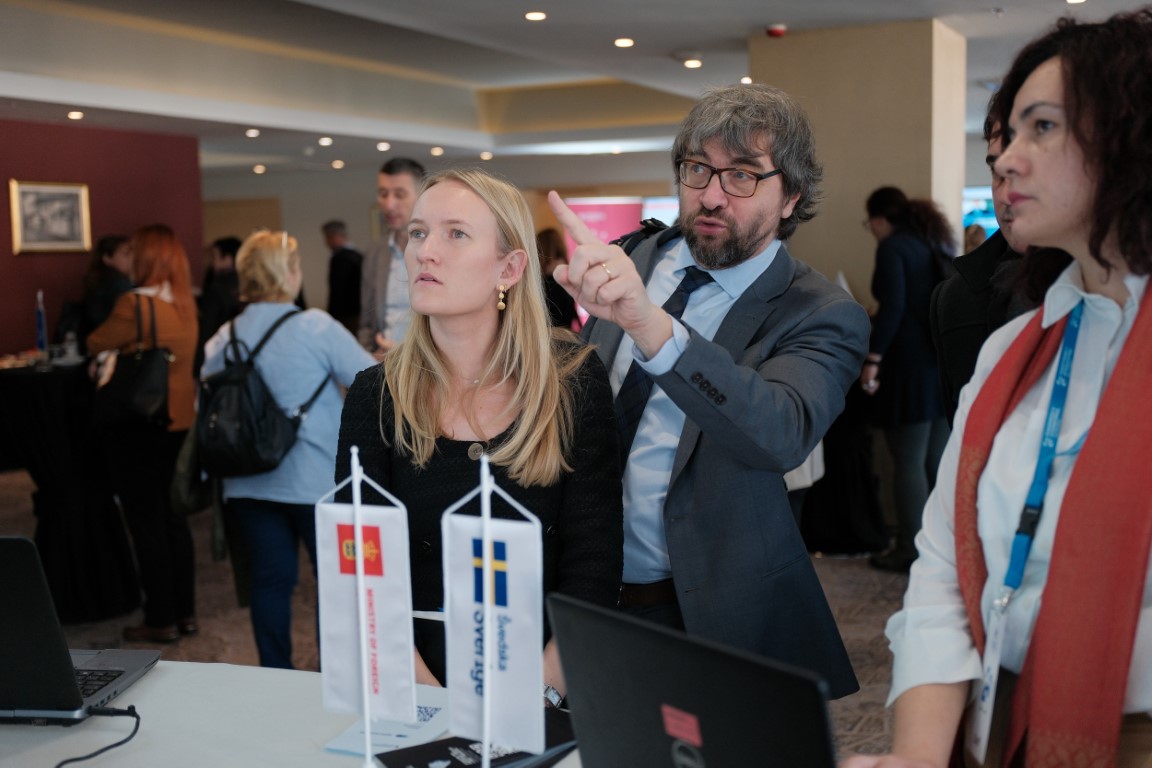
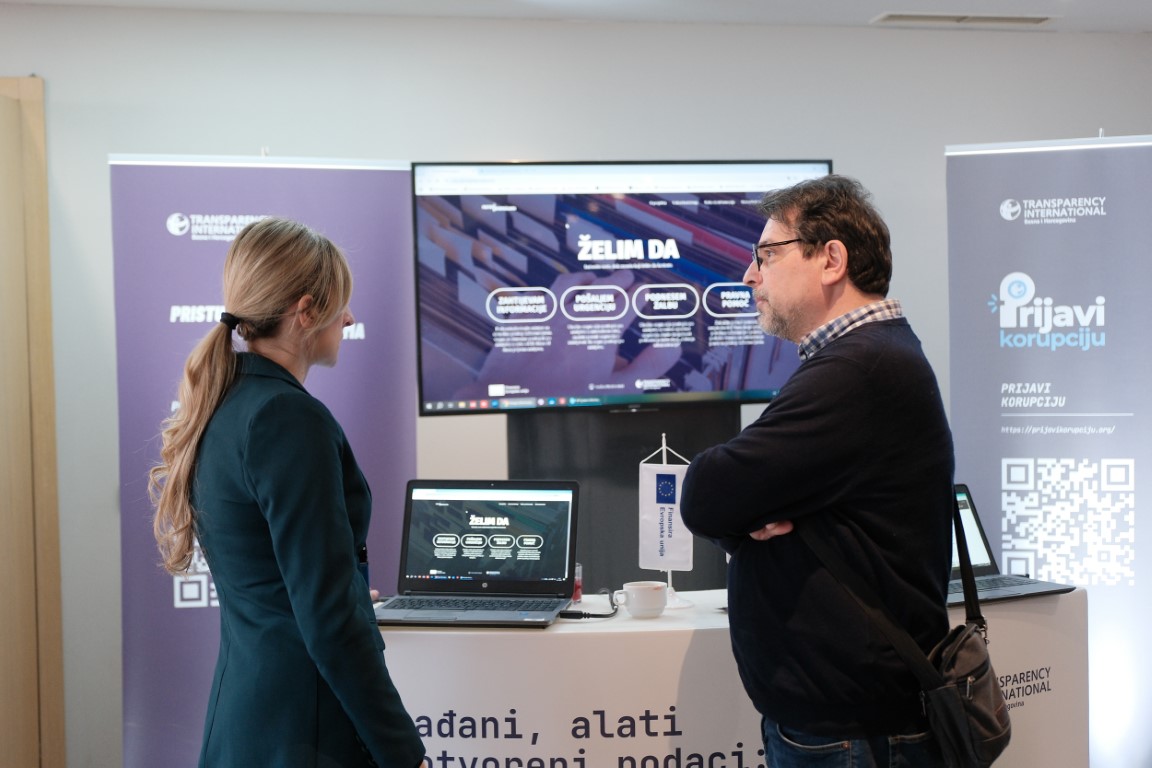
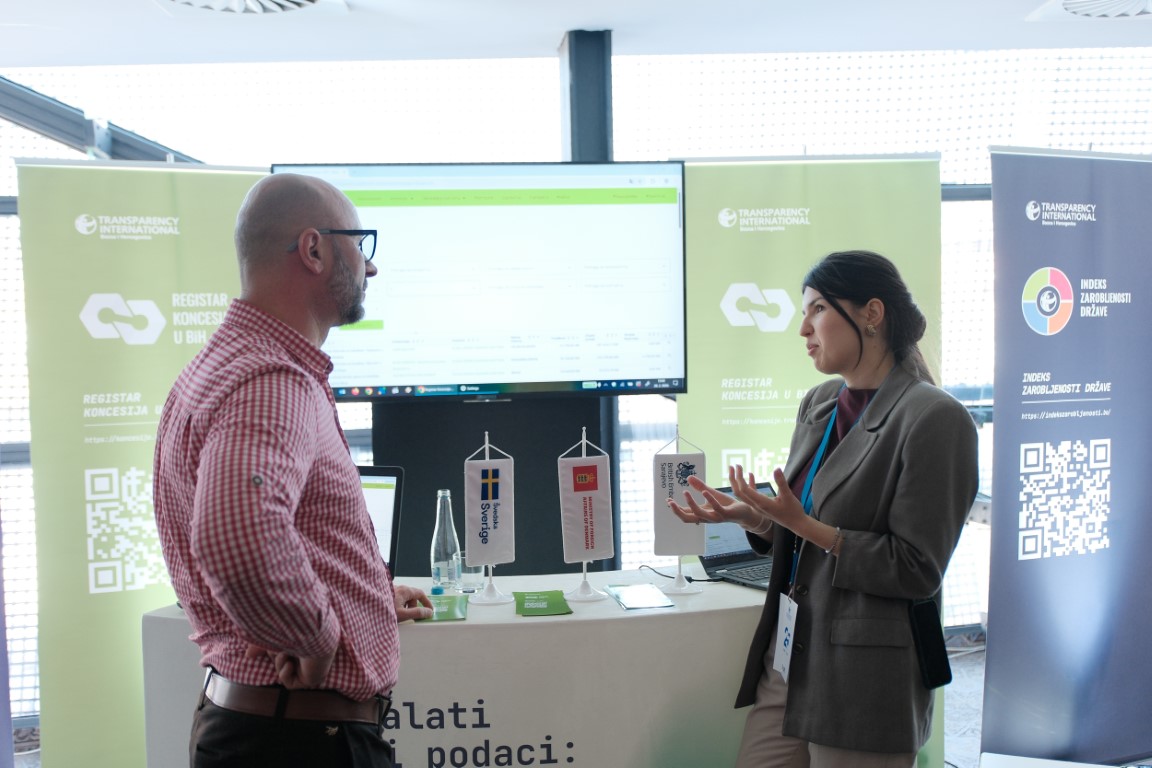
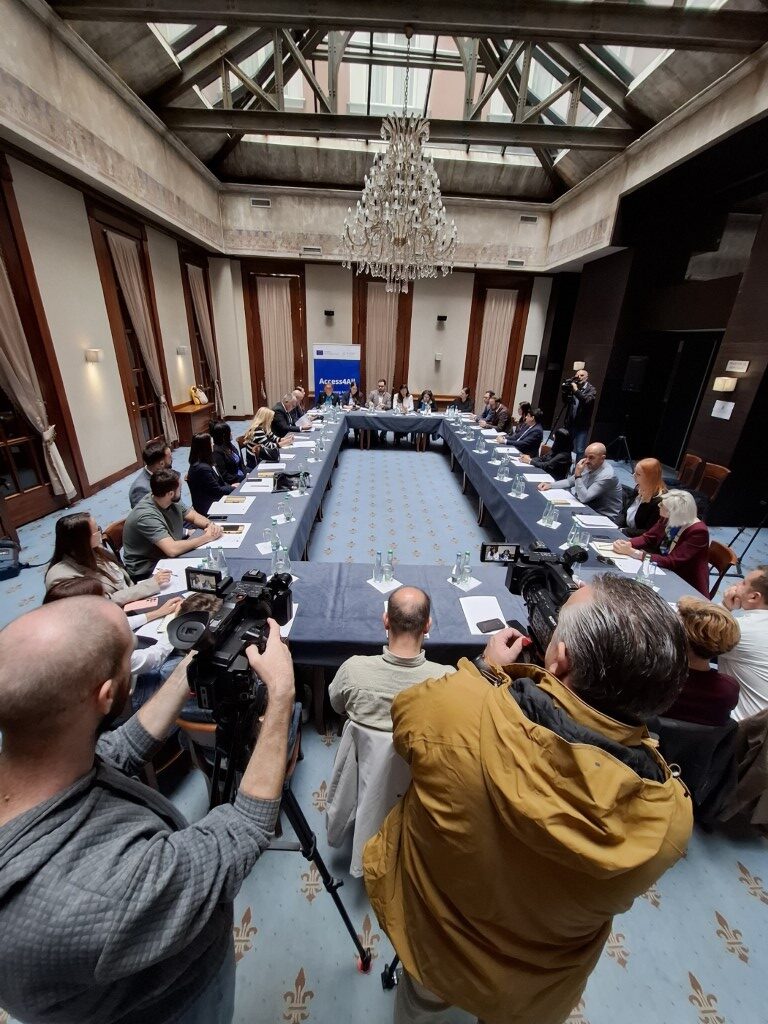
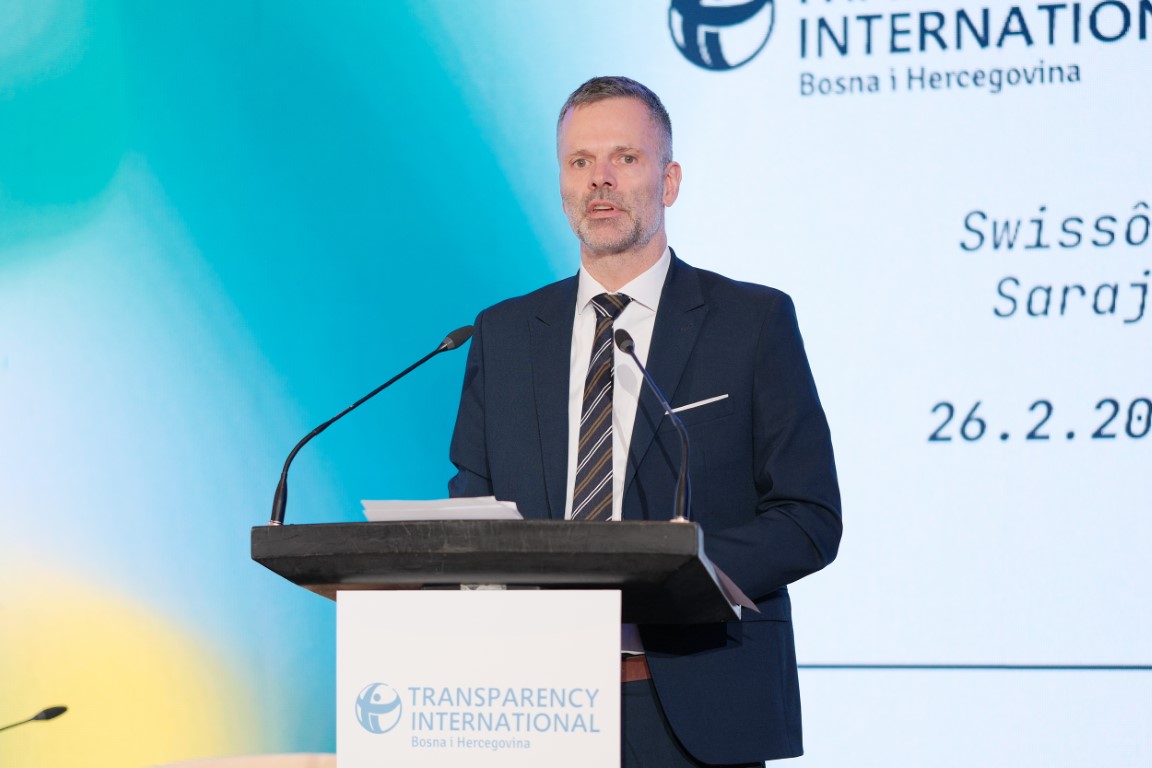
All of this necessitates initiating a broader societal debate on these issues, which was the reason for holding the conference “Citizens, Tools, and Open Data: How to Access Information of Public Interest” organized by Transparency International in Bosnia and Herzegovina (TI BiH) today in Sarajevo. The conference served as an introduction to the TI BiH Expo – an exhibition of databases and tools developed to enable easier access to public information, which is crucial for corruption prevention. That this is a fundamental issue for the European path was also emphasized by H.E. Åge Sandal Møller, Ambassador of Denmark to BiH.

“Transparency and access to information for citizens and media are essential prerequisites of every democratic society. Open data not only strengthens trust in institutions but is also a key tool in fighting corruption and a driver of economic growth. Denmark is a country founded on trust in institutions, and the fight against corruption is essential on Bosnia and Herzegovina’s EU path. Our support aims to encourage civil society efforts whose oversight role is absolutely necessary , stated Ambassador Møller.

The Delegation of the European Union to BiH emphasized that the availability of information of public interest is crucial for empowering citizens in a democracy.

“Therefore, it is of crucial importance for BiH to establish a fair and effective mechanism for monitoring the implementation of laws that guarantee free access to public information, ensure impartial legal remedies, and impose sanctions. The European Union will continue to advocate for cooperation between public institutions, civil society, and media to achieve this , stated Aurelie Valtat, Head of the European Integration, Political Affairs, Media and Information Section at the EU Delegation to BiH.

To facilitate access to information and break down the “wall of silence,” TI BiH has, in addition to the aforementioned information, opened to the public on various platforms data on the operations and management structures of public institutions and enterprises, the distribution of public funds to non-profit organizations, information on the prosecution of corruption and transparency of judicial operations, monitoring of reforms in the field of anti-corruption, as well as various tools for oversight of public fund distribution, strengthening institutional integrity, and accountability of holders of the highest public offices.

Press rls_26_02_2026

A responsible government has nothing to hide: Open all phases of decision-making by governments and parliaments.

Mostar, November 13, 2025 – Transparency International in BiH presented recommendations at the conference “Open Government for an Open Society” in Mostar for...

Izvještaji za Mediae

A responsible government has nothing to hide: Open all phases of decision-making by governments and parliaments.

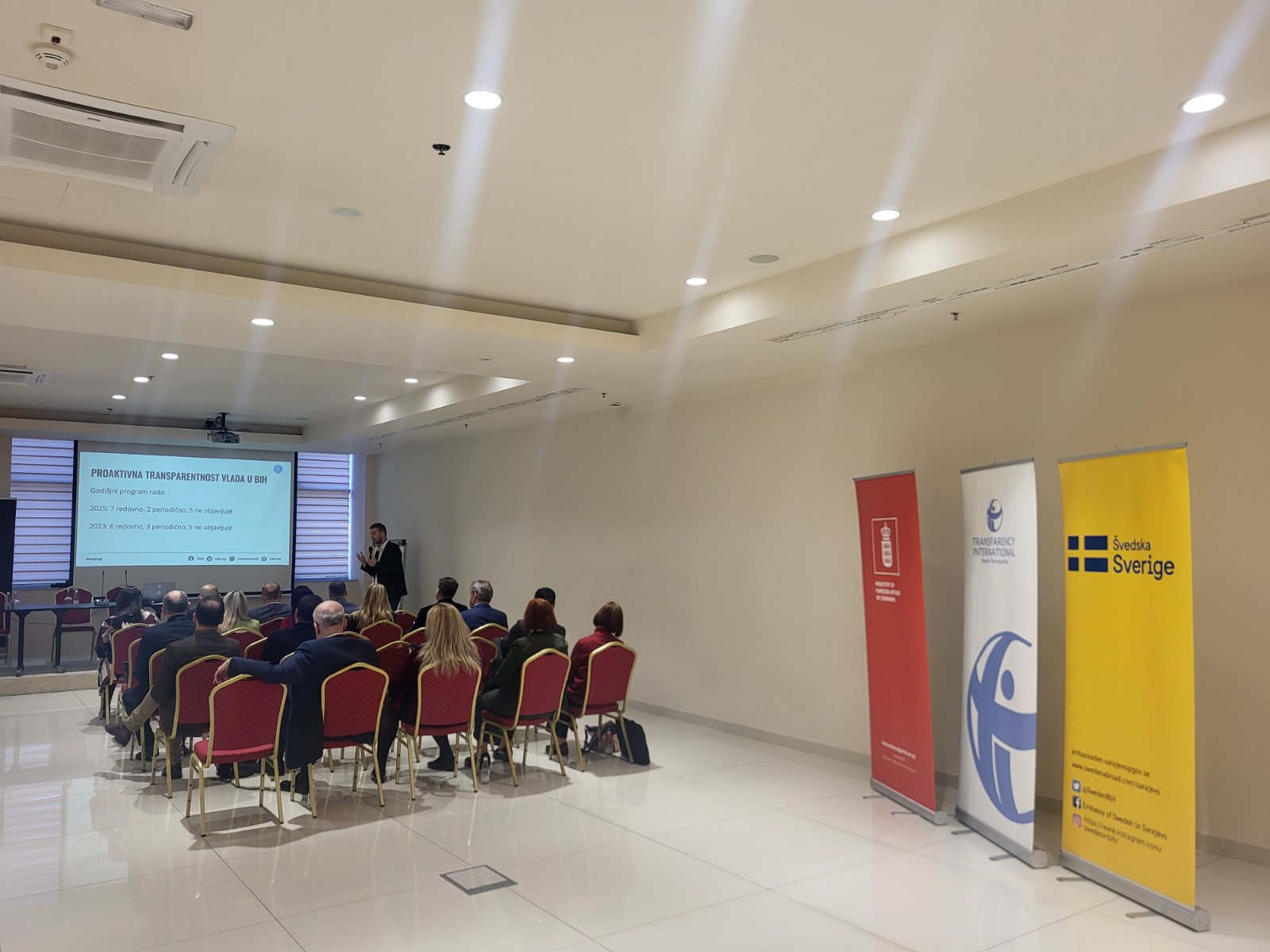
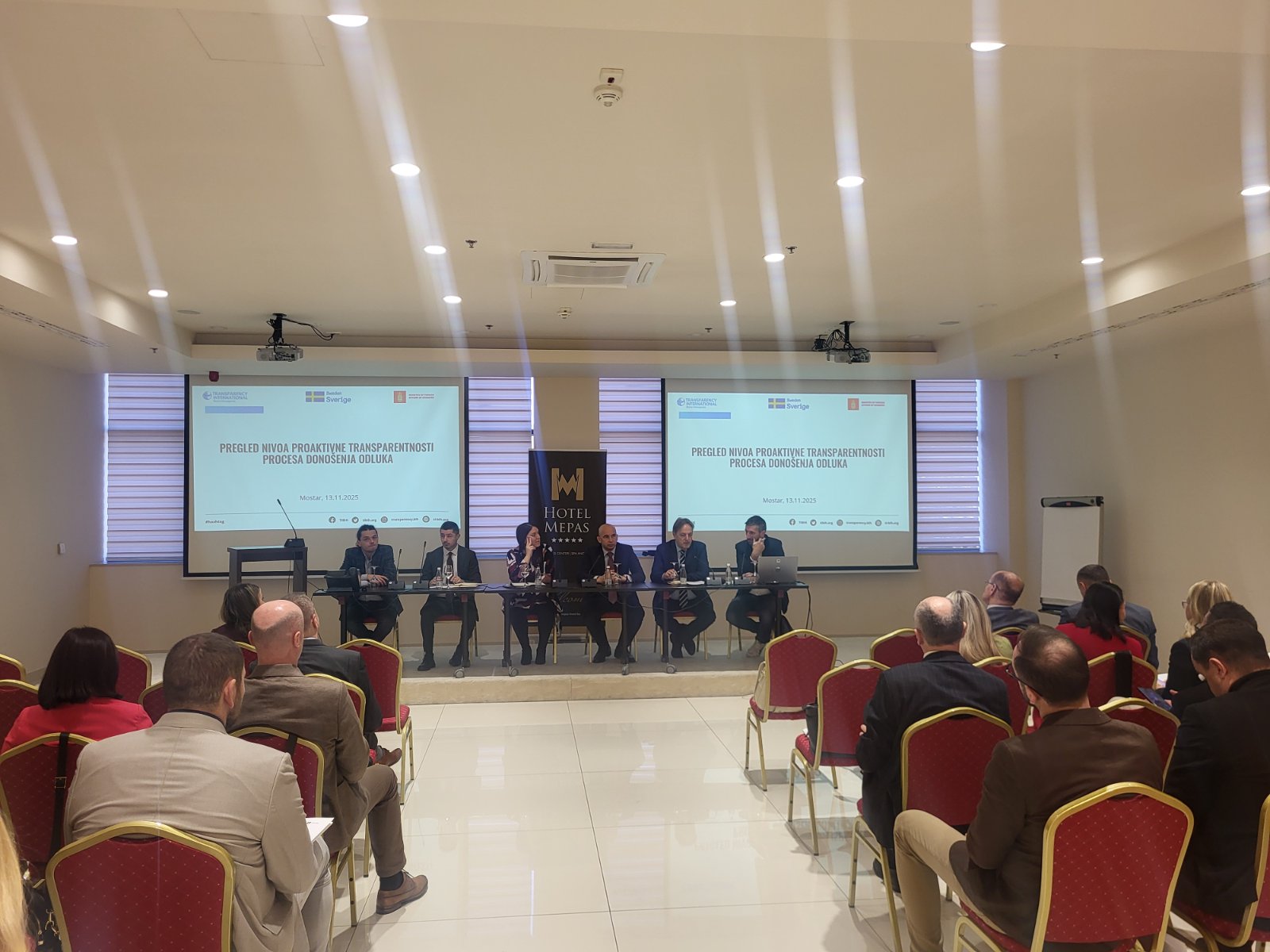
Mostar, November 13, 2025 – Transparency International in BiH presented recommendations at the conference “Open Government for an Open Society” in Mostar for governments and parliaments to improve transparency in decision-making at all levels of government in BiH. This includes: establishing the obligation for timely and regular publication of documents accompanying government and parliamentary decision-making, publishing agendas and draft decisions before and after sessions, developing and enhancing electronic tools and platforms for citizen engagement and public discussions, ensuring public participation in working groups for law preparation, etc.

The event highlighted positive examples of proactive transparency from the BiH Parliament, the Government of Zenica-Doboj Canton, and the Assembly of Brčko District BiH. Practices of these institutions were presented by the Prime Minister of Ze-Do Canton, Nezir Pivić, the President of the BD Assembly, Damir Bučević, and the Head of the Public Relations Sector of the BiH Parliamentary Assembly, Zlatko Vukmirović. Despite room for improvement, these institutions lead in publishing key documents and developing digital solutions that allow citizens easier access to information of public importance.

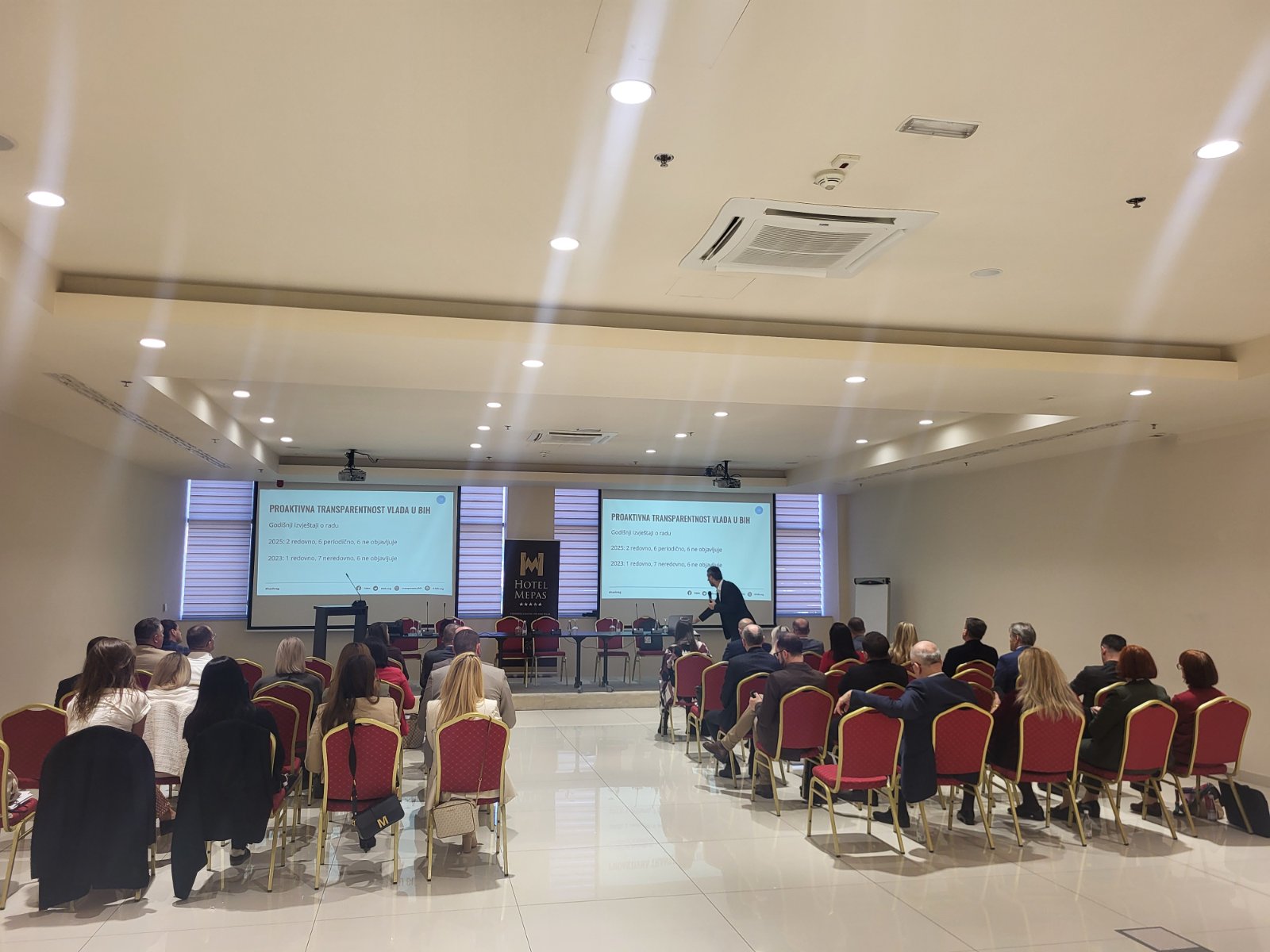
However, the latest review of the level of proactive transparency in decision-making processes in Bosnia and Herzegovina shows that, despite visible progress, further and more serious improvements are needed for transparency to become the norm rather than the exception.

The research showed that no government in BiH regularly publishes materials from held sessions, while the Council of Ministers is the only executive institution whose minutes from held sessions are published, albeit with certain delays.

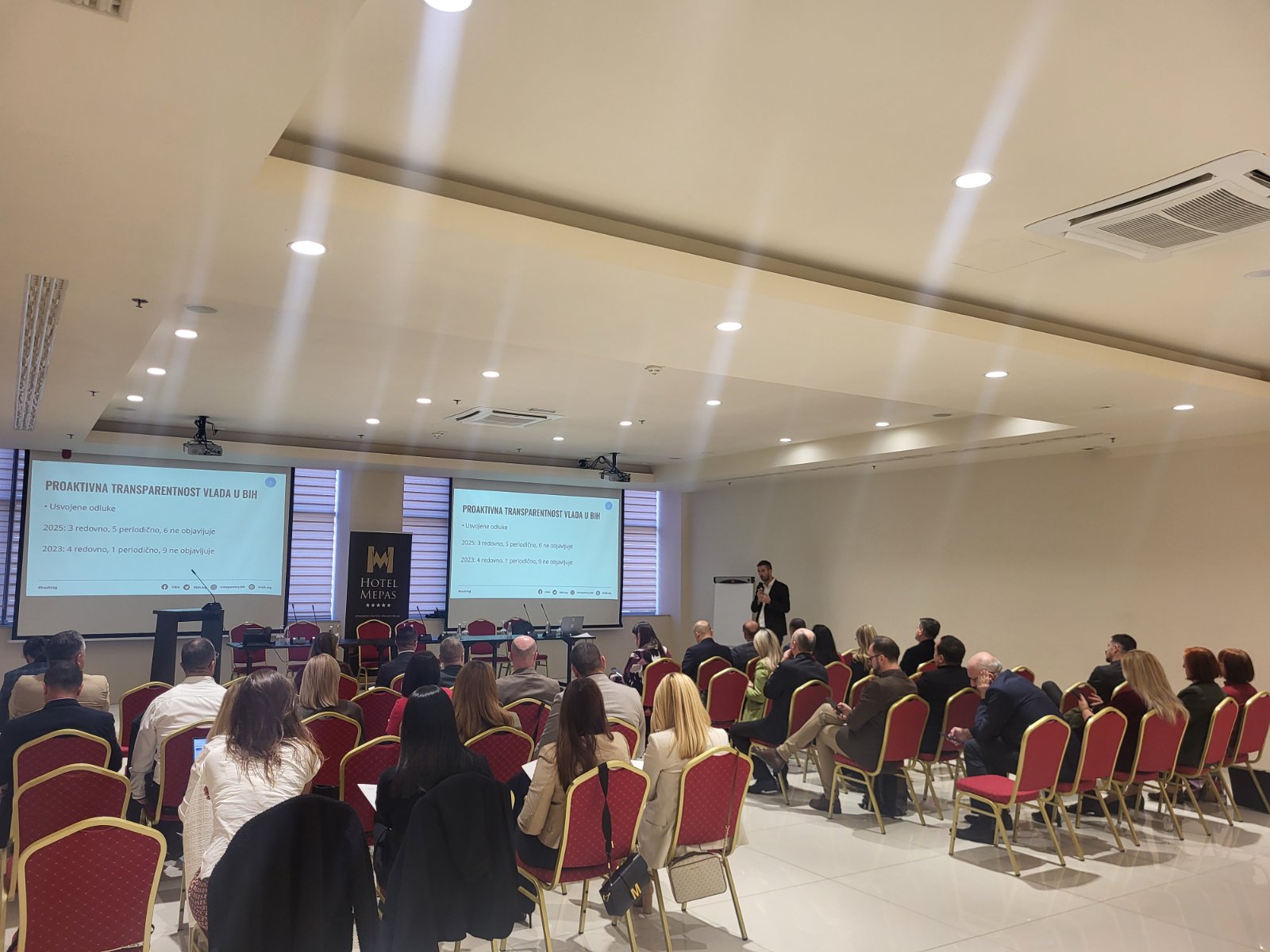
This fact, along with the fact that only 3 out of 14 governments in BiH regularly publish decisions on their official websites, indicates that citizens are not adequately informed about executive decisions that directly affect them, which reduces the level of trust in their work.

Although a slight improvement has been observed in the publication of annual work programs, which are now regularly published by seven governments, the publication of annual reports remains at an extremely low level.

The state of proactive transparency is no better in legislative bodies across BiH, as cantonal assemblies, entities, and both houses of the BiH Parliament do not regularly publish plans or reports on conducted public discussions, and only 6 out of 16 legislative bodies regularly publish reports on their work. A positive circumstance is that all assemblies regularly publish agendas, but access to other information remains uneven – still, 4 cantonal assemblies do not publish materials for sessions.

TI BiH calls on all levels of government to recognize transparency as a key mechanism for strengthening integrity and accountability of government in BiH. Timely, complete, and proactive publication of information must become an inseparable part of institutional practice, so that citizens have a real insight into the decisions made on their behalf. Therefore, in the coming period, TI BiH will again send initiatives to governments and parliaments with concrete guidelines and solutions for establishing more transparent practices.

The conference was held with financial support from Sweden and Denmark.

Press rls_13_11_2025


International Right to Know Day: Citizens’ right to information must be fully guaranteed

Sarajevo, September 30, 2025 – A weak legal framework at all levels still allows institutions to hide information of public interest, undermining transparency and reducing the...

Izvještaji za Mediae

International Right to Know Day: Citizens’ right to information must be fully guaranteed

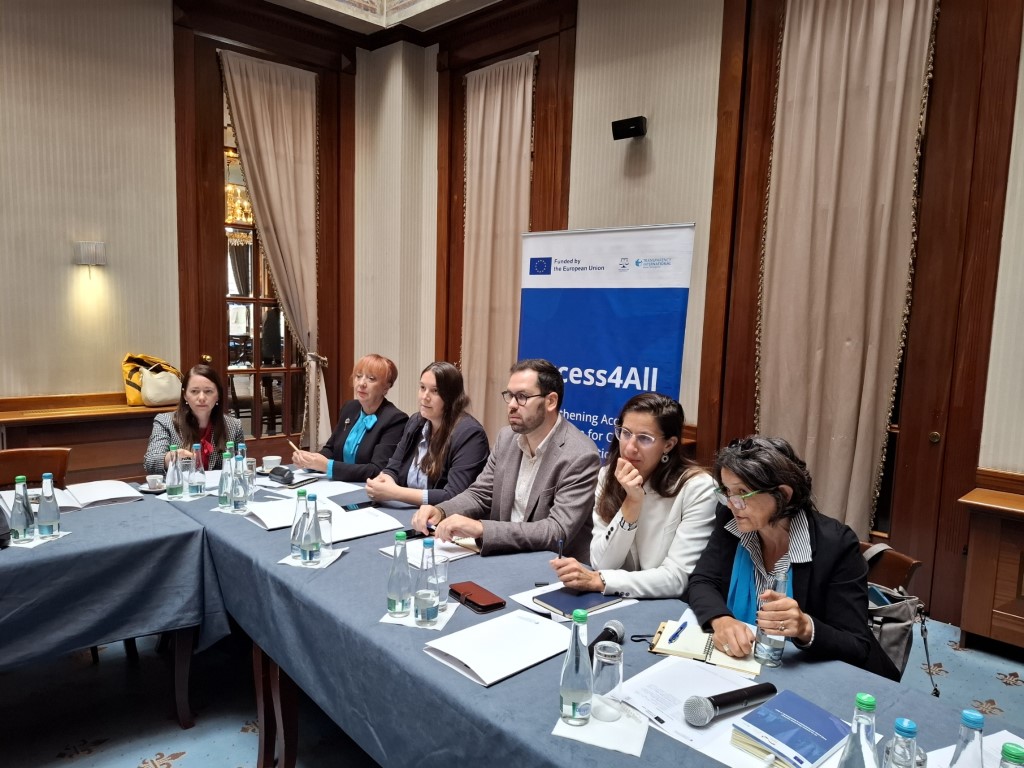
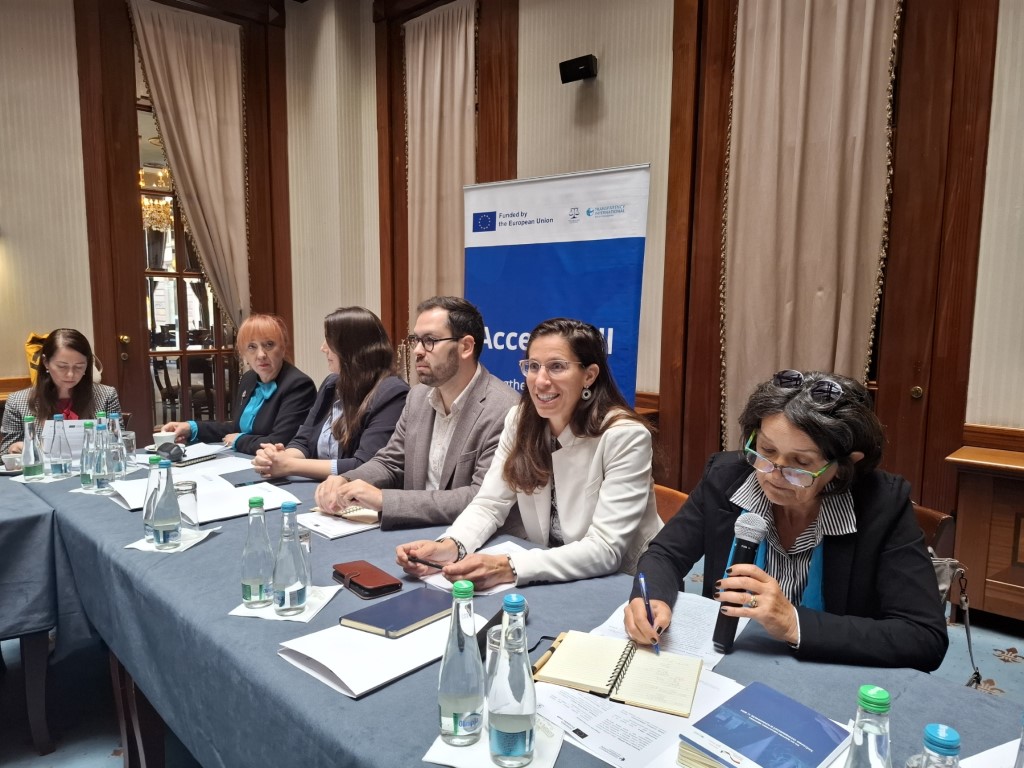
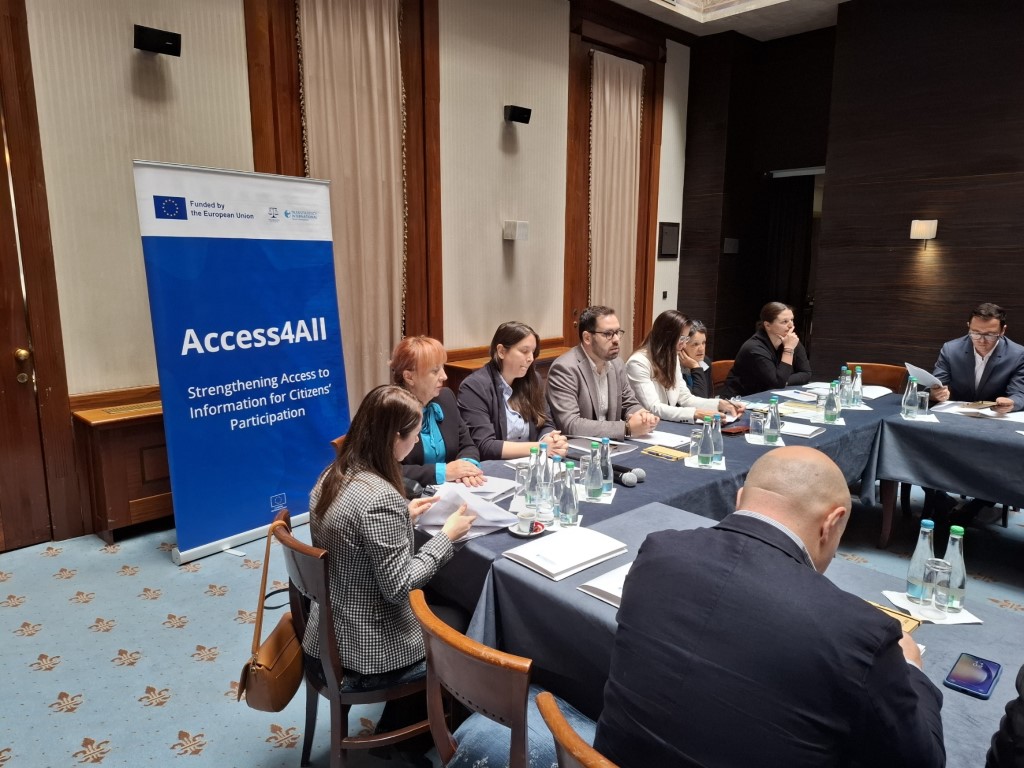
Sarajevo, September 30, 2025 – A weak legal framework at all levels still allows institutions to hide information of public interest, undermining transparency and reducing the accountability of public institutions. The new law at the BiH level, presented as reformative, has brought new challenges in implementation, as warned by civil society organizations. This was conveyed at a round table organized by Transparency International in BiH and the association Your Rights BiH, with the support of the European Union, on the occasion of International Right to Know Day.

The gathering presented initiatives to improve the legal framework at all levels of government, in response to the practice where institutions used legal loopholes to prolong disputes, did not consistently comply with court decisions, and restricted public access to information crucial for promoting transparency and accountability.

At the entity level, institutions are still not required to proactively and regularly publish key information of public importance such as budgets, contracts, reports, while the new law at the state level still does not yield the expected results. Therefore, the initiative proposes measures to address key shortcomings of the legal framework:

  • In RS and FBiH, introduce provisions on proactive transparency, prescribe inspection oversight, misdemeanor provisions, and fines for violations of the law.
  • At the BiH level, prescribe sanctions for non-compliance with legally prescribed deadlines, change the policy of imposing fines, and establish an independent second-instance decision-making mechanism for appeals.

In Brčko District, a particular challenge remains the absence of a law regulating this area for two years.

The adoption of a new law at the BiH level has brought certain improvements, including provisions on proactive transparency. At the same time, it has created new grounds on which institutions can deny access to information, raising concerns that information of public importance may remain inaccessible to citizens and the media. An Appeals Council was also established within the BiH Council of Ministers, questioning the independence of this body.

According to TI BiH data from the beginning of 2024 to June 2025, the Council received 108 appeals, of which 12 were dismissed, 20 were upheld, while in 62 cases the appeal was rejected. So far, 15 administrative disputes have been initiated against the Council’s decisions, and the BiH Court has issued two judgments, one accepting the lawsuit and one rejecting it.

  • These indicators clearly show that the existing second-instance mechanism for protecting the right to access information is not sufficiently functional and independent, and its engagement in improving legal protection is completely lacking. We call on the competent institutions to establish an independent and impartial body to decide on appeals in access to information procedures, in accordance with best practices in the region and international recommendations, as stated by TI BiH.

The gathering highlighted that BiH still faces serious challenges in implementing the freedom of information law, including inconsistency in decision-making, institutional delays, and a lack of proactive transparency. Participants exchanged experiences and presented proposals for improving the law, aiming to strengthen institutional accountability and ensure consistent application of this right at all levels of government.

Aurelie Valtat, Head of the Sector for European Integration, Political Affairs, Media, and Information at the EU Delegation in BiH, stated: “The European Union has long supported reforms that strengthen transparency, accountability, and good governance in Bosnia and Herzegovina. The new state Freedom of Information Act must be translated into real practice, not remain just a dead letter. To this end, with our support, Transparency International BiH and Your Rights BiH have developed an online platform that facilitates the submission and tracking of information access requests. We call on institutions, civil society, and the media to seize this moment to make transparency a reality for all citizens.”

Initiatives to improve the laws regulating this area will be submitted to governments and legislative bodies at all levels. Representatives of the media and civil society organizations, who submit the majority of requests to institutions, called on the authorities to ensure a transparent process and avoid repeating the shortcomings observed during the adoption of the law at the state level.

Press rls_30_9_2025

TI BIH appeals to the Brčko District Assembly: Enable public discussion on the new Freedom of Information Act

Banja Luka, 03. June 2025: Transparency International BiH has requested the Brčko District Assembly of BiH to submit the draft Freedom of Information Act for public discussion to...

Izvještaji za Mediae

TI BIH appeals to the Brčko District Assembly: Enable public discussion on the new Freedom of Information Act

Banja Luka, 03. June 2025: Transparency International BiH has requested the Brčko District Assembly of BiH to submit the draft Freedom of Information Act for public discussion to improve provisions, protect citizens’ rights, and enable the involvement of a broader interested public.

The content of this law directly affects citizens’ rights to access information of public importance, as well as the work of journalists and civil society organizations that monitor government activities. In recent days, we have received several reactions and warnings that the proposed solution will further enable authorities to hide information of public interest.

This regulation concerns all citizens for whom it is the only mechanism to obtain information under the control of public authorities. Unfortunately, the proposed solution eliminates the possibility of appealing the decision of the authority from which information is requested, so those who wish to protect their rights will have to engage in legal proceedings, incurring additional costs for legal representation, court fees, etc., leading to a high likelihood that some will give up at the outset.
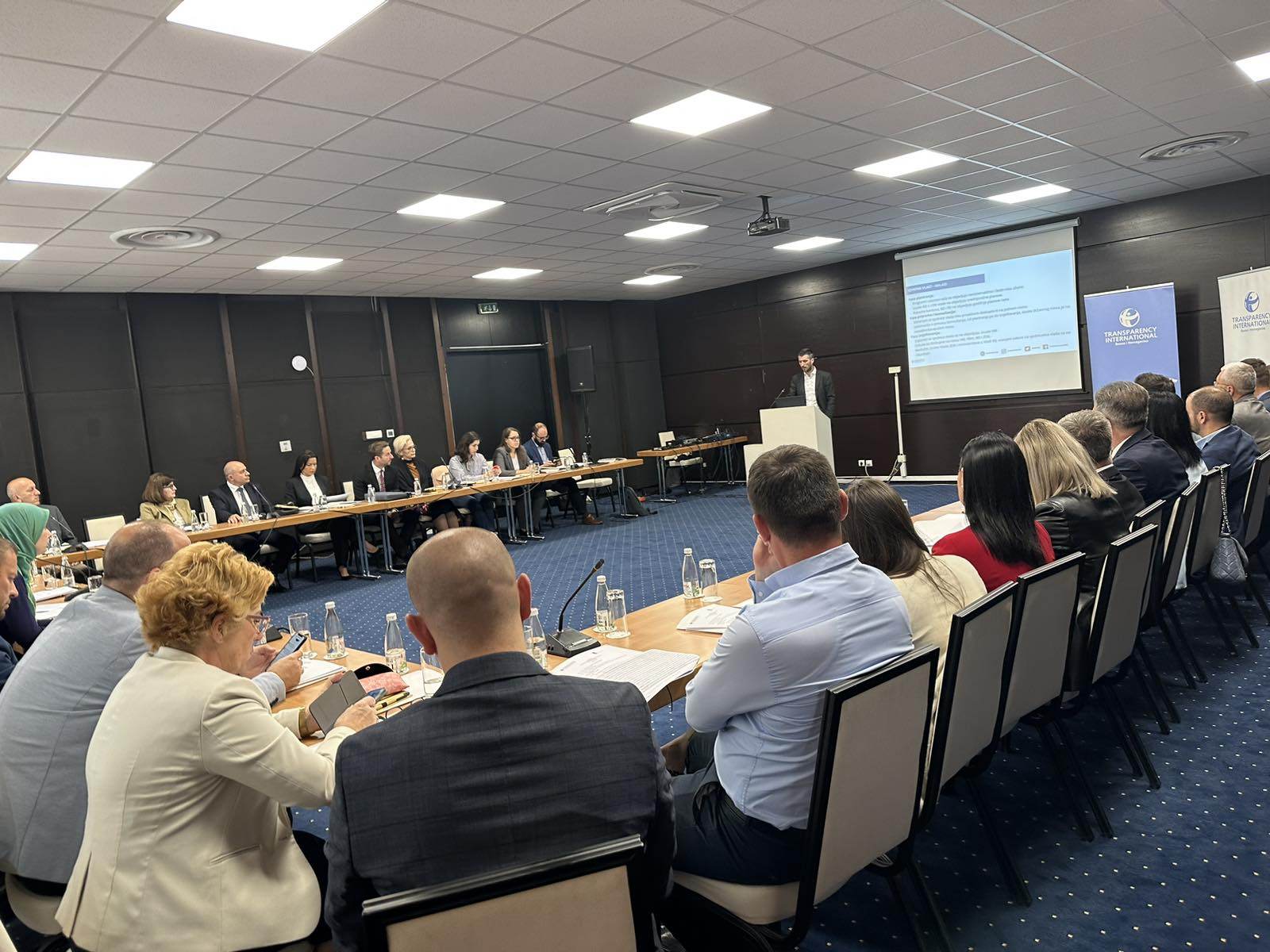
The publication of this draft law has caused negative reactions in the public and media due to contentious provisions that limit the right to appeal, prescribe misdemeanor provisions that will not have practical effects, ignore existing administrative procedure procedures, and potentially prevent effective oversight of public authorities’ actions.

Precisely because of the significance and potential impact of the law on citizens, journalists, and activists, it is necessary for the adoption process to be open, inclusive, and transparent, allowing all interested parties to present their proposals and suggestions.

TI BiH believes that by submitting the law for public discussion, the Brčko District authorities of BiH would send an important message that they respect the principles of democratic decision-making and uphold citizens’ rights to participate in decision-making and shaping public policies.

Press rls_0306

TI BiH on the new Freedom of Information Law of Brčko District: It is unacceptable to deny citizens the right to appeal.

Banja Luka, 21. May 2025: Transparency International in Bosnia and Herzegovina (TI BiH) warns the authorities of Brčko District that the draft of the new law regulating the area...

Izvještaji za Mediae

TI BiH on the new Freedom of Information Law of Brčko District: It is unacceptable to deny citizens the right to appeal.

Banja Luka, 21. May 2025: Transparency International in Bosnia and Herzegovina (TI BiH) warns the authorities of Brčko District that the draft of the new law regulating the area of access to information contains numerous deficiencies that are contrary to international standards and deny citizens the right to appeal, thereby imposing additional costs on them. TI BiH has submitted comments to the Brčko District Assembly on the draft of the new Freedom of Information Law, which will be discussed at today’s session, with the most contentious issue being that there is no provision for appealing the decision of the authority from which information of public importance is requested.

In practice, this will create additional room for authorities to hide key information about their work, public spending, and other information of public interest from the public, and will force citizens, media, and civil society to initiate expensive legal proceedings. This will require additional costs for legal representation, court fees for lawsuits and judgments, and it is expected that a large number of them will give up at the outset.

Denying the right to appeal is unacceptable because one of the basic principles of administrative procedure is the “principle of two-tiered decision-making,” and this right is also guaranteed by the Constitution of BiH, which incorporates the European Convention on Human Rights and Freedoms. Likewise, certain norms are contrary to international standards, including the provisions of the European Convention on Human Rights and Freedoms, as well as the Council of Europe Convention on Access to Official Documents (Tromsø Convention).

It is also problematic that the misdemeanor provisions are designed so that responsible persons are punished only if they do not comply with the order of the supervisory authority, while there is a complete lack of sanctions if they act unlawfully towards applicants. Until recently, Brčko District applied the BiH law regulating this area, but with the adoption of the new law at the state level as part of the so-called “European laws,” there was a need to regulate this issue at the District level. However, the proposed draft is not aligned with European standards or with laws at other levels.

Therefore, TI BiH appeals to the deputies to return the draft for revision in the parliamentary procedure because the new solution should improve the situation in this area, not worsen it further.

Press rls_21.05.25

INTRODUCING THE ‘ACCESS TO INFORMATION’ TOOL: A STEP TOWARD GREATER TRANSPARENCY IN BIH

"Access to Information", a tool for creating requests for free access to information, drafting urgentities and complaints, and receiving reminders for deadlines for each step of the process of obtaining information of public importance from all institutions in Bosnia and Herzegovina, was presented today in Sarajevo.

Sarajevo, January 30, 2025 – Today in Sarajevo, the online tool ‘Access to Information’ (Pristupi Informacijama) was officially presented. This platform enables users to...

Izvještaji za Mediae

INTRODUCING THE ‘ACCESS TO INFORMATION’ TOOL: A STEP TOWARD GREATER TRANSPARENCY IN BIH

Sarajevo, January 30, 2025 – Today in Sarajevo, the online tool ‘Access to Information’ (Pristupi Informacijama) was officially presented. This platform enables users to create requests for free access to information directed at all institutions in Bosnia and Herzegovina. The tool, available at pristupinformacijama.ba, provides an automated and intuitive process for submitting requests and allows citizens, media, and civil society organizations to draft and send follow-ups and appeals, as well as receive reminders for deadlines at each stage of obtaining information of public importance.

“The aim of this tool, whose development was supported by the European Union, is to enhance access to information, which not only improves the transparency of public authorities but also increases citizens’ participation in the work of institutions. This is a fundamental prerequisite for the democratic nature, openness, and accountability of institutions, stated Aurelie Valtat, Head of Political, Press and Information Section at the Delegation of the European Union in BiH.

The Access to Information tool features an intuitive and user-friendly interface that guides users through each step of drafting an access to information request. It also contains a database of several thousand public institutions, agencies, enterprises, and organizations at all levels of government in Bosnia and Herzegovina, allowing citizens to direct their inquiries appropriately.

Once a request is created, users can print and send it to the relevant institution, after which the tool tracks deadlines and automatically notifies users of available options, such as sending a follow-up or appeal if the public authority fails to respond within the legally prescribed timeframe. Additionally, citizens can request legal assistance if they encounter difficulties in obtaining the requested information.

“Our goal was to provide citizens with a simple and intuitive way to draft their requests independently, enabling them to obtain information from public authorities, as this is one of the fundamental rights guaranteed by freedom of information laws,” said Marko Vujić, a legal aid associate at Transparency International in BiH (TI BiH), which implemented the project in collaboration with Vaša prava BiH (VP BiH).

It is important to emphasize that the Access to Information tool enables users to submit requests to all public institutions in BiH while automatically selecting the appropriate legal framework based on the level of government and the institution’s jurisdiction. This feature significantly simplifies the process, considering that three different laws currently regulate access to information in Bosnia and Herzegovina.

The presentation of the Access to Information tool also highlighted shortcomings in the Freedom of Information Law in BiH. A legal analysis of the law reveals inconsistent terminology, unclear provisions on the public interest test, a lack of harmonization with other legal acts, unjustifiably long response times, and the absence of adequate sanctions, all of which hinder its implementation and reduce the efficiency of public access to information.

“Due to vague provisions and inconsistencies with other laws, which allow for ambiguous interpretations, the implementation of the Freedom of Information Law in Bosnia and Herzegovina has become arbitrary and unreliable, further eroding public trust in institutions,” said Emir Prcanović, Director of Vaša prava BiH.

The discussion also highlighted weaknesses in the entity-level access to information laws, such as the lack of proactive disclosure provisions, non-compliance with international standards, and the absence of an oversight mechanism in the Freedom of Information Law of Republika Srpska.

Enhancing transparency and institutional accountability is crucial for rebuilding public trust and ensuring the effective functioning of a democratic society. To this end, TI BiH plans to organize training sessions and workshops for media professionals and civil society representatives to familiarize them with the Access to Information tool. These efforts aim to promote the practical application of the right to information and encourage greater proactive transparency among public institutions.

The Ministry of Transport and Communications of the Republic of Srpska Continues to ignore court decisions, despite the fourth verdict in favor of TI BiH

The District Court in Banja Luka has upheld the fourth lawsuit filed by Transparency International in BiH (TI BiH) against the Ministry of Transport and Communications of...

Izvještaji za Mediae

The Ministry of Transport and Communications of the Republic of Srpska Continues to ignore court decisions, despite the fourth verdict in favor of TI BiH

The District Court in Banja Luka has upheld the fourth lawsuit filed by Transparency International in BiH (TI BiH) against the Ministry of Transport and Communications of Republika Srpska, once again ordering the Ministry to clearly explain why the concession contract for the Banja Luka–Prijedor highway was classified as exempt from disclosure. The ruling emphasized that the Ministry prioritized the commercial interests of the Chinese investor over the public interest, without conducting a public interest test or providing specific evidence of commercial harm from disclosing information from the Financial Model, thus misapplying the Law on Freedom of Access to Information.
According to the Court, even if the commercial interests of the Chinese company were at risk, the Ministry was still obligated to assess whether disclosing details of the contract – such as financing methods and projected toll revenues – would serve a greater public benefit than protecting the concessionaire’s confidential business interests.
Despite clear legal obligations and four court rulings, the Ministry continues to deny access to key information from the highway construction contract, relying on vague claims of business secrecy.
In addition to these violations, the Ministry also denied the right to appeal its decision, thereby breaching not only the Law on Freedom of Access to Information, but also the Law on Administrative Procedure and the Constitution of Republika Srpska, which guarantees the right to appeal. TI BiH recalls that in this case, the Institution of Human Rights Ombudsman also issued a recommendation in 2022, ordering the Ministry to act on the submitted appeal.
Since 2021, TI BiH has been seeking access to all essential elements of the contract for one of the most important infrastructure projects in RS, citing public interest and suspicions that the deal was concluded under detrimental conditions for the entity.
In this case, TI BiH has been denied access to information despite four administrative disputes resolved in its favor and the annulment of all Ministry decisions. TI BiH requested that the Court notify the Republic’s Administrative Inspectorate due to the Ministry’s continued non-compliance and asked the Court to resolve the matter itself, but the Court refused, even though it is evident that the Ministry is abusing procedural powers to the detriment of TI BiH.

Press rls_29.11.24

The Government of Republic of Srpska Illegally Did the Minutes from the Sessions

Banja Luka, October 18, 2024 – Transparency International in BiH has won a lawsuit against the Government of the Republic of Srpska for refusing to disclose the minutes of...

Izvještaji za Mediae

The Government of Republic of Srpska Illegally Did the Minutes from the Sessions

Banja Luka, October 18, 2024 – Transparency International in BiH has won a lawsuit against the Government of the Republic of Srpska for refusing to disclose the minutes of sessions where the Draft Law on the Special Registry and Transparency of the Work of Non-Profit Organizations in the RS was determined.

Due to the contentious and non-transparent process of adopting this law, which garnered significant public interest because it deeply impacts fundamental human rights, Transparency International in BiH requested the minutes from the sessions of the Government of the Republic of Srpska where the Draft Law on the Special Registry and Transparency of the Work of Non-Profit Organizations in the RS was determined. The General Secretariat of the Government of the Republic of Srpska rejected this request, claiming, among other things, that the publication of the requested information, namely the session minutes, was not in the public interest.

Transparency International in BiH subsequently turned to the court, which ruled that withholding the requested information was unlawful and that the Government had improperly applied the provisions of the Law on Freedom of Access to Information. The ruling of the District Court in Banja Luka  specifically highlighted the denial of the constitutionally guaranteed right to appeal and the failure to conduct a public interest test when making the decision.

As a reminder, the Government of the Republic of Srpska secretly approved the Draft Law on the Special Registry and Transparency of the Work of Non-Profit Organizations and forwarded it for adoption to the National Assembly of the RS. The decision on when and how the Draft was approved was not made available to the public. Only after media inquiries did the Government disclose that the Draft had been approved at a session held on March 21, 2024, just before the deadline. Notably, the adoption of this Draft was neither mentioned in the announced agenda nor in the Government’s post-session information.

This verdict is only the latest in a series of examples of the unsatisfactory degree of transparency shown by the authorities in the Republic of Srpska, which is also confirmed by research conducted by TI BiH, according to which only 5 governments in BiH regularly publish decisions, while the materials from the held sessions are not published by any of the 14 governments in Bosnia and Herzegovina, as a result of which distrust in the institutions grows, but also room for abuse of procedures and making decisions that are not in the public interest.


The Unsatisfactory Implementation of the Law on Freedom of Information Threatens Transparency in Bosnia and Herzegovina (BiH).

Sarajevo, September 27, 2024 – Delays in responding, providing incomplete answers, or delivering information in a format not stipulated by law are just some indicators of the...

Izvještaji za Mediae

The Unsatisfactory Implementation of the Law on Freedom of Information Threatens Transparency in Bosnia and Herzegovina (BiH).

Sarajevo, September 27, 2024 – Delays in responding, providing incomplete answers, or delivering information in a format not stipulated by law are just some indicators of the careless and arbitrary implementation of freedom of information laws in Bosnia and Herzegovina. As a result, citizens face significant obstacles in accessing data that is inherently public.

Nearly half of public authorities fail to respond to requests for free access to information within the legal timeframe, and only slightly more than a third of institutions—140 out of 394 surveyed—provided all the requested data within the legal deadline. These findings were presented today in Sarajevo as part of the International Day for Universal Access to Information.

“Access to information is a key indicator of a country’s level of democracy and a mechanism that allows citizens to participate in public processes,” stated Aurélie Valtat, Head of the European Integration, Political, and Economic Affairs Section at the Delegation of the European Union to BiH, during her address at the opening of the conference “Challenges of Access to Public Information in BiH: From Adoption to Implementation of the Law.”

“Freedom of access to information is one of the foundations of transparent and accountable public administration, as well as a cornerstone of the EU’s principles. Progress in this area is one of the most important aspects for the development of democracy,” Valtat added.

The research, conducted by Transparency International in BiH in collaboration with the organization “Vaša prava” Bosnia and Herzegovina as part of the project “Access for All – Strengthening Access to Information for Citizen Participation,” with support from the Delegation of the European Union to BiH, covered 394 public authorities at all levels of government in Bosnia and Herzegovina. The requested information included data on salary allocations, employment in 2022 and 2023, and service contracts concluded over the past three years.

The data indicate that public authorities most frequently justify their refusal to provide information by citing the protection of personal data. This is particularly evident in cases involving the details of service contracts, where most institutions claimed that such information was not of public interest. This stance persists despite legal provisions and interpretations by the Personal Data Protection Agency of BiH, which state that the earnings of employees in public institutions do not enjoy the same level of privacy protection.

The research revealed a noticeable difference in the responsiveness of various levels of government in Bosnia and Herzegovina. Ministries at the state level responded within the legal timeframe in 88.9% of cases, while only 68% of cantonal ministries provided timely responses. The data also show that disputes over violations of freedom of information laws are resolved within one to two years on average, though significant variations exist. For instance, the Cantonal Court in Novi Travnik issued a decision in just one month, whereas the Cantonal Court in Sarajevo took four years to rule on a case filed in January 2019.

“The goal of the law on freedom of access to information in BiH is to ensure that information under the control of a public authority represents a public good and to promote greater transparency and responsibility of those public authorities, while the analysis of the application of this law shows that this is not the case,” said Marko Vujić, legal aid associate in TI BiH ALAC.

In the past five years, TI BiH initiated 93 administrative disputes against public authorities due to violations of the law on freedom of access to information, and the fact that 86% of resolved cases were in favor of Transparency International in BiH indicates that public authorities improperly apply the law, undermining the importance of the public interest when deciding not to publish the information requested of them.

This research confirms the previous findings and analyzes of TI BiH where public bodies show an unsatisfactory level of transparency and protection of public interest, creating legal uncertainty in the process of obtaining public information. TI BiH previously indicated that after the adoption of four reform laws important for Bosnia and Herzegovina’s European path, among which is the new Law on Freedom of Access to Information at the level of BiH, the publication of data of public interest was not accelerated and no positive developments were recorded.

TI BiH: The Ministry of Justice is hiding the Draft Law on the Court of BiH

Sarajevo, April 4th, 2024: The Ministry of Justice of Bosnia and Herzegovina refused to publish the Draft Law on the Court of Bosnia and Herzegovina and thus continued to hide...

Izvještaji za Mediae

TI BiH: The Ministry of Justice is hiding the Draft Law on the Court of BiH

Sarajevo, April 4th, 2024: The Ministry of Justice of Bosnia and Herzegovina refused to publish the Draft Law on the Court of Bosnia and Herzegovina and thus continued to hide from the public one of the most important reform laws in the EU integration process. Transparency International in BiH requested submission of the Draft, which was removed from the agenda of the Council of Ministers of BiH several times, but the relevant Ministry refused the request, referring to one of a number of restrictions from the new Law on Freedom of Access to Information. This law was presented as one of the great successes that BiH made on the European path, although numerous civil society organizations warned that it would enable the authorities to additionally hide information of public importance, which was shown in this example.

In this case, the Ministry of Justice referred to a provision of the new Law that allows institutions to limit access to information if its publication “could seriously disrupt the process of its creation”. The Ministry, however, did not explain why the publication of the content could damage the process of passing such an important law, for which there is great public interest.

TI BiH believes that the Ministry should, after determining the draft, publish this law and invite the interested public to submit written proposals and comments. Namely, the original draft of the Law on the Courts of BiH was published on the e-consultation platform in 2022, but after that it was revised as part of the working group and coalition agreements, and it was changed, placed and removed from the agenda of the Council of Ministers on several occasions, and in the meantime, the name and scope of the law being adopted have been changed. At the same time, there are numerous controversies regarding its content and provisions that are subject of public scrutiny and interest.

Instead of involving the public in the consultation process and enabling a public debate on such an important issue, the Draft Law is hidden from the citizens, without adequate explanation and a public interest test, while key decisions are made at closed meetings of political coalition members. TI BiH previously warned against the harmful practice of the Council of Ministers of BiH to hide the content of the most important laws, only to fundamentally change it at the session itself, enabling the public insight only when these laws are already referred to the parliamentary procedure.

Ultimately the public is deprived of any information related to the legislation process itself, as well as the content of this important regulation, which not only indicates a lack of transparency, but also affects the quality of the solutions that are adopted as well as public trust.

TI BiH previously urged all governments and parliaments in BiH to publish session materials, including draft laws, in order to enable the constructive participation of civil society and other interested actors in the adoption of policies.

INTERNATIONAL DAY FOR UNIVERSAL ACCESS TO INFORMATION MARKED: A CHALLENGE THAT LASTS FOR 22 YEARS

Sarajevo, September 28, 2023 – The new Law on Freedom of Access to Information, which was adopted in the Parliament of Bosnia and Herzegovina, reduces the range of acquired...

Izvještaji za Mediae

INTERNATIONAL DAY FOR UNIVERSAL ACCESS TO INFORMATION MARKED: A CHALLENGE THAT LASTS FOR 22 YEARS

Sarajevo, September 28, 2023 – The new Law on Freedom of Access to Information, which was adopted in the Parliament of Bosnia and Herzegovina, reduces the range of acquired rights and achievements present in the upcoming laws, while in certain aspects the new solution is not in accordance with international standards and practices, is the message of the conference “The new Law on Freedom of Access to Information – Progress or new challenges in access to information” organized by Transparency International in Bosnia and Herzegovina today in Sarajevo.

Marking September 28, the International Day for Universal Access to Information, the conference was an opportunity to review the news brought by the new Law on Freedom of Access to Information at the BiH level, as well as the process that preceded its adoption, and an overview of the previous experience in the implementation of the law in this area at all levels in Bosnia and Herzegovina.

The adopted law significantly restricts access to information of public interest, given that it contains a long list of exceptions or possible restrictions on access to information in the possession of public authorities, which turned the European standard of open and free access to public information into an exception rather than a rule, conference participants agreed.

The fact that the application of the right to access public information is potentially worsened by the new law is also indicated by the reduction of the competence of the Institution of the Ombudsman for Human Rights, which by no means represents a movement in the right direction, and the decision that the Appeals Council at the Council of Ministers of BiH receives the role of a second-level body is especially worrying, bearing in mind the experience with the work and functioning of the Council of Ministers, which was directly reflected in the stagnation of procedures, the violation of deadlines, and therefore the violation of human rights.

In addition, one of the shortcomings of the new law is reflected in the fact that it does not provide for sufficiently severe sanctions, and the participants of the conference emphasized that it was necessary to go in the direction of a solution that foresees that sanctions are imposed in case of violation of the law itself, and not only in situations where one does not comply with the order of the administrative inspector.

Addressing the participants of the conference on behalf of the Embassy of the Kingdom of Sweden, which supported the event, Birgitta Jansson emphasized that the principles of openness and transparency lie within the basic principle of human rights, with the message that “It is the duty holder’s obligation to respect and implement these principles, and the right of citizens to access to information is fundamental in every democratic society”.

The conference marked 22 years of the existence and application of the law that guarantees freedom of access to information in Bosnia and Herzegovina, and was an opportunity to present a cross-section of research on transparency  in the work of public bodies and the application of the Law on Freedom of Access to Information in Bosnia and Herzegovina, which the TI BiH Center for Providing Free Legal Aid has been implemented continuously since 2011.

Analysis of TI BiH: BiH Took a Step Back in Relation to 14 Priorities in Numerous Segments

Banja Luka, July 26, 2023 – Only one of the 14 priorities from the European Commission’s Opinion on Bosnia and Herzegovina’s application for EU membership has...

Izvještaji za Mediae

Analysis of TI BiH: BiH Took a Step Back in Relation to 14 Priorities in Numerous Segments

Banja Luka, July 26, 2023 – Only one of the 14 priorities from the European Commission’s Opinion on Bosnia and Herzegovina’s application for EU membership has been fully met, namely the one related to the formation of the Parliamentary Committee for Stabilization and Association, which does not meet, while only five priorities were realized partially, with a general deterioration in many issues concerning democracy, human rights and the functioning of institutions, shows the analysis conducted by Transparency International in Bosnia and Herzegovina.

The report Process of BiH Integration into the EU, which analyzes the implementation of reforms, shows that, since the adoption of the Opinion in 2019, BiH has regressed in many segments that are contained in the 14 priorities from the Opinion of the European Commission for EU membership, and the most worrying is the regression in the area of basic rights, especially on issues related to the creation of a favorable environment for civil society, the provision of guarantees and protection of journalists and the financing of public broadcasting services.

Regression in many areas

BiH has not only regressed in certain segments relevant to the fulfillment of priorities on the path to EU membership, but institutions at all levels have initiated processes of denying basic human rights, the consequences of which will be suffered by all citizens, which is most clearly illustrated by the changes to the Criminal Code of the Republic of Srpska which, in an atmosphere of lynching, verbal and physical attacks against journalists and through problematic procedures, once again recognized defamation as a criminal offense in this entity.

Similar negative tendencies are also visible in the rest of the country, in the form of the Draft Law on offenses against public order and peace of Sarajevo Canton, which if adopted under the pretext of fighting fake news, could open up space for restrictions on freedom of speech and censorship, exposing the government’s intentions throughout Bosnia and Herzegovina to suppress criticism and silence citizens, the media, the opposition and non-governmental organizations that point to corruption.

In the area of democracy and functioning of the government, one priority related to the formation of the Parliamentary Committee for Stabilization and Association has been achieved, while in other segments this area has significantly regressed due to political obstructions. This primarily refers to the problem of non-implementation of the decisions of the Constitutional Court, questioning of its competences, threats of a complete suspension of the dialogue with the EU and the application of the SAA, and blocking of the work of institutions thanks to political decisions that come mainly from the Republic of Srpska.

Some progress has been recorded in the areas of border and migration management capacities, while the adoption of amendments to the Law on Public Procurement of BiH is often mentioned as the one priority fulfilled, although these amendments did not ensure the strengthening of competences and capacities for the supervision of public procurement, which is the essence of this proposal that the EU insists on. However, in the area of the rule of law and the fight against corruption there is generally a noticeable setback, and key laws have not only not been adopted yet, but attempts are being made to adopt solutions that are worse than the existing ones.

In this segment, the Law on the Conflict of Interests of BiH has not yet been adopted, and the fact that the protection of individual interests and not the progress on the European path is the main goal of the authorities in BiH, is most blatantly shown by the express adoption of amendments to the Law on the Prevention of Conflicts of Interests of the RS, which actually legalize certain forms of conflicts of interest, and which occurred after TI BiH reported the adviser to the President of the RS, Milan Tegeltija, for a conflict of interest.

Funds for the Indirect Taxation Authority building approved, laws not

Yesterday’s decision of the BiH Council of Ministers, which, according to the media, withdrew the Draft Law on Prevention of Conflicts of Interest in the Institutions of BiH and the Draft Law on the Courts of BiH, while the decision was made to approve the funds for the ITA building in Banja Luka, only confirms the allegations of the analysis and shows the attitude of the ruling coalition at the BiH level towards key reforms, which have been marked as urgent for years.

In addition, the proposed solutions also showed shortcomings, so the Draft Law on Conflict of Interest does not provide an adequate status and independence of the Commission and leaves a wide space for the interpretation of sanctions for certain misdemeanors, while the Law on Courts seeks to narrow the jurisdiction of the Court of Bosnia and Herzegovina for the prosecution of corruption and organized crime. On top of all that, the Law on Freedom of Access to Information, which is in parliamentary procedure, does not guarantee the independence of the Appeals Council, and its application will be meaningless with a large number of exceptions.

All the examples stated above serve as an indicator that the authorities in Bosnia and Herzegovina only show the appearance of progress and “reform momentum”, while real progress is not a priority, especially in relation to the interests of the parties, the personal interests of their leaders and the increasingly pronounced authoritarian tendencies and laws that deny freedom to citizens .

Press rls_26.07.23_

The Low Level of Transparency of Institutions Undermines Citizens’ Confidence in their Work

Sarajevo, June 14, 2023 – The work of governments and assemblies of cantons, entities and parliaments at the state level in Bosnia and Herzegovina is insufficiently public,...

Izvještaji za Mediae

The Low Level of Transparency of Institutions Undermines Citizens’ Confidence in their Work

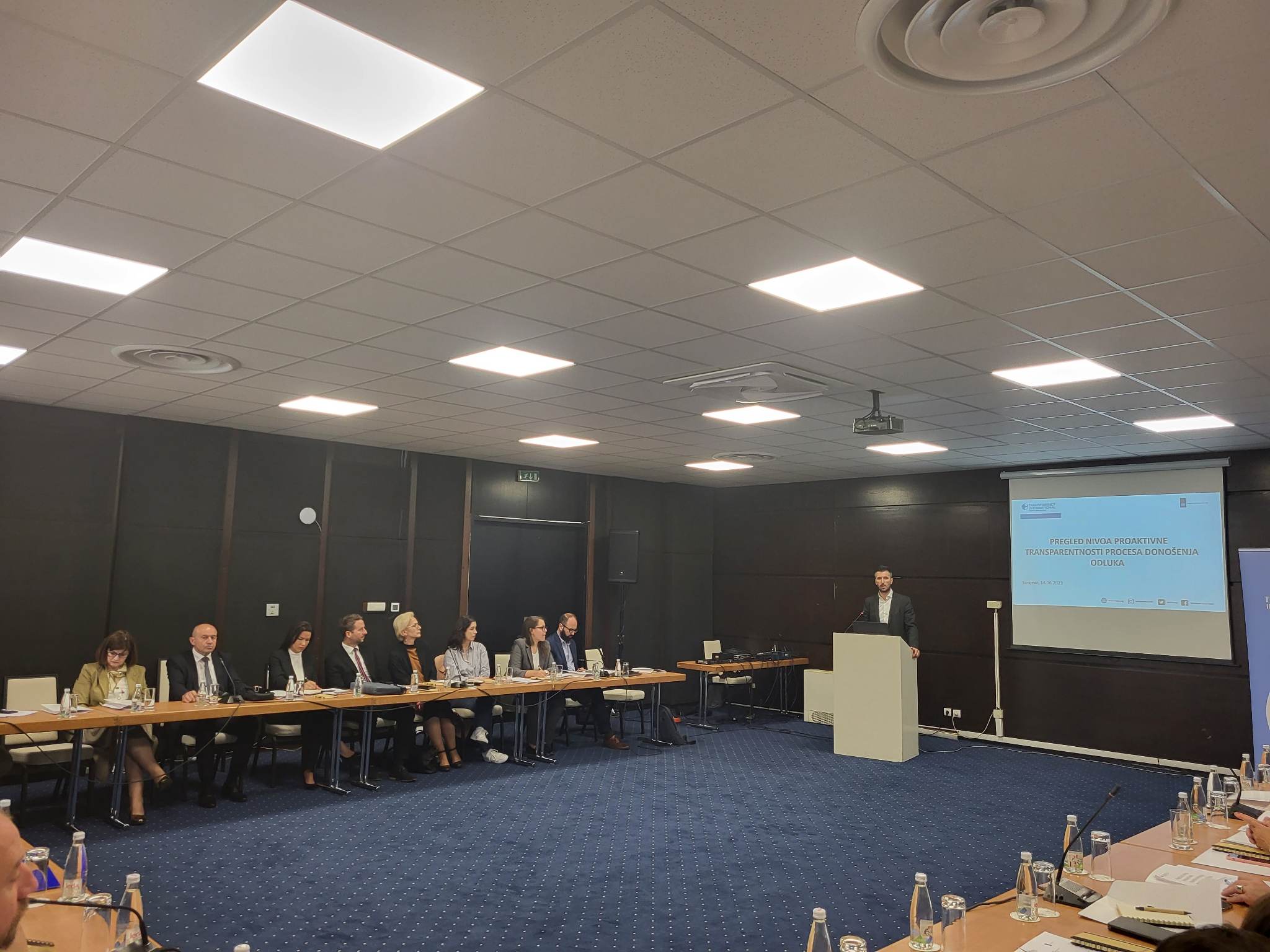
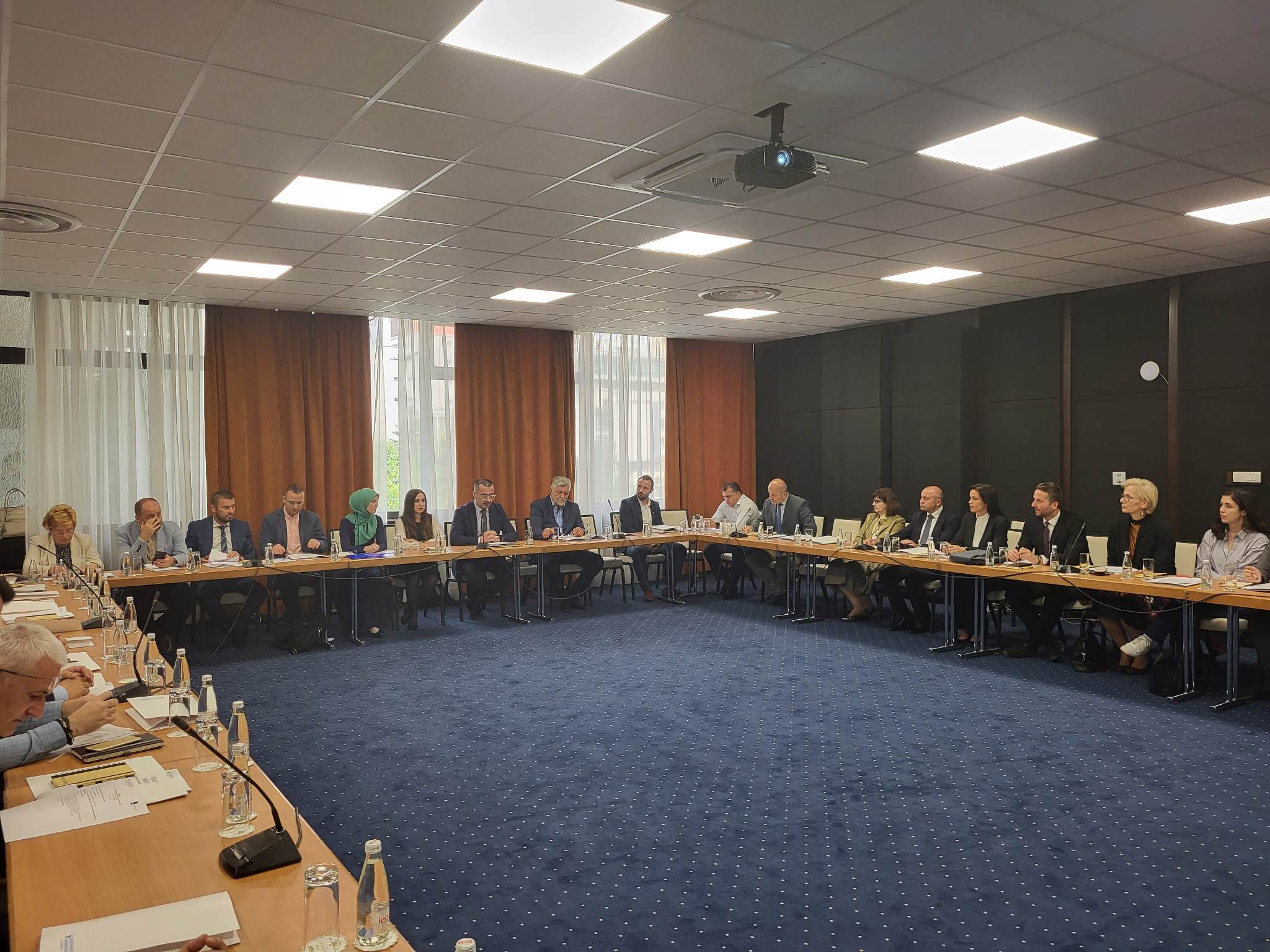
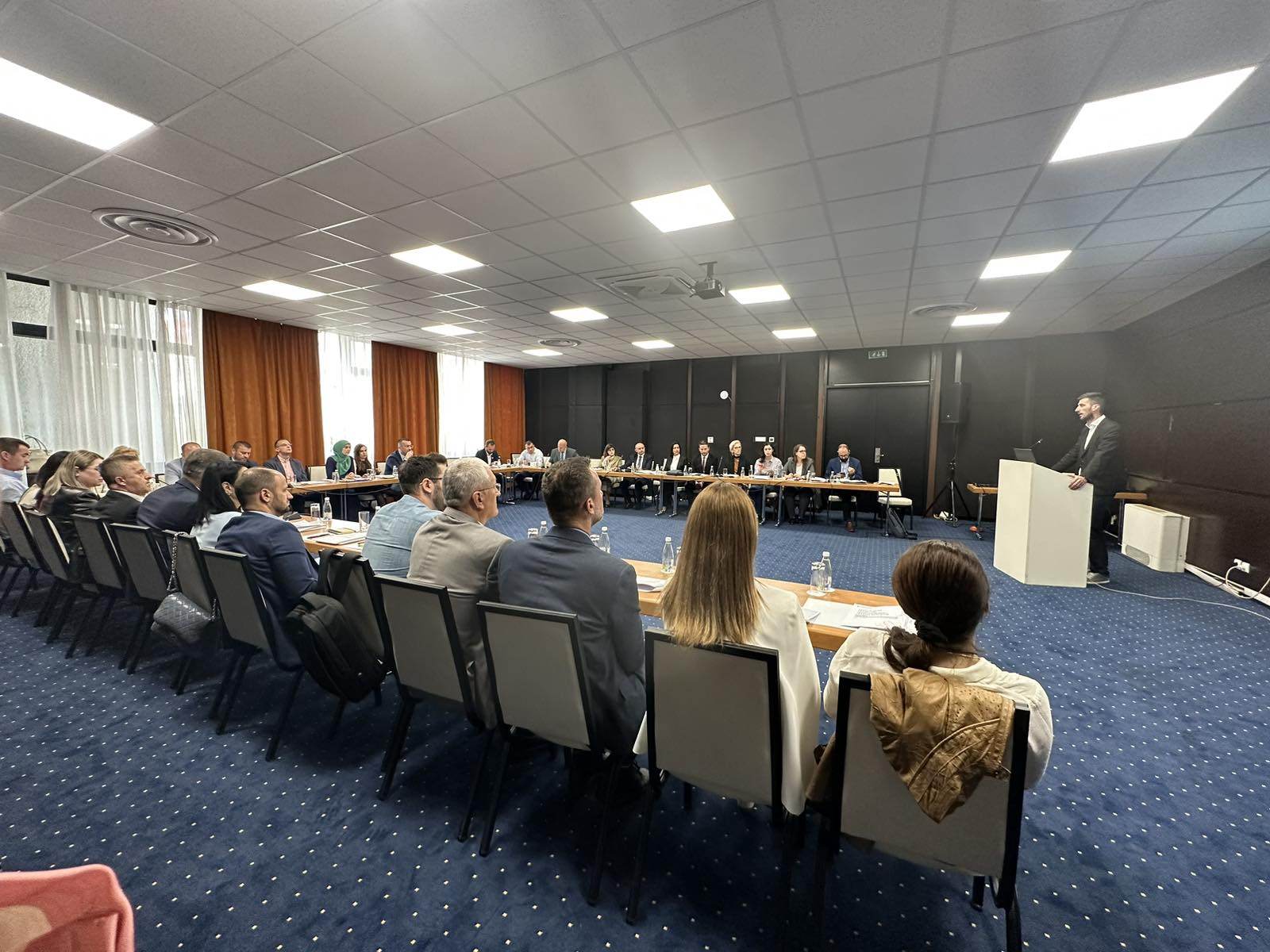
Sarajevo, June 14, 2023 – The work of governments and assemblies of cantons, entities and parliaments at the state level in Bosnia and Herzegovina is insufficiently public, which denies the possibility of citizens’ participation in the control of their work and the decision-making process,which is why there is growing distrust in the work of institutions as well as room for corruption, is the message of the round table entitled“Transparency of the decision-making process in BiH”held today in Sarajevo in the organization of Transparency International in BiH.

At the round table, which was organized with the support of the Embassy of the Kingdom of the Netherlands, presented are the results of the research published as part of the analysis entitled“Overview of the Level of Proactive Transparency of the Decision-Making Process” which included the institutions of the executive and legislative authorities at the cantonal, entity and BiH levels, indicating the worrying lack of transparency of public bodies throughout Bosnia and Herzegovina.

The research showed that no government in Bosnia and Herzegovina regularly publishes materials from the held sessions on its internet presentations, while the Council of Ministers and the Government of the Posavina Canton are one of the two institutions of executive power whose minutes from the held sessions are published in a timely manner and are available to citizens.

This data, as well as the fact that only 5 out of 14 governments in Bosnia and Herzegovina regularly announce decisions on their official sites, indicates that citizens in Bosnia and Herzegovina are not adequately informed about the decisions of the executive authorities that directly affect them, which reduces the degree of public trust in their work.

Legislative bodies throughout BiH do not show any better state of proactive transparency either, since the research showed that the assemblies of cantons, entities, as well as both houses of the Parliament of BiH do not regularly publish plans or reports on public debates, i.e. hearings, and reports on their work are regularly published by only 5 of 16 legislative bodies at the observed levels of government in BiH.

An overview of the level of proactive transparency of the decision-making process shows that in BiH there are governments whose activities the public is insufficiently familiar with, while citizens are denied information on key stages in the work of parliaments, which adversely affects citizens’ trust in institutions and reduces their ability to protect their interests, which in total increases the space for corruption.

“The publication of data and reports on the work of institutions, but also on decision-making processes is what is disputed,”said Srđan Blagovčanin, Chairman of the Board of Directors of Transparency International in Bosnia and Herzegovina, noting that it should not be emphasized how important proactive transparency is for strengthening political responsibility at all levels in Bosnia and Herzegovina, but also for enabling citizens to participate in decision-making processes.

“We have a glaring example at the state level, which is actually the practice, that the proposed laws, when they pass the Council of Ministers, are not actually published, and there we have a situation where the public practically has no insight into the form and in which text these laws were adopted. An example is the recently adopted Law on the High Judicial and Prosecutorial Council of Bosnia and Herzegovina, which is among 14 priorities, and we, as a public, still have no insight into the text in which it was adopted”, explained Blagovčanin, adding that such practice must be changed.

To this end, TI BiH put forward proposals for strengthening the standards of proactive transparency, which include the improvement of the legal framework that treats the area of access to information at all levels in BiH, the recognition of examples of good practice in the application of proactive transparency standards and their implementation, and the establishment of various electronic tools and open standards data for all levels of government in Bosnia and Herzegovina.

The round table brought together representatives of relevant institutions from all levels of government in BiH, international institutions, civil society organizations and the media, who were presented with the importance of proactive transparency as a way for citizens to achieve a greater degree of participation in the work of the legislative and executive authorities, but also to strenghten the responsibility and integrity of the public sector as key assumptions for combating corruption.

Press rls_14.06.23_

Civil Society Organizations Warn: The Draft Law on Freedom of Access to Information Will Threaten the Rights of Citizens

Sarajevo, June 13, 2023 – Civil society organizations, gathered in the Initiative for Monitoring the European Integration of Bosnia and Herzegovina, warn of the shortcomings...

Izvještaji za Mediae

Civil Society Organizations Warn: The Draft Law on Freedom of Access to Information Will Threaten the Rights of Citizens

Sarajevo, June 13, 2023 – Civil society organizations, gathered in the Initiative for Monitoring the European Integration of Bosnia and Herzegovina, warn of the shortcomings of the Draft Law on Freedom of Access to Information of Bosnia and Herzegovina, which was adopted by the Council of Ministers of Bosnia and Herzegovina at the 9th session on April 12, 2023. In certain parts, this proposal threatens the acquired rights and achievements from the existing Law and is not in accordance with international standards and practices.

The adopted Proposal would significantly limit access to information of public interest, given that it contains a long list of exceptions or possible restrictions on access to information held by public authorities. The proposer of this law turned the European standard of open and free access to public information into an exception, not a rule, which in practice could lead to the impossibility of accessing a large amount of information of public importance. With this, the Ministry of Justice of Bosnia and Herzegovina tried to replicate the model from the Republic of Croatia, where, unlike in Bosnia and Herzegovina, the independent institution of the Commissioner was established. By expanding the list of exceptions in access to public information and without additional guarantees for the application of exceptions, the application of the right to access to public information could worsen even compared to the current situation.
The decision that the Appeals Council at the BiH Council of Ministers assumes the role of a second-level authority for all special administrative procedures of access to information at the state level is also worrying, and this decision needs to be further considered. It is common knowledge that the Council of Ministers had delays in its work and functioning, which was directly reflected in the stagnation of procedures, the violation of deadlines, and therefore the violation of human rights. At the same time, extensions of the deadlines for the adoption of a second-level decision (up to 90 days) are not acceptable in cases where it is necessary to consider the test of public interest.
The undersigned organizations are also concerned that the adopted Proposal, instead of strengthening, diminishes the role of the Ombudsman for Human Rights of Bosnia and Herzegovina, even though this is the only independent institution that has so far monitored the implementation of the Law on Freedom of Access to Information. On the other hand, the Proposal envisages that the Appeals Council at the Council of Ministers of Bosnia and Herzegovina, in addition to the role of a second-level body, also has the mandate to propose measures to the institutions to improve the exercise of the right to access to information.

Members of the BiH European Integration Monitoring Initiative note with regret that the Ministry of Justice of BiH ignored over 200 proposals and comments submitted by civil society organizations and other interested parties during the consultation on changes to the law in 2021. It is also indicative that the proponent did not accept the suggestions or opinions of the competent institutions of the European Commission and SIGMA regarding the formation of a new independent body that would perform inspection supervision over the implementation of this law and at the same time be a second instance body for appeals on decisions on access to information.

The institutions failed another test of openness to the proposals of relevant actors in order to find quality solutions. After two years of waiting, this Proposal was pulled out of the drawer and unanimously adopted by the Council of Ministers, despite earlier criticisms, with the recommendation that the Parliamentary Assembly of BiH considers this proposal in a shortened procedure.

The members of the Initiative are preparing amendments to the adopted Proposal with the aim of improving it and harmonizing it with international standards. At the same time, we invite representatives, MPs and delegates in the Parliamentary Assembly of BiH, the media, the professional public and citizens to join the discussion on the Draft Law on Freedom of Access to Information, and to, using their authorizations and expertise, together contribute to the adoption of quality solutions in accordance with EU standards.

Signatory organizations:

Balkan Research Network in Bosnia and Herzegovina (BIRN BiH)

Center for Investigative Reporting (CIN)

Youth Center “KVART”

Center for the Promotion of Civil Society (CPCD)

Foundation CURE

Forum ZDF BiH

Helsinki Citizens’ Parliament of Banja Luka

Youth Initiative for Human Rights in BiH (YIHR BiH)

Kali Sara – Roma information Center

Sarajevo Open Center (SOC)

Transparency International in BiH (TI BiH)

Association of Citizens “Ostra Nula”

Association of Citizens “With Tolerance Towards Diversity” (ToPeeR)

Association “Peace Building Network”

Association Transitional Justice, Responsibility and Remembrance in Bosnia and Herzegovina (TPOS)

Association of BH journalists

Press rls_13.06.23_

Get involved

Don't miss it

If you want to receive our announcements immediately after the publication, leave your e-mail address in the field below.