PRESS RELEASES AND ANNOUNCEMENTS

Key dates

TI BiH filed a report against the Chief BIH prosecutor: Kajganić assigned most of the cases outside the TCMS, which is why Gordana Tadić was dismissed.

Transparency International in Bosnia and Herzegovina submitted a report to the Disciplinary Prosecutor’s Office against Milanko Kaganić, the Chief prosecutor of the...

TI BiH
Izvještaji za Mediae

TI BiH filed a report against the Chief BIH prosecutor: Kajganić assigned most of the cases outside the TCMS, which is why Gordana Tadić was dismissed.

Transparency International in Bosnia and Herzegovina submitted a report to the Disciplinary Prosecutor’s Office against Milanko Kaganić, the Chief prosecutor of the Prosecutor’s Office of Bosnia and Herzegovina, who assigned the vast majority of cases outside the TCMS automatic management system during the past year, the same reason his predecessor in this position, Gordana Tadić, was dismissed.

After the appeal procedure, the Prosecutor’s Office of Bosnia and Herzegovina submitted to Transparency International the data on the number of cases in which the chief prosecutor made presignations, i.e., assigned cases outside of the automatic management system, and the data show that in 2022 the number of presignations is greater than the total number of cases that this prosecution worked on.

This practically means that TCMS is rarely used and that subjects are almost never assigned automatically. Specifically, in 2021, in which Gordana Tadić was dismissed due to bypassing the TCMS, the Prosecutor’s Office of Bosnia and Herzegovina had 1,499 cases and a total of 1,434 presignations, although multiple presignations in one case are possible, if several prosecutors are working on it. During 2022, the Prosecutor’s Office of Bosnia and Herzegovina had 1,473 cases and a total of 2,276 presignations, i.e., cases in which the chief prosecutor assigned a case to the prosecutor bypassing the automatic management system.

TI BiH reminds that Article 8 of the Rulebook on the System for Automatic Case Management in Prosecutor’s Offices (TCMS) stipulates that the distribution of cases to prosecutors is to be conducted automatically, as a measure to reduce corruption risks. Also, according to the conclusion of the High Judicial and Prosecutorial Council of Bosnia and Herzegovina from 2014, all chief prosecutors were tasked to ensure the assignment of cases through TCMS in their institutions. The chief prosecutor has the right to assign a case to another prosecutor if there are reasons for it, granting this as an exception and not a rule, meaning the fact that the number of assignments is greater than the total number of cases in the work may indicate serious omissions in the work of the chief prosecutor.

Also, there is a reason to suspect that the Chief Prosecutor of BiH acted contrary to the provisions of the Rulebook and the Conclusion of the HJPC and committed the disciplinary offenses of “negligence or inattention in the performance of official duties” and “failure, for unjustified reasons, to act in accordance with the decisions, orders or requests of the Council” from the Law on the HJPC.

This behavior is contrary to the provisions of the Code of Ethics for Prosecutors, and it should also be recalled the Joint Opinion of the Venice Commission and the Council of Europe – Directorate for Human Rights (DHR) of the General Directorate for Human Rights and the Rule of Law, which emphasizes that, in order to protect the right to independent and impartial judicial and prosecutorial action, the allocation of cases within courts and prosecutor’s offices should follow objective, predetermined criteria.

Transparency International BiH reminds that the Disciplinary Commission of the HJPC of BiH has already conducted and legally concluded disciplinary proceedings against the former Chief Prosecutor Gordana Tadić, as well as against some other Chief Prosecutors in BiH for the same offenses in which disciplinary measures were imposed.

It is important to note that the Prosecutor’s Office of Bosnia and Herzegovina repeatedly refused to provide TI BIH with data on the number of presignations, as it was the case in 2018 and 2019 when in was claimed that the accurate statistics was not kept, so the information was provided only after the Court of Bosnia and Herzegovina passed judgments in favor of TI BiH. This year, the data on presignatures was submitted only after a complaint was filed, because the Prosecutor’s Office of BiH initially claimed that the request was not precisely formulated.

CONFERENCE ON THE STATE OF THE BIH JUDICIARY: REFINEMENT OF THE DRAFT LAW ON THE HIGH JUDICIAL AND PROSECUTORIAL COUNCIL NECCESSARY

Sarajevo, July 13, 2023 – The majority of courts do not publish information about judgments and information about prosecution cases are usually far from the public eye,...

TI BiH
Izvještaji za Mediae

CONFERENCE ON THE STATE OF THE BIH JUDICIARY: REFINEMENT OF THE DRAFT LAW ON THE HIGH JUDICIAL AND PROSECUTORIAL COUNCIL NECCESSARY

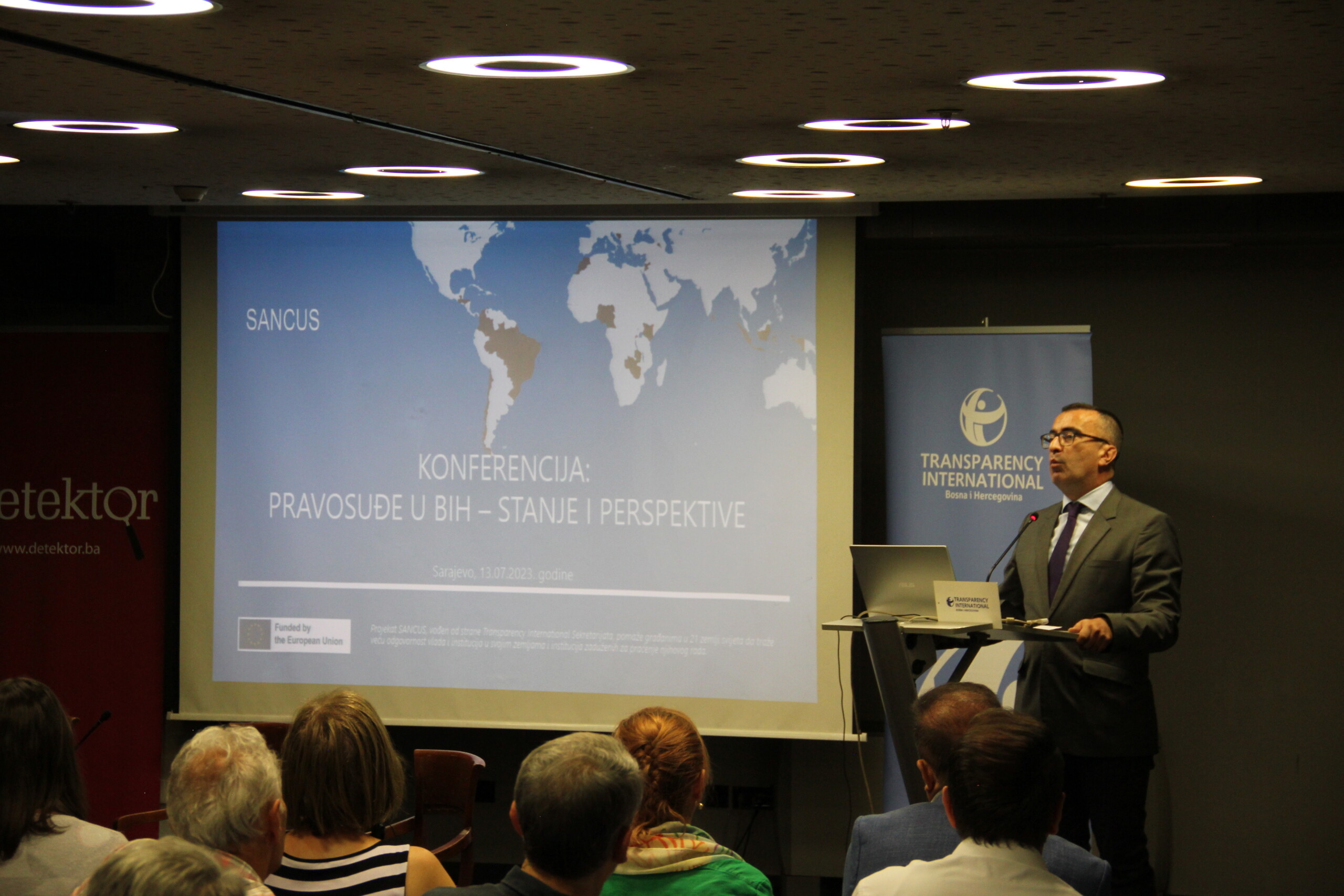
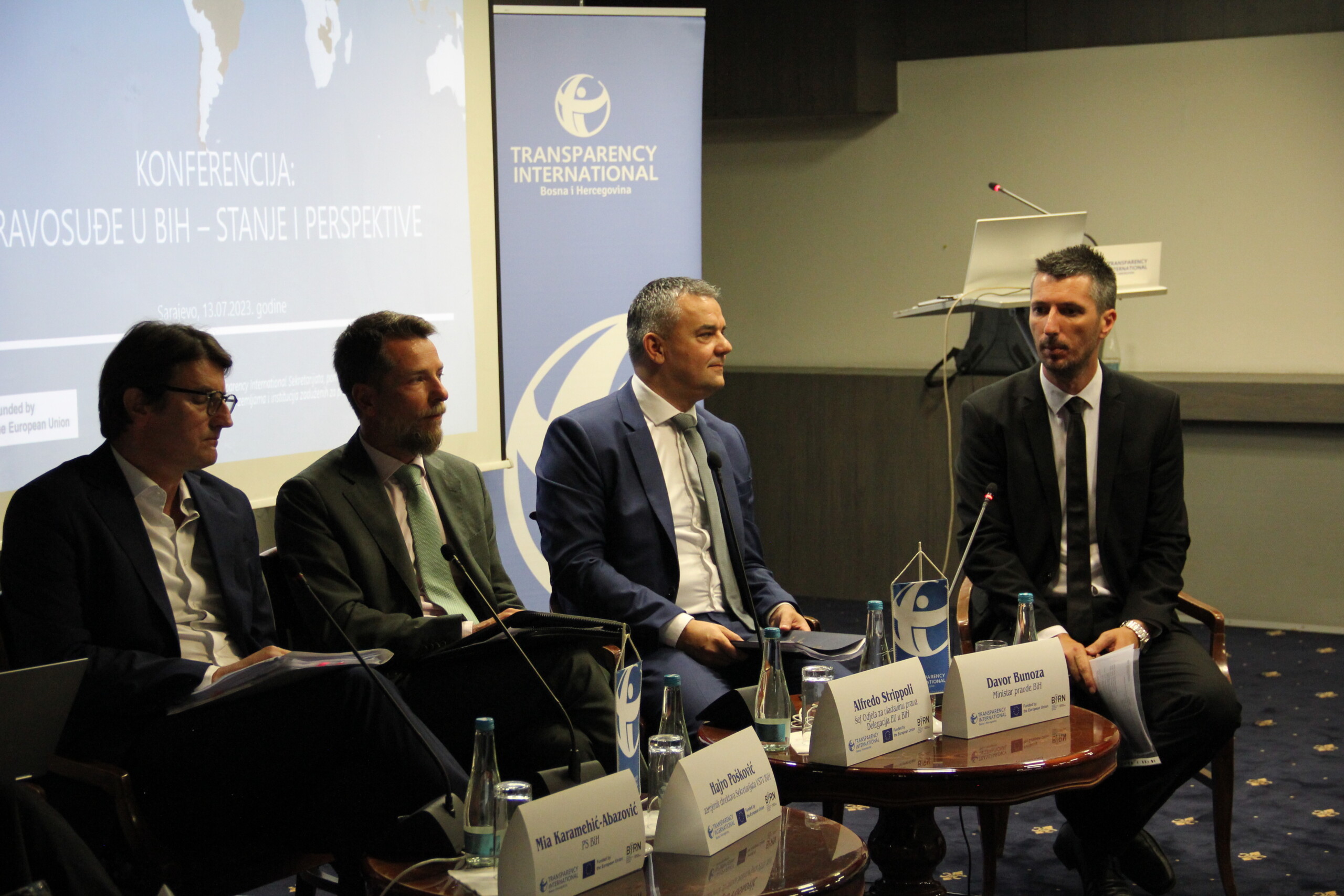
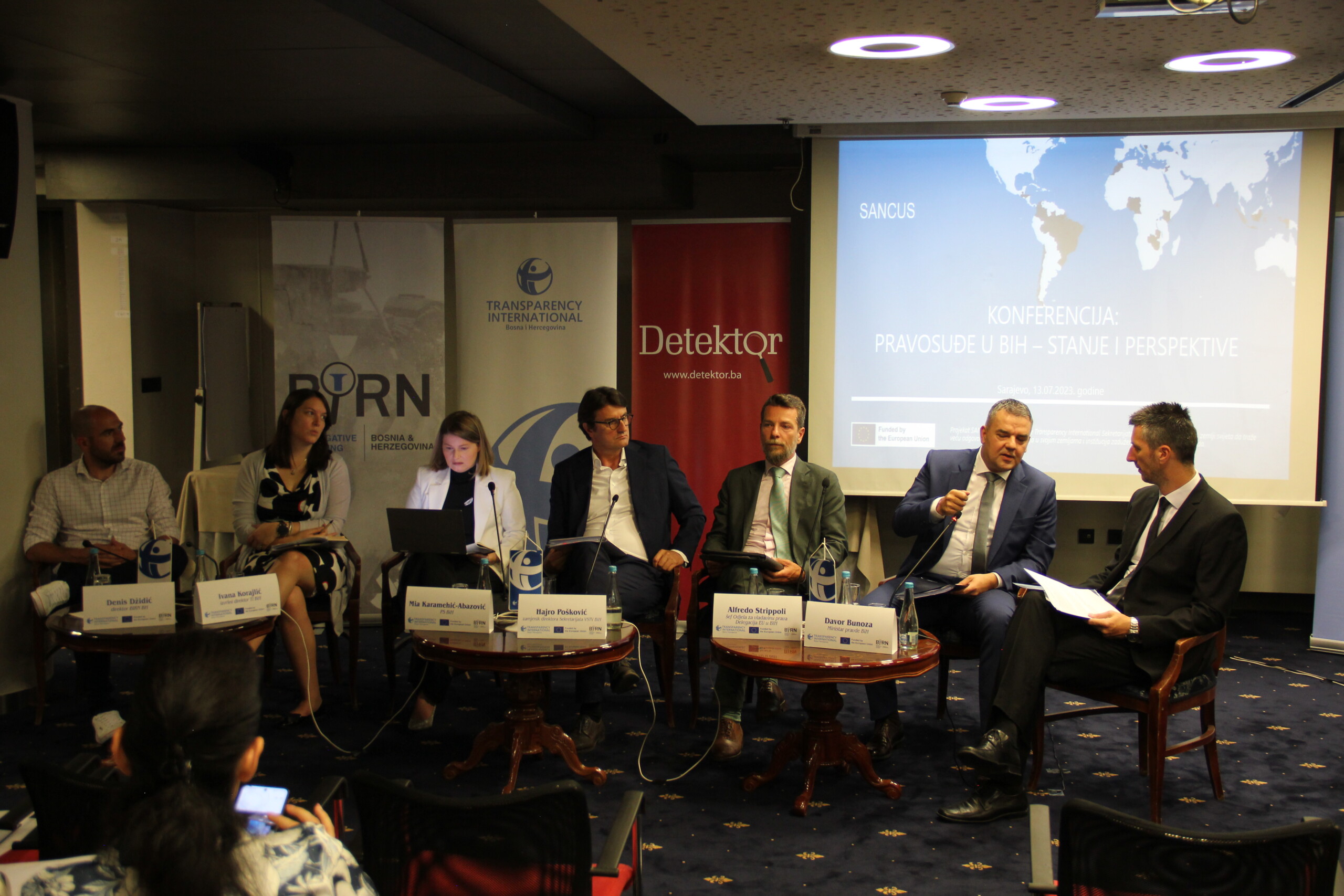
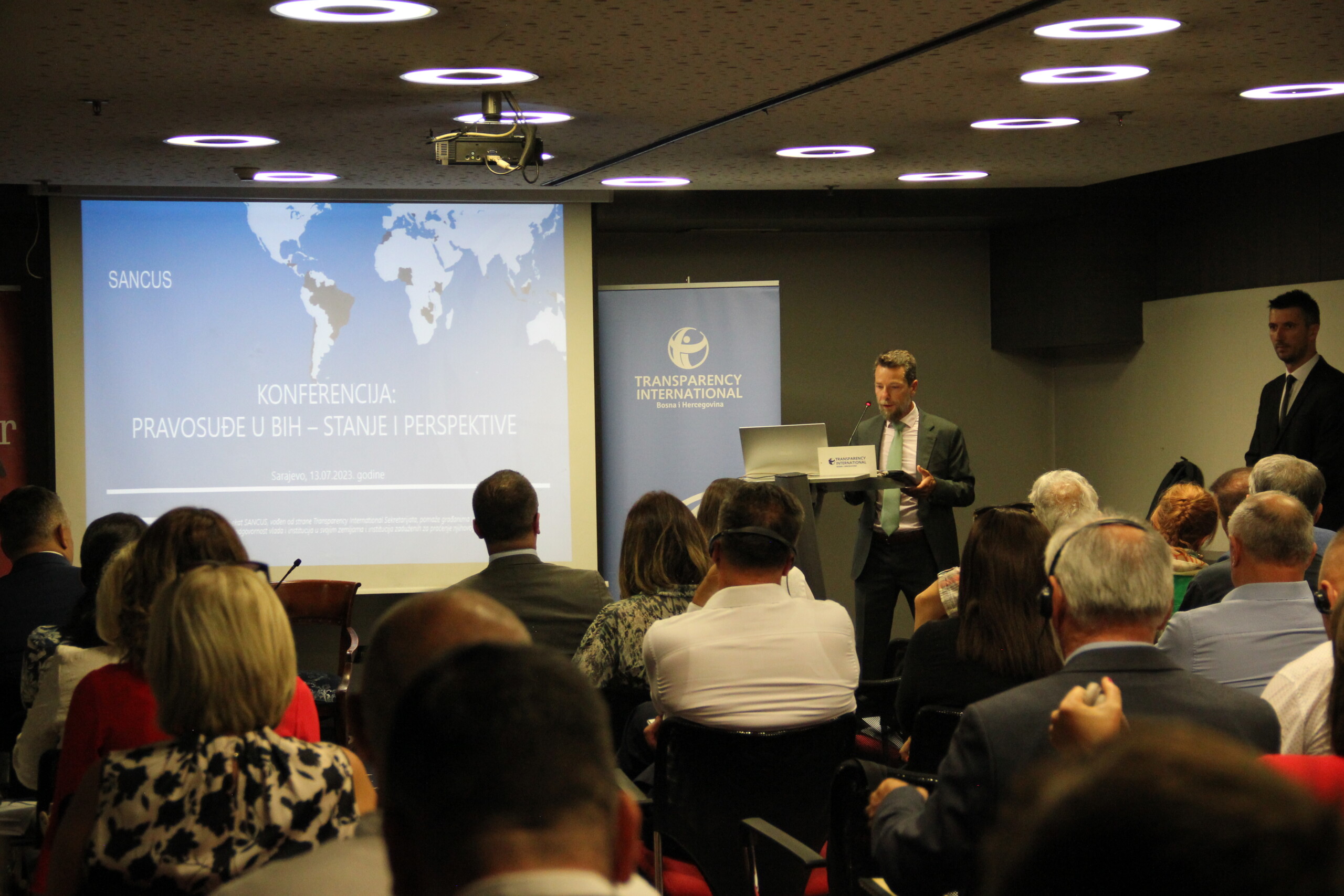
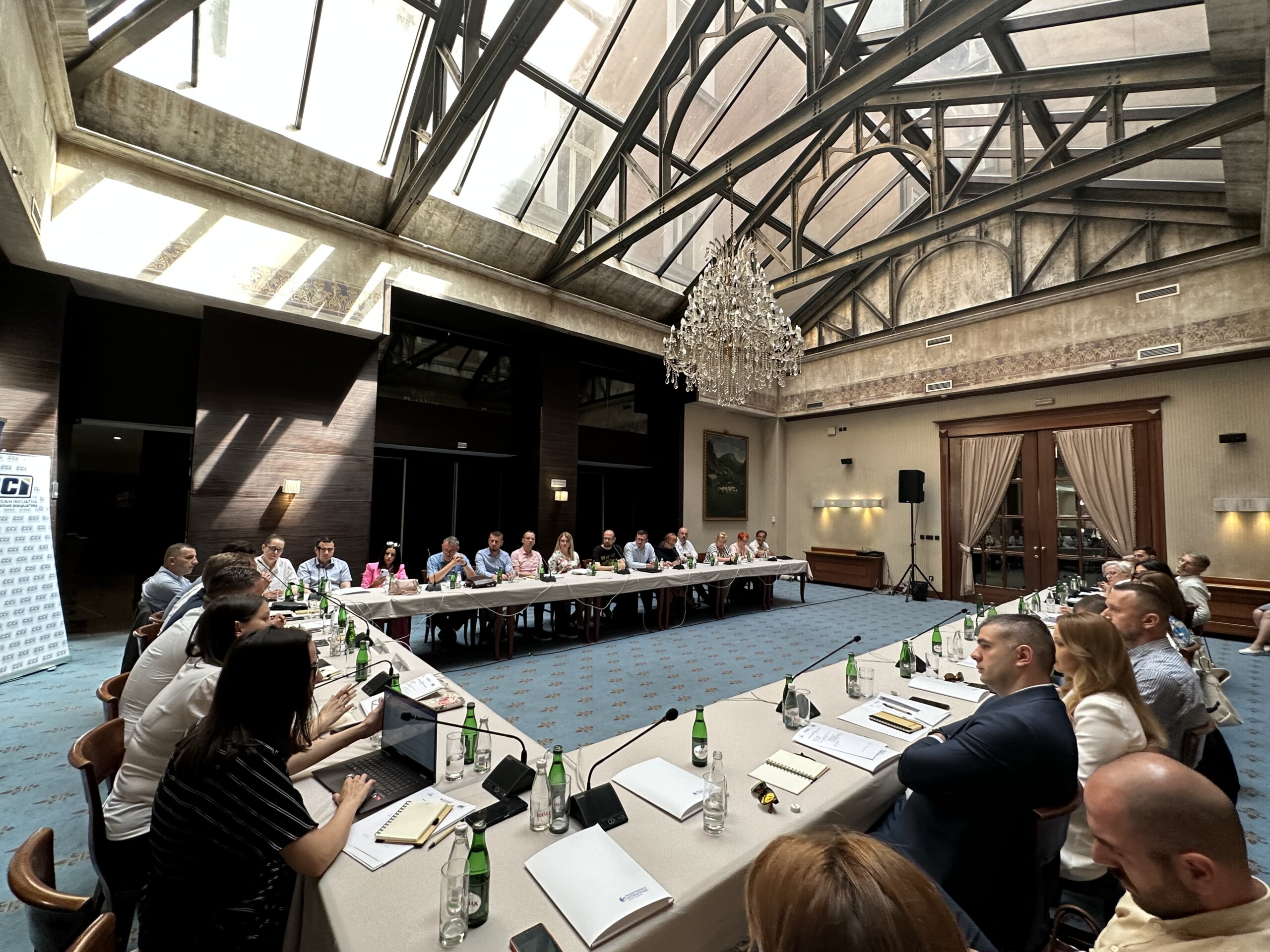
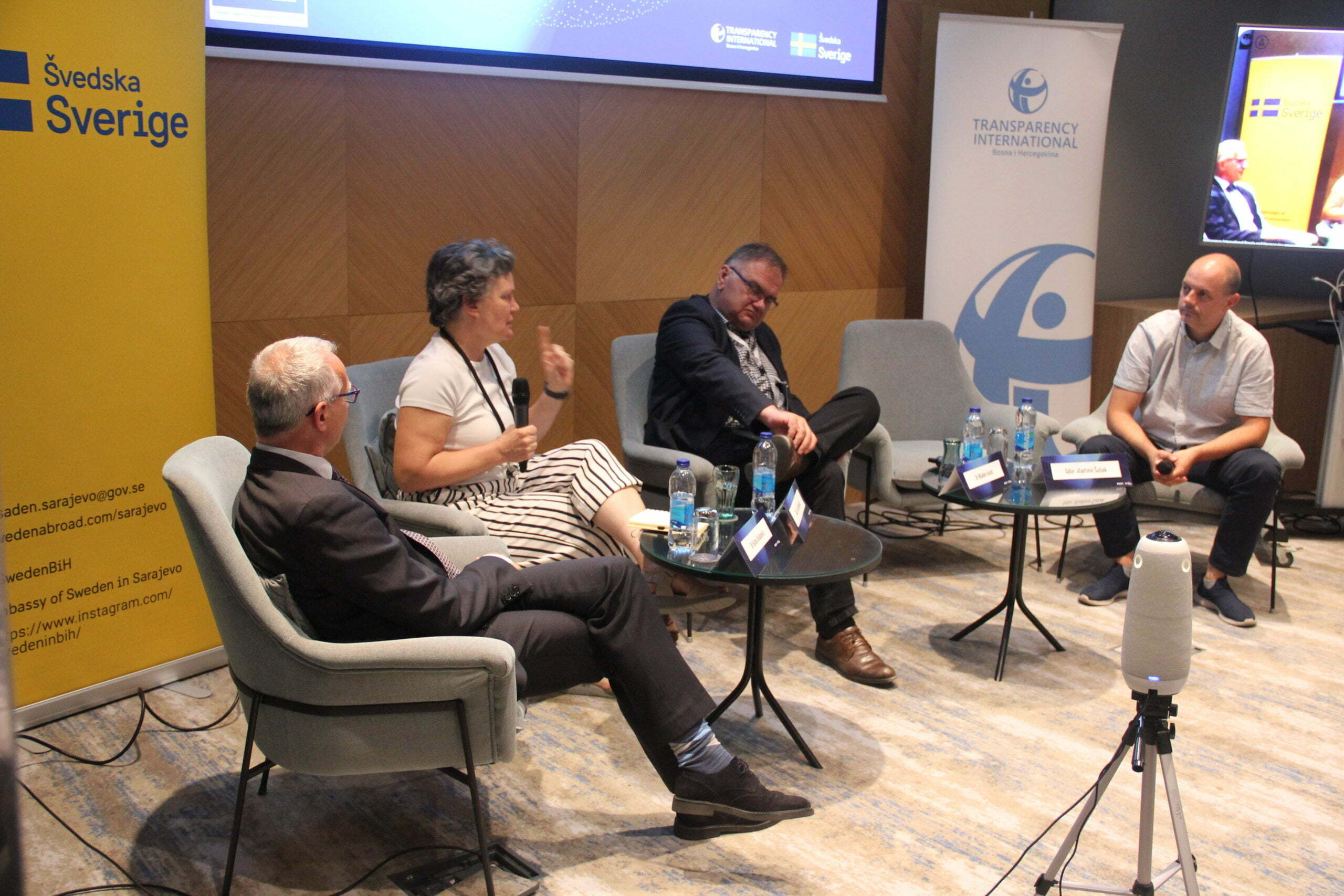
Sarajevo, July 13, 2023 – The majority of courts do not publish information about judgments and information about prosecution cases are usually far from the public eye, while half of the judicial institutions ignore the inquiries of the media and citizens, these are the results of the research on judicial transparency published during the conference “Judiciary in Bosnia and Herzegovina – Status and Perspectives” held today in Sarajevo.

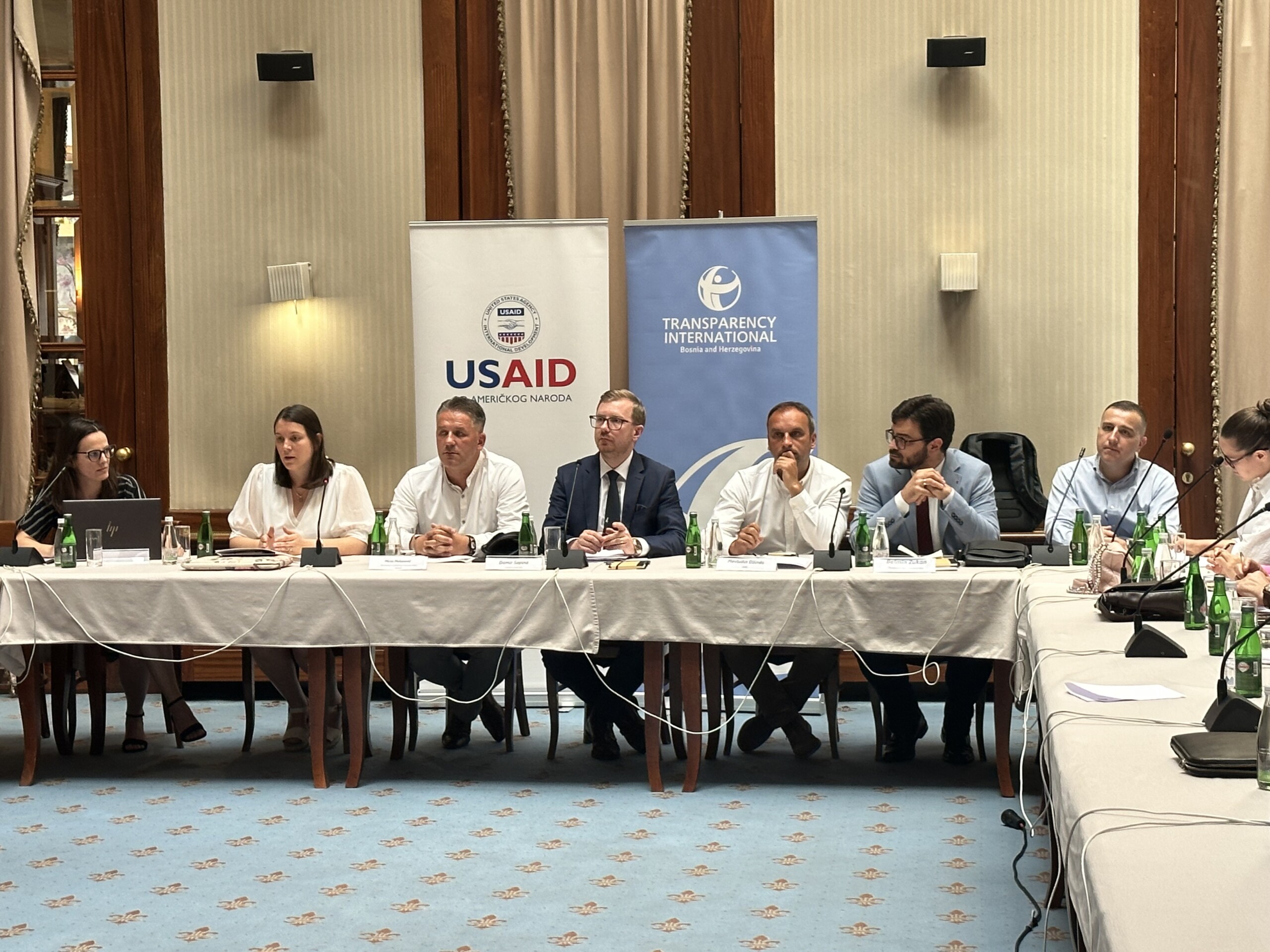
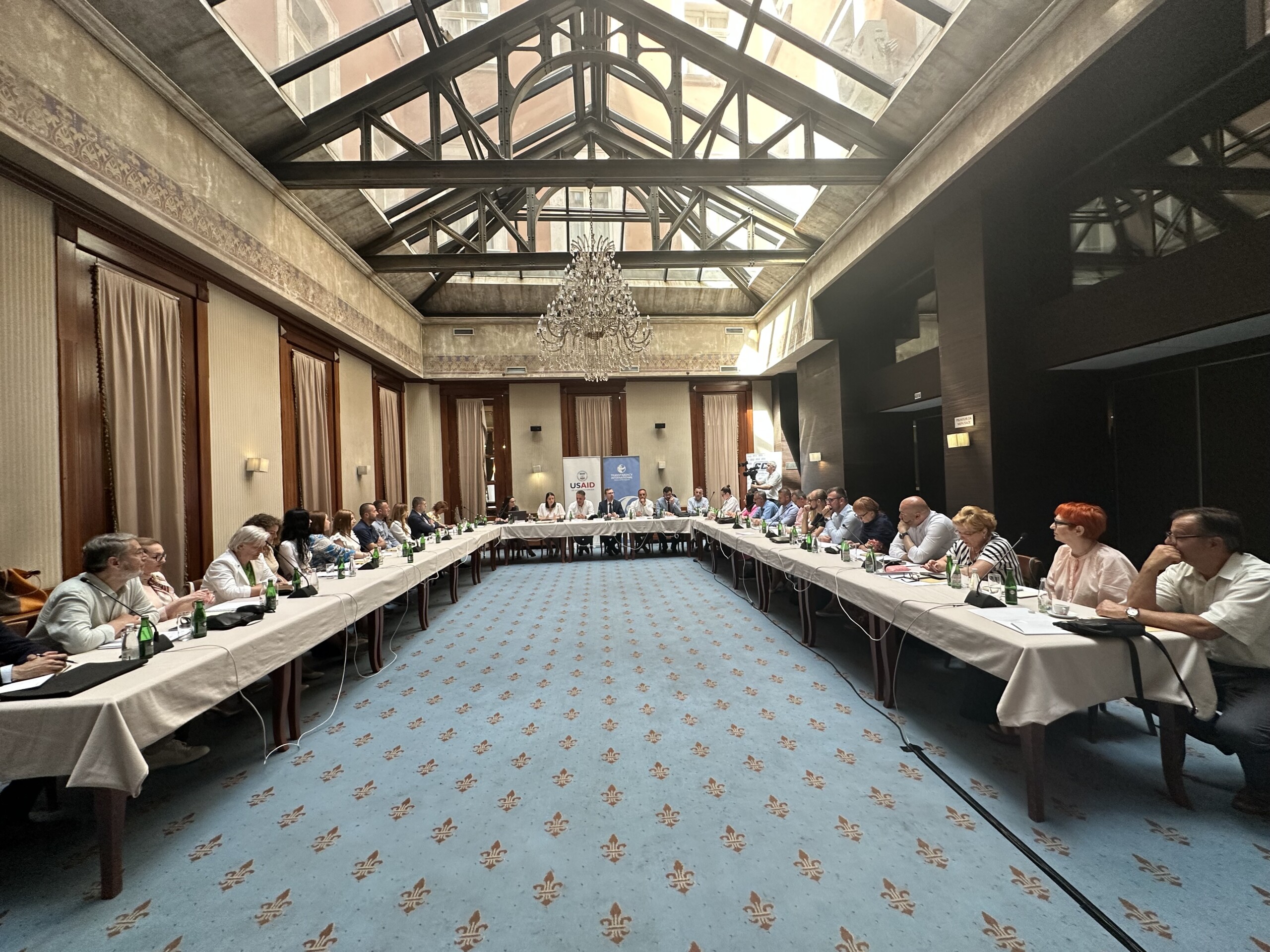
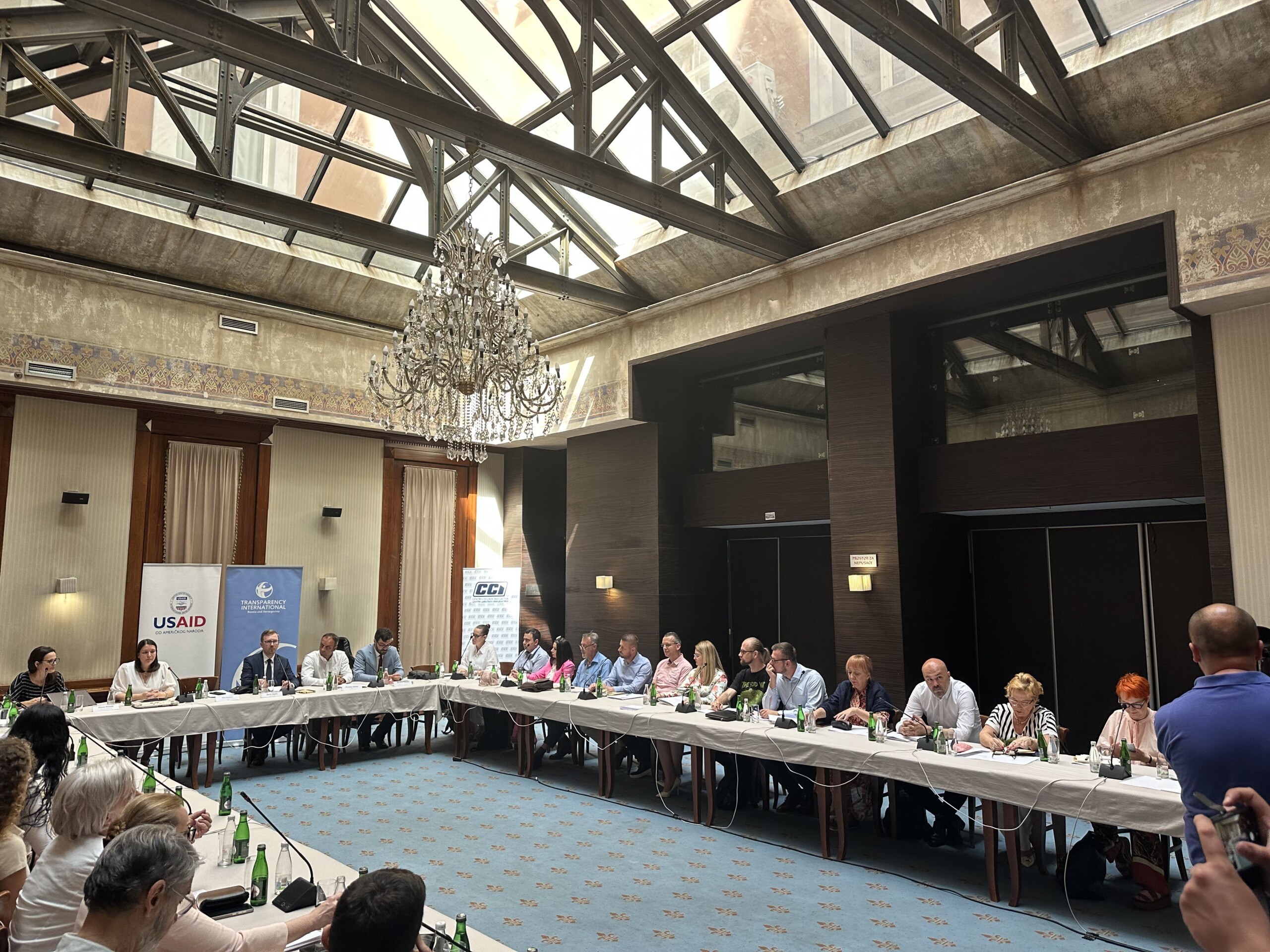
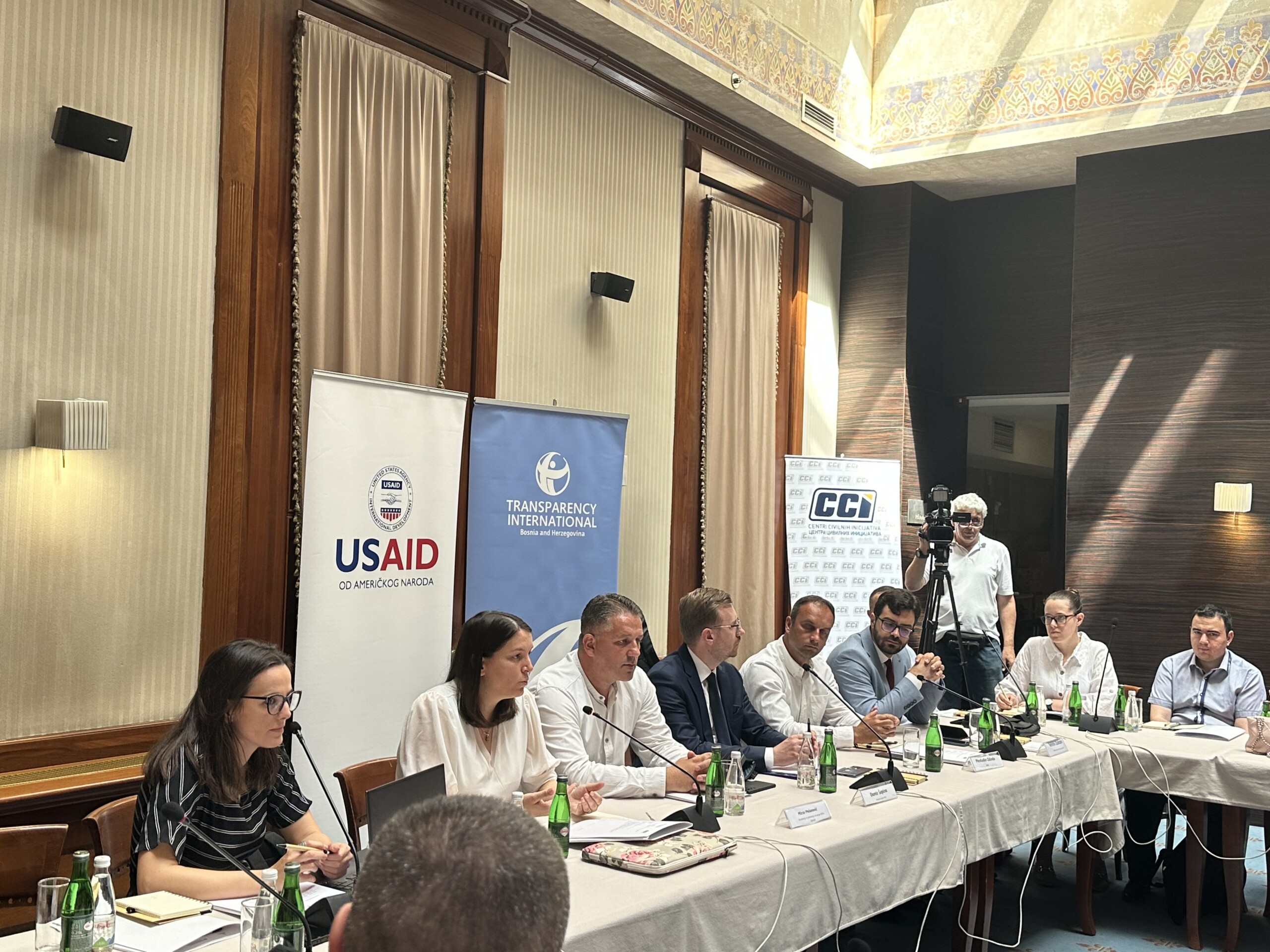
The participants of the conference, organized by Transparency International in BiH (TI BiH) in cooperation with the Balkan Research Network of BiH (BIRN BiH) with the support of the EU, referred to the amendments to the Law on the HJPC by which the government seeks to weaken the mechanisms for ensuring the accountability of holders of judicial functions.

The changes, which the Council of Ministers included in the Law on Amendments to the Law on the HJPC, seek to weaken the originally proposed mechanisms for ensuring accountability and call into question the possibility of checking the assets of holders of judicial functions.

From the very beginning of the process of amedment, not all the recommendations of the Venice Commission and the EU were followed, especially in terms of the provisions on the conflict of interests of members of the HJPC and other holders of judicial functions, while TI BIH warned from the beginning that there was a lot of room for non-declaration of assets and abuse of the property controls system.

Therefore, one of the conclusions of the conference, with which all participants agreed, is to use the further procedure to refine and improve the draft law.

If that opportunity is missed now, the question is how long it will take to adopt a new law that adequately solves these identified problems, and the conference sent a message that it is necessary to act urgently so that we do not end up in a situation where, due to inadequate wording, the mechanisms intended to strengthen the responsibility of abuse serve precisely to avoid it.

The online platform “Judiciary Index” was also presented at the conference, containing data on the transparency of 74 courts and 20 prosecutor’s offices, showing the worrying level for the publicity of the work of the BH judiciary.

55% of courts do not publish information about the first-instance verdicts they pass, and 90% of them do not publish any information about criminal cases on their websites, which undoubtedly encourages a low level of public trust in the work of the judiciary.

The poor state of the judiciary in terms of public access to its work is illustrated by research showing that 54% of courts and prosecutor’s offices in Bosnia and Herzegovina violated the legal deadline for responding to a request for free access to information, while half of the judicial institutions ignored media inquiries about the status of the case.

The worst results in transparency are recorded by the Cantonal Prosecutor’s Office in Sarajevo and the Herzegovina Neretva Canton, whose transparency index is 35, and the Municipal Courts in Žepče (28), Mostar (24) and Čitluk (23) and the Basic Court in Srebrenica with a score of 26. On the other hand, the Basic Court Teslić records the highest level of transparency with an index of 82, while among the most transparent institutions are the Court of Bosnia and Herzegovina with an index of 81 and the Prosecutor’s Office of the Brčko District of BiH, which, like the Cantonal Prosecutor’s Offices of the SBK and Posavina Cantons, record a score of 75.

The “Judiciary Index” platform was created as part of the project “Strengthening networks of civil society organizations in order to improve accountability – SANCUS” with the financial support of the European Union. It evaluates the availability of information on the websites of institutions as well as the openness towards citizens, media and civil society organizations regarding the availability of information.

The platform also offers information on cases of corruption and organized crime, disciplinary proceedings, as well as other information on the work of the judiciary in BiH and allows citizens to create their own request for access to information that they can send to any judicial institution on the territory of BiH.


Press rls_13.07.23

World Whistleblower Day: Only One Whistleblower Sought Protection from APIK Last Year

Sarajevo, June 23, 2023 – During the last year, only one person requested protection from the Agency for Prevention of Corruption and Coordination of the Fight Against...

TI BiH
Izvještaji za Mediae

World Whistleblower Day: Only One Whistleblower Sought Protection from APIK Last Year

Sarajevo, June 23, 2023 – During the last year, only one person requested protection from the Agency for Prevention of Corruption and Coordination of the Fight Against Corruption (APIK), but he/she was not granted the status of a protected corruption reporter, and this data best illustrates citizens’ trust in institutions that should protect whistleblowers.

This devastating statistic is no better in the Republic of Srpska, where last year not a single internal report for the protection of whistleblowers was recorded, while in this entity only three cases from the area regulated by the Law on the Protection of Corruption Whistleblowers are being handled. In the Federation of Bosnia and Herzegovina, there is still no law that protects public sector employees who decide to report corruption in the workplace, while in Brčko District last year, four applicants received protection.

On the other hand, public sector employees are far more likely to report corruption to non-governmental organizations, which shows that, where laws do exist, their implementation is at a low level, which is why “whistleblowers” are victims of persecution, discrimination and often intimidation, is the message of the round table“Defiance of Corruption Despite Retaliation: How to Better Protect Whistleblowers in Bosnia and Herzegovina?”which marked World Whistleblower Day, on June 23, organized by Transparency International in Bosnia and Herzegovina (TIBiH).

The participants of the round table pointed to the fact that in the course of 2022, TI BiH had 37 cases based on reports of “whistleblowers”, and a significant number came from the Federation of BiH, which is the only part of BiH where there is no law on the protection of persons who report corruption. Such laws exist at all other levels in BiH and since the beginning of this year also in the Sarajevo Canton, which is why persons who report corruption in the rest of the Federation of BiH are discriminated against in terms of the legal protection they can receive.

In the Republic of Srpska, the mere existence of a law that protects corruption whistleblowers is not enough for its implementation, and it is prevented due to the atmosphere of public condemnation, intimidation and even open threats by the highest political officials addressed to anyone who dares to criticize the work of institutions and publicly point to corruption. Because of this, as well as the fact that citizens are insufficiently familiar with the method of reporting and the scope of protection offered by the law, as well as the general distrust of citizens in the judiciary, there were no reports for the protection of whistleblowers in this entity last year.

The situation is no better when it comes to the institutions of Bosnia and Herzegovina, so only one person approached the Agency for Prevention of Corruption and Coordination of the Fight Against Corruption (APIK) in 2022 with a request to be granted the status of “whistleblower”, but that request was rejected, due to, in the opinion of the Agency, “failure to meet the conditions for awarding whistleblower status”. The most adequate protection is available to persons who report corruption in the Brčko District, where all four applicants were given the status of “whistleblower”, thus realizing the possibility of legal protection.

The participants of the round table recalled the case of Emir Mešić, a whistleblower who was fired after speaking about corruption in the Indirect Taxation Authority, where the APIK did not fulfill its part and did not provide him with protection from disciplinary prosecution, which is the best demonstration of the institution’s handling of to persons who report corruption. The fear of consequences and possible retaliation is the reason why the number of “whistleblowers” who turn to TI BiH far exceeds the number of those who receive the status of protected corruption informants from the competent institutions.

In contrast to official institutions, citizens of BiH who are witnesses or victims of corruption are increasingly turning to non-governmental organizations, which is confirmed by the devastating fact that APIK received 33 reports from 2014 to 2022 and granted protection to the applicants in only 11 cases, while TI BiH registered 29 such applications in just the first five months of this year. The number of reports indicates that citizens place a greater degree of trust in non-governmental organizations than in institutions when it comes to the fight against corruption, which should not be surprising since the greatest degree of protection for whistleblowers in BiH is currently provided by civil society organizations.

The inefficiency of the judiciary, which mostly resolves minor cases while major corruption scandals go unpunished, as well as the disproportionately light punishments for criminal acts of corruption, do not seem encouraging, and the lack of positive examples that received a judicial epilogue further deters citizens from reporting corruption to competent institutions.

Reports by “whistleblowers” are the most effective way to detect, process and prevent corruption, which is why TI BiH appeals to the institutions and representatives of legislative bodies in the Federation of BiH to urgently initiate procedures for passing laws that contain support measures for persons who point out abuses, providing them with all possible protection from retaliation, discrimination and unfair treatment.

TI BiH also calls on political actors throughout BiH to ensure and enable the implementation of existing laws and to prevent unacceptable pressure from top officials that has a negative impact on corruption whistleblowers, in order to provide whistleblowers with the support that the honest and uncompromising fight against corruption deserves, and which the citizens of Bosnia and Herzegovina have been waiting for years.

Press rls_23.06.23_

For Corruption, the Most Common is Suspended Sentence; No Confirmed Indictments for High Level Corruption in the Last Year

Banja Luka, May 25, 2023 – During the last year, not a single indictment for high corruption was confirmed in the entire Bosnia and Herzegovina, and in cases from earlier...

TI BiH
Izvještaji za Mediae

For Corruption, the Most Common is Suspended Sentence; No Confirmed Indictments for High Level Corruption in the Last Year

Banja Luka, May 25, 2023 – During the last year, not a single indictment for high corruption was confirmed in the entire Bosnia and Herzegovina, and in cases from earlier years, only four final verdicts, in which prison sentences were imposed on the perpetrators of criminal acts of high corruption, were passed. Two such verdicts were pronounced in the Una-Sana Canton, one in the Republic of Srpska and one in the Brcko District, according to the data that Transparency International received from the High Judicial and Prosecutorial Council and published on TI BIH’s interactive map of corruption prosecutions.

In 2022, the prosecutor’s offices in Bosnia and Herzegovina registered 1,859 reports for criminal acts of corruption, and that number is higher by 168 cases compared to last year, and the fact that two-thirds of all reports for criminal acts of corruption end with an order not to conduct an investigation is particularly worrying, as shown by data from the Monitoring of Corruption Prosecution presented by Transparency International in Bosnia and Herzegovina.

Mostly fines or suspended sentences are imposed before the BiH judiciary for criminal acts of corruption, while prison sentences were imposed in only 29.6% of cases, and only 4 final court verdicts were passed in the entire BiH last year, in which the perpetrators were imposed prison sentences for crimes of high corruption.

All of this indicates that corruption is generally not prosecuted in Bosnia and Herzegovina, and that, when it does happen, the judiciary in Bosnia and Herzegovina is mostly resolving minor cases, while major corruption cases go unpunished.

Thus, during the last year, 1,859 reports for criminal acts of corruption were recorded, and it is particularly worrying that at the same time the number of orders not to carry out the investigation increased, and 60% of the reports were rejected, which is the largest number of such decisions since TI BiH has been monitoring corruption proceedings before the courts and prosecutor’s offices in Bosnia and Herzegovina.

These results of the judiciary work in the fight against corruption and the prosecution of criminal acts of corruption are confirmed by the findings of the Corruption Perception Index (CPI) for 2022 showing that the degree of corruption in BiH is the highest since this research was conducted, as well as that BiH is the third most corrupt country in Europe, behind war-torn Ukraine and Russia.

The reason for this state of affairs can certainly be sought in the Prosecutor’s Office of BiH, which, after the scandal surrounding the appointment of the Chief Prosecutor of BiH and the arrival of the Deputy Chief Prosecutor on the US blacklist, precisely because of suspicions of corruption, lost public confidence in its ability to adequately fight corruption.

In support of these trends is the fact that the number of indictments filed in 2022 is lower compared to 2021, and that decline can be mainly attributed to the work of the prosecutor’s offices in the territory of the Federation of BiH, which filed 14.5% fewer indictments for corruption. At the same time, 124 judgments in which the accused were found guilty were passed in this entity and in which a suspended sentence was determined instead of a prison sentence, making up 75% of the total number of cases that ended with judgments in which the accused were found guilty. For the sake of comparison, at the level of Bosnia and Herzegovina, the number of established suspended sentences is 3, in Republika Srpska 6, while in Brčko there is only one such decision in 2022.

The Cantonal Prosecutor’s Office of Central Bosna Canton has been distinguished by poor results for years, and in the last year it had only one confirmed indictment for corruption, and that was in the case against Jasna Babić, the director of JKP “Vitkom” d.o.o. Vitez, who was reported by TI BiH in 2019 for falsifying a document and conflict of interest. In this canton, in the last eight years, only 4 final verdicts were passed in which the defendants were declared guilty, but in which a suspended sentence was determined instead of a sentence, while 83% of corruption reports received by this prosecutor’s office from 2015 to 2022 resulted in the decision not to conduct the investigation or to suspend it, and the low level of efficiency was also shown by the Prosecutor’s Office of Herzegovina-Neretva Canton, where the last prison sentence for a criminal offense of corruption was pronounced in 2019.

According to the indictments of the prosecutor’s offices, the courts issued a total of 288 convictions for criminal offenses related to corruption, which is the best result in the observed period, but this is again not a sufficient indicator for a good assessment of the work of the judiciary as a whole, especially when analyzing the types of sentences that were imposed in these cases.

Out of the total number of judgments passed in corruption cases in 2022, 199 judgments were final, and in as many as 67% of cases a suspended sentence was imposed instead of a sentence, in 3.5% of cases a fine was imposed, while less than a third of the cases in which corruption was tried resulted in a prison sentence. Perpetrators of high corruption were sentenced to only 4 prison sentences last year, while three cases ended with verdicts that imposed a suspended sentence instead of a prison sentence, which once again confirms that corruption is generally not prosecuted in Bosnia and Herzegovina, and that mainly minor cases are solved while major corruption cases go unpunished.

Apart from these, other research data of Transparency International BiH indicate that the judiciary is the main source of problems when it comes to the fight against corruption, such as the research of TI BiH on the disciplinary responsibility of holders of judicial functions in BiH showed that several disciplinary measures were imposed against holders of judicial positions during 2022, but that the most common disciplinary sanction was a reduction in salary by a certain percentage, while only two holders of judicial positions were disciplinary sanctioned by being transferred to a lower position due to negligence in their work.

Press rls_25.05.23_

TI BIH Asked the Ministry of Security of Bosnia and Herzegovina to Declare Whether Žarko Laketa Passed the Security Checks During the Appointment

If it turns out that the Council of Ministers ignored warnings and positions of official institutions and despite this made an illegal appointment, there are indications that those responsible committed acts that fall under the sphere of criminal responsibility.

Transparency International in BiH asked for information on the appointment of the new director of the Service for Foreigners’ Affairs from the Ministry of Security of Bosnia...

TI BiH
Izvještaji za Mediae

TI BIH Asked the Ministry of Security of Bosnia and Herzegovina to Declare Whether Žarko Laketa Passed the Security Checks During the Appointment

Transparency International in BiH asked for information on the appointment of the new director of the Service for Foreigners’ Affairs from the Ministry of Security of Bosnia and Herzegovina and the related Inspectorate, Žarko Laketa, who, according to media reports, did not pass security checks and does not have the necessary work experience to perform this function.

The Ministry, as well as other representatives of the Council of Ministers, have not yet denied the allegations that the Inspectorate informed them before the appointment that Laketa does not meet the requirements, because he has a final conviction for a criminal offense, does not have a permit to access classified information marked “highly confidential” and does not have at least three years of experience in jobs related to the movement and residence of foreigners.

Since the controversial appointment was still made at the last session of the Council of Ministers, TI BiH requested a statement from these institutions believing it is an unacceptable practice for potentially ineligible persons to head law enforcement agencies. If it turns out that the Council of Ministers ignored the warnings and positions of official institutions and despite this made an illegal appointment, there are indications that those responsible committed acts that fall under the sphere of criminal responsibility.

Another problem is that the new composition of the Council of Ministers, in addition to continuing the practice of public party distribution of positions in institutions that should be independent, enters the new mandate with a series of controversial decisions and appointments without implementing procedures prescribed by law, which once again sends the message to citizens that state institutions are the prey of political parties and interest groups and their mutual agreements.

Press rls_13.02.22_

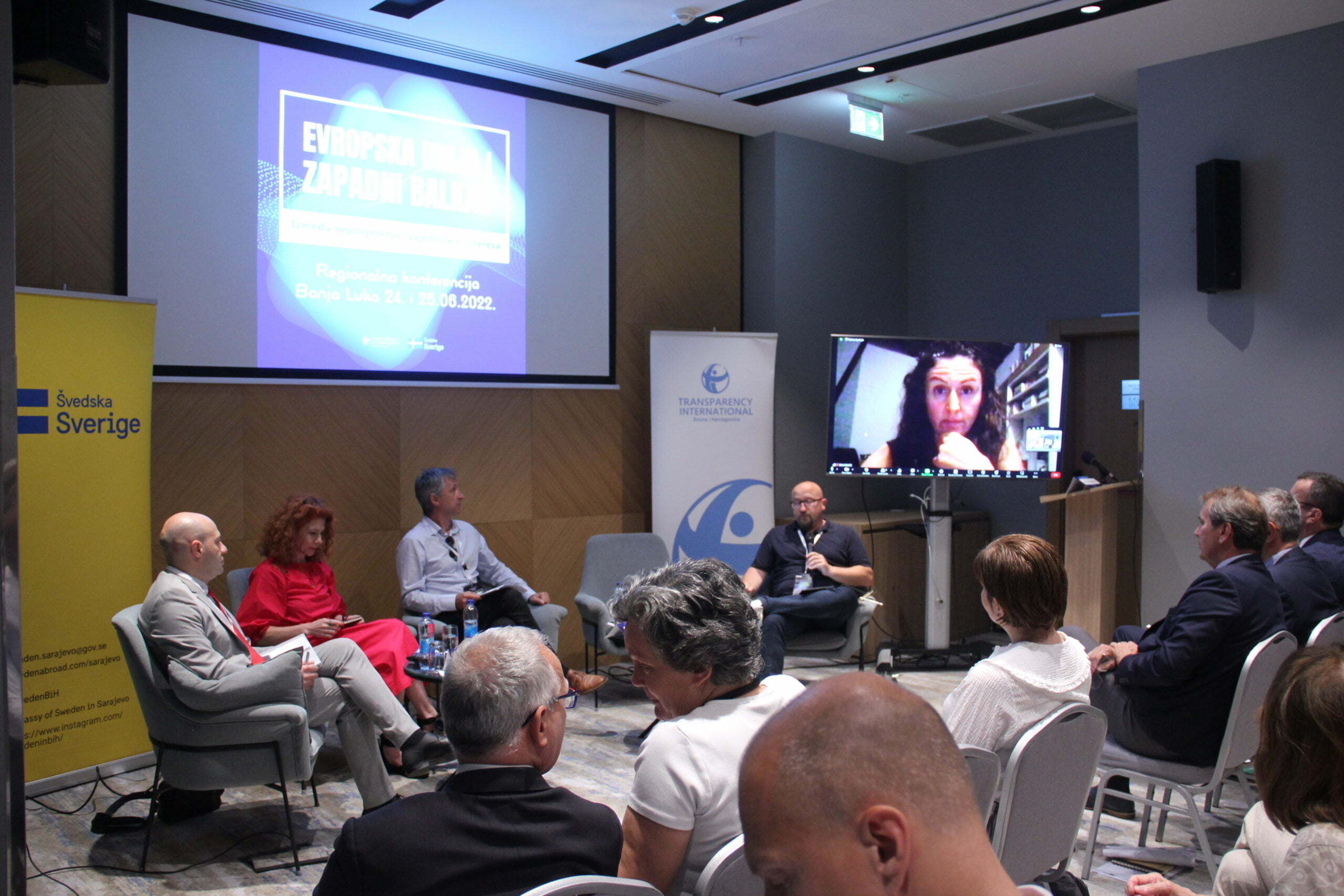
Message from the EU-Western Balkans conference: Credibility needs to be restored to European integration, decisions from last summit will have negative consequences for region

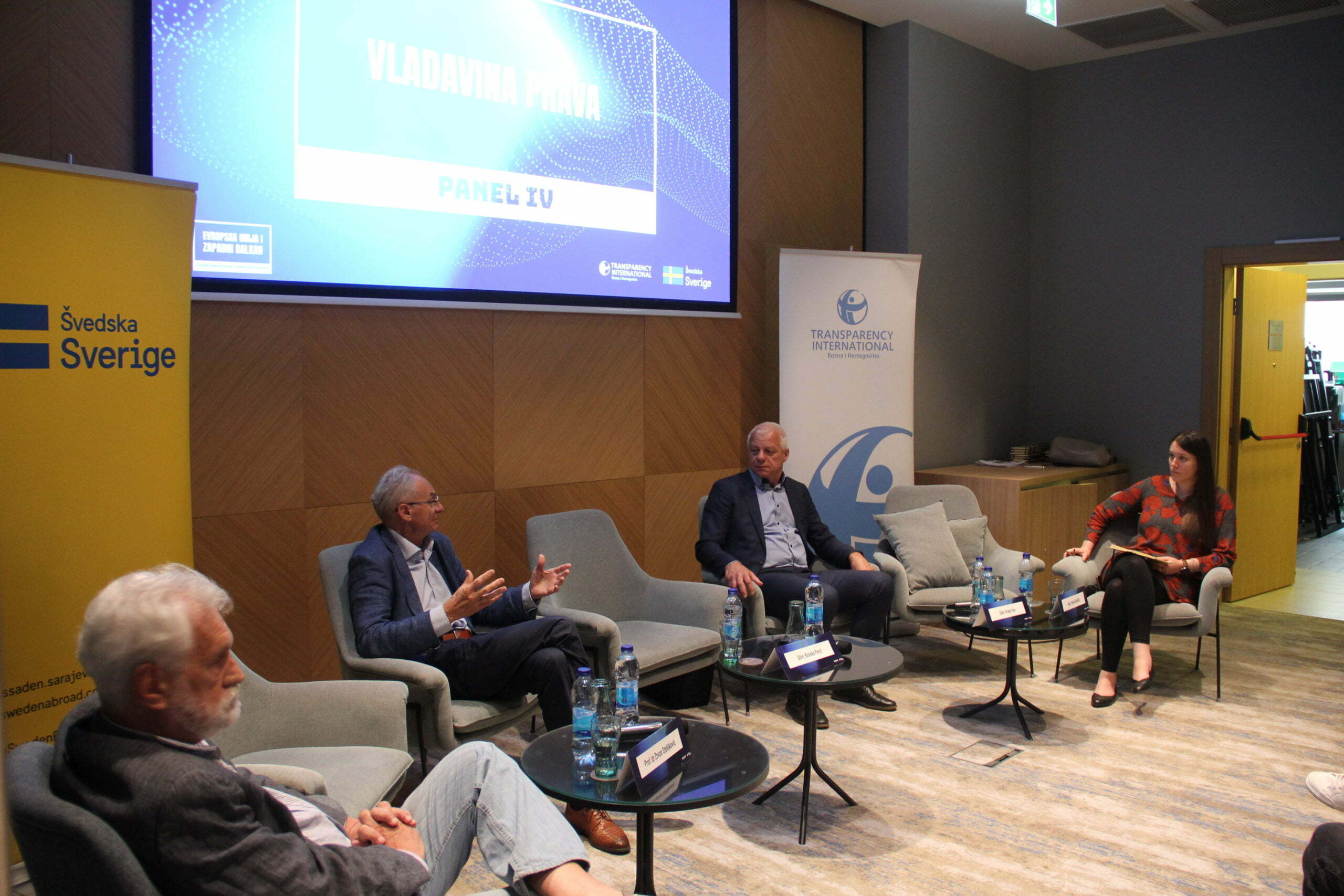
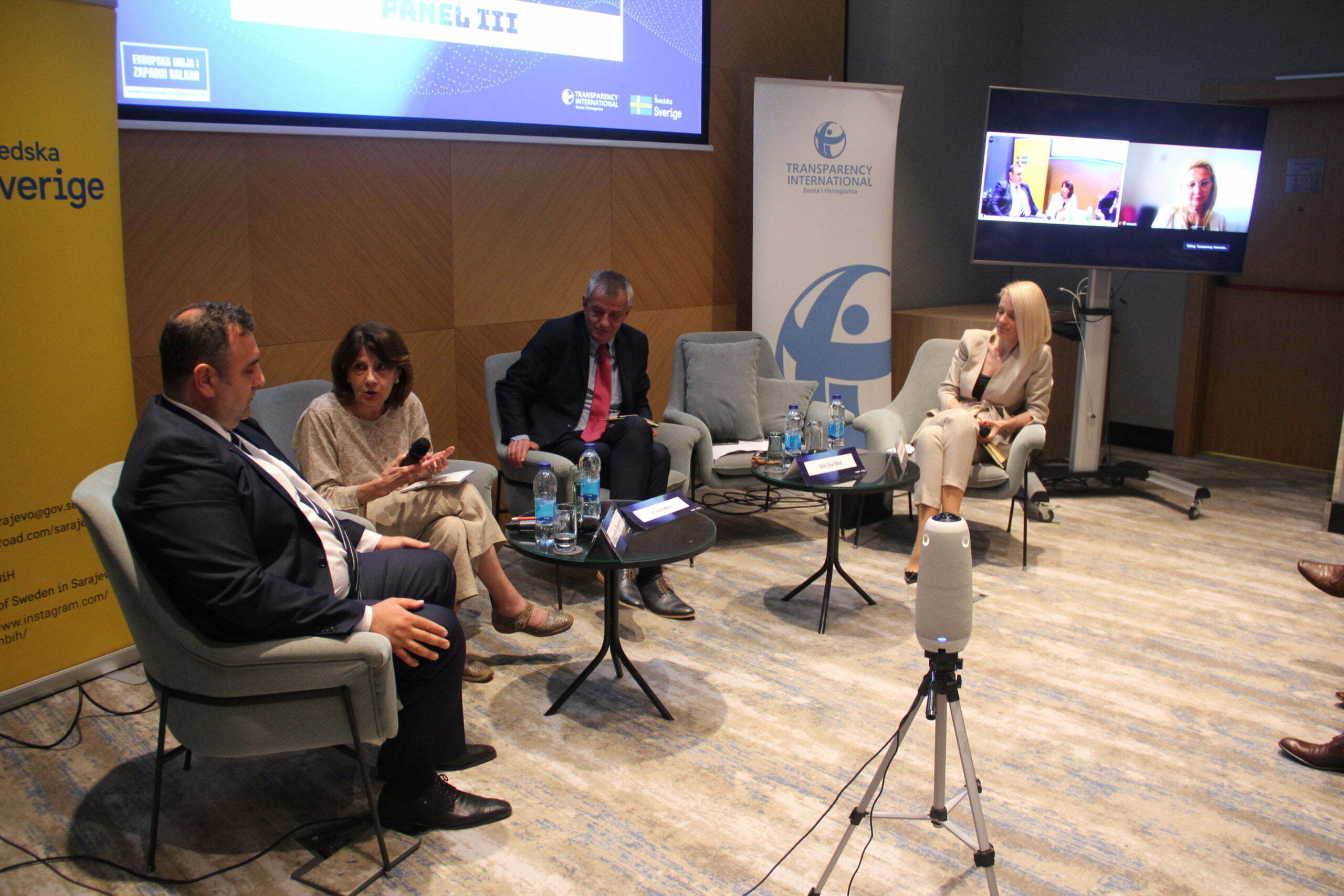
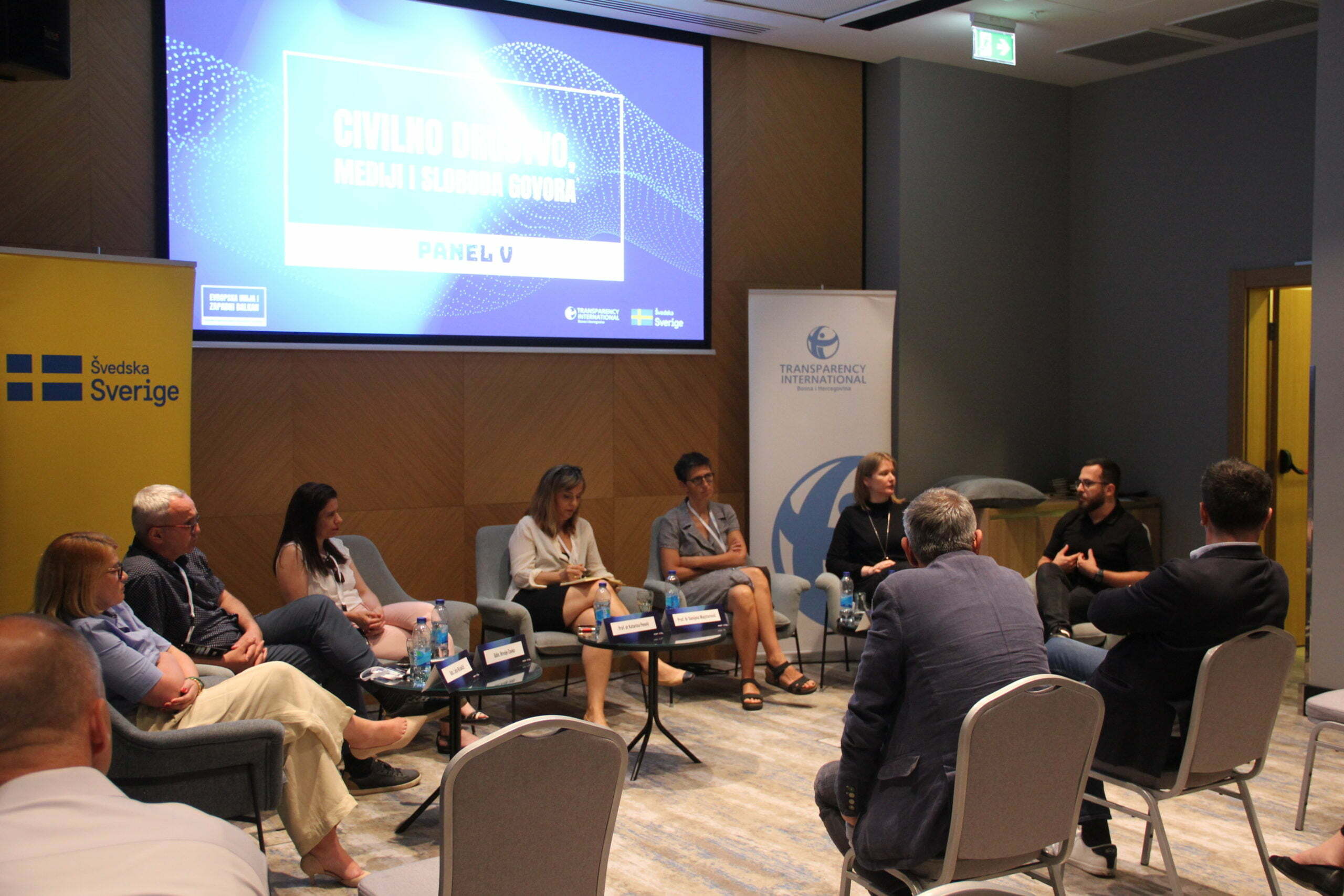
The European Union's decision not to grant candidate status to any new country from the Western Balkans at the last summit did not give a positive signal to the region and further undermined the credibility of the accession process, it was announced at the conference "The EU and the Western Balkans - between mistrust and common interests" which was held in Banja Luka organized by Transparency International in Bosnia and Herzegovina.

The decision of the European Union not to grant candidate status to any new country from the Western Balkans at the last summit did not give a positive signal to the region and...

TI BiH
Izvještaji za Mediae

Message from the EU-Western Balkans conference: Credibility needs to be restored to European integration, decisions from last summit will have negative consequences for region

The decision of the European Union not to grant candidate status to any new country from the Western Balkans at the last summit did not give a positive signal to the region and further undermined the credibility of the accession process, it was said at the conference Banja Luka organized Transparency International in BiH. International experts, former diplomats, decision-makers from BiH and the surrounding area, representatives of academia and civil society spoke at the conference, and the common conclusion is that the region needs stronger EU engagement, new impetus for integration and support in key reforms such as the rule of law.

The complete halt in the process of European integration in the region came due to the increasingly pronounced authoritarian tendencies of domestic leaders, accompanied by the violation of the rule of law, civil and media freedoms. The desire of the political elites in the countries of the Western Balkans is obviously to maintain the current situation, and the previous approach of the Brussels administration has many times led to rewarding those who violated the European path, the rule of law and fundamental civil liberties.

On the other hand, internal problems in the EU itself have led to a blockade of the European path and those countries that have met difficult conditions, and the result is a decline in public support for the European integration process, which will certainly be an aggravating factor in the future.

In the case of Bosnia and Herzegovina, only one of the 14 key priorities met the technical condition of setting up a Parliamentary Committee on European Integration, while authorities blocked all key reforms to enable the rule of law and the fight against corruption. Despite the fact that the vast majority of political actors are committed to European integration, everything that has happened in recent years clearly shows that the key goal of the ruling elites is to obstruct these reforms, preserve the levers of power and the current state of widespread corruption. The participants in the conference also criticized the EU’s approach so far, which has spent huge funds on judicial reform and other reforms that have not yielded results because solutions that are not adapted to the situation in the region have been forced.

Therefore, the message is that the EU should insist more strongly on fulfilling the key conditions in the area of the rule of law, democratic transition and the fight against corruption, because the latest developments among domestic leaders are understood as a message that candidate status can be obtained without fulfilling these conditions.

The conference also stressed the need to strengthen regional cooperation in order to build mutual trust and strengthen the civil society sector, which is a prerequisite for creating the preconditions that will enable a deep democratic transition. The tendency to violate media freedoms is present both in the countries waiting for accession and in the EU member states from the region, which requires a special approach in resistance to authoritarian tendencies.

Goran Svilanovic – former Minister of Foreign Affairs of FR Yugoslavia and former Secretary General of the Regional Cooperation Council, Kori Udovicki – former Deputy Prime Minister of Serbia and Chief Economist of the Center for Advanced Economic Studies in Belgrade spoke at the conference organized by TI BiH with the support of the Embassy of Sweden in BiH , Emir Đikić – CEFTA Director, Maja Sever – President of the European Federation of Journalists, Neven Anđelić – Professor Regent of the University of London, Katarina Peović – Member of the Croatian Parliament, Drago Kos – Chair of the OECD Anti-Corruption Working Group.

During 2021. only 4 final verdicts for high corruption, most defendants end up with suspended sentences

Despite BiH being one of the countries with the highest level of corruption in Europe according to all relevant research, the judiciary has mainly dealt with small cases and low-ranking officials, while many major scandals have remained unanswered.

The average prison sentence for corruption is less than two years, while court proceedings last up to 10 years Banja Luka, 11. May 2022 – During 2021. In 2011, 147 final...

TI BiH
Izvještaji za Mediae

During 2021. only 4 final verdicts for high corruption, most defendants end up with suspended sentences

The average prison sentence for corruption is less than two years, while court proceedings last up to 10 years

Banja Luka, 11. May 2022 – During 2021. In 2011, 147 final verdicts for corruption offenses were passed in Bosnia and Herzegovina, of which only four related to high-level corruption, according to data from the Monitoring of Corruption Prosecution presented by Transparency International in BiH. Despite BiH being one of the countries with the highest level of corruption in Europe according to all relevant research, the judiciary has mainly dealt with small cases and low-ranking officials, while many major scandals have remained unanswered.

All prosecutor’s offices in BiH have filed a total of 235 indictments, of which only 6 or 2.5% relate to high-level corruption. One of them refers to the former Minister of Defense of BiH, Selma Cikotić, who is accused of a criminal act committed more than 10 years ago, which additionally indicates untimely and inefficient prosecution of corruption in BiH.

The data published by TI BIH on the Interactive Map of Corruption Prosecution show that the Prosecutor’s Office of BiH additionally reduced the already small number of indictments and the Special Department for Suppression of Corruption, Organized and Serious Forms of Economic Crime at the RS Republic Prosecutor’s Office did not succeed. It mainly dealt with corruption in “own ranks”, ie in the judiciary itself, and out of a total of 6 confirmed indictments, one was filed against officials of this prosecution for accepting bribes, and three indictments were filed against judges in Banja Luka, East Sarajevo and Prijedor. It should be noted that this prosecution opened some significant investigations into multimillion-dollar abuses in public procurement during the pandemic last year, but the results are still expected in the coming period.

Across BiH, there has been an increase in the number of indictments for corruption compared to 2020. year when due to the pandemic there was a sharp decline in all indicators of the judiciary, so the results are now at about the same level as in previous years. The biggest contribution to that was given by the FBIH prosecutorial system, where the number of indictments was 75 during 2020. increased to 185 last year. On the other hand, the number of indictments in the RS prosecutorial system has increased only slightly, but is still far lower than in the five years before the pandemic, while the Brcko District Prosecutor’s Office has reduced the number of indictments for corruption.

The District Prosecutor’s Office in East Sarajevo, which filed the last indictment for corruption in 2018, has had particularly devastating results for years. In the last seven years, the courts have passed only two convictions for corruption in the cases of this prosecution. The District Prosecutor’s Office in Trebinje has no better results, which did not file a single indictment for corruption last year. Only one was filed by the Cantonal Prosecutor’s Office of the SBK, and only three verdicts for corruption were handed down before the courts in this canton, and in all three cases the defendants were acquitted.

Of the total number of final court verdicts for corruption, 68% ended in suspended sentences, as mostly minor cases were processed, while only 41 verdicts (27.8%) related to prison sentences. Also, more than half of criminal charges (57.3%) end with an order not to conduct an investigation, and as these charges, in addition to citizens, are submitted by competent law enforcement agencies, it is clear that there is no adequate cooperation between these agencies and prosecutors.

The recent monitoring of trials in these cases by a TI BiH sample showed that the average prison sentence for corruption in BiH was less than two years, although the law provides for a penalty of up to 10 years for corruption offenses. The trials in these cases lasted on average three years and seven months, while some cases lasted over 11 years. The judiciary is increasingly facing political pressure and public attacks by high-ranking officials, which, along with the existing systemic shortcomings, certainly affects the efficiency of corruption prosecution.

Press rls_11.05.22_

Processing monitoring 2021_TIBiH_

Adoption of the RS VSTS Law leads to complete legal uncertainty and the capture of the judiciary

The creation of parallel institutions would violate legal security and hinder citizens from enjoying basic human rights and freedoms, such as the right to personal liberty and security, the right to property and the like.

Banja Luka, 8. February 2022 – Transparency International in Bosnia and Herzegovina (TI BiH) warns that the adoption of the Law on the High Judicial and Prosecutorial...

TI BiH
Izvještaji za Mediae

Adoption of the RS VSTS Law leads to complete legal uncertainty and the capture of the judiciary

Banja Luka, 8. February 2022 – Transparency International in Bosnia and Herzegovina (TI BiH) warns that the adoption of the Law on the High Judicial and Prosecutorial Council of the Republika Srpska, which should take the form of a draft before the deputies on 20. regular session of the National Assembly of the Republika Srpska, set a dangerous precedent that would lead to legal uncertainty. The adoption of the new law, which was put on the agenda of today’s NARS session at the last minute, is just another in a series of attempts to overthrow the legal order and establish additional capture of judicial institutions. In recent months, the authorities in Republika Srpska have obviously been trying to establish control over all institutions and processes by creating parallel institutions without grounds, and now, through the appointment of suitable judges and prosecutors, they are trying to further undermine the rule of law.

We remind you that Bosnia and Herzegovina already has a High Judicial and Prosecutorial Council (HJPC), which was established as an independent and autonomous body, and has the task of providing an independent, impartial and professional judiciary. The HJPC members are judges and prosecutors from all over BiH, and this body has the authority to appoint judges and prosecutors at the state, entity, cantonal, district, basic and municipal levels, including the Brcko District of BiH, with the exception of the entity constitutional courts. The Constitution of Bosnia and Herzegovina stipulates that BiH is a state governed by the rule of law, and the rule of law is obliged to guarantee legal security to its citizens. Legal certainty, on the other hand, means that every individual can rely on the meaning and predictability of positive legal regulations, as well as the rights and obligations arising from those regulations. Creating parallel institutions and disrupting the unity of the organization and governance of the judiciary would undermine legal certainty and impede the enjoyment of basic human rights and freedoms such as the right to liberty and security of person, the right to property, the right to a fair hearing and criminal matters, etc.

The legislative procedure before the Parliamentary Assembly of BiH includes amendments to the Law on the HJPC, in order to harmonize it with the recommendations of the Venice Commission and the priority conditions of the European Union, which require stronger guarantees of judicial independence. The HJPC, as an independent and autonomous body governing the judiciary, needs to be strengthened by additional guarantees of independence, while initiatives to create new bodies at the entity level thwart such efforts. TI BiH has long pointed to the problems of political influence on the judiciary in BiH and the need for comprehensive reform, strengthening independence and accountability, but instead The authorities in the Republika Srpska are trying to create chaos and uncertainty by completely collapsing the legal order, which would have catastrophic consequences for all processes in the country, basic rights of citizens and the functioning of all institutions. Instead of dealing with the Law on the HJPC, which is in the legislative procedure before the BiH Parliamentary Assembly, decision-makers are dealing with the adoption of a law that is a threat to legal security and will further alienate BiH in the European integration process.

TI BiH warns that the Draft Law on the HJPC of the Republika Srpska has not been published on the official website of the National Assembly of the RS, that the content of the draft is unknown to the general public, that the public learned about the draft through unofficial sources, a few days before the session. the impact of passing such a law.

The creation of parallel institutions for the supervision of the judiciary, all under the guise of national interest, is actually aimed at creating a private state and destabilization with the aim of strengthening the position of the ruling parties. TI BiH therefore calls on NARS MPs to take responsibility towards the citizens of Republika Srpska and Bosnia and Herzegovina and urges them to consider the consequences of establishing such institutions and the losses they will produce due to legal uncertainty and paralysis of institutions. give their contribution to reforms in the judiciary with proposals that respect basic legal principles.

Press rls-08.02.21_


After the report of TI BiH, the Chief Prosecutor of the Prosecutor’s Office of Tuzla Canton was fined – he rented business premises to lawyers who represented the accused

In the end, a public reprimand was issued to the Chief Prosecutor, published in an anonymized form, so that the general public did not receive any information about this case. In...

TI BiH
Izvještaji za Mediae

After the report of TI BiH, the Chief Prosecutor of the Prosecutor’s Office of Tuzla Canton was fined – he rented business premises to lawyers who represented the accused

In the end, a public reprimand was issued to the Chief Prosecutor, published in an anonymized form, so that the general public did not receive any information about this case. In this way, the practice of mild disciplinary policy towards judicial office holders continues. (more…)

The District Prosecutor’s Office Banja Luka will not conduct any investigation against Dodik

The Prosecutor’s Office brought a decision not to conduct any investigation against Milorad Dodik in a very short time, while Dodik’s speech given at the opening of the...

TI BiH
Izvještaji za Mediae

The District Prosecutor’s Office Banja Luka will not conduct any investigation against Dodik

The Prosecutor’s Office brought a decision not to conduct any investigation against Milorad Dodik in a very short time, while Dodik’s speech given at the opening of the University Clinical Center Banja Luka was characterized as a pre-election meeting, without considering the allegations from the complaint and the controversial situation in which specific threats were directed to health worker. (more…)

TI BiH won the case against the Prosecutor’s Office of BiH

The Prosecutor’s Office of BiH violated the Law on Free Access to Information because it refused to provide documentation on cases related to criminal offenses against the...

TI BiH
Izvještaji za Mediae

TI BiH won the case against the Prosecutor’s Office of BiH

The Prosecutor’s Office of BiH violated the Law on Free Access to Information because it refused to provide documentation on cases related to criminal offenses against the official duty (more…)

Political pressure on the judiciary must stop!

Holders of the highest state functions through pressure on the work of the judiciary have shown that political interests are placed above the implementation of the law and...

TI BiH
Izvještaji za Mediae

Political pressure on the judiciary must stop!

Holders of the highest state functions through pressure on the work of the judiciary have shown that political interests are placed above the implementation of the law and directly told the citizens that legal procedures are not the same for everyone (more…)

Unacceptable Influences on Judiciary

In this sense the most indicated example is the President of RS, Milorad Dodik and some members of the Government on the Court of Bijeljina. The President Dodik has manifested...

TI BiH
Izvještaji za Mediae

Unacceptable Influences on Judiciary

In this sense the most indicated example is the President of RS, Milorad Dodik and some members of the Government on the Court of Bijeljina. The President Dodik has manifested repeatedly this kind of pressure, threatening even the abolition of this court, and insulting the judge for a decision on confiscation of property of the company “Alumina”.

Also, the behavior of the Minister of Justice of FBiH, Zoran Mikulić, can be characterized as a direct and inappropriate influence and pressure on the work of the judiciary. Bearing in mind that he is suspected of abuse of power and obstruction of justice through unauthorized relocation of witnesses, he has exercised direct pressure on prosecutors work, practically interfering with judiciary.

TI BiH recalls that judicial institutions should function independently of the executive institutions and to have control over its operations, although political leaders in BiH increasingly show that in BiH executive power is controlling legislative and judiciary. In this way, the independence of the judiciary is directly threatened, having in mind that any decision of the judiciary, which is not in favor of the representatives of the government, causes threat, pressure and attacks.

No Progress in Prosecuting Corruption in BiH

The Data show that in the work of prosecutors the increase of number of reports was noted, but there has been a reduction in the number of reports of corruption and criminal...

TI BiH
Izvještaji za Mediae

No Progress in Prosecuting Corruption in BiH

The Data show that in the work of prosecutors the increase of number of reports was noted, but there has been a reduction in the number of reports of corruption and criminal offenses against official and other duties (on average 2.3 percent of the total number of applications).

It is the same situation with the number of investigations by the prosecutor’s office, which had increased the total number of investigations of corruption cases 2012 in relation to the 2011 (1464 to 2012, compared to 829 in 2011.).

However, these investigations have not yielded sufficient results due to the fact that there has been stagnation in terms of the number of indictments for crimes of corruption and that the number of indictments for corruption in number of 223 during the 2012 was disproportionately small compared to the number of investigations conducted by these crimes – 1464.

Also, the share of 1.4 percent of confirmed indictments for corruption offenses in relation to all the other confirmed indictment is extremely low, and when even the figure of 223 confirmed indictments for corruption offenses brought in connection with a number of 74 in regular court in BiH, it is clear this is indeed a very small number of confirmed indictments.

In terms of the total number of judgments rendered by the courts there has been noticeable increase in the volume of work, but no significant changes in the number of convictions for corruption.

Except in the Brčko district, at all levels, there has been a reduction in the number of convictions for offenses of corruption.

As in earlier period, the additional problem is lacking of cases about system corruption in which high level politicians would be processed.

When it comes to the structure of the convictions, the High Judicial and Prosecutorial Council refused to provide information about the structure of the judgment, thereby violating the Law on Free Access to Information.

However, according to unconfirmed information held by TI BiH, there were no any significant changes.

During the year 2012, there was a total of seven prison sentences at all levels of the criminal offense of bribe-taking, while the abuse of power  was issued a total of nine prison sentences at all levels, which is certainly not a very high number compared to the pervasive problem of corruption.

Also, the convictions were mainly for cases of abuse at the lower levels, while absent epilogues for cases at higher levels.

Monitoring of prosecuting the corruption also included confiscation of the illegally acquired property.

TI BiH data show that in the 2012 there was a significant decrease in the number of cases in which the illegally acquired property  was taken compared to the 2011 (57 compared to 228), and in the period 2011-2012  there has been a drastic reduction in the financial worth of the confiscated properties (in the period 2009 -2010).

Confiscated assets amounted to about 30 million, while for the period 2011 to 2012  was taken only about 5.6 million ( a decline of about 80%).

Lately BiH citizens witnessed numerous arrests and announced investigations in cases of high corruption, but are absent epilogues of these cases, which clearly proves that the fight against corruption in BiH is only demagogic and no real results.

The negative trend of justice efficiency continues for years, which indicates the presence of systemic corruption in BiH which obstruct any progress and or change, reflecting the end of the work of the judiciary.

[:bs]Nemar i neozbiljnost pravosuđa u slučaju Čović-Lijanovići

Povodom izvještaja Centra za istraživačko novinarstvo, prema kojem nedostaje 40 originalnih dokumenata u predmetu Čović-Lijanovići, TI BiH apeluje da se provede hitna...

TI BiH
Izvještaji za Mediae

[:bs]Nemar i neozbiljnost pravosuđa u slučaju Čović-Lijanovići

Corruption without punishment and consequences

Analysis of the processing of corruption cases before the courts and prosecutor's offices in BiH indicates the inefficiency of the judiciary and the lack of will for a...

TI BiH
Izvještaji za Mediae

Corruption without punishment and consequences

Get involved

Don't miss it

If you want to receive our announcements immediately after the publication, leave your e-mail address in the field below.