PRESS RELEASES AND ANNOUNCEMENTS

Key dates

TI BiH warns: Appointment of investor through amendments to the Southern Interconnection Law sets a dangerous precedent

Banja Luka, 30. March 2026 year – Transparency International in BiH warns that amendments to the Law on the Southern Interconnection of FBiH, which directly define which...

TI BiH
Izvještaji za Mediae

TI BiH warns: Appointment of investor through amendments to the Southern Interconnection Law sets a dangerous precedent

Banja Luka, 30. March 2026 year – Transparency International in BiH warns that amendments to the Law on the Southern Interconnection of FBiH, which directly define which investor will implement the project, represent a dangerous precedent and as such carry the risk of seriously undermining the public interest.

The Draft Law on Amendments to the Law on the Gas Pipeline “Southern Interconnection Bosnia and Herzegovina and the Republic of Croatia“, which the Government of the Federation of BiH adopted on March 25 and submitted for adoption to the Parliament of FBiH under urgent procedure, undermines not only transparency but also eliminates any possibility of competition. The content itself raises numerous questions and indicates multiple risks that may lead to the endangerment of responsible governance and compromising the public interest by favoring particular interests.

Considering the importance of this project for the entire economy and energy independence of BiH, TI BiH emphasizes that no adequate analysis has been provided nor a rational basis for the radical change in approach to the project’s implementation compared to the Law that was adopted only one year earlier.

Specifically, the proposed amendments appoint a private investor as partner and project leader directly in the law itself, which represents a dangerous precedent that raises justified suspicion that this is a so-called tailor-made legal solution, i.e., legal provisions tailored to particular interests.

In addition to opening the risk of regulatory capture, which favors personal, commercial, or political interests of certain actors at the expense of BiH citizens, establishing such a practice in a country with one of the highest levels of corruption in Europe would lead to catastrophic consequences in the implementation of strategically important projects such as the “Southern Interconnection” gas pipeline.

The implications that such a project implementation model carries are something the entire BiH public should be informed about, as well as the professional credentials of the potential investor and the very reasons for changing the model, all of which the proposer has neglected in the proposed amendments to the Law.

Furthermore, the Government of the Federation has not explained the reasons for the urgent procedure, which has prevented broader discussion that should be necessary considering the importance of the project and the possible consequences of its implementation in the proposed manner.

Finally, there are justified concerns regarding the compliance of this Law with existing constitutional and legal solutions, as well as with obligations arising from the harmonization of BiH legislation with EU regulations.

In view of all the above, Transparency International BiH calls on the Parliament and Government of FBiH to organize a public debate on this law so that the public can gain insight into all aspects of these amendments, and that through reasoned discussion all concerns be addressed and contribute to the adoption of an optimal solution for the implementation of such an important project.
Press rls_30_03_2026

Collection of concession fees in BiH is declining. Numerous concessionaires are avoiding payment of already minimal obligations

SARAJEVO, March 19, 2026. – Collection of concession fees in Bosnia and Herzegovina decreased by approximately 17% last year, according to preliminary data from Transparency...

TI BiH
Izvještaji za Mediae

Collection of concession fees in BiH is declining. Numerous concessionaires are avoiding payment of already minimal obligations

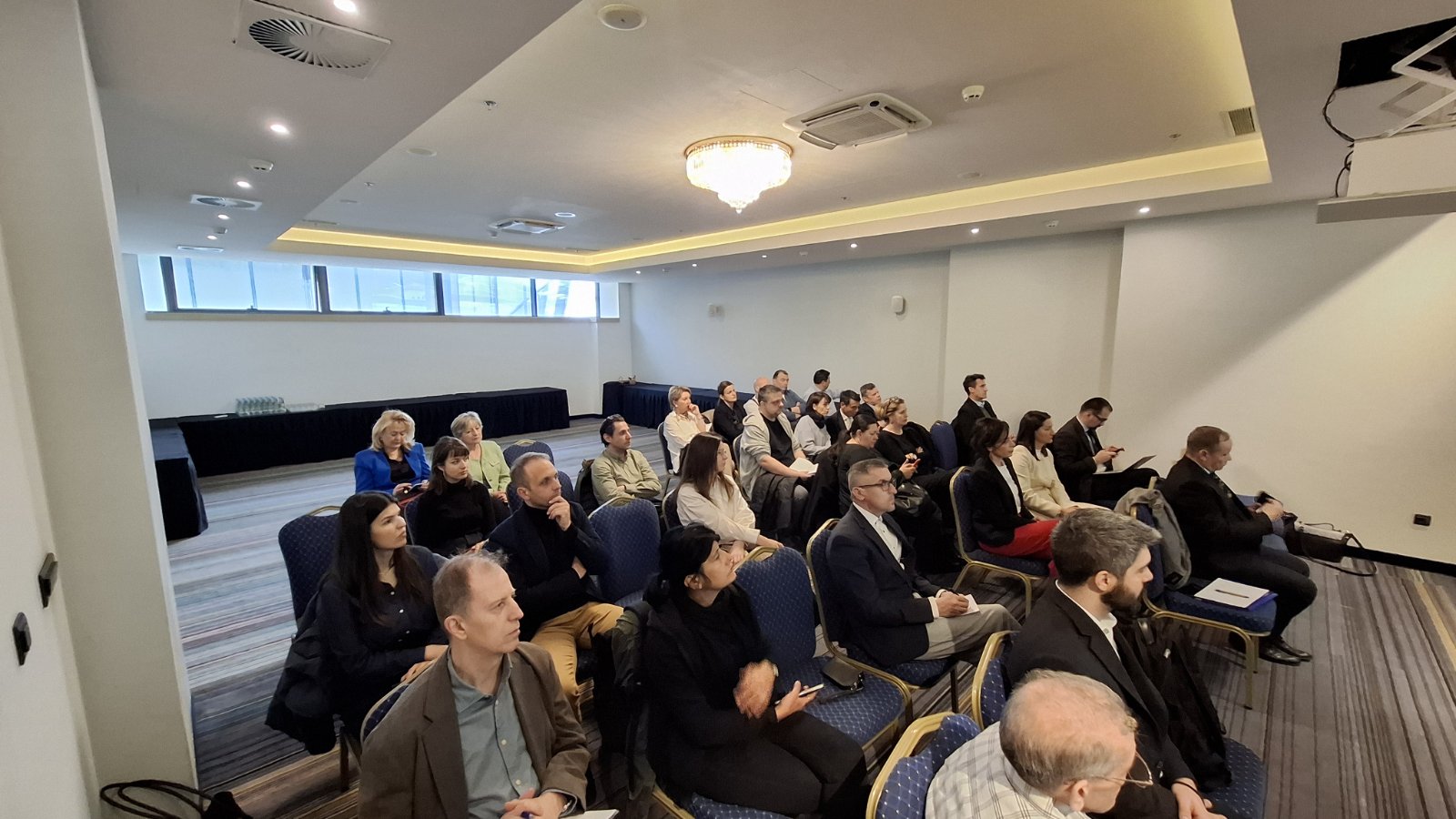
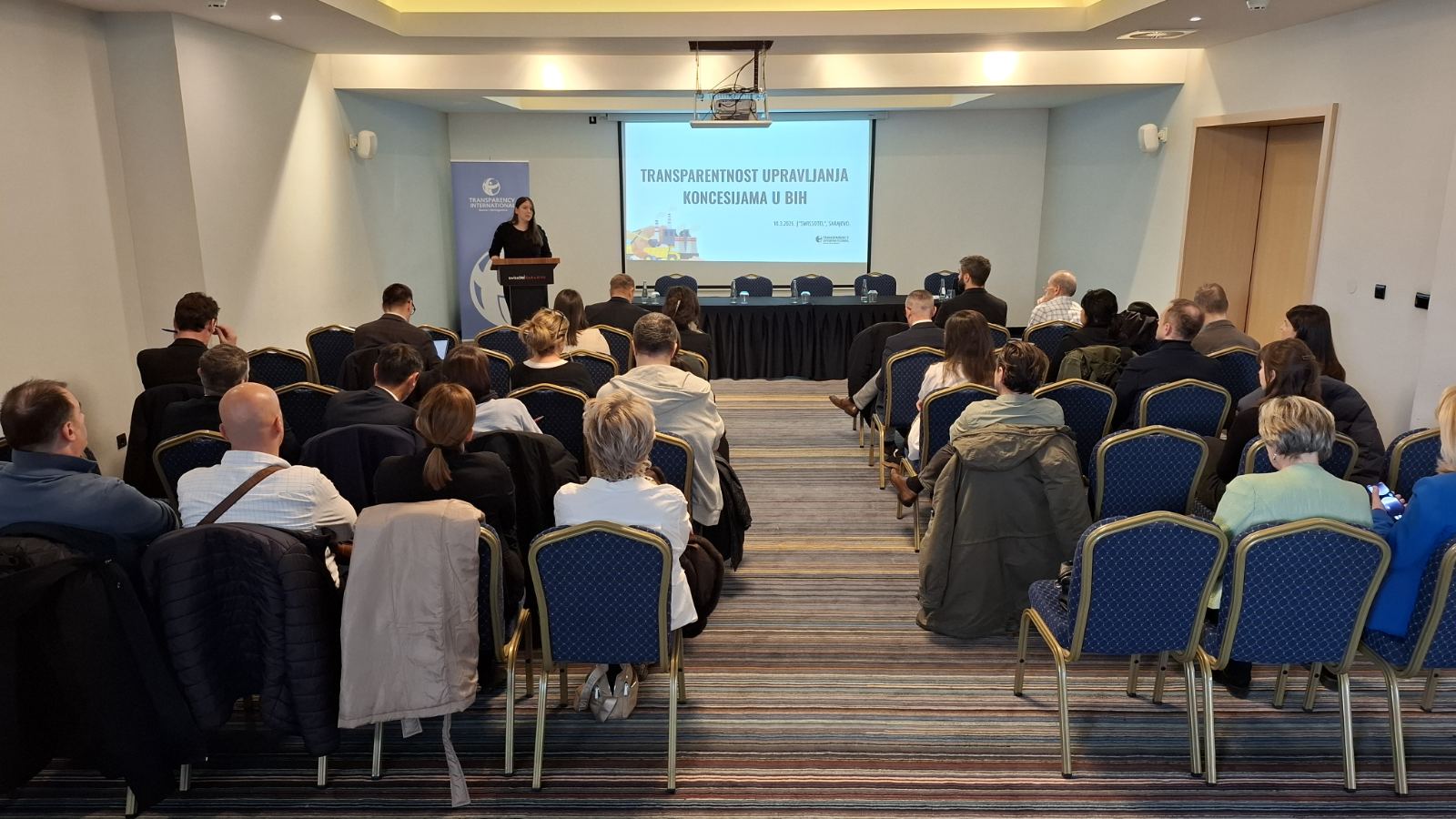
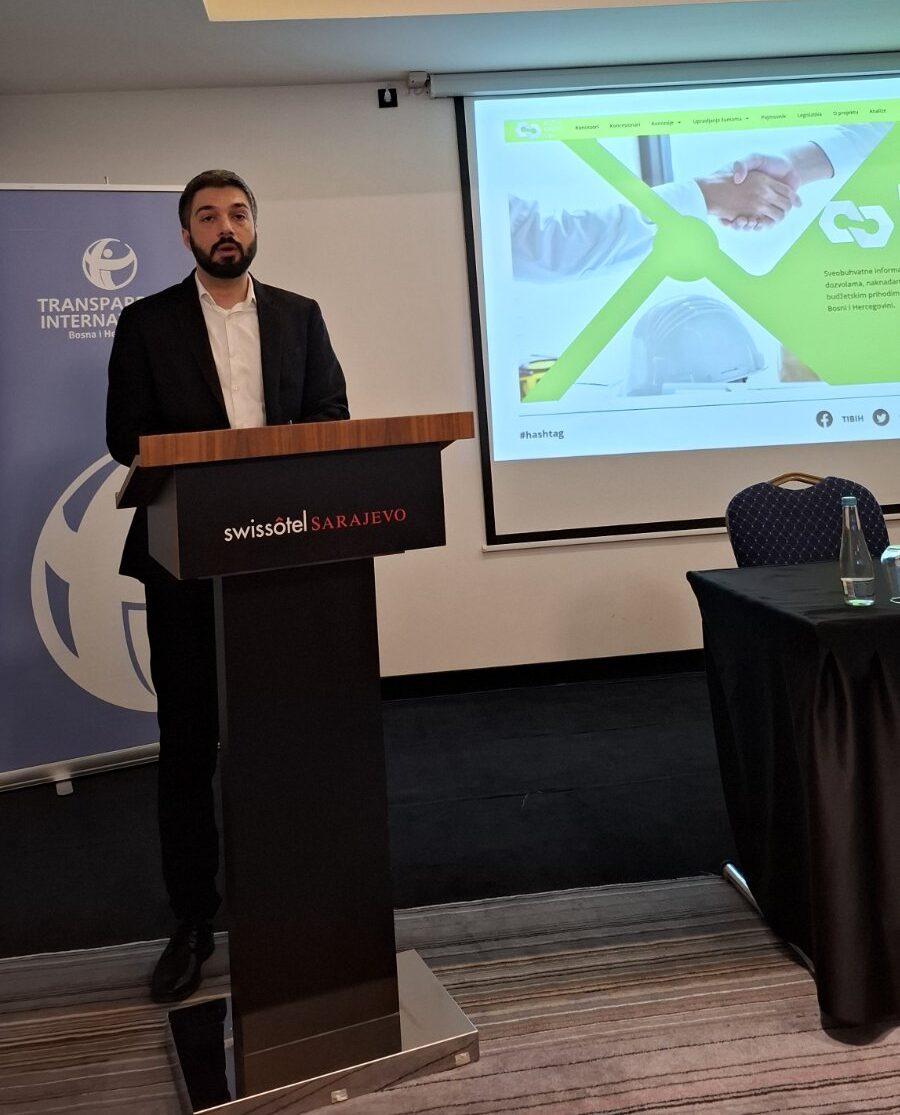
SARAJEVO, March 19, 2026. – Collection of concession fees in Bosnia and Herzegovina decreased by approximately 17% last year, according to preliminary data from Transparency International in BiH presented at a conference dedicated to transparency in concession management. These figures are based on data provided by authorities, but the number is not final as TI BiH continues to pursue disputes with institutions that refuse to disclose information, while numerous concessionaires exploiting significant natural resources avoid paying already low obligations to the state. The share of concession fees in total public budget revenues continues to decline. In the last year, it decreased from 1.2% to 1.02%, which is a direct consequence of poor collection and chronic lack of transparency.

The current debt of concessionaires exceeds nine million convertible marks, but experts warn that this is not the final figure. As many as seven government bodies continue to refuse to provide payment data, while others have provided only partial information, preventing accurate insight into how much money the state is actually losing. Auditors in numerous institutions constantly encounter deficiencies caused by inconsistent laws and the absence of adequate records.

Therefore, TI BiH believes that the lack of transparency in concession award procedures subsequently leads to environmental, economic, and other negative consequences for society as a whole.

– This problem is further exacerbated by weak oversight of institutions that should ensure compliance with legal procedures, which enables avoidance of obligations and irregularities in contract implementation. Irresponsibly awarded or inadequately supervised concessions not only endanger the environment but also directly put people’s lives at risk, while undermining citizens’ trust in institutions , stated Ivana Korajlić, Executive Director of Transparency International in BiH.

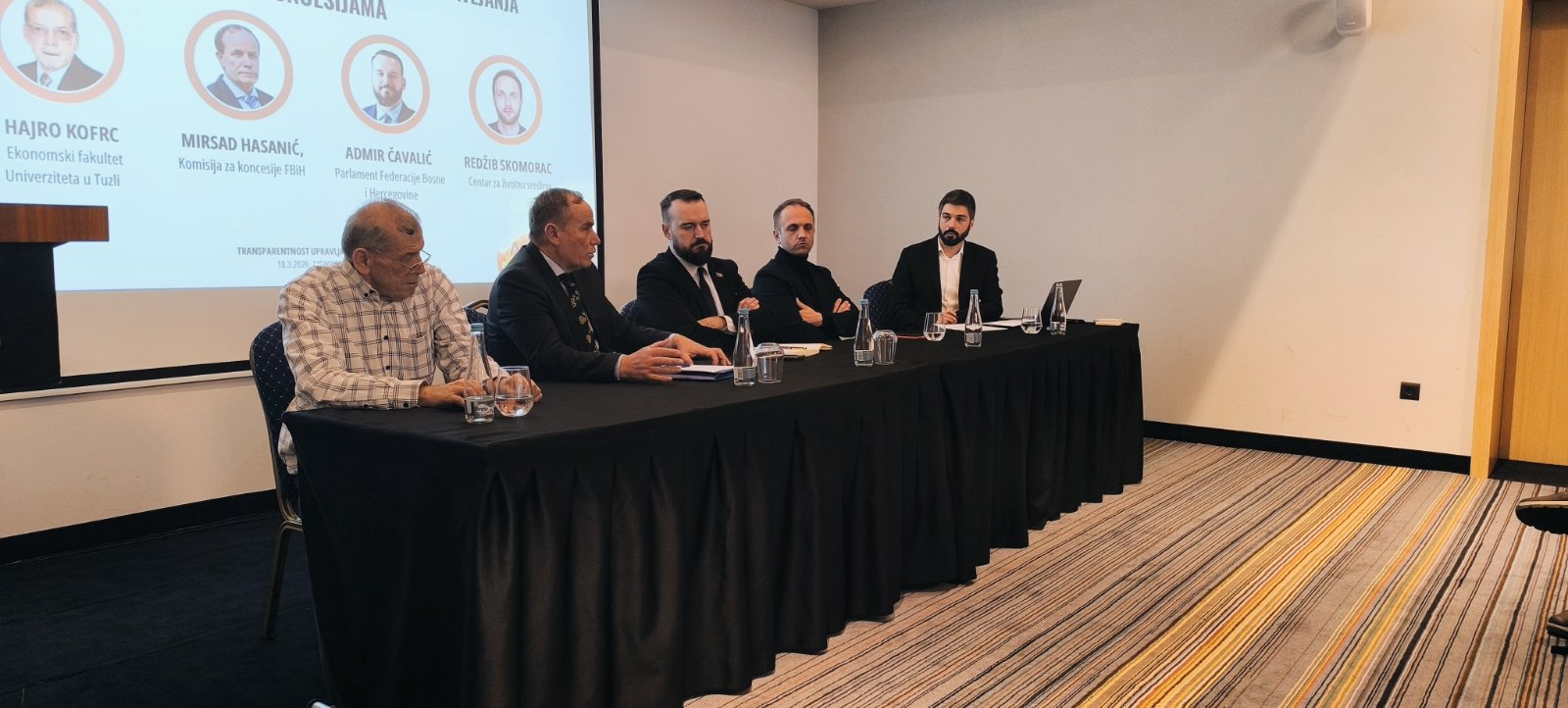
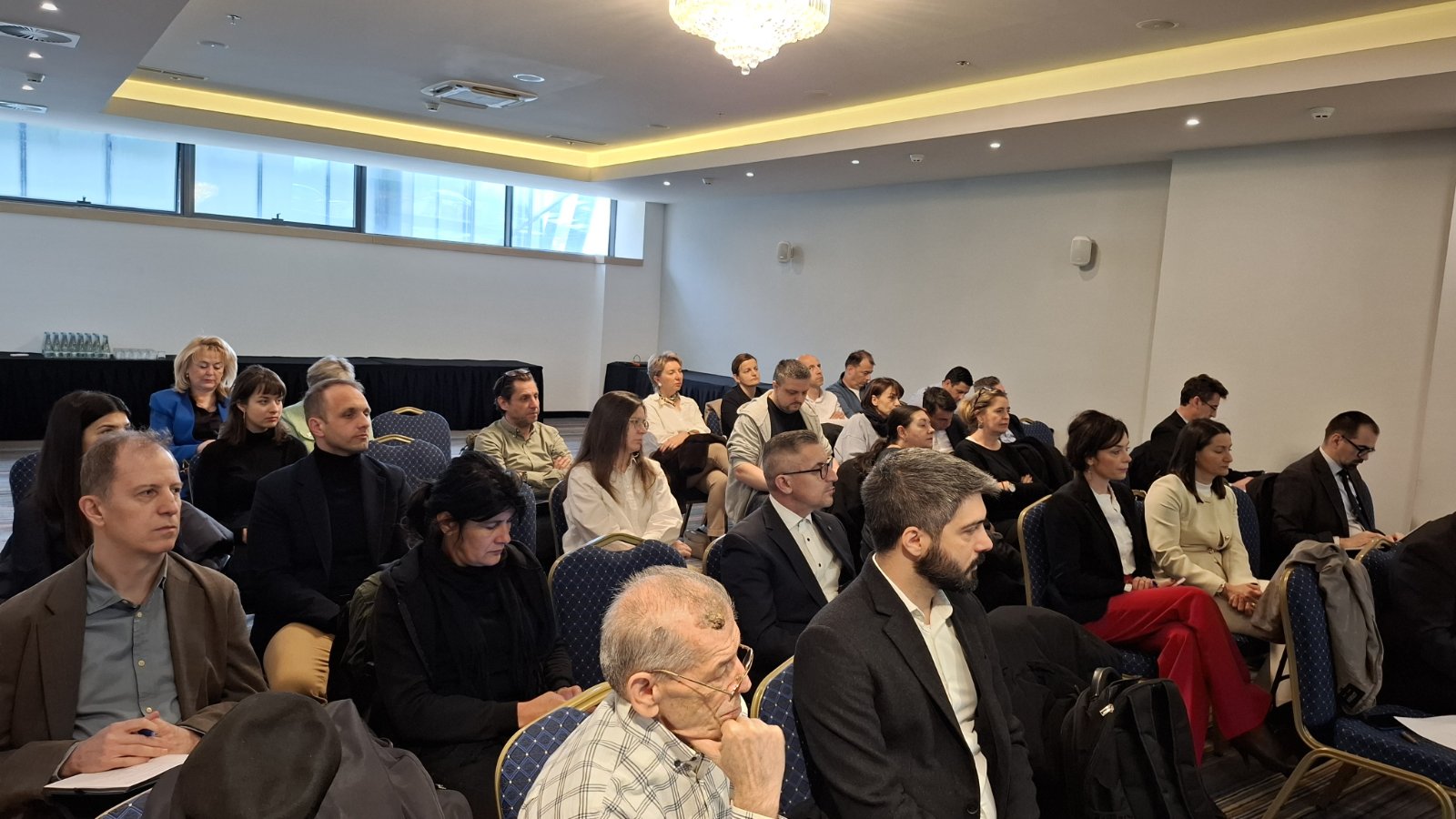
The conference organized by TI BiH in Sarajevo brought together relevant stakeholders from this field who agreed that society benefits little from this manner of concession management.

Member of the FBiH Parliament Admir Čavalić stated that concession fees in Bosnia and Herzegovina are among the lowest in the region and that they should be increased, with the introduction of a variable component that would track market price changes, while collected funds should be distributed more proportionally to local communities that directly experience the consequences of resource exploitation.

Mirsad Hasanić from the FBiH Concessions Commission also pointed to systemic anomalies, noting that unsolicited proposals have become the rule rather than the exception, and that in legal terms, virtually no concession has been awarded through a classic tender process, which places favorites in a privileged position from the start.

An additional problem is the so-called “project fragmentation,” highlighted by Redžib Skomorac from the Center for the Environment. He notes that in the construction of solar power plants, projects are deliberately divided into smaller parts to completely avoid the obligation of concession award. Professor at the Faculty of Economics in Tuzla, Dr. Hajro Kofrc, stated that concessions can be a powerful tool for economic development, but only with strict adherence to rules. The conference also presented recommendations for improving transparency in concession management. Primarily, harmonization of the legislative framework on concessions at all levels in BiH with the Concessions Directive and other significant segments of the EU Acquis, followed by adoption and publication of concession plans, with mandatory prior public consultations from the earliest project phases, and incorporation of all three pillars of the Aarhus Convention into concession laws in BiH—namely the right to access information, the right to public participation in decision-making, and the right to legal protection. There was also a call for the introduction of concession contract registries with detailed data open to the general public, including financial indicators, as only this can enable adequate public oversight of concessionaire operations.

Press_rls19.03.2026

Get involved

Don't miss it

If you want to receive our announcements immediately after the publication, leave your e-mail address in the field below.